Key takeaways
- Akkermansia muciniphila plays a pivotal role in maintaining gut mechanical and immunological barrier function.
- The bacterium stimulates mucosal turnover by degrading old mucin and encouraging goblet cell production of fresh mucus.
- Human clinical trials demonstrate that pasteurized Akkermansia supplementation improves insulin sensitivity and reduces liver enzymes.
- Polyphenols from pomegranates, dark berries, green tea, and cranberries represent the most effective dietary stimuli for natural Akkermansia growth.
- Depleted Akkermansia levels serve as a distinct biomarker for metabolic dysregulation and accelerated biological aging.
Medical disclaimer: Content is for informational purposes and does not replace medical advice.
Discovery and Ecological Niche of Akkermansia muciniphila
Akkermansia muciniphila was first isolated in 2004 by Professor Willem de Vos at Wageningen University. Named after Dutch microbiologist Antoon Akkermans, the species epithet 'muciniphila' translates to 'mucin-loving'. PMID 23671105
Unlike most gut bacteria that depend on dietary fibers passing through the lumen, Akkermansia resides directly within the nutrient-rich mucus layer lining the colonic epithelium. It utilizes mucin glycoproteins as its sole carbon and nitrogen source. By continuously harvesting the outer mucus layer, Akkermansia signals goblet cells to secrete fresh, dense mucus. This process creates a dynamic, self-renewing barrier that prevents pathogenic translocation and endotoxin leakage. PMID 23671105
Importantly, the relationship between Akkermansia and the human immune system evolved over millennia of host-microbe symbiosis. By continuously interacting with mucosal receptors, this microorganism maintains immunological tolerance in the gut, preventing abnormal hyper-reactivity against dietary antigens and minimizing the risk of autoimmune responses. PMID 23671105
Continuous mucin turnover preserves a thick, protective lining that combats age-associated intestinal thinning. Without sufficient Akkermansia stimulation, the mucosal barrier degrades, exposing enterocytes to luminal inflammatory triggers, dietary toxins, and bacterial antigens. PMID 23671105
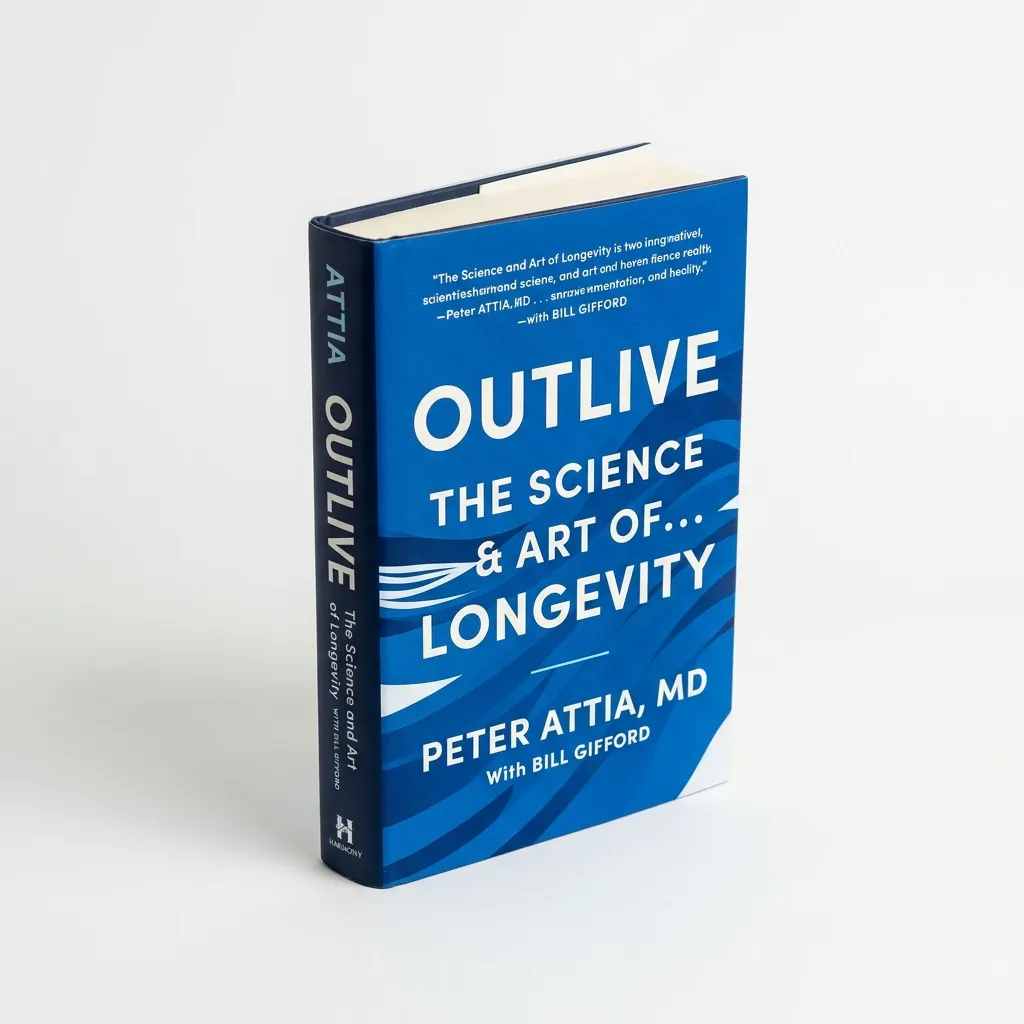
Outlive: The Science & Art of Longevity
Dr. Peter Attia's groundbreaking guide to preventive medicine, exercise for longevity, and healthy aging.
- Scientific framework for Medicine 3.0
- Actionable guide on sleep, exercise & nutrition
Correlation with Metabolic Syndrome and Insulin Resistance
Extensive human and animal studies demonstrate a consistent inverse correlation between Akkermansia abundance and metabolic dysfunction. Individuals with lean body mass, normal insulin sensitivity, and low baseline inflammatory markers invariably maintain robust colonization of Akkermansia. PMID 31263284 EFSA Panel on Nutrition, Novel Foods and Food Allergens 2021
Conversely, depleted Akkermansia levels are widely documented in patients with untreated type 2 diabetes, non-alcoholic fatty liver disease (NAFLD), and cardiometabolic conditions. When the mucosal barrier thins due to Akkermansia depletion, translocation of circulating lipopolysaccharides (LPS) escalates, provoking low-grade systemic endotoxemia, impaired insulin signaling, and chronic metabolic inflammation. PMID 31263284 EFSA Panel on Nutrition, Novel Foods and Food Allergens 2021
Furthermore, modern geroscience reveals that centenarians with exceptional health profiles preserve high intestinal levels of Akkermansia muciniphila compared to age-matched peers suffering from chronic lifestyle diseases. PMID 31263284 EFSA Panel on Nutrition, Novel Foods and Food Allergens 2021
Metabolic endotoxemia driven by intestinal permeability remains a primary trigger of systemic 'inflammaging.' As LPS enters the portal circulation, it engages CD14 and TLR4 receptors on macrophages, inducing inflammatory cascades (TNF-alpha, IL-6) that directly disrupt intracellular insulin receptor phosphorylation in muscle and hepatic tissue. PMID 31263284 EFSA Panel on Nutrition, Novel Foods and Food Allergens 2021
Pasteurized Akkermansia: Clinical Trial Breakthroughs
Because Akkermansia muciniphila is an obligate anaerobe (inactivated rapidly upon oxygen exposure), formulating viable probiotic supplements has posed major technological barriers. However, in a landmark clinical trial led by Professor Patrice Cani, researchers made a surprising discovery: pasteurized (heat-treated) Akkermansia was even more effective than live bacteria in improving host metabolic markers. PMID 30551069 PMID 27897958
The explanation lies in a specific outer membrane protein known as Amuc_1100. This stable protein withstands pasteurization and binds directly to Toll-Like Receptor 2 (TLR2) on intestinal enterocytes, activating tight junction assembly (claudins, occludin) and reducing systemic permeability. In 2021, the European Food Safety Authority (EFSA) officially authorized pasteurized Akkermansia muciniphila as a safe Novel Food ingredient, paving the way for targeted commercial supplementation. PMID 30551069 PMID 27897958
In a double-blind, randomized clinical trial published in Nature Medicine, daily oral supplementation with 10 billion pasteurized Akkermansia cells for 3 months prevented deterioration of insulin sensitivity, lowered total cholesterol, and induced a statistically significant reduction in body weight and fat mass without enforced caloric restriction. PMID 30551069 PMID 27897958
| Akkermansia Formulation | Stability & Storage Requirements | Biological Mechanism (Amuc_1100 & TLR2) | Clinical Trial Findings (Cani et al. 2019) | Recommended Protocol & Safety Profile |
|---|---|---|---|---|
| Pasteurized Akkermansia (Postbiotic) | Fully ambient-stable; impervious to oxygen and gastric acid | Gentle pasteurization exposes outer membrane protein Amuc_1100, enhancing TLR2 affinity 4-fold | 30% increase in insulin sensitivity, lower fasting insulin, decreased fat mass, and normalized ALT | 1 capsule daily (10 billion pasteurized cells); formally approved as a Novel Food by EFSA |
| Live Akkermansia (Strict Anaerobe) | Fragile; rapidly inactivated by atmospheric oxygen exposure and gastric pH | Active mucin enzymatic turnover; prompts mucosal goblet cells to produce fresh mucin | Effective barrier repair in animal models, but problematic commercial viability and shelf stability | Primarily evaluated in laboratory settings; difficult to formulate reliably in retail supplements |
| Endogenous Enhancement via Polyphenols | Natural stimulation of native colonic microbiome strains | Ellagitannins (from pomegranates and walnuts) yield urolithins, which selectively expand Akkermansia | 2- to 3-fold elevation in fecal Akkermansia relative abundance within 4 to 8 weeks | 100–200 ml pure organic pomegranate juice or 500 mg standardized pomegranate extract daily |
| Endogenous Enhancement via Fasting | Physiological endogenous triggering without caloric inputs | In the absence of luminal substrates, Akkermansia utilizes mucin glycans, prompting goblet cell renewal | Thickens the colonic protective mucosal barrier and lowers baseline circulatory endotoxemia | 16:8 time-restricted feeding regimens or intermittent 24-hour fasting windows |
| Dual Synergistic Stack (Postbiotic + Prebiotic) | Maximized multi-target metabolic protocol | Supplies bioactive Amuc_1100 while concurrently feeding native colonies with fermentable glycans | Comprehensive metabolic reset: improved HOMA-IR, blunted postprandial glucose, reduced circulating LPS | 1 capsule pasteurized Akkermansia + 10 g prebiotic resistant starch (green banana or potato flour) |
Diet and Polyphenols: How to Naturally Boost Akkermansia
For individuals seeking to expand their endogenous Akkermansia population through nutrition, dietary strategy is remarkably powerful. Because Akkermansia thrives in an environment enriched with mucin and polyphenols, targeted foods stimulate its proliferation: PMID 27897958
1. **Polyphenol-rich fruits and extracts**: Pomegranates (abundant in ellagitannins converted into urolithin A), cranberries, dark Concord grapes, and wild blueberries are the most potent natural promoters of Akkermansia. PMID 27897958
2. **Green tea and EGCG**: Epigallocatechin gallate (EGCG) from steeped green tea significantly increases the relative abundance of colonic Akkermansia in experimental models. PMID 27897958
3. **Omega-3 fatty acids**: Marine EPA and DHA promote healthy mucosal architecture and support optimal epithelial colonization. PMID 27897958
4. **Fasting and Time-Restricted Eating**: During fasting windows when luminal nutrients are absent, Akkermansia feeds on old mucosal glycoproteins, stimulating rapid mucosal regeneration before the next feeding cycle. PMID 27897958
A structured protocol to nurture Akkermansia combines 500-1000 mg of dietary polyphenols daily alongside intermittent fasting (e.g., a 16:8 schedule), creating ideal conditions for sustained mucosal renewal and metabolic resilience. PMID 27897958
Internal Further Reading
Read also in the same cluster

Smart Body Composition Scale
Advanced bioimpedance scale tracking muscle mass, body fat percentage, bone density and hydration.
- Tracks muscle mass & visceral fat
- Wireless sync with health apps
FAQ
Is live or pasteurized Akkermansia more effective?
Human clinical trials demonstrated that pasteurized Akkermansia muciniphila was equally or more effective than live cells at improving insulin sensitivity, due to the bioactivity of the outer membrane protein Amuc_1100.
Can Akkermansia be measured via standard blood tests?
No, Akkermansia is quantified through DNA-based stool metagenomic sequencing, which profiles the relative abundance of gut bacterial taxa.
Does Akkermansia supplementation cause adverse side effects?
Clinical safety trials authorized by EFSA confirm that pasteurized Akkermansia muciniphila exhibits an exceptional safety profile with no significant adverse events compared to placebo.
Sources and References
- [1]
- [2]
- [3]
- [4]
Editorial History
16. juli 2026
Første publicering
Første version blev publiceret som del af metabolic health med intro, takeaways, FAQ og referenceblok.
16. juli 2026
Faglig gennemgang
Formuleringer, forbehold og interne links blev gennemgået for klarhed, konsistens og YMYL-tydelighed.
21. juli 2026
Seneste opdatering
Akkermansia Muciniphila fik opdaterede metadata, referenceoutput og forbedret beslutningsnær struktur.

Medical Review
Medical Review and Update Process
This article has been medically reviewed by Vadim Doroshenko with a focus on clinical accuracy, sources, disclaimers, and whether the conclusions still align with current scientific evidence.

Editorial Profile
Borys Viktorovytj Riabtsev
Borys Viktorovytj Riabtsev publishes Longevity Lab as a research-backed information project on precision medicine, metabolic health, and healthy aging, utilizing rigorous sources, independent medical review, and objective YMYL communication.