Key takeaways
- Biological age is an overall assessment of function, stress and recovery, not a magic conclusion.
- VO2 max, grip strength, waist circumference, blood pressure, glucose and sleep are often more actionable than an isolated clock number.
- Wearables and epigenetic tests can be useful, but must be interpreted in conjunction with behavior, symptoms, and clinical context.
- The most robust interventions are still exercise, weight management, protein, sleep, stress management and smoking cessation.
Medical disclaimer: Content is for informational purposes and does not replace medical advice.
Biological age is a functional measure
Chronological age tells how many years you have lived. Biological age, on the other hand, is about how the body actually functions right now. Two people on the same date of birth can have very different aerobic capacity, insulin sensitivity, inflammation level and recovery ability. PMID 36599349 PMID 24138928
It is therefore more useful to see biological age as a risk compass than as a doomsday clock. The goal is not to chase a spectacularly low number, but to identify which physiological systems are pulling in the wrong direction. PMID 36599349 PMID 24138928
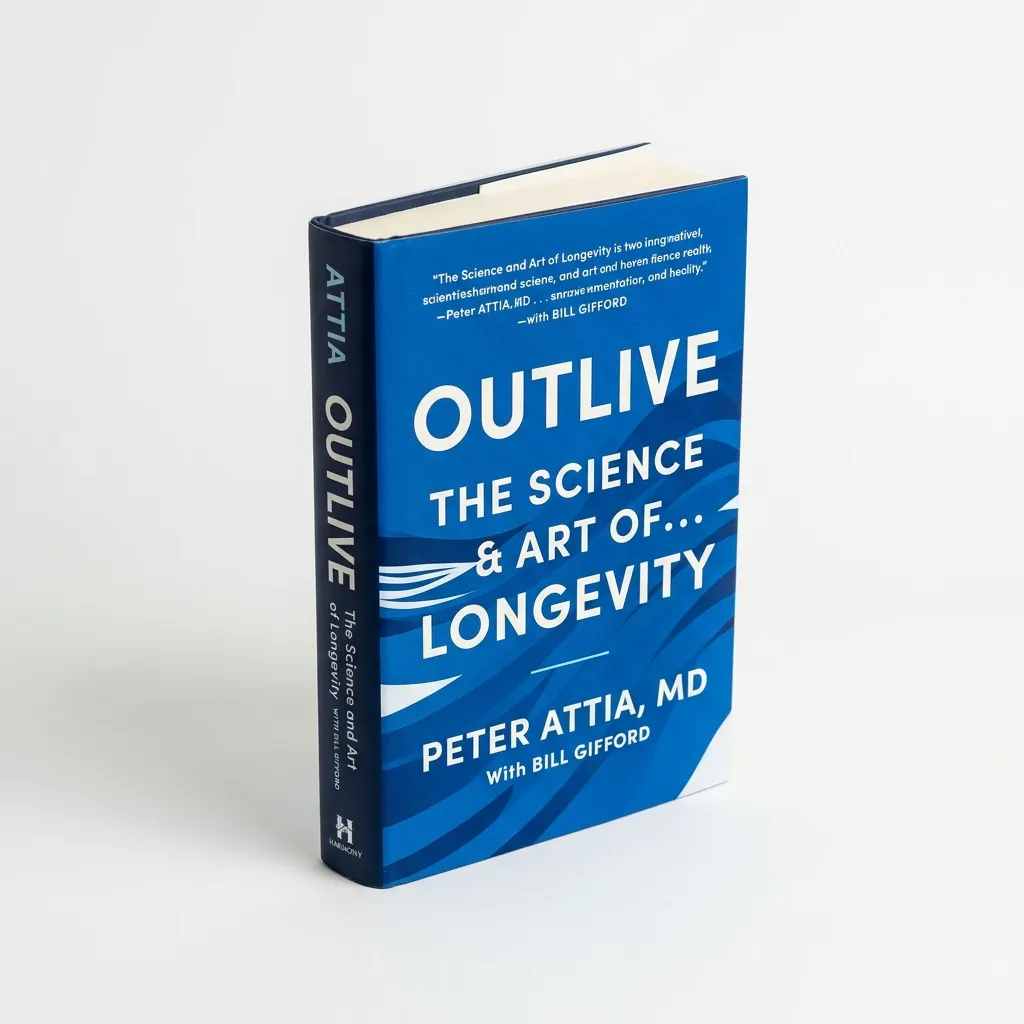
Outlive: The Science & Art of Longevity
Dr. Peter Attia's groundbreaking guide to preventive medicine, exercise for longevity, and healthy aging.
- Scientific framework for Medicine 3.0
- Actionable guide on sleep, exercise & nutrition
Which biomarkers make the most sense in practice?
In daily clinical assessment, the best markers are typically those that are both valid, repeatable and actionable. Epigenetic clocks are interesting, but they should be supplemented with more specific functional tests and standard blood tests. PMID 24138928 PMID 37156805
If the goal is to assess healthy aging, it is often wise to combine metabolic, cardiovascular and functional signals. It provides a more useful picture than leaning on a single biomarker platform. PMID 24138928 PMID 37156805
Quick overview of the most important signals
Many readers are overwhelmed because biological age is often marketed as a single master number. In practice, it is more useful to see the most important metrics side by side and assess which ones can actually be moved with action. PMID 37156805 PMID 38355974
The table provides a faster overview of which signals are typically most actionable. PMID 37156805 PMID 38355974
Which layer makes the most sense first?
Many start in the wrong place because the longevity market sells the most exotic metrics first. In practice, it often makes the most sense to start with the signals that change behavior and follow-up most clearly. PMID 24138928 PMID 37156805
Use the comparison as a decision filter: not everything needs to be bought at the same time, and the most expensive layer is rarely the most actionable. PMID 24138928 PMID 37156805
What can actually move development?
The most underrated thing about longevity is that the most effective interventions often look boring. Neither bells, rings nor nutritional supplements can replace the great signal from aerobic work, strength training, energy balance and proper sleep. PMID 37156805 PMID 38355974
This does not mean that advanced metrics are irrelevant. But they work best as a feedback mechanism when the behavioral basis is already in place. Data without a practical program provides the most support for concern. PMID 37156805 PMID 38355974
Beware of over-interpretation
One of the biggest problems in the quantified self environment is that ordinary variation is confused with disease or accelerated aging. HRV decreases with stress, travel and poor sleep. This does not automatically mean that you are headed for biological collapse. PMID 24138928 PMID 37156805
Therefore, all data should be viewed over time and in conjunction with symptoms, behavior and other measurements. The best interpretation is almost always longitudinal: what happens over repeated measurements when you change something concrete? PMID 24138928 PMID 37156805
A pragmatic 90-day strategy
If you want to work seriously with biological age, a three-month course is often a good starting point. Start with a few core goals, implement a manageable program and then evaluate the effect systematically instead of spontaneously. PMID 37156805 PMID 38355974
In practice, this typically means baseline measurement, exercise plan, diet structure, sleep intervention and a clear plan for re-measurement. In this sense, Longevity is less of a hack and more of a manageable project. PMID 37156805 PMID 38355974
Chronological Age vs Biological Age: The Hallmarks of Aging
Chronological age measures nothing more than the number of orbital revolutions around the sun since birth, serving as a crude and imprecise surrogate for physiological vitality. Two 50-year-old individuals frequently display wildly divergent somatic phenotypes: one may maintain arterial compliance, cognitive acuity, and musculoskeletal integrity comparable to an average 35-year-old, while the other manifests subclinical atherosclerosis, advanced glycation, and cellular exhaustion. PMID 36599349 PMID 24138928
**Biological age** quantifies cumulative systemic wear and tear driven by the 12 canonical *Hallmarks of Aging* (*Cell*): including epigenetic alterations, telomere attrition, mitochondrial dysfunction, cellular senescence accumulation, loss of proteostasis, compromised autophagy, and chronic sterile inflammation (**inflammaging**). While chronological age is an invariant forward arrow, biological age is malleable, plastic, and responsive to targeted longevity therapeutics. PMID 36599349 PMID 24138928
From Molecular Clocks to Functional Physiological Reserve
Evaluating biological age requires distinguishing between three stratified diagnostic tiers: 1. **Molecular Signatures**: DNA methylation arrays (epigenetic clocks such as Horvath, GrimAge, and DunedinPACE), plasma proteomics (Olink platforms), and telomeric length assays. These capture molecular damage directly across chromatin and circulation. 2. **Systemic Clinical Panels**: Composite multi-parameter blood models (such as Morgan Levine's PhenoAge) that integrate fasting glucose, serum albumin, creatinine, high-sensitivity CRP, leukocyte differentials, and liver enzymes to capture organ-specific allostatic burden. 3. **Functional Physiological Reserve**: Cardiorespiratory fitness (VO2 max), isometric grip strength, neuromuscular gait velocity, and post-exercise heart rate deceleration. PMID 37156805 PMID 33139886
An individual exhibiting favorable epigenetic methylation metrics who nonetheless suffers from sarcopenic muscle wasting and low VO2 max carries immense vulnerability to functional frailty. A comprehensive longevity architecture must therefore integrate both microscopic epigenomics and macroscopic physiological performance metrics. PMID 37156805 PMID 33139886
| Diagnostic Domain | Analytical Modalities & Biomarkers | Clinical Predictive Power | Typical Cost & Access in DK |
|---|---|---|---|
| Molecular (Epigenomics) | DNA methylation arrays (DunedinPACE, GrimAge, TruAge) | Highest correlation with cellular aging rate and all-cause mortality | 1,800–3,800 DKK via specialized consumer test kits or clinics |
| Systemic (Blood Chemistry) | Levine PhenoAge, hs-CRP, ApoB, HbA1c, HOMA-IR | Provides real-time clinical assessment of multi-organ strain | 300–1,200 DKK; partially covered via GP or private lab panels |
| Functional (Physiological) | VO2 max ergospirometry, DEXA ALMI, grip dynamometry | Indispensable predictor of lifelong independence and fall prevention | 800–2,000 DKK at sports medicine facilities and private hospitals |
Decelerating the Pace of Aging: An Actionable Framework
The genuine clinical utility of measuring biological age does not reside in a single static score, but in empowering you to bend the slope of deterioration. If serial testing reveals an accelerated pace of biological decay (e.g., DunedinPACE > 1.1 biological years per calendar year), structured interventions can systematically slow down rate: PMID 37156805 PMID 38355974
• **Mitochondrial Biogenesis**: 150–200 minutes of weekly Zone 2 aerobic cardio paired with weekly 4x4 min VO2 max intervals enhances cellular bioenergetics. • **Nutrient-Sensing Modulation**: Transitioning toward a minimally processed anti-inflammatory diet rich in polyphenols and marine omega-3 blunts chronic mTOR hyperactivation and upregulates AMPK and sirtuins. • **Circadian Restoration**: 7–9 hours of dark, uninterrupted sleep mitigates allostatic cortisol load and facilitates glymphatic neuro-metabolic waste clearance. Retest biological metrics every 12 to 18 months to objectively verify that lifestyle interventions are successfully reversing biological decay. PMID 37156805 PMID 38355974
Internal Further Reading
Read also in the same cluster
Smart Body Composition Scale
Advanced bioimpedance scale tracking muscle mass, body fat percentage, bone density and hydration.
- Tracks muscle mass & visceral fat
- Wireless sync with health apps
FAQ
Is biological age a real clinical marker?
It can be useful as an overall risk assessment, but it should not be treated as a definitive diagnosis. You only achieve practical value when the number is linked to concrete function and blood markers.
Can wearables alone tell my biological age?
No. Wearables provide useful signals about sleep, heart rate and activity, but they cannot alone describe metabolic, inflammation level, muscle mass or clinical risk.
How quickly can biological age improve?
Some functional markers can move over weeks to months, but the pace varies greatly with starting point, adherence, disease burden and which measurements you follow.
Which measurements are best to start with?
For most, it is best to start with few but robust signals such as fitness, strength, waist circumference, blood pressure, glucose and sleep rather than buying a large dashboard with little actionable value.
Are epigenetic tests necessary?
No. They can be interesting, but they are rarely necessary as a first step. Many get more out of classic functional and metabolic markers.
Should I take a biological age test before working with the basic markers?
Usually no. For most people, it makes more sense to start with function, blood pressure, glucose, waist circumference, sleep and exercise capacity. The test becomes more relevant when you already have a program and a clear question.
What is the fundamental difference between biological and chronological age?
Chronological age is the simple count of calendar years since birth. Biological age evaluates the structural and functional health of your cells, tissues, and organs, which may be significantly younger or older than chronological age based on genetics and lifestyle.
Can individual organs age at different rates within the same human body?
Yes. Recent clinical and proteomic investigations demonstrate organ-specific aging rates. An individual may possess vascular mechanics resembling a healthy 40-year-old while harboring renal or immune profiles characteristic of a 60-year-old.
Which lifestyle interventions exert the greatest documented impact on biological age?
Synergistic combinations of high-tier cardiorespiratory exercise (VO2 max) alongside progressive resistance training, restorative sleep architecture, nutrient-dense anti-inflammatory nutrition, and smoking cessation exhibit the strongest evidence for slowing biological aging.
Sources and References
- [1]
- [2]
- [3]
- [4]
Show all 5 sources (1 more)
- [5]
Editorial History
4. July 2026
First publication
Initial version was published as part of the healthy aging with introduction, takeaways, FAQ, and reference block.
4. July 2026
Medical review
Phrasing, caveats, and internal links were reviewed for clarity, consistency, and YMYL alignment.
4. July 2026
Latest update
Biological Age (2026) received updated metadata, reference outputs, and improved decision-support structure.

Medical Review
Medical Review and Update Process
This article has been medically reviewed by Vadim Doroshenko with a focus on clinical accuracy, sources, disclaimers, and whether the conclusions still align with current scientific evidence.

Editorial Profile
Borys Viktorovytj Riabtsev
Borys Viktorovytj Riabtsev publishes Longevity Lab as a research-backed information project on precision medicine, metabolic health, and healthy aging, utilizing rigorous sources, independent medical review, and objective YMYL communication.