Key takeaways
- A biomarker is most valuable when it can be followed up with a specific choice or action.
- Classic markers like blood pressure, glucose, waist circumference and function are often more useful than more expensive dashboards.
- The right panel depends on the question, not on how modern the test looks.
- If you do not know what you want to do differently after the result, there is a high risk that the measurement is too early.
Medical disclaimer: Content is for informational purposes and does not replace medical advice.
Why actionability is more important than fascination
Many longevity users gravitate towards the most advanced buzzwords: multiomics, clocks, scorecards and personalized dashboards. But in practice, the best markers are often those that are most down to earth and easiest to repeat over time. PMID 31623863 PMID 32168239
So the key question is not just what a marker says, but what you actually want to do if the number looks better or worse in 8 to 12 weeks. PMID 31623863 PMID 32168239

Outlive: The Science & Art of Longevity
Dr. Peter Attia's groundbreaking guide to preventive medicine, exercise for longevity, and healthy aging.
- Scientific framework for Medicine 3.0
- Actionable guide on sleep, exercise & nutrition
The most actionable biomarkers in practice
Use the table as a prioritization filter, not as a definitive list. Start with the signals that most often give a real next step. PMID 32168239 PMID 35213452
| Biomarker | What It Is Typically Used For | When It Makes the Most Clinical Sense |
|---|---|---|
| Blood Pressure | Vascular workload and cardiovascular risk profile | Almost always as part of a baseline health profile |
| Waist Circumference | Visceral adipose burden and metabolic risk | During weight loss, insulin resistance, and lifestyle changes |
| HbA1c or Fasting Glucose | Long-term glucose control over 90 days | If meals, energy crashes, or insulin sensitivity are in focus |
| VO2 Max / Work Capacity | Cardiorespiratory aerobic reserve and functional capacity | If the objective is healthy aging, physical capacity, and resilience |
| Sleep & Nocturnal HRV Trend | Autonomic recovery and physiological stress trajectory | If you want to track patterns around stress, circadian rhythm, and recovery |
When a panel becomes too wide and too expensive
A panel quickly loses value if it contains many signals you don't understand, can't repeat or can't realistically act on. It is a classic problem in preventive and commercial diagnostics. PMID 35213452 PMID 33924783
The wider the panel becomes, the more important it becomes to know which markers are actually decision-critical for your particular situation. PMID 35213452 PMID 33924783
How to choose the right measurement
The best choice starts with the question. Do you want to understand metabolic load, functional reserve, recovery or whether a private test makes sense at all? When the question is clear, marker selection becomes easier. PMID 33924783 PMID 34215282
The right marker depends on the right decision. Read on about private blood tests, biological age, CGM and precision medicine guides to find your answer. PMID 33924783 PMID 34215282
A simple filter before paying for another test
Ask before buying: Can I explain what I want to use the result for? Can I remeasure it? And will a deviating result change anything concrete in my everyday life or my follow-up? PMID 34215282
If the answer is unclear, there is a high probability that the test is too early, or that you really lack a clearer plan rather than more data. PMID 34215282
Cardiovascular key markers: why ApoB outperforms standard cholesterol panels
In conventional preventive medicine, total cholesterol and LDL cholesterol are standard markers of cardiovascular risk. However, contemporary cardiology establishes that **Apolipoprotein B (ApoB)** is a vastly superior biomarker because it quantifies the exact particle count of all atherogenic lipoproteins (LDL, VLDL, and IDL) in circulation, rather than merely the mass of cholesterol trapped inside them. PMID 31623863 PMID 32168239
Optimal preventive longevity thresholds target an ApoB level below 0.80 g/L (80 mg/dL) in primary prevention, and below 0.65 g/L (65 mg/dL) for individuals with elevated baseline risk or family history of early infarction. A single-lifetime measurement of Lipoprotein(a) [Lp(a)] identifies genetically determined vascular risk uncaptured by standard lipid tests. PMID 31623863 PMID 32168239
Knowing your precise ApoB concentration allows targeted, measurable dietary interventions—such as increasing viscous soluble fiber, curbing saturated fat—and precise titration of lipid-lowering pharmacotherapy when indicated. PMID 31623863 PMID 32168239
Metabolic and inflammatory panels: HOMA-IR, fasting insulin, and hs-CRP
Insulin resistance frequently develops 10 to 15 years prior to fasting blood glucose crossing diagnostic thresholds for type 2 diabetes. Calculating the **HOMA-IR** score (derived from concurrent fasting glucose and fasting insulin measurements) is one of the highest-yield actionable clinical assessments available: PMID 32168239 PMID 35213452
A HOMA-IR score below 1.0–1.5 indicates optimal peripheral insulin sensitivity; values between 1.5 and 2.5 reflect early compensatory hyperinsulinemia, while scores above 2.5 demonstrate manifest insulin resistance requiring assertive dietary and physical training countermeasures. PMID 32168239 PMID 35213452
Concurrently, **high-sensitivity C-reactive protein (hs-CRP)** acts as the primary systemic inflammasome thermometer: levels below 1.0 mg/L reflect minimal vascular inflammation and robust endothelial integrity, whereas levels between 1.0 and 3.0 mg/L indicate low-grade chronic inflammation warranting lifestyle modulation. PMID 32168239 PMID 35213452
Liver transaminases, iron status, and diagnostic testing access in Denmark
A comprehensive longevity panel should systematically assess hepatic transaminases (ALT and GGT) alongside serum ferritin and transferrin saturation. Elevated ALT (>35 U/L for men, >25 U/L for women) serves as an early red flag for non-alcoholic fatty liver disease (NAFLD/MASLD) driven by excess fructose or central adiposity. PMID 33924783 PMID 34215282
Serum ferritin is ideally maintained between 50 and 150 µg/L; concentrations exceeding 200–300 µg/L in middle-aged men and postmenopausal women can indicate pro-oxidative iron accumulation or an active acute-phase inflammatory response, which can be safely managed through therapeutic phlebotomy or voluntary blood donation. PMID 33924783 PMID 34215282
In Denmark, these diagnostic biomarker panels can be requested through your general practitioner (egen læge) upon clinical indication, or accessed privately via established clinical testing providers such as Werlabs or private hospital networks utilizing accredited laboratory diagnostics. PMID 33924783 PMID 34215282
Internal Further Reading
Read also in the same cluster
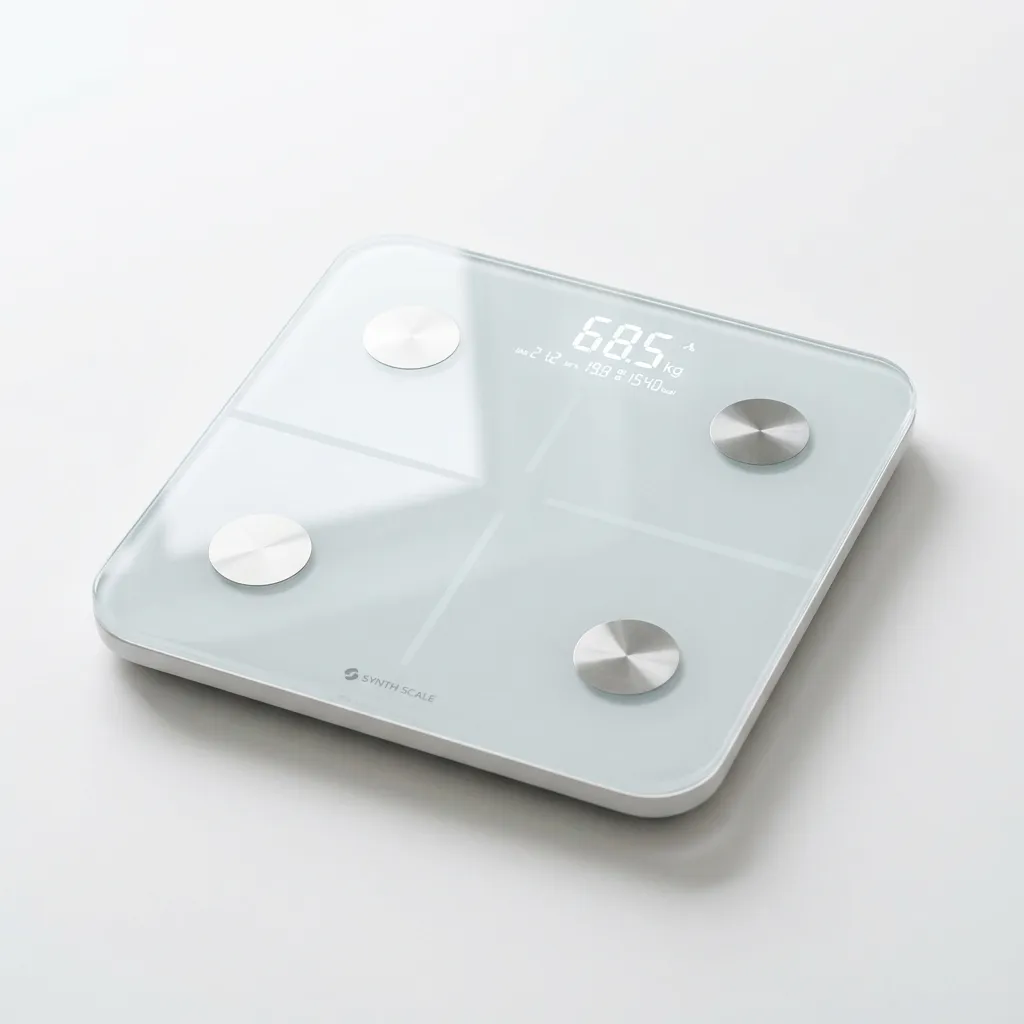
Smart Body Composition Scale
Advanced bioimpedance scale tracking muscle mass, body fat percentage, bone density and hydration.
- Tracks muscle mass & visceral fat
- Wireless sync with health apps
FAQ
Are more expensive biomarker panels always better?
No. The value depends on whether the signals are valid, understandable and actionable for your particular situation.
Which markers most often make sense to start with?
For many, blood pressure, waist circumference, glucose control, lipid profile and functional signals such as capacity or strength are a better first layer than very advanced panels.
When do biological age tests make sense?
Typically as an extra layer for users who already work structured with the basic markers and have a plan for follow-up.
Can wearables replace classic biomarkers?
No. Wearables are great for trends and daily feedback, but they don't replace blood pressure, glucose, blood tests or clinical assessment.
What is the most important question before a new measurement?
Whether the result will change a concrete next step. If not, the timing or value of the measurement is probably weak.
Sources and References
- [1]
- [2]
- [3]
- [4]
Show all 5 sources (1 more)
- [5]
Editorial History
18. April 2026
First publication
Initial version was published as part of the precision medicine with introduction, takeaways, FAQ, and reference block.
18. April 2026
Medical review
Phrasing, caveats, and internal links were reviewed for clarity, consistency, and YMYL alignment.
4. July 2026
Latest update
Biomarkers you can act on received updated metadata, reference outputs, and improved decision-support structure.

Medical Review
Medical Review and Update Process
This article has been medically reviewed by Vadim Doroshenko with a focus on clinical accuracy, sources, disclaimers, and whether the conclusions still align with current scientific evidence.

Editorial Profile
Borys Viktorovytj Riabtsev
Borys Viktorovytj Riabtsev publishes Longevity Lab as a research-backed information project on precision medicine, metabolic health, and healthy aging, utilizing rigorous sources, independent medical review, and objective YMYL communication.