Key takeaways
- CGM without diabetes provides the most value as a short learning window with a specific question and a plan for what you want to test.
- The first 14 days often show more about meal timing, sleep and behavior than about disease or overall metabolic risk.
- Large fluctuations after late meals, poor sleep or stress are not automatically signs of insulin resistance or the need for GLP-1.
- Use the CGM as feedback for adjustments and better questions, not as a diagnostic machine.
Medical disclaimer: Content is for informational purposes and does not replace medical advice.
What you typically see in the first 14 days
Most people do not learn most from single curves, but from repetitions. A CGM typically shows which meals, times and routines produce calmer or more agitated patterns over several days. It is far more useful than staring at a single peak and thinking that it alone says something decisive about health. Stelo by Dexcom Stelo by Dexcom PMID 37961419
For many, the greatest value lies in seeing how the same type of breakfast, late dinner, a short walk or a night of poor sleep affects the curve. It gives a more realistic picture of everyday response than lab numbers alone, but it is still a behavioral tool and not a diagnosis. Stelo by Dexcom Stelo by Dexcom PMID 37961419
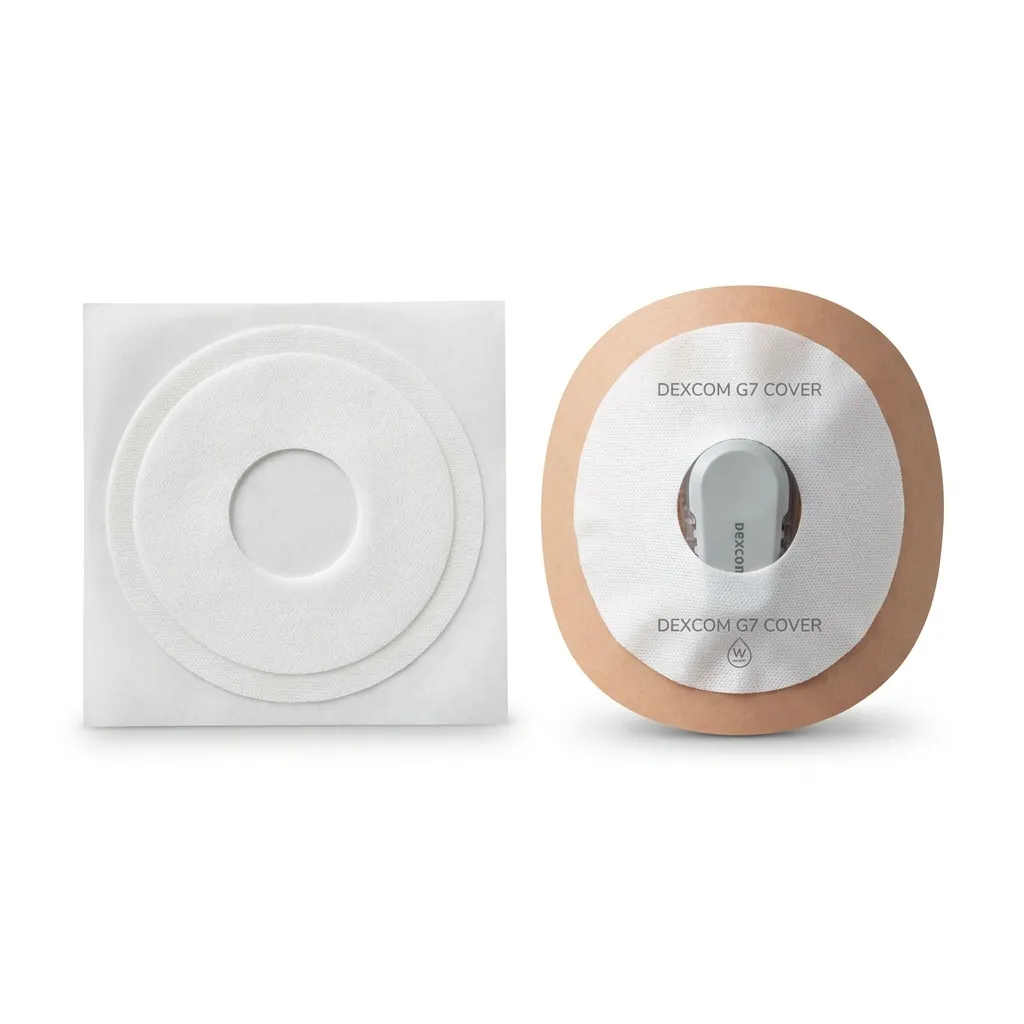
Waterproof Sensor Covers for Dexcom G7 & CGM
Waterproof and breathable patches to protect continuous glucose monitors during exercise and bathing.
- Waterproof & sweatproof up to 14 days
- Hypoallergenic latex-free medical adhesive
Stress, lack of sleep and late meals can distort the picture
It is tempting to compare all days directly, but the curve is easily influenced by the context. Days with less sleep, higher stress or late and large dinners can result in more restless profiles without this meaning that your entire metabolic setup has suddenly worsened. PMID 37961419 PMID 36790875 PMID 41355298
Therefore, a 14-day period should ideally be used as a small observation window with roughly similar comparisons. If you compare a quiet weekday with a travel day, a five-hour night or a late-night takeaway, you should expect more noise in the signal. PMID 37961419 PMID 36790875 PMID 41355298
What might be useful to adjust
A CGM is most useful when used for small, deliberate adjustments. It can be meal composition, timing or movement right after a meal. The practical strength lies in testing one thing at a time and seeing if the pattern repeats itself. Stelo by Dexcom PMID 37961419 PMID 38732543
This is also where CGM can become more valuable than just another dashboard. If you are working with appetite, weight, insulin resistance or metabolic syndrome, the sensor can be a way to see if specific everyday measures actually do something about your patterns. Stelo by Dexcom PMID 37961419 PMID 38732543
What you cannot conclude on your own
A CGM curve alone cannot tell you if you have diabetes, insulin resistance or need for GLP-1. It can show dynamics, timing and variation, but must be seen alongside symptoms, HbA1c, fasting glucose, body composition and the wider clinical context. Stelo by Dexcom PMID 36790875 PMID 41355298
The most common overreaction is to turn any peak into a danger signal. However, for healthy and fit people, it is completely normal and physiologically expected for glucose levels to rise briefly to upwards of 140 mg/dL (7.8 mmol/L) after a meal – this is a healthy biological response, not a sign of disease. The next mistake is the opposite: seeing a few good days and thinking that all metabolic issues are thus settled. Both parts are safer paths to over-interpretation than to insight. Stelo by Dexcom PMID 36790875 PMID 41355298
| Continuous Glucose Observation | Clinical Utility & Application | Inappropriate Standalone Use |
|---|---|---|
| Postprandial Glycemic Excursion (> 7.8 mmol/L) | Identifies high-glycemic meals, individual carbohydrate intolerance, and food sequencing needs | Cannot formally diagnose type 2 diabetes without laboratory oral glucose tolerance or HbA1c |
| Nocturnal Hypoglycemic Dips (< 3.9 mmol/L) | Detects compression lows (sensor pressure during sleep) or late-night alcohol/exercise rebounds | Do not treat transient asymptomatic nocturnal drops with rapid sugar unless symptomatic |
| Elevated Glycemic Variability (CV > 36%) | Reflects metabolic inflexibility, autonomic stress, and hyperinsulinemic volatility | CGM interstitial fluid readings lag blood capillary glucose by 5–15 minutes |
| Time in Range 3.9–7.8 mmol/L (TIR > 90%) | Confirms robust pancreatic beta-cell reserve and metabolic healthspan resilience | Data alone does not produce behavioral change without disciplined nutritional execution |
When CGM makes the most sense without diabetes
CGM makes the most sense for users with a concrete question and a willingness to change something. It can be meals, energy, appetite, suspicion of an unfortunate pattern or desire to see how everyday habits interact with glucose. Stelo by Dexcom Stelo by Dexcom PMID 37961419
The Dexcom Stelo takes up so much space because OTC-CGM has made the technology more accessible. But the official Stelo position is also clear: the sensor must not be used to make medical decisions on its own, and it is not an argument for skipping clinical assessment. Stelo by Dexcom Stelo by Dexcom PMID 37961419
Internal Further Reading
Read also in the same cluster
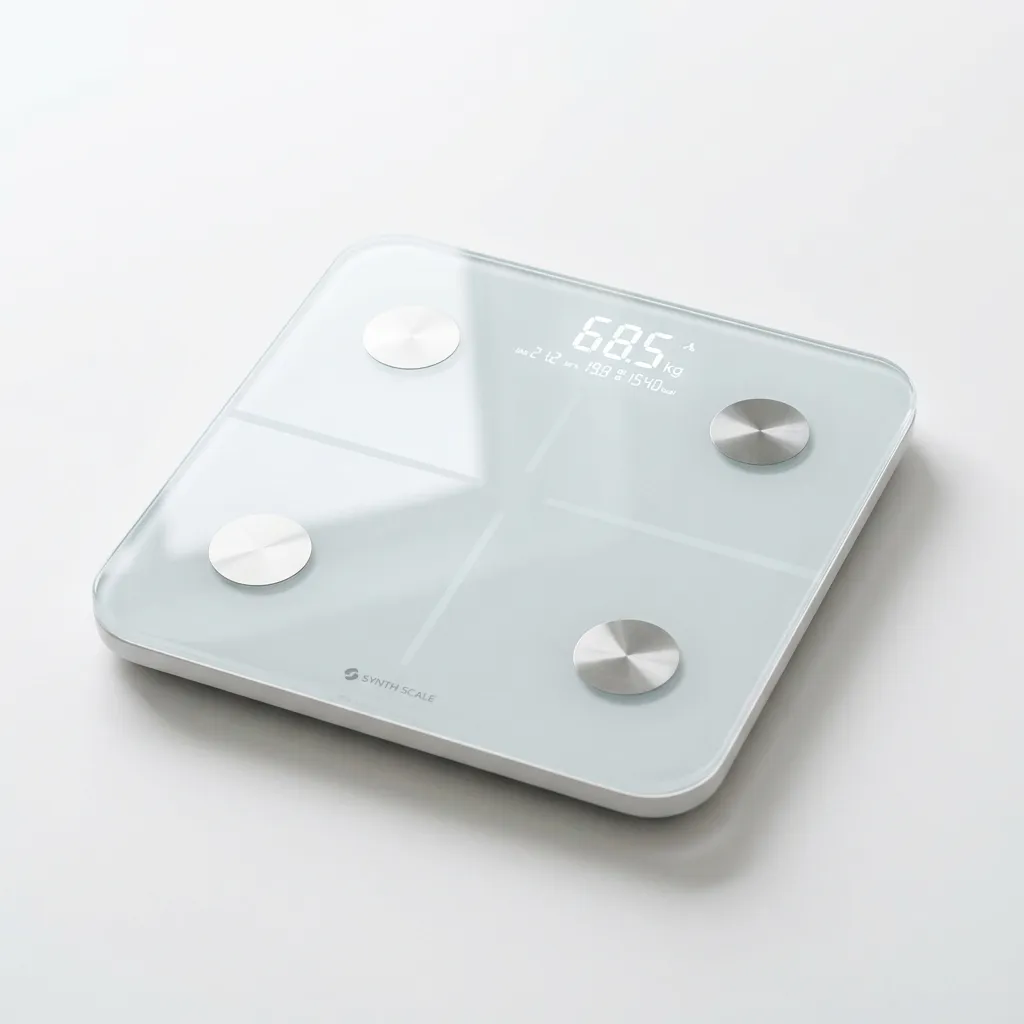
Smart Body Composition Scale
Advanced bioimpedance scale tracking muscle mass, body fat percentage, bone density and hydration.
- Tracks muscle mass & visceral fat
- Wireless sync with health apps
FAQ
Is 14 days enough to learn something useful?
For many, 14 days is enough to see the clearest patterns around meals, sleep and timing. It is less suitable as a final judgment on your metabolic health.
Should I avoid all glucose spikes?
No. The body is designed to handle fluctuations. The focus should be on patterns, symptoms, blood tests and overall metabolic health rather than perfect curves.
Is Dexcom Stelo OTC a medical diagnosis?
No. Dexcom Stelo and other OTC-CGM solutions can provide useful insights, but do not replace medical judgment, HbA1c, fasting glucose or other clinical data.
Can CGM tell about insulin resistance?
Not alone. CGM can show patterns that may be relevant to take further, but insulin resistance is assessed more broadly than through a sensor alone.
Is CGM helpful if I am considering GLP-1 or other metabolic interventions?
It can be useful as behavioral feedback about meals, timing and appetite patterns, but CGM does not select treatment alone and does not replace the wider assessment.
Is a sensor better than regular blood tests?
No. The two things solve different tasks. CGM shows dynamics over time, while blood tests provide a more traditional clinical overview.
Sources and References
- [1]
- [2]
- [3]
- [4]
Editorial History
22. April 2026
First publication
Initial version was published as part of the metabolic health with introduction, takeaways, FAQ, and reference block.
11. June 2026
Medical review
Phrasing, caveats, and internal links were reviewed for clarity, consistency, and YMYL alignment.
5. July 2026
Latest update
CGM without diabetes for 14 days received updated metadata, reference outputs, and improved decision-support structure.

Medical Review
Medical Review and Update Process
This article has been medically reviewed by Vadim Doroshenko with a focus on clinical accuracy, sources, disclaimers, and whether the conclusions still align with current scientific evidence.

Editorial Profile
Borys Viktorovytj Riabtsev
Borys Viktorovytj Riabtsev publishes Longevity Lab as a research-backed information project on precision medicine, metabolic health, and healthy aging, utilizing rigorous sources, independent medical review, and objective YMYL communication.