Key takeaways
- Consumer genetic tests analyze SNPs — small variations that each have a small effect on disease risk.
- Most health results from genetic testing are risk assessments, not diagnoses—they say something about probability, not fate.
- Monogenic diseases (BRCA, HFE) have strong evidence but are rare. Most common diseases are polygenic and strongly influenced by lifestyle.
- The biggest value for most people is pharmacogenetics — insight into how your body responds to drugs.
Medical disclaimer: Content is for informational purposes and does not replace medical advice.
What a genetic test actually measures
When you buy a genetic test from companies like 23andMe, AncestryDNA or Danish providers, you typically get SNP genotyping — an analysis of hundreds of thousands of specific positions in your DNA where there are known genetic variations between people. A SNP is a single letter change in the DNA code: for example, some may have a C where others have a T at a given position. Each individual variant often has a very small effect, but together they can give a meaningful picture. PMID 32589994 PMID 32160082
It is important to understand that these tests do NOT sequence your entire genome. They look at preselected positions — like looking up an index instead of reading the whole book. Whole genome sequencing also exists, but typically costs 5-10 times more and requires specialized interpretation. Consumer tests are therefore a selection of the most well-researched variants. PMID 32589994 PMID 32160082
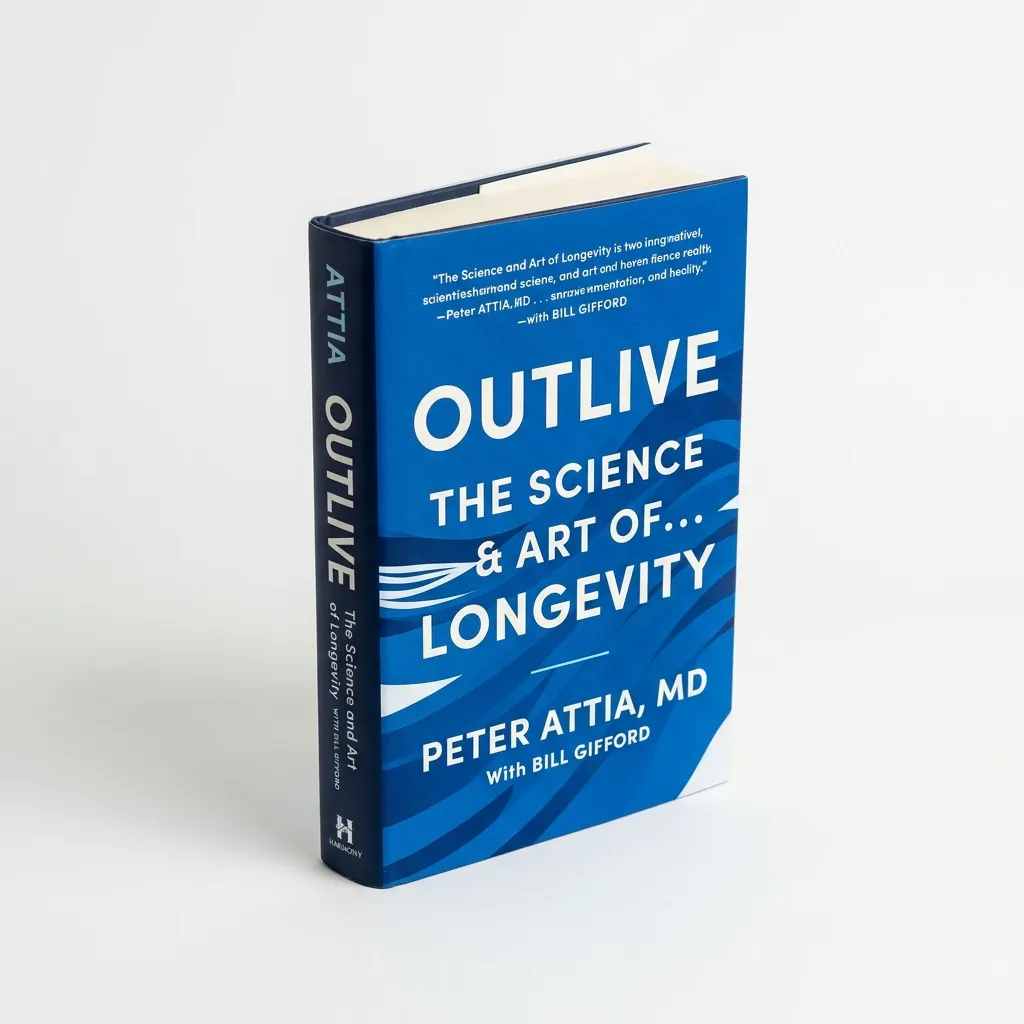
Outlive: The Science & Art of Longevity
Dr. Peter Attia's groundbreaking guide to preventive medicine, exercise for longevity, and healthy aging.
- Scientific framework for Medicine 3.0
- Actionable guide on sleep, exercise & nutrition
What the test can tell — and with what certainty
The most reliable results from consumer tests are about monogenic traits — traits determined primarily by a single gene. This includes things like lactose intolerance, alcohol turnover, earwax type and certain rare disease variants like HFE hemochromatosis. For these traits, the test is very precise because a single variant has a large effect. PMID 32589994 PMID 34188226 PMID 31329262
For most common diseases — type 2 diabetes, cardiovascular disease, Alzheimer's — the situation is more complex. Here, polygenic risk scores are used, which combine hundreds or thousands of variants into an overall risk profile. These scores can identify individuals at markedly increased risk, but rarely explain more than 10-20% of the total genetic risk. Lifestyle — diet, exercise, smoking, sleep — often has a greater absolute effect on risk than the genetic variants alone. PMID 32589994 PMID 34188226 PMID 31329262
| Genetic Test Category | Scope of Analysis | Actionable Clinical Utility | Limitations & Caveats |
|---|---|---|---|
| Monogenic Variant Screening | Single gene high-penetrance mutations (BRCA1/2, LDLR, APOE) | High — definitive diagnostic implications and tailored screening schedules | Only applies to specific inherited mutations; does not capture general polygenic disease |
| Polygenic Risk Scores (PRS) | Genome-wide statistical aggregation of millions of common SNPs | Moderate — stratifies lifetime risk for coronary artery disease, T2D, and breast cancer | Probabilistic rather than deterministic; lifestyle heavily modulates final clinical phenotype |
| Pharmacogenomics (PGx) | Enzyme polymorphisms governing drug metabolism (CYP2D6, CYP2C19) | Very high — avoids adverse drug reactions and optimizes psychiatric and cardiac dosing | Underutilized in standard care; requires specialized physician interpretation |
| Direct-to-Consumer Lifestyle Genetics | Nutrigenomics and fitness gene panels (ACTN3, MTHFR) | Low to moderate — interesting for personal curiosity but rarely changes baseline advice | Frequently over-hyped by commercial marketing with weak independent validation |
Pharmacogenetics — the most practical application
For many, pharmacogenetics is the most directly applicable part of a genetic test. It's about how your genes affect your body's metabolism of medicine. For example, around 7-10% of the Danish population have a genetic variant that makes them slow metabolizers of clopidogrel — a blood-thinning drug given after blood clots. These people have a markedly worse effect of the medicine and should have an alternative treatment. PMID 32589994 PMID 32160082
Other examples include warfarin dosing, statin side effects, and codeine turnover. These are areas where genetic information can have direct clinical significance — and where several Danish hospitals already use pharmacogenetic testing before certain treatments. If you take regular medications, the pharmacogenetic portion of a consumer test may be the most actionable result. PMID 32589994 PMID 32160082
A large part of this turnover is controlled by the CYP450 enzyme system in the liver. Gene variations in e.g. CYP2D6 and CYP2C19 determine whether you are a slow, normal, or ultra-rapid metabolizer of many common medications, including antidepressants, pain relievers, and heart medications. Knowing your genetic status can help your doctor choose the right dose from the start and avoid serious side effects or a lack of therapeutic effect, which is one of the most concrete examples of personalized medicine today. PMID 32589994 PMID 32160082
What the test can't tell you
A genetic test cannot tell you how to eat, exercise or live. Most dietary and lifestyle recommendations based on genetics — nutrigenomics — have weak scientific evidence. A variant in the FTO gene can increase your statistical risk of being overweight by 20-30%, but this does not change the fact that caloric balance, protein intake and physical activity are the decisive factors. PMID 32589994 PMID 34188226 PMID 31329262
The test also cannot diagnose cancer, predict your biological age or tell you if you will get Alzheimer's. Even for APOE-e4 — the strongest genetic risk factor for Alzheimer's — there are people with two copies of the variant who never develop the disease, and people without the variant who do. Genes are probabilities, not fates. PMID 32589994 PMID 34188226 PMID 31329262
It is also crucial to distinguish between genetics (your static DNA) and epigenetics (how your genes are expressed). Your genetic code remains the same throughout your life, but lifestyle, stress, sleep and environmental influences continually change the epigenetic chemical markers on your DNA that turn the genes on and off. A genetic test gives you an overview of your biological potential and your innate weaknesses, but it cannot measure your current state of health or your biological aging rate — it requires other types of measurements such as epigenetic clocks (DNA methylation tests) or ongoing blood tests. PMID 32589994 PMID 34188226 PMID 31329262
Internal Further Reading
Read also in the same cluster

Smart Body Composition Scale
Advanced bioimpedance scale tracking muscle mass, body fat percentage, bone density and hydration.
- Tracks muscle mass & visceral fat
- Wireless sync with health apps
FAQ
Are 23andMe and similar tests reliable?
For monogenic properties and pharmacogenetics: yes. For polygenic disease risks: moderately reliable as a risk assessment but not as a diagnosis.
Can my insurance get access to my genetic data?
In Denmark, there is a ban on insurance discrimination based on genetic tests. Do not share data with third parties without reading the terms.
Is a genetic test relevant for my children?
For healthy children, genetic testing is generally not recommended — information about disease risks may do more harm than good before adulthood.
How much does a genetic test cost in Denmark?
Consumer tests: DKK 500-1,500. Whole-genome sequencing: DKK 5,000-15,000. Clinical testing via the doctor can be free if medically indicated.
Sources and References
- [1]
- [2]
- [3]
- [4]
Show all 5 sources (1 more)
- [5]
Editorial History
21. June 2026
First publication
Initial version was published as part of the precision medicine with introduction, takeaways, FAQ, and reference block.
21. June 2026
Medical review
Phrasing, caveats, and internal links were reviewed for clarity, consistency, and YMYL alignment.
21. June 2026
Latest update
Genetic tests — what can they actually tell you and what is pure hype received updated metadata, reference outputs, and improved decision-support structure.

Medical Review
Medical Review and Update Process
This article has been medically reviewed by Vadim Doroshenko with a focus on clinical accuracy, sources, disclaimers, and whether the conclusions still align with current scientific evidence.

Editorial Profile
Borys Viktorovytj Riabtsev
Borys Viktorovytj Riabtsev publishes Longevity Lab as a research-backed information project on precision medicine, metabolic health, and healthy aging, utilizing rigorous sources, independent medical review, and objective YMYL communication.