Key takeaways
- Good genetic screening is about decision support, not about fascination with DNA alone.
- Usefulness depends on the question, the target group and how the test is actually used afterwards.
- There is a big difference between clinically relevant findings and broad lifestyle genetics content without actionable value.
- A good test without good interpretation is still a bad experience.
Medical disclaimer: Content is for informational purposes and does not replace medical advice.
When genetic screening makes the most sense
Genetic screening makes the most sense when there is a concrete decision at the other end. This may be a family history of certain diseases, suspicion of a hereditary predisposition or the need for a more precise risk assessment in a clinical context. PMID 32423490 PMID 35156748
If, on the other hand, the question is just general curiosity, the gain is often less than the user imagines. It doesn't make the test useless, but it changes what you can reasonably expect. PMID 32423490 PMID 35156748
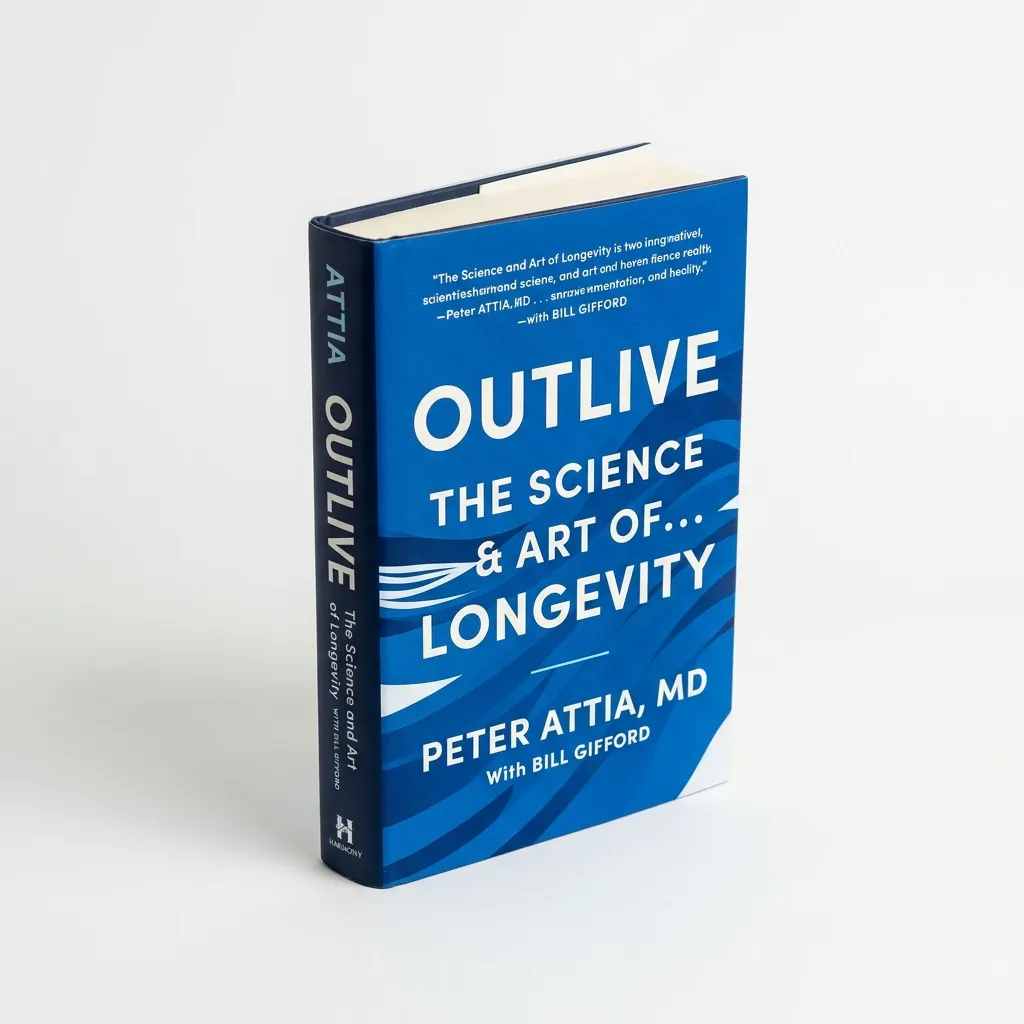
Outlive: The Science & Art of Longevity
Dr. Peter Attia's groundbreaking guide to preventive medicine, exercise for longevity, and healthy aging.
- Scientific framework for Medicine 3.0
- Actionable guide on sleep, exercise & nutrition
What is often exaggerated
Many direct-to-consumer offers sell the feeling of being exceptionally personalized. But in reality, many results are probabilistic, small in effect size, or difficult to translate into behavior. This applies especially to lifestyle products that promise very fine personal diet or exercise protocols based on limited evidence. PMID 35156748 PMID 37347242
Precision medicine is strongest when it combines genomics with multiomics, family history, blood tests, symptoms and clinical assessment. Genetics alone rarely provide the whole answer. PMID 35156748 PMID 37347242
How to evaluate an offer
The most important question is simple: What will I do differently if the result is positive, negative or unclear? If the answer is unclear, it is also unclear whether the test is worth the money. PMID 37347242 Nationalt Genom Center
At the same time, it is worth asking who interprets the result, which databases and populations the assessment is based on, and whether the findings can lead to overdiagnosis or unnecessary concern. PMID 37347242 Nationalt Genom Center
Three types of genetic offers
Not all genetic tests solve the same task. Therefore, it is useful to distinguish between clinical screening, risk profile and more lifestyle-oriented packages. Nationalt Genom Center PMID 27848917
The table shows why some tests provide more decision value than others. Nationalt Genom Center PMID 27848917
Genetics in the larger 2026 context
The convergence of AI, multiomics, genomics and clinical platforms is real, and it is driving some of the strongest innovation in the entire longevity economy. This is also why the topic is so important in the site structure. PMID 27848917
But the most valuable content isn't the one with the most promise. This is what helps the user understand when the test makes sense and when classic risk factors are still more important. PMID 27848917
Polygenic Risk Scores (PRS): Moving from research curves to cardiometabolic stratification
While classical medical genetics targets rare, high-penetrance single-gene mutations (such as BRCA1 or familial hypercholesterolemia), polygenic risk scores (PRS) aggregate millions of common small-effect genetic variants. Each individual SNP contributes marginally, but collectively they form a continuous statistical risk distribution. PMID 32423490 Nationalt Genom Center PMID 27848917
Landmark studies in The New England Journal of Medicine have demonstrated that individuals in the highest decile of cardiovascular PRS carry an event risk comparable to monogenic defects. Crucially, research also demonstrates that rigorous adherence to a healthy lifestyle (optimizing ApoB, blood pressure, and Zone 2 exercise) cuts excess cardiovascular risk by half even in the highest genetic tier. PMID 32423490 Nationalt Genom Center PMID 27848917
PRS is consequently not a biological predestination, but a powerful risk filter that informs how proactively and early preventative lifestyle and clinical measures should be deployed. PMID 32423490 Nationalt Genom Center PMID 27848917
Pharmacogenomics (PGx) and clinical medication safety
The most directly actionable branch of personal genomics today is pharmacogenomics (PGx) — understanding how hepatic cytochrome P450 enzymes and cellular drug transporters process pharmaceuticals. PMID 35156748 Nationalt Genom Center
A genetic variant in the SLCO1B1 transporter, for instance, drastically increases the incidence of statin-induced myopathy under simvastatin therapy, making rosuvastatin or pravastatin the evidence-based alternative. Similarly, impaired CYP2C19 function prevents conversion of the prodrug clopidogrel into its active antiplatelet form. PMID 35156748 Nationalt Genom Center
Pre-emptive PGx screening empowers patients and clinicians to avoid severe adverse drug reactions and optimize pharmacological dosages from the very first prescription. PMID 35156748 Nationalt Genom Center
Sequencing technologies and clinical validity: Navigating your options
When evaluating personal genetic testing, understanding technical distinctions between platforms is essential. Consumer direct-to-consumer services typically utilize low-cost microarray SNP chips, whereas clinical precision medicine relies on high-throughput Next-Generation Sequencing (NGS). PMID 32423490 PMID 37347242 Nationalt Genom Center
The table below breaks down the four core testing modalities, their diagnostic coverage, and their practical boundaries. PMID 32423490 PMID 37347242 Nationalt Genom Center
| Modality | Genomic Coverage | Clinical Utility | Limitations & Boundaries |
|---|---|---|---|
| Targeted SNP Chip | ~0.1% of genome (selected predefined SNPs) | Direct-to-consumer health reports, ancestry | High false-positive rate for rare alleles; cannot sequence unknown mutations. |
| Targeted Gene Panels | Specific disease genes (e.g. BRCA1/2, Lynch) | Clinical workup for known familial diseases | Blind to mutations located outside the specific targeted panel. |
| Whole Exome Sequencing (WES) | ~1-2% of genome (all protein-coding exons) | Diagnostic investigations of rare inherited disorders | Omits non-coding regulatory introns and deep structural variations. |
| Whole Genome Sequencing (WGS) | >99% of genome (all coding & non-coding DNA) | Comprehensive precision medicine & research | Substantial data volume, frequent variants of uncertain significance (VUS), priced €700-€2,000. |
Internal Further Reading
Read also in the same cluster

Smart Body Composition Scale
Advanced bioimpedance scale tracking muscle mass, body fat percentage, bone density and hydration.
- Tracks muscle mass & visceral fat
- Wireless sync with health apps
FAQ
Is genetic screening relevant for everyone?
No. The relevance depends on the question, family history, risk profile and whether there is a decision to be made based on the answer.
Can genetic tests replace blood tests and clinical assessment?
No. Genetics shows predisposition, but not always your current biological state.
Why is multiomics so often mentioned together with genetics?
Because proteomics, metabolomics and other layers can make the assessment more dynamic and more relevant to the current physiology.
Which type of genetic test usually makes the most sense?
Typically the test that arises from a specific clinical or family question and which can change follow-up or screening.
Is lifestyle genetics a waste of time?
Not always, but the benefit is often less and more indirect than the marketing suggests. Therefore, expectations should be adjusted.
Sources and References
- [1]
- [2]
- [3]
- [4]
Show all 5 sources (1 more)
- [5]
Editorial History
15. April 2026
First publication
Initial version was published as part of the precision medicine with introduction, takeaways, FAQ, and reference block.
15. April 2026
Medical review
Phrasing, caveats, and internal links were reviewed for clarity, consistency, and YMYL alignment.
9. June 2026
Latest update
Genetic screening in 2026 received updated metadata, reference outputs, and improved decision-support structure.

Medical Review
Medical Review and Update Process
This article has been medically reviewed by Vadim Doroshenko with a focus on clinical accuracy, sources, disclaimers, and whether the conclusions still align with current scientific evidence.

Editorial Profile
Borys Viktorovytj Riabtsev
Borys Viktorovytj Riabtsev publishes Longevity Lab as a research-backed information project on precision medicine, metabolic health, and healthy aging, utilizing rigorous sources, independent medical review, and objective YMYL communication.