Key takeaways
- HbA1c is best at seeing a long-term glucose pattern, but can mask fluctuations.
- Fasting glucose is simple and clinically known, but only captures a fasting moment.
- CGM provides more context about meals and behavior, but measures interstitial glucose and must be interpreted cautiously.
- If there are symptoms, high risk, or conflicting data, clinical judgment is more important than multiple dashboards.
Medical disclaimer: Content is for informational purposes and does not replace medical advice.
Why the three measurements are not competitors
The most important shift is to see HbA1c, fasting glucose and CGM as three different lenses. HbA1c calms the picture by aggregating glucose impact over several months. Fasting glucose narrows the picture by asking what the level looks like after a night without food. CGM broadens the picture by showing reactions over the day. PMID 30482642 PMID 33139886 PMID 34101673
Therefore, the conclusion is easily wrong if you expect one measurement to replace the others. A normal HbA1c can coexist well with large meal fluctuations. A single fasting glucose can be affected by sleep, stress and timing. A CGM curve can look dramatic without signifying disease. PMID 30482642 PMID 33139886 PMID 34101673
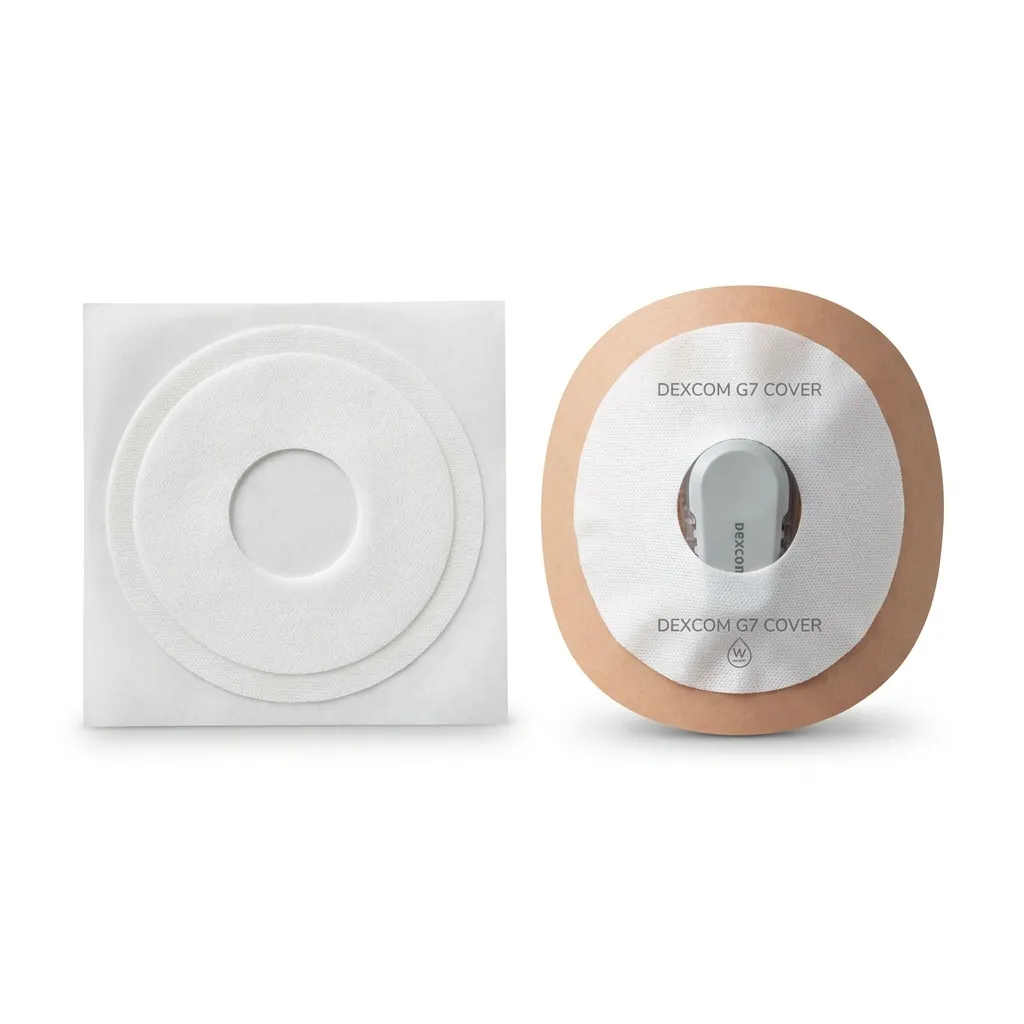
Waterproof Sensor Covers for Dexcom G7 & CGM
Waterproof and breathable patches to protect continuous glucose monitors during exercise and bathing.
- Waterproof & sweatproof up to 14 days
- Hypoallergenic latex-free medical adhesive
When HbA1c makes the most sense
HbA1c is useful when the question is long-term: is the glucose load overall normal, in the prediabetes range or in the diabetes range? This is precisely why HbA1c is used so much in clinical guidelines. It is a stable starting point, especially when combined with risk factors, symptoms and other blood tests. PMID 30482642 PMID 33139886
The limitation is that the average can hide variation. Two people can have approximately the same HbA1c, but very different curves in everyday life. Therefore, HbA1c is best as a baseline and follow-up, not as the only explanation for energy, hunger, meal response or performance. PMID 30482642 PMID 33139886
When fasting glucose makes the most sense
Fasting glucose is a sober and practical signal. It shows where the glucose level is after a period without food, and is therefore closely related to basal metabolic regulation. Together with HbA1c, lipids, blood pressure and waist circumference, it can give a solid first picture. PMID 30482642 PMID 33139886
But fasting glucose is still a snapshot. A bad night, illness, moderate alcohol, late dinner or stress can shift the number. Therefore, repetition and context are often more important than over-interpreting a single measurement. PMID 30482642 PMID 33139886
When CGM actually adds something
CGM makes the most sense when you have a specific question: do I react differently to a late dinner, sleep deprivation, stress, alcohol, zone 2 exercise, or a particular breakfast? In that situation, the curve may show a pattern that HbA1c and fasting glucose are not designed to show. PMID 34101673 Dansk Selskab for Almen Medicin (DSAM) PMID 30626854
But CGM must be kept in its role. The sensor measures glucose in interstitial fluid, and the numbers may differ from a blood glucose measurement, especially when glucose changes rapidly. If symptoms and sensor do not match, or if data is to be used for medical decisions, a health professional must enter the picture. PMID 34101673 Dansk Selskab for Almen Medicin (DSAM) PMID 30626854
A practical order
For most, the most robust sequence is simple: start with classic blood tests and risk factors, use CGM if you lack everyday dynamics, and assemble the results into a clinical framework if something looks worrisome. It's less spectacular than a sensor narrative, but far more useful. PMID 30482642 PMID 33139886 PMID 30626854
The goal is not to self-diagnose, but to provide a solid foundation for asking the right questions with your doctor and avoiding unnecessary concern over an isolated number. PMID 30482642 PMID 33139886 PMID 30626854
HbA1c Mechanics and Pitfalls: Why Averages Can Deceive
Glycated hemoglobin (HbA1c) represents the clinical gold standard for diagnosing type 2 diabetes (HbA1c >= 48 mmol/mol or >= 6.5%) and prediabetes (42–47 mmol/mol or 5.7–6.4% per Danish and international guidelines). HbA1c quantifies the fraction of erythrocyte hemoglobin subjected to non-enzymatic ketoamine glycation over the red blood cell lifespan, delivering a weighted retrospective average of circulating glucose over the preceding 8 to 12 weeks. PMID 30482642 PMID 33139886 Dansk Selskab for Almen Medicin (DSAM)
However, HbA1c harbors substantial diagnostic blind spots. First, its validity presupposes an invariant erythrocyte turnover rate of approximately 120 days. Pathophysiological shifts in red cell kinetics — including latent iron deficiency, occult hemolytic anemia, hemoglobinopathies, or recent blood donation — skew HbA1c upward or downward independent of actual glycemia. Second, HbA1c is a blunt arithmetic mean: An individual with steady, flat glucose levels at 5.5 mmol/L can manifest the identical HbA1c as someone oscillating between severe 3.0 mmol/L troughs and 11.5 mmol/L postprandial excursions, despite the latter enduring severe oxidative stress and endothelial injury. PMID 30482642 PMID 33139886 Dansk Selskab for Almen Medicin (DSAM)
Fasting Plasma Glucose and Hepatic Gluconeogenesis: The Silent Blind Spot
A conventional fasting plasma glucose (FPG) test (venous draw following an 8-hour fast, reference normal < 6.1 mmol/L; impaired fasting glucose IFG 6.1–6.9 mmol/L) evaluates hepatic glucose output (gluconeogenesis and glycogenolysis) regulated by basal beta-cell insulin secretion. PMID 30482642 PMID 34101673 Dansk Selskab for Almen Medicin (DSAM)
In the early pathogenesis of metabolic syndrome and insulin resistance, skeletal muscle tissue exhibits early insulin insensitivity while the liver remains capable of suppressing nocturnal glucose output. Consequently, fasting glucose frequently remains impeccably normal for years while postprandial excursions are already pathological. Furthermore, acute sleep disruption, emotional stress, and the dawn phenomenon (cortisol-mediated morning hepatic output) can induce transient elevations unrelated to underlying metabolic flexibility. PMID 30482642 PMID 34101673 Dansk Selskab for Almen Medicin (DSAM)
| Diagnostic Modality | Physiological Target | Clinical Reference (DSAM) | Optimal Longevity Target | Primary Clinical Limitation |
|---|---|---|---|---|
| HbA1c (Glycated Hb) | 8–12 week mean erythrocyte glycation | <42 mmol/mol (normal) | <34–36 mmol/mol (5.3–5.4%) | Conceals glycemic variability; distorted by red cell turnover |
| Fasting Glucose (FPG) | Hepatic gluconeogenesis post-fast | <6.1 mmol/L (normal) | 4.2–5.2 mmol/L | Isolated snapshot; blind to postprandial muscle insulin resistance |
| Continuous Monitor (CGM) | Dynamic glucose kinetics in interstitial fluid | TIR (3.9–10.0) >70% | TITR (3.9–6.7) >85–90%, % CV <20–25% | Out-of-pocket cost; 5–15 min physiological lag time |
The Metabolic Triad: Implementing an Integrated Protocol
In precision longevity medicine, these three diagnostic modalities should not be treated as competitors, but as complementary layers of a diagnostic pyramid: PMID 30482642 PMID 34101673 PMID 30626854
1. **Annual Venous Laboratory Workup**: Order fasting glucose, HbA1c, and fasting serum insulin to calculate the **HOMA-IR** score. Maintaining HOMA-IR below 1.0–1.5 verifies authentic whole-body insulin sensitivity. 2. **Periodic CGM Deep-Dive**: Deploy a 14-day continuous biosensor once or twice annually to assess glycemic variability (% CV) and identify dietary combinations that provoke excessive glucose spikes. 3. **Targeted Behavioral Optimization**: Leverage continuous data to time postprandial mobility — a brisk 10–15 minute walk immediately after carbohydrate-containing meals stimulates insulin-independent GLUT4 translocation, blunting postprandial glycemic excursions. PMID 30482642 PMID 34101673 PMID 30626854
Internal Further Reading
Read also in the same cluster
Smart Body Composition Scale
Advanced bioimpedance scale tracking muscle mass, body fat percentage, bone density and hydration.
- Tracks muscle mass & visceral fat
- Wireless sync with health apps
FAQ
Is HbA1c better than CGM?
No, they show different things. HbA1c shows a long-term average, while CGM shows everyday dynamics and variation.
Can CGM replace fasting glucose?
Not as a clinical blood test. CGM can provide additional context, but fasting glucose is still a standardized blood-based signal.
Can I use a CGM to diagnose insulin resistance?
No. CGM can show patterns, but insulin resistance is best assessed along with blood tests, risk factors and clinical context.
When is it enough to start with HbA1c and fasting glucose?
Often when the goal is screening or basic follow-up. CGM becomes most relevant if you want to understand meals, timing and variation.
Can one have prediabetes despite a completely normal HbA1c reading?
Yes. Early metabolic impairment frequently manifests as exaggerated postprandial glucose spikes or elevated fasting insulin (hyperinsulinemia) long before cumulative erythrocyte glycation drives the HbA1c test above clinical cutoffs.
Why do iron deficiency or blood donation alter HbA1c measurements?
HbA1c measures hemoglobin glycation across the red cell lifespan. Iron deficiency extends erythrocyte age, causing falsely elevated HbA1c. Conversely, recent blood donation increases the proportion of young erythrocytes, yielding artificially low HbA1c values.
Which single test is best for monitoring long-term metabolic health?
No single test suffices in isolation. The most rigorous protocol pairs annual venous HbA1c and fasting glucose/insulin (to calculate HOMA-IR) with intermittent 14-day CGM snapshots to quantify real-world glycemic variability and postprandial excursions.
Sources and References
- [1]
- [2]
- [3]
- [4]
Show all 5 sources (1 more)
- [5]
Editorial History
9. June 2026
First publication
Initial version was published as part of the metabolic health with introduction, takeaways, FAQ, and reference block.
9. June 2026
Medical review
Phrasing, caveats, and internal links were reviewed for clarity, consistency, and YMYL alignment.
9. June 2026
Latest update
HbA1c vs fasting glucose vs CGM received updated metadata, reference outputs, and improved decision-support structure.

Medical Review
Medical Review and Update Process
This article has been medically reviewed by Vadim Doroshenko with a focus on clinical accuracy, sources, disclaimers, and whether the conclusions still align with current scientific evidence.

Editorial Profile
Borys Viktorovytj Riabtsev
Borys Viktorovytj Riabtsev publishes Longevity Lab as a research-backed information project on precision medicine, metabolic health, and healthy aging, utilizing rigorous sources, independent medical review, and objective YMYL communication.