Key takeaways
- CGM can make sense as a short feedback layer during a GLP-1 course if the question is concrete.
- The sensor cannot be used to decide on medication, dose or treatment needs alone.
- In the case of symptoms, medication adjustment or diabetes treatment, clinical follow-up must govern.
- For many, HbA1c, fasting glucose, weight trend, muscle mass, protein and side effects are more important than several glucose curves.
Medical disclaimer: Content is for informational purposes and does not replace medical advice.
Why the combination seems logical
GLP-1 drugs are used, among other things, in type 2 diabetes and chronic weight management, and they affect appetite, weight and glucose regulation. CGM shows glucose curves in everyday life. It is therefore understandable that many want to pair the two together to see what happens after meals. PMID 29364588 PMID 23727914 PMID 31177183
But a logical combination is not automatically a necessary combination. If the goal of the GLP-1 course is clinical treatment, the everyday curves of the sensor are just an extra layer. Treatment choices and medical adjustments must not be moved from practitioner to app. PMID 29364588 PMID 23727914 PMID 31177183
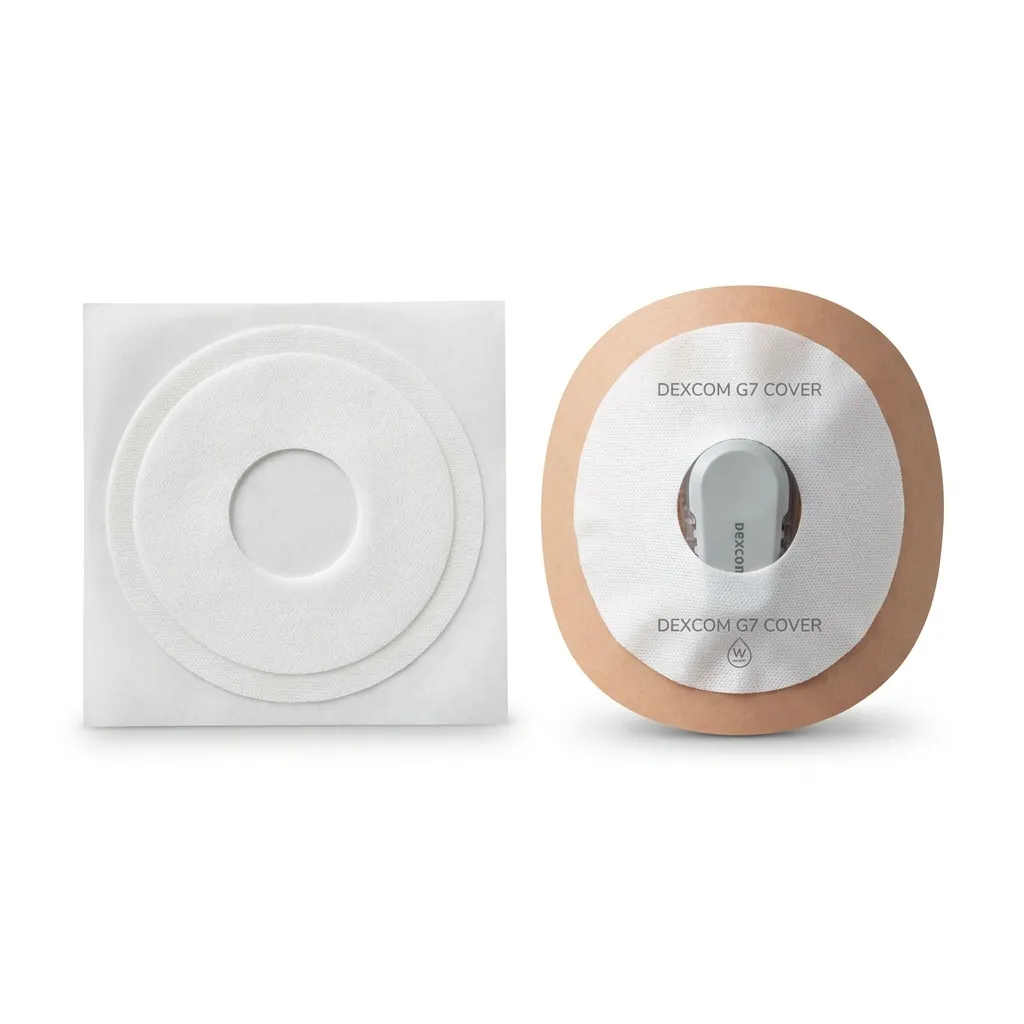
Waterproof Sensor Covers for Dexcom G7 & CGM
Waterproof and breathable patches to protect continuous glucose monitors during exercise and bathing.
- Waterproof & sweatproof up to 14 days
- Hypoallergenic latex-free medical adhesive
When CGM can make sense
CGM is most relevant if there is a specific question. For example: is dinner very late, liquid calories cause unexpected spikes, glucose variability decreases when meals are smaller, or are certain symptoms related to meal timing? PMID 23727914 PMID 33567185 PMID 37060934
In that type of use, the sensor is a reflection tool. It can help to structure the conversation with the therapist, dietician or coach. It is not proof that GLP-1 works or does not work. PMID 23727914 PMID 33567185 PMID 37060934
When CGM is not the most important thing
During a GLP-1 course, there are often other signals that mean more than a sensor: side effects, weight rate, muscle mass, protein intake, strength training, blood pressure, HbA1c, fasting glucose and whether the treatment suits the person at all. PMID 29364588 PMID 31177183 PMID 37060934
It is also important to distinguish between approved medicines and unauthorized or compounded products. In 2026, the FDA has flagged concern for unapproved GLP-1 products and misleading claims. A CGM cannot make an unsafe product safe. PMID 29364588 PMID 31177183 PMID 37060934
The safe conversation with the therapist
If you are using CGM during a GLP-1 course, the most useful printout is not a scary spike, but a brief summary: what situations are recurring, what has been tested, and what would you like to clarify? It makes data more clinically useful and less emotional. PMID 23727914 PMID 37060934
The same applies if symptoms do not match the sensor's numbers. Stelo and other CGM sources themselves point out that symptoms should not be ignored and that a blood glucose meter or health professional may be relevant in certain situations. PMID 23727914 PMID 37060934
Conclusion
GLP-1 and CGM can make sense together, but only when CGM is used as a bounded feedback layer. If the sensor becomes a treatment judge, it has been used incorrectly. PMID 29364588 PMID 23727914 PMID 37060934
The best framing is therefore simple: CGM can make some conversations more concrete. It cannot replace a doctor, diagnosis, medication safety or basic follow-up. PMID 29364588 PMID 23727914 PMID 37060934
Physiological dynamics: How GLP-1 alters CGM glucose profiles
GLP-1 receptor agonists deliver two profound physiological effects on metabolic control: they delay gastric emptying rates and stimulate strictly glucose-dependent pancreatic beta-cell insulin release while suppressing hepatic glucagon secretion. PMID 29364588 PMID 23727914 PMID 31177183
On a continuous glucose monitor (CGM), this produces a striking transformation in postprandial glucose curves. Where carbohydrate ingestion previously triggered a sharp peak within 30 to 45 minutes, GLP-1 therapy flattens and elongates the curve across 2 to 3 hours. Glycemic variability (%CV) routinely drops below 25-30%, and Time-in-Range (3.9–10.0 mmol/L) climbs above 95%. PMID 29364588 PMID 23727914 PMID 31177183
Continuous sensors thus offer vivid visual confirmation of pharmacologic stabilization, but curves must be interpreted through the lens of delayed gastric transit rather than instantaneous systemic clearance. PMID 29364588 PMID 23727914 PMID 31177183
Sensor myths, reactive hypoglycemia, and compression lows
Non-diabetic users often experience alarm when their sensor reports nocturnal readings dipping below 3.9 mmol/L (70 mg/dL). Differentiating between genuine hypoglycemia and sensor artifacts is critical. PMID 23727914 PMID 31177183 PMID 33567185
True clinical hypoglycemia is exceptionally rare with GLP-1 monotherapy because insulin secretion shuts down once circulating glucose approaches normal baseline levels. Furthermore, nocturnal drops into the 3.2–3.6 mmol/L range almost universally represent compression lows — mechanical pressure from lying on the sensor that temporarily displaces interstitial fluid away from the enzymatic filament. PMID 23727914 PMID 31177183 PMID 33567185
When low readings appear without adrenergic symptoms, users should verify with a capillary fingerstick glucometer before consuming rescue carbohydrates, avoiding unwarranted sugar intake. PMID 23727914 PMID 31177183 PMID 33567185
Protein pacing and nutrient density during GLP-1 hypophagia
The greatest long-term health risk during a GLP-1 protocol is rarely glycemic excursions, but rather uncalculated micronutrient malnutrition and skeletal muscle wasting driven by severe hypophagia. PMID 31177183 PMID 33567185 PMID 37060934
A completely flat CGM tracing can instill false complacency: stable glucose does not indicate metabolic success if daily dietary protein has collapsed below critical thresholds. CGM feedback is most useful to structure meal pacing and ensure adequate amino acid delivery around physical workouts. PMID 31177183 PMID 33567185 PMID 37060934
The table below outlines common CGM observations during GLP-1 therapy and their clinically grounded responses. PMID 31177183 PMID 33567185 PMID 37060934
| CGM Pattern on GLP-1 | Physiological Explanation | Recommended Action |
|---|---|---|
| Blunted spike following carbohydrate meal | Delayed gastric emptying paces glucose absorption over hours | Physiological expectation; avoid grazing or adding extra calories. |
| Abrupt nocturnal dip (<3.8 mmol/L) | Mechanical sensor compression against bed/arm (compression low) | Adjust sleeping posture; confirm with capillary fingerstick if symptomatic. |
| Zero postprandial variation | Heightened beta-cell sensitivity and minimal gastric flux | Focus on meeting leucine and protein targets (30-40 g) rather than glucose chasing. |
| Lightheadedness with normal CGM (5.0 mmol/L) | Frequently postural hypotension or dehydration rather than hypoglycemia | Increase fluids and electrolytes (sodium, potassium); monitor blood pressure. |
Internal Further Reading
Read also in the same cluster
Smart Body Composition Scale
Advanced bioimpedance scale tracking muscle mass, body fat percentage, bone density and hydration.
- Tracks muscle mass & visceral fat
- Wireless sync with health apps
FAQ
Should everyone on GLP-1 use CGM?
No. CGM can be useful for some specific questions, but many benefit more from classic follow-up, nutrition, strength training and blood tests.
Can CGM show whether GLP-1 is working?
Not alone. CGM can show glucose patterns, but efficacy and safety are assessed more broadly with clinical data, symptoms, weight trends and treatment goals.
Can I adjust the GLP-1 dose based on the CGM?
No. The medication dose must be assessed with the treating physician. Sensor output is not a stand-alone dose guide.
Is CGM more relevant in type 2 diabetes?
It may be, but it depends on treatment, risk and clinical goals. The practitioner should assess the need.
Can GLP-1 cause dangerous low blood sugar in non-diabetics?
No, when used as monotherapy in individuals without diabetes, the risk of severe hypoglycemia is negligible because GLP-1-induced insulin secretion is strictly glucose-dependent.
Should I wear a CGM throughout my entire GLP-1 journey?
No, a 2 to 4-week window is sufficient to observe meal pacing and tolerance. Prolonged continuous monitoring often adds unnecessary data anxiety without actionable benefit.
Why does my CGM alert with low glucose readings at night?
Most nocturnal low alerts are compression lows, caused by direct body pressure on the sensor during sleep that temporarily reduces interstitial fluid flow to the sensor filament.
Sources and References
- [1]
- [2]
- [3]
- [4]
Show all 5 sources (1 more)
- [5]
Editorial History
9. June 2026
First publication
Initial version was published as part of the metabolic health with introduction, takeaways, FAQ, and reference block.
9. June 2026
Medical review
Phrasing, caveats, and internal links were reviewed for clarity, consistency, and YMYL alignment.
9. June 2026
Latest update
GLP-1 and CGM received updated metadata, reference outputs, and improved decision-support structure.

Medical Review
Medical Review and Update Process
This article has been medically reviewed by Vadim Doroshenko with a focus on clinical accuracy, sources, disclaimers, and whether the conclusions still align with current scientific evidence.

Editorial Profile
Borys Viktorovytj Riabtsev
Borys Viktorovytj Riabtsev publishes Longevity Lab as a research-backed information project on precision medicine, metabolic health, and healthy aging, utilizing rigorous sources, independent medical review, and objective YMYL communication.