Key takeaways
- Longevity risk is not only about living longer, but about living longer with an unpredictable health profile and financial burden.
- The insurance and planning angle shows that longevity is also about institutions, risk and financial planning.
- It is relevant to readers who want to understand the interaction between healthspan, pension and private decisions.
- The subject is most useful when explained calmly, analytically and without financial doomsday rhetoric.
Medical disclaimer: Content is for informational purposes and does not replace medical advice.
What longevity risk actually means in practice
Longevity risk is not just about living long. It is about the uncertainty about how long you will be healthy, functional and financially self-supporting. Two people can live the same length of time, but have very different needs for treatment, care and income security along the way. OECD Danmarks Statistik & ATP
This is precisely the uncertainty that insurance, pensions and planning respond to. The risk lies not only in age, but in the variation between different health trajectories. OECD Danmarks Statistik & ATP
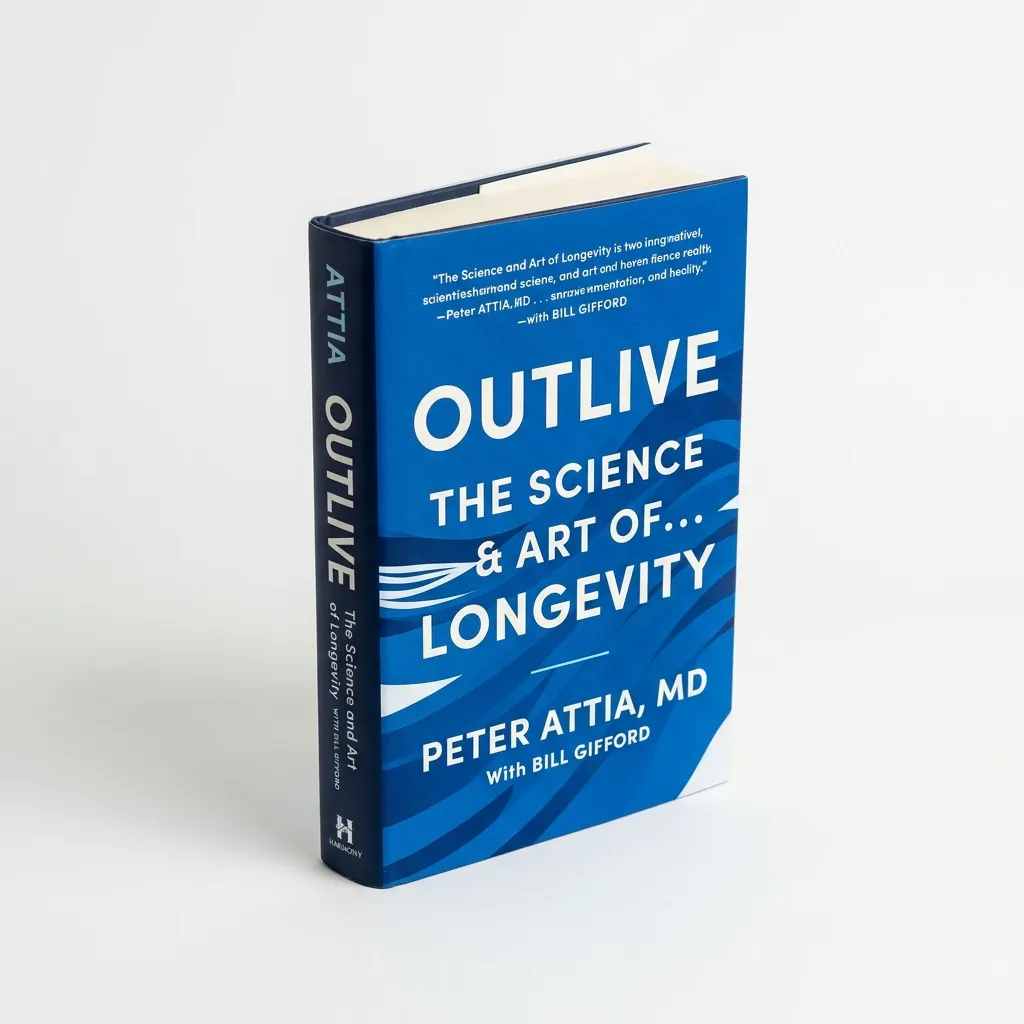
Outlive: The Science & Art of Longevity
Dr. Peter Attia's groundbreaking guide to preventive medicine, exercise for longevity, and healthy aging.
- Scientific framework for Medicine 3.0
- Actionable guide on sleep, exercise & nutrition
Why healthspan matters for the economy
Healthy aging is not just about quality of life. It also affects how long you can work, how much help you may need, and how resilient the private economy is to illness or loss of function. Danmarks Statistik & ATP Skattestyrelsen
Therefore, healthspan is economically important. If more years are lived with better function, the whole calculation looks different than if the extra years are primarily accompanied by a higher burden of disease. Danmarks Statistik & ATP Skattestyrelsen
Who should be interested in the topic already now
The topic is relevant to people in their 40s, 50s and 60s who want to plan more realistically for retirement, reserve capacity and future healthcare costs. It is also relevant for families who want to understand what good prevention and function actually mean in a longer life course. Skattestyrelsen Sygeforsikringen 'danmark'
You don't have to have a complicated financial product in mind to use the idea. Just seeing health as part of long-term planning makes for better decisions. Skattestyrelsen Sygeforsikringen 'danmark'
Think in scenarios, not scary images
It's easy to use longevity risk as disaster language, but it's rarely helpful. The more useful approach is to work with scenarios: what if function, mobility or chronic disease develops better or worse than expected? Sygeforsikringen 'danmark' PMID 34215890
That approach makes for calmer and better decisions than trying to predict everything. The goal is not fear, but better resilience over time. Sygeforsikringen 'danmark' PMID 34215890
Longevity risk in the pension landscape: Fixed-term vs lifetime annuities
In financial economics, longevity risk represents the distinct probability of outliving your accumulated private wealth, exhausting capital reserves while continuing to survive with escalating care needs. OECD Danmarks Statistik & ATP Skattestyrelsen
In defined-contribution structures, fixed-term payout plans (such as the Danish ratepension) distribute capital across a defined window of 10 to 30 years, terminating predictably between age 75 and 85. If an individual maintains high biological vitality into their nineties, this creates an acute financial cliff where liquid income suddenly drops. OECD Danmarks Statistik & ATP Skattestyrelsen
The structural hedge is the lifetime annuity (livsvarig livrente). By pooling mortality risk across a broad actuarial cohort, lifetime annuities redistribute the capital of those who pass away early to survivors (mortality credits). This guarantees non-expiring monthly cash flow whether a person lives to age 82 or 102. OECD Danmarks Statistik & ATP Skattestyrelsen
Termination of corporate health coverage upon retirement
Millions of professionals maintain comprehensive private health insurance funded entirely through corporate employers, providing swift private clinical access, physical therapy, and diagnostic scans. Upon formal retirement, this institutional safety net terminates abruptly. Sygeforsikringen 'danmark' PMID 34215890
Converting employer plans into individual private policies frequently triggers steep premium escalations and pre-existing condition exclusions. Consequently, establishing membership in independent supplementary health funds (such as Sygeforsikringen 'danmark' in Scandinavia) well prior to retirement age is essential. Sygeforsikringen 'danmark' PMID 34215890
Because supplemental health mutuals require clean health declarations at enrollment, securing coverage in one's forties or fifties safeguards against crushing out-of-pocket costs for prescription pharmaceuticals, dental reconstruction, and specialized rehabilitation in later decades. Sygeforsikringen 'danmark' PMID 34215890
Financial longevity architecture: Budgeting for healthspan vs lifespan
Sophisticated retirement models partition senescent life into three distinct spending horizons: The Active Phase (ages 65-75 with high discretionary travel and recreation), The Transition Phase (ages 75-85 with moderating physical capacity and home accessibility retrofits), and The Care Phase (ages 85+ with specialized private caregiving and medical co-payments). OECD PMID 34215890
The table below contrasts key financial instruments used to architect long-term resilience against longevity risk. OECD PMID 34215890
| Financial Vehicle | Strategic Role in Longevity | Key Advantages | Longevity Risk Exposure |
|---|---|---|---|
| Lifetime Annuity (Livrente) | Guaranteed foundational income hedge | Pays indefinitely until death; benefits from actuarial mortality pooling | Capital is illiquid; zero residual inheritance upon early death. |
| Fixed Payout Plan (Ratepension) | Active phase discretionary funding | Higher annual cash flow; unspent balances pass to heirs | Expires at age 80-85; creates a sudden income contraction thereafter. |
| Tax-Advantaged Cash Buffers | Liquid emergency fund for private care | No adverse impact on statutory public pension supplements | Subject to rapid depletion if major private surgeries are required. |
| Supplemental Health Mutuals | Co-pay protection for prescriptions & therapy | Substantial lifetime subsidies on pharmaceuticals & rehabilitation | Requires healthy status at entry; does not fund private inpatient care directly. |
Internal Further Reading
Read also in the same cluster

Smart Body Composition Scale
Advanced bioimpedance scale tracking muscle mass, body fat percentage, bone density and hydration.
- Tracks muscle mass & visceral fat
- Wireless sync with health apps
FAQ
What is longevity risk?
It is the risk and uncertainty associated with longer lifespans, uneven health outcomes and the financial consequences of that.
Why is the topic relevant for a health site?
Because longevity in 2026 is about biology, planning, institutions and social economy.
Who should be interested in longevity risk already now?
In particular, people in mid- or late career, families with a focus on retirement planning and readers who want to link health to long-term resilience can benefit from the concept.
Sources and References
- [1]
- [2]
- [3]
- [4]
Show all 5 sources (1 more)
- [5]
Editorial History
16. April 2026
First publication
Initial version was published as part of the precision medicine with introduction, takeaways, FAQ, and reference block.
16. April 2026
Medical review
Phrasing, caveats, and internal links were reviewed for clarity, consistency, and YMYL alignment.
4. July 2026
Latest update
Longevity risk insurance received updated metadata, reference outputs, and improved decision-support structure.

Medical Review
Medical Review and Update Process
This article has been medically reviewed by Vadim Doroshenko with a focus on clinical accuracy, sources, disclaimers, and whether the conclusions still align with current scientific evidence.

Editorial Profile
Borys Viktorovytj Riabtsev
Borys Viktorovytj Riabtsev publishes Longevity Lab as a research-backed information project on precision medicine, metabolic health, and healthy aging, utilizing rigorous sources, independent medical review, and objective YMYL communication.