Key takeaways
- Metformin is the best documented drug in longevity research beyond its diabetes indication.
- ITP data show extended lifespan in mice across genetics and the cow, but the effect size varies.
- Human data from cohort studies show lower overall mortality, but observational data cannot prove causation.
- Metformin affects AMPK, mTOR, inflammation and the gut flora — all relevant aging mechanisms.
- B12 monitoring and kidney function are necessary safety parameters for long-term use.
Medical disclaimer: Content is for informational purposes and does not replace medical advice.
How metformin entered the longevity debate
Metformin is a biguanide that has been used for type 2 diabetes since 1957. Because it is inexpensive, well-known, and has a solid safety profile, researchers have speculated for decades whether its mechanisms of action—specifically, activation of AMPK and inhibition of hepatic gluconeogenesis—might have broader antiaging effects. Wikipedia PMID 25041462 American Federation for Aging Research
A decisive turning point came in 2014, when Bannister et al. published a retrospective study showing lower all-cause mortality among diabetic patients on metformin therapy than among matched controls without diabetes. Since then, metformin has become the primary drug in the so-called geroscience approach: can we treat aging as a modifiable risk factor? Wikipedia PMID 25041462 American Federation for Aging Research
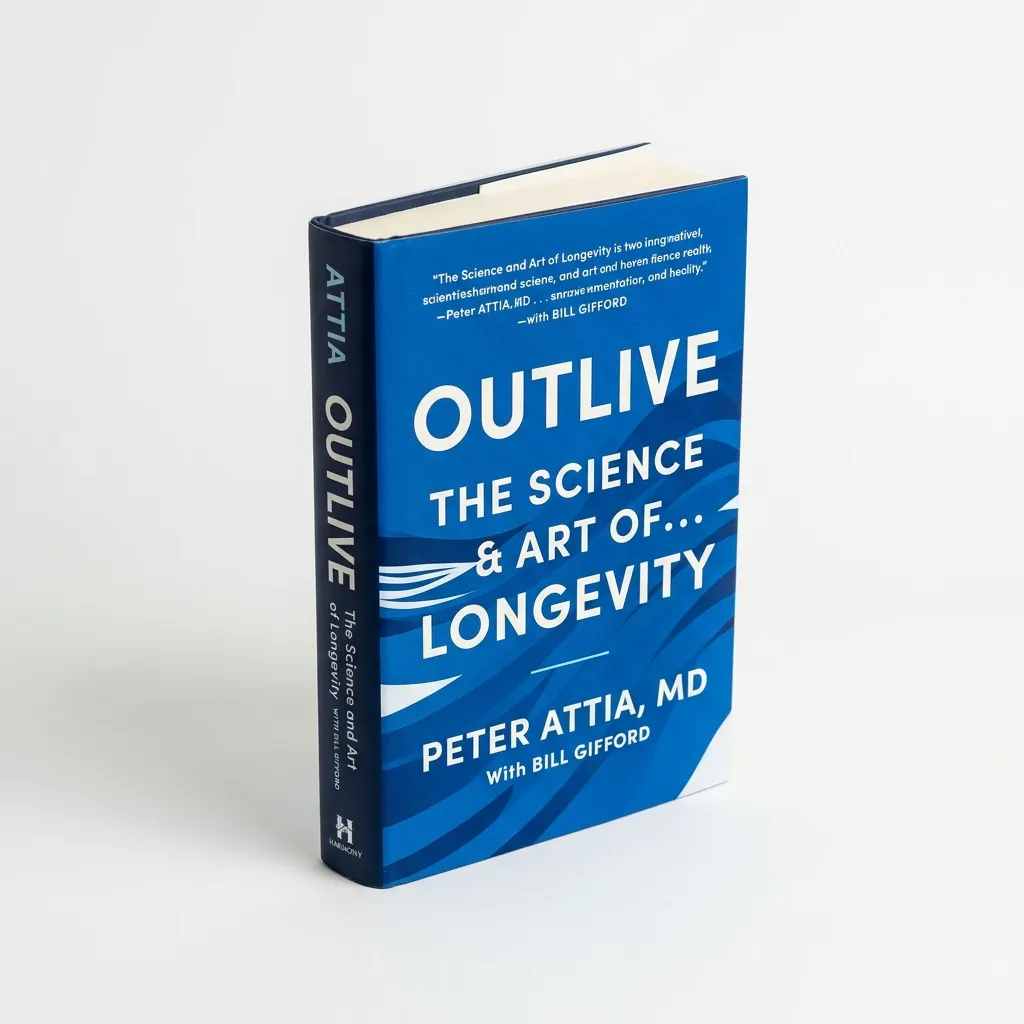
Outlive: The Science & Art of Longevity
Dr. Peter Attia's groundbreaking guide to preventive medicine, exercise for longevity, and healthy aging.
- Scientific framework for Medicine 3.0
- Actionable guide on sleep, exercise & nutrition
What ITP and preclinical studies show
The Interventions Testing Program (ITP) is an NIH-funded program that tests drugs in parallel on three independent strains of mice to avoid strain-specific false positives. Metformin was one of the first drugs to be tested under ITP. PMID 25041462 American Federation for Aging Research NIA Interventions Testing Program
The results from ITP show a moderate but consistent lifespan extension in mice, especially when metformin is given early in life. The effect varies between strains and is more pronounced in females. Most importantly: metformin extends healthspan — i.e. the period without age-related loss of function — more significantly than the total life span. PMID 25041462 American Federation for Aging Research NIA Interventions Testing Program
| Trial / Research Program | Model & Population | Primary Clinical Findings | Methodological Limitations |
|---|---|---|---|
| TAME Trial (Targeting Aging with Metformin) | Multi-center clinical trial in older adults without diabetes | Evaluates delayed onset of age-related chronic diseases (CVD, cancer, dementia) | Long-term endpoints still ongoing; requires sustained multi-year follow-up |
| UKPDS 34 / Observational Cohorts | Type 2 diabetes patients on metformin monotherapy | Statistically lower all-cause mortality and reduced cardiovascular events vs other therapies | Observational bias; confounded by glycemic improvements vs intrinsic anti-aging effects |
| Mechanistic Interventions (AMPK / mTOR) | Cellular and rodent longevity models | Direct activation of AMPK, mild complex I mitochondrial inhibition, and reduced mTORC1 | Dose translation to humans varies; potential blunting of aerobic exercise mitochondrial adaptations |
Documented mechanisms: AMPK, mTOR, inflammation and intestinal flora
Metformin has several overlapping mechanisms of action, which together make it relevant to aging biology. The primary mechanism is inhibition of complex I in the mitochondrial electron transport chain, leading to a mild energetic stress — a signal that activates AMPK. Wikipedia PMID 25041462 PMID 27666796 NIA Interventions Testing Program
AMPK functions as a cellular energy sensor. When AMPK is activated, mTOR signaling (which otherwise drives growth and aging) is dampened, autophagy is increased, and inflammation is reduced. In addition, metformin affects the composition of the gut microbiota and increases GDF15 secretion — a hormone that reduces appetite and caloric intake. Wikipedia PMID 25041462 PMID 27666796 NIA Interventions Testing Program
What the TAME study means for the future
The TAME study (Targeting Aging with Metformin), led by Nir Barzilai at the Albert Einstein College of Medicine, is the first RCT in history to use aging — not a single disease — as an indication area. The study recruits ~3000 participants aged 65-79 years and maps the time to the development of a new age-related disease. PMID 25041462 American Federation for Aging Research
If TAME shows significant effect, it will change regulatory practice globally: FDA and EMA will for the first time have recognized aging as a treatable indication. This opens the door for a completely new class of geroprotective drugs and makes it easier to finance future studies. PMID 25041462 American Federation for Aging Research
Who should consider metformin — and who should leave it alone
Metformin is not for everyone. Although it has a good safety profile, it is important to understand that all evidence for longevity use in healthy subjects is indirect. There is no approved indication for metformin as an anti-aging drug, and all use outside of diabetes or PCOS is off-label and should be done in consultation with a doctor. Wikipedia PMID 27666796 Sundhed.dk
The most obvious candidates are people with pre-diabetes, metabolic syndrome, elevated fasting glucose or a family predisposition to type 2 diabetes — as these groups already have a documented indication for metformin. For perfectly healthy people, the evidence base is too thin for a general recommendation. Wikipedia PMID 27666796 Sundhed.dk
Real risks: B12, gastrointestinal and kidney function
Metformin's side effect profile is well known from aartier's diabetes use. The most frequent side effects are gastrointestinal: diarrhoea, nausea and abdominal pain, especially at the start of treatment. These can often be reduced by slow uptitration or use of a depot formulation. Wikipedia Sundhed.dk
An often overlooked risk is vitamin B12 deficiency. Metformin inhibits B12 absorption in the ileum, and with long-term use this can lead to a clinically significant deficiency with neurological symptoms. Regular monitoring of B12 status is recommended. Lactic acidosis is a rare but potentially serious side effect, especially with reduced kidney function (eGFR below 30 ml/min). Wikipedia Sundhed.dk
Internal Further Reading
Read also in the same cluster

Smart Body Composition Scale
Advanced bioimpedance scale tracking muscle mass, body fat percentage, bone density and hydration.
- Tracks muscle mass & visceral fat
- Wireless sync with health apps
FAQ
Can I get metformin from my doctor if I don't have diabetes?
Metformin is a prescription medicine, and off-label prescribing for healthy people is the doctor's individual assessment. This is most likely if you have prediabetes, metabolic syndrome or PCOS — because these conditions are documented indications for metformin. Talk openly with your doctor about the evidence and the risks.
What is the typical dose in terms of longevity?
There is no standard longevity dose. In the TAME study, 1,500 mg is used daily (which is a standard diabetes starting dose). Most studies have used doses between 1,000 and 2,000 mg daily. The optimal dose for healthy people is not known, and the lowest effective dose should be striven for.
Is metformin better than rapamycin for anti-aging?
It is too early to say. Rapamycin has shown greater and more consistent life extension in ITP studies than metformin, but has a heavier side effect profile. Metformin has decades of safety data from diabetes use, which makes it easier to argue for off-label use. The two drugs have different mechanisms and may be complementary rather than competitive.
Do I need to take B12 supplements if I take metformin?
Routine B12 monitoring is recommended for long-term metformin use. If your B12 levels drop, supplementation (oral or injection) can correct the deficiency without stopping metformin. Talk to your doctor about annual B12 control.
When will the TAME results come?
The TAME study started recruitment in 2021-2022. With a follow-up period of 3.5-6 years, the first primary results are expected in 2028-2029 at the earliest. Until then, all evidence on metformin's effect on aging in healthy subjects is based on observational data, animal models and small pilot RCTs.
What is the difference between metformin and berberine?
Berberine is a plant-based alkaloid with some of the same metabolic effects as metformin, but has lower bioavailability and less extensive clinical evidence. Metformin is a standardized, prescription drug with predictable pharmacokinetics. Berberine can be bought as a dietary supplement, but lacks the regulatory quality control that pharmaceuticals go through.
Sources and References
- [1]
- [2]
- [3]
- [4]
Show all 6 sources (2 more)
- [5]
- [6]
Editorial History
4. June 2026
First publication
Initial version was published as part of the precision medicine with introduction, takeaways, FAQ, and reference block.
4. June 2026
Medical review
Phrasing, caveats, and internal links were reviewed for clarity, consistency, and YMYL alignment.
4. June 2026
Latest update
Metformin and aging received updated metadata, reference outputs, and improved decision-support structure.

Medical Review
Medical Review and Update Process
This article has been medically reviewed by Vadim Doroshenko with a focus on clinical accuracy, sources, disclaimers, and whether the conclusions still align with current scientific evidence.

Editorial Profile
Borys Viktorovytj Riabtsev
Borys Viktorovytj Riabtsev publishes Longevity Lab as a research-backed information project on precision medicine, metabolic health, and healthy aging, utilizing rigorous sources, independent medical review, and objective YMYL communication.