Key takeaways
- Both products are OTC biosensors for adults 18+ without insulin and should not be used for medical decisions alone.
- Lingo makes the most sense if you want more coaching, a score-based app experience, and official access in both the US and UK.
- Stelo makes the most sense if you want a simpler, more stripped-down tracking experience, shorter warmup and a clearer focus on trends rather than coaching.
- The difference is not just the sensor, but the entire ownership experience: app logic, friction, accessibility, and what you expect to use the data for.
Medical disclaimer: Content is for informational purposes and does not replace medical advice.
What the two biosensors have in common
Bade Abbott Lingo and Dexcom Stelo are official OTC products aimed at adults over the age of 18 who do not use insulin. Neither is marketed as a shortcut to diagnosing disease, and both vendors are clear that data should not be used to make medical decisions alone. Lingo by Abbott Lingo Support Stelo by Dexcom FDA Stelo by Dexcom
This means that the comparison should start somewhere other than classic diabetes CGM. For most healthy or metabolically curious users, the choice is about learning, behavior and daily friction. Here, the two products are relevant because they provide continuous glucose data without a prescription, but they do not promise the same setup around data. Lingo by Abbott Lingo Support Stelo by Dexcom FDA Stelo by Dexcom
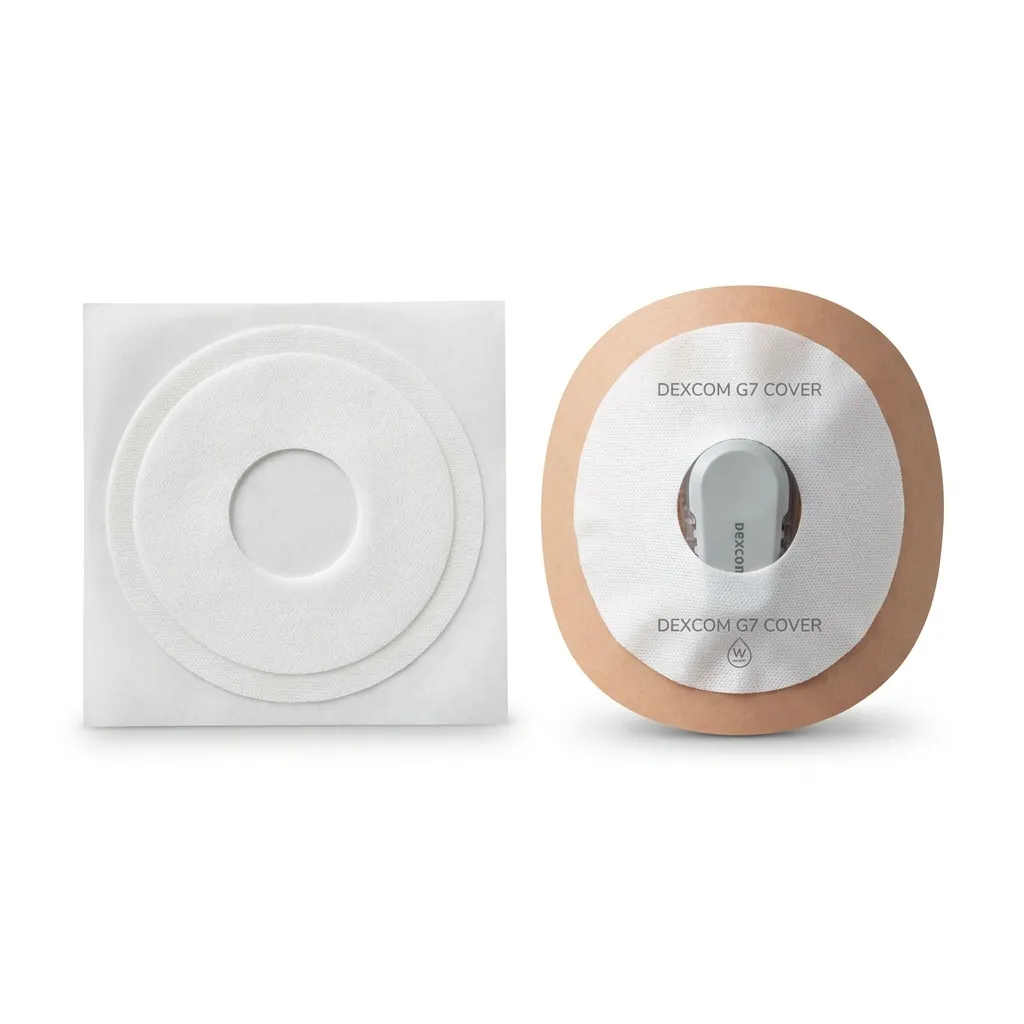
Waterproof Sensor Covers for Dexcom G7 & CGM
Waterproof and breathable patches to protect continuous glucose monitors during exercise and bathing.
- Waterproof & sweatproof up to 14 days
- Hypoallergenic latex-free medical adhesive
Where they actually differ
Lingo is not only sold as a biosensor, but as a biosensor, app and coaching program in the same solution. Abbott explicitly describes Lingo Count as a proprietary scoring system that translates spikes into a daily score, making the whole experience more programmatic. It can be useful for users who want guided feedback and something concrete to steer by. Lingo Support Lingo Support Stelo by Dexcom
Stelo seems more like a simpler tracking layer. Dexcom emphasizes alert-free glucose tracking, spike and pattern detection and sharing with a doctor rather than a large coaching framework. It's not better or worse per se, but it's better suited to users who want to interpret their data more directly without being led through a points system. Lingo Support Lingo Support Stelo by Dexcom
Price, availability and friction at start-up
The practical difference is greater than many comparison articles capture. On the official US purchase sites on April 23, 2026, Lingo was listed at $54 for a 2-week plan with 1 biosensor, while Stelo was listed at $55 for a 2-week single-use package with 1 biosensor. The entry price was therefore almost identical, so the choice is not primarily decided by the first dollar. Lingo by Abbott Lingo Support Lingo Support Stelo by Dexcom Stelo by Dexcom
The difference lies more in availability and setup. According to support, Lingo is currently available in the US and UK, while Stelo is officially only sold in the US. Lingo uses up to 14 days per sensor and 60 minute warmup, while Stelo states up to 15 days, 30 minute warmup and 12 hour grace period. For some users, this is a small detail. For others, it is precisely the detail that makes the product easier to live with. Lingo by Abbott Lingo Support Lingo Support Stelo by Dexcom Stelo by Dexcom
| Biosensor Parameter | Abbott Lingo | Dexcom Stelo | Longevity & Lifestyle Assessment |
|---|---|---|---|
| Target Audience | Wellness, biohacking, and metabolic health enthusiasts | Prediabetes and non-insulin Type 2 diabetes management | Lingo focuses on coaching; Stelo focuses on medical data simplicity |
| App Metric & Coaching | Lingo Count (quantifies glucose spikes as a daily target) | Standard glucose curves and ambulatory glucose profile (AGP) | Lingo gamifies glucose moderation; Stelo provides clean clinical metrics |
| Sensor Longevity | 14 days per biosensor | 15 days per sensor | Virtually identical monthly turnover requirement (2 sensors per month) |
| Prescription Requirement | Over-the-counter (OTC, No prescription needed) | Over-the-counter (OTC, No prescription needed) | Direct consumer access across US and European markets |
When Lingo makes the most sense
Lingo is best suited for users who don't just want to see curves, but want a clear app narrative around them. If you're the type who wants prompts, challenges, goals and a score like Lingo Count, Abbott is clearer on that front than Dexcom. Lingo by Abbott Lingo Support Lingo Support Lingo Support
Lingo also makes more sense if you're outside of the pure US-only setup because the product is officially available in both the US and the UK. This makes Lingo more flexible as a consumer biosensor, even if it is still not a real Danish product. Lingo by Abbott Lingo Support Lingo Support Lingo Support
When Stelo makes the most sense
Stelo makes the most sense for users who want a more direct path to glucose data without being wrapped up in a larger wellness program. Dexcom's official product layer emphasizes patterns, trends and alert-free tracking, and is a good match for users who already know what they want to test. Stelo by Dexcom FDA Stelo by Dexcom Stelo by Dexcom
Stelo also has a few practical advantages in the setup itself: shorter warmup and slightly longer specified wear time. If you don't need Lingo Count or a coaching tone, Stelo can therefore feel more straightforward and less instructor-like from day one. Stelo by Dexcom FDA Stelo by Dexcom Stelo by Dexcom
What neither of them can decide alone
Here's the most important caveat: neither Lingo nor Stelo is a shortcut to diagnosing diabetes, insulin resistance, or a need for treatment. Both brands say the same thing in practice, with slightly different wording: the product is made for learning and behavioral insight, not for independent medical decisions. Lingo Support Stelo by Dexcom FDA
If you have symptoms, if the data doesn't make sense in relation to how you feel, or if you want to adjust medication, the OTC biosensor is not the answer. It can be useful as context, but the larger assessment still requires clinical context, blood tests and professional judgement. Lingo Support Stelo by Dexcom FDA
Internal Further Reading
Read also in the same cluster
Outlive: The Science & Art of Longevity
Dr. Peter Attia's groundbreaking guide to preventive medicine, exercise for longevity, and healthy aging.
- Scientific framework for Medicine 3.0
- Actionable guide on sleep, exercise & nutrition
FAQ
Are Abbott Lingo and Dexcom Stelo both OTC?
Yes. Both are officially sold as OTC glucose biosensors for adults without insulin and are not made as classic prescription CGMs for diabetes management.
What is the main difference in practice?
The main difference is the app logic. Lingo places more emphasis on coaching, Lingo Count and a guided habit course, while Stelo is more simple and tracking-oriented.
Is Lingo cheaper than Stelo?
On the official US pages on April 23, 2026, the entry price was almost the same: $54 for Lingo versus $55 for Stelo. Therefore, product logic is more important than a marginal price difference.
Which one is best outside the US?
Neither of them is an actual Denmark product, but Lingo officially has wider consumer availability than Stelo, because Abbott support reports sales in both the US and the UK, while Stelo is US-only.
Can either of them replace blood tests or medical assessment?
No. Both can provide useful behavioral and contextual insights, but they are not designed to diagnose or replace HbA1c, fasting glucose and clinical assessment.
Sources and References
- [1]
- [2]
- [3]
- [4]
Editorial History
23. April 2026
First publication
Initial version was published as part of the wearables with introduction, takeaways, FAQ, and reference block.
23. April 2026
Medical review
Phrasing, caveats, and internal links were reviewed for clarity, consistency, and YMYL alignment.
23. April 2026
Latest update
Abbott Lingo vs Dexcom Stelo received updated metadata, reference outputs, and improved decision-support structure.

Medical Review
Medical Review and Update Process
This article has been medically reviewed by Vadim Doroshenko with a focus on clinical accuracy, sources, disclaimers, and whether the conclusions still align with current scientific evidence.

Editorial Profile
Borys Viktorovytj Riabtsev
Borys Viktorovytj Riabtsev publishes Longevity Lab as a research-backed information project on precision medicine, metabolic health, and healthy aging, utilizing rigorous sources, independent medical review, and objective YMYL communication.