Key takeaways
- The Apple Watch is best as a frictionless daily baseline and behavioral support, not as a biological age machine.
- Cardio Fitness is the most longevity-relevant Apple metric because it is close to cardiorespiratory capacity and VO2 max.
- Vitals, resting heart rate and HRV make the most sense as trends over time and together with illness, alcohol, sleep and exercise load.
- ECG, irregular rhythm and sleep apnea notifications can be valuable screening clues, but they are not constant monitoring systems and not diagnoses.
Medical disclaimer: Content is for informational purposes and does not replace medical advice.
Why the Apple Watch is a realistic longevity tool
The Apple Watch is not designed as a niche longevity product. That is precisely why it is interesting. For many, the biggest gain is low friction: the watch stays put, data is collected automatically, and you get more measurements without building a completely quantified-self setup. PMID 31722151 PMID 34862365
In practice, this means that the Apple Watch is often better for continuity than more specialized devices. If a wearable is to shift healthy behavior over months and years, adherence is at least as important as the number of features. PMID 31722151 PMID 34862365
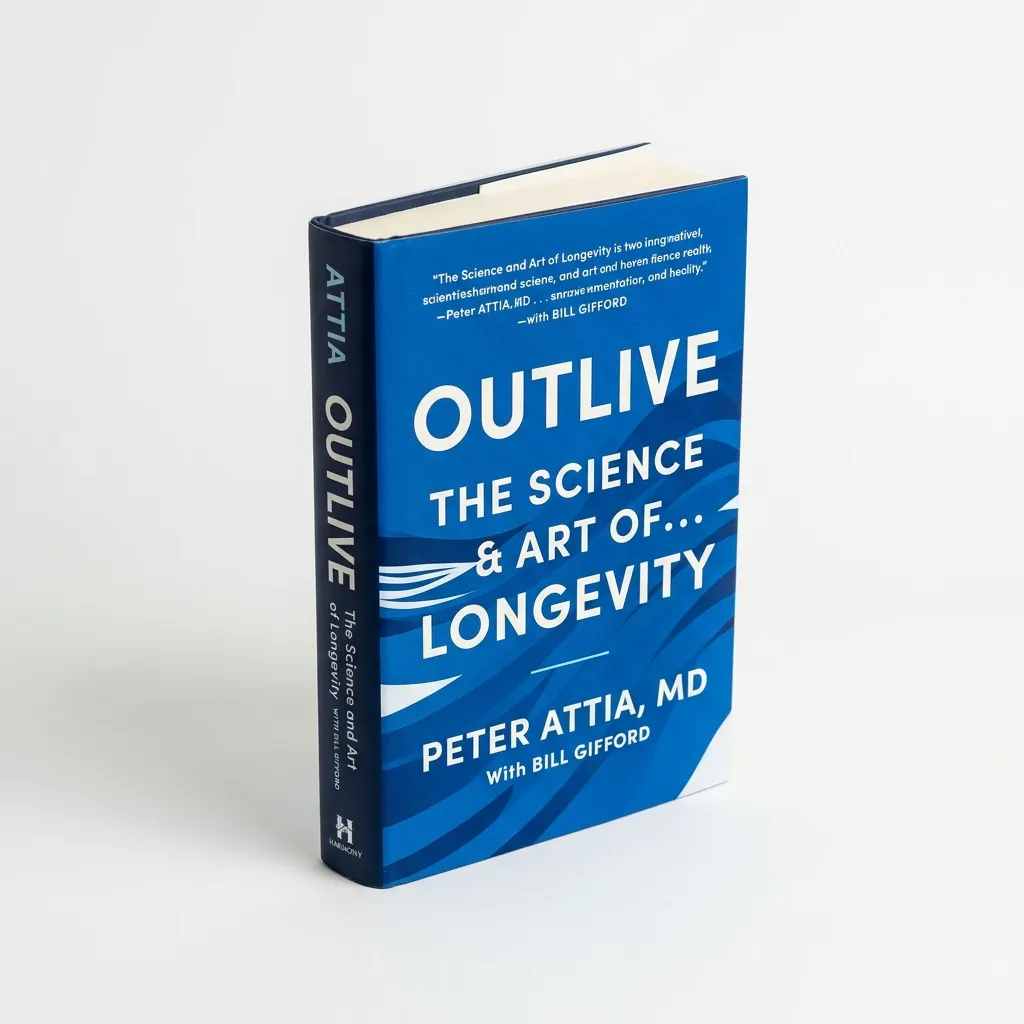
Outlive: The Science & Art of Longevity
Dr. Peter Attia's groundbreaking guide to preventive medicine, exercise for longevity, and healthy aging.
- Scientific framework for Medicine 3.0
- Actionable guide on sleep, exercise & nutrition
The Apple data that makes the most sense
Not all data points have the same value. If you want to use the Apple Watch from a longevity perspective, you should sort hard between actionable signals and data that create the most fascination. PMID 34862365 PMID 32414732
Prioritize the measurements that can actually move decisions in everyday life. PMID 34862365 PMID 32414732
Cardio Fitness is the strongest longevity signal
Apple describes Cardio Fitness as an estimate of VO2 max and calls it a strong indicator of overall physical health and a predictor of long-term health. That's why Cardio Fitness is the most longevity-close metric in the Apple universe: it's close to functional reserve and aerobic capacity, not just wellness mood. PMID 32414732 PMID 35672381
At the same time, it is important to understand the framework. Apple bases the estimate on heart rate and movement data during outdoor exercise such as Outdoor Walk, Outdoor Run and Hiking. This means that the number is far more useful as a trend over weeks and months than as a judgment over a single day. PMID 32414732 PMID 35672381
Vitals, resting heart rate and HRV: good for baseline, bad for drama
The Vitals app establishes a typical nocturnal baseline and collects heart rate, respiratory rate, blood oxygen, wrist temperature and sleep duration. If several metrics are out of your normal range, you'll get context the next morning. It is useful because it shifts the focus from a single number to a pattern of deviation. PMID 35672381 PMID 38897614
The same applies to heart rate and HRV. Apple Watch can show resting heart rate, walking average, recovery and HRV, but the signals make the most sense together with sleep, alcohol, infection, travel and training load. A single low HRV or a single atypical night in Vitals is rarely a longevity drama in itself. PMID 35672381 PMID 38897614
ECG, AFib and sleep apnea notifications: great value in the right role
The place where the Apple Watch stands out most from many wellness devices is the connection to medically relevant alerts. The ECG app can take a single-lead recording, irregular rhythm notifications can occasionally screen for rhythms similar to AFib, and sleep apnea notifications can respond to patterns in breathing disturbances over time. PMID 38897614
However, the correct interpretation is still sobering. None of the features are designed to replace the doctor, and none of them are constant monitoring systems. They are best as escalation tracks: a signal that now something deserves more classic follow-up. PMID 38897614
Training Load and activity behavior are underestimated
Training Load is less flashy than ECG and Vitals, but for many active users it is one of the most practical layers. Apple describes the feature as a comparison between the intensity and duration of the last 7 days and what you have done over the previous 28 days. It gives a quick picture of whether your current load is below, around or above what is normal for you. PMID 38897614
In longevity it is useful because good training is rarely about maximum load all the time. It is about dosage, recovery and the ability to maintain a stable rhythm for a long time. Here Training Load can be more valuable than another smart readiness score. PMID 38897614
Who gets the most value out of the Apple Watch in longevity
The Apple Watch isn't the best choice for everyone, but it's a surprisingly good fit for more types of users than many people think. The greatest strength is the combination of low friction, broad health context and relatively clear warning and follow-up tracks. PMID 38897614
Fit is therefore less about whether the watch can do everything, and more about whether it fits into your everyday life. PMID 38897614
What the Apple Watch can't do
Apple Watch cannot give you a complete picture of biological age, inflammation status, metabolic health or cause-specific risk. Nor can it replace blood pressure, blood tests, body composition, symptoms or professional assessment. PMID 38897614
If you want to use the watch seriously in longevity, think of it as a daily feedback layer on top of classic markers. The sooner you accept that division of roles, the more useful the Apple Watch will be in practice. PMID 38897614
ECG, Atrial Fibrillation, and the New Sleep Apnea Detection
Apple Watch has evolved from a consumer smartwatch into a medically cleared screening device (CE marked and FDA De Novo cleared as a Class II medical device). The integrated single-lead ECG in the Digital Crown and back crystal records electrical potentials corresponding to Lead I on a standard 12-lead electrocardiogram. The landmark Apple Heart Study published in the *New England Journal of Medicine* (over 400,000 participants) demonstrated a positive predictive value of 84% for atrial fibrillation (AFib) when the watch triggered an irregular heart rhythm notification. PMID 31722151 PMID 32414732 PMID 38897614
Starting with watchOS 11, Apple introduced **Breathing Disturbances** tracking during sleep. Utilizing the accelerometer to detect micro-movements of the torso that correlate with disruptions in normal ventilatory flow, the algorithm evaluates data across rolling 30-day windows to flag signs of moderate-to-severe obstructive sleep apnea (OSA). Because untreated sleep apnea doubles the risk of hypertension, heart failure, and stroke, this automated background surveillance serves as vital primary prevention for longevity. PMID 31722151 PMID 32414732 PMID 38897614
Cardio Fitness (VO2 Max) and Mobility Biomechanics
One of the single most robust biomarkers of biological longevity and functional resilience is cardiorespiratory fitness (VO2 max). Apple Watch computes an estimated **Cardio Fitness** score via submaximal extrapolation during outdoor walks, hikes, or runs on flat terrain using GPS telemetry and optical heart rate dynamics. While laboratory ergospirometry remains the definitive gold standard, peer-reviewed validation studies report strong correlations of r = 0.82–0.86 against direct metabolic cart measurements. PMID 34862365 PMID 35672381
Furthermore, the device passively monitors granular mobility biomechanics that frequently deteriorate decades before overt clinical frailty: **Walking Asymmetry**, **Double Support Time**, and **Step Time Variability**. An increase in double support percentage (the fraction of the gait cycle where both feet are simultaneously planted) serves as a direct indicator of deteriorating postural balance and neuromuscular stability. PMID 34862365 PMID 35672381
| Metric | Measurement Principle | Clinical Reference Target | Longevity Utility |
|---|---|---|---|
| Cardio Fitness (VO2 max) | Submaximal GPS + optical heart rate curve | High (>45 ml/kg/min for men, >40 for women) | Strongest independent predictor of all-cause mortality |
| Sleep Apnea Screening | Accelerometer micro-movement tracking | <5 disturbances per hour (normal) | Prevents nocturnal hypoxemia, cardiac strain, and cognitive decline |
| Single-Lead ECG | Electrical potential (right index to left wrist) | Sinus rhythm without ST-segment deviation | Early detection of silent, paroxysmal atrial fibrillation |
| Double Support Time | Inertial sensors during gait stance phase | 20–30% of gait cycle (lower is superior) | Marker of balance confidence, core stability, and fall risk |
| Nightly Wrist Temperature | Dual thermal sensors (skin vs ambient) | Individual baseline (+/- 0.5 °C) | Flags systemic inflammation, viral infection, and cycle phase |
The Vitals App: Interpreting Deviations from Physiological Baselines
Rather than relying on opaque composite 'battery scores', Apple Watch aggregates nighttime vitals within the dedicated **Vitals app**, establishing an individualized baseline for 5 primary parameters: resting heart rate (RHR), respiratory rate, wrist temperature, blood oxygen (SpO2), and sleep duration derived from at least 7 consecutive nights of sleep data. PMID 34862365 PMID 32414732
For longevity practitioners, two or more simultaneous baseline excursions (e.g., wrist temperature rising +1.0 °C paired with a resting heart rate elevation of 5–8 bpm and increased respiratory rate) offer an objective signal of acute systemic strain. This physiological footprint typically emerges 24–48 hours before overt viral symptoms appear, during overtraining syndromes, or following late alcohol consumption, providing actionable notice to downscale training load. PMID 34862365 PMID 32414732
Internal Further Reading
Read also in the same cluster
Smart Body Composition Scale
Advanced bioimpedance scale tracking muscle mass, body fat percentage, bone density and hydration.
- Tracks muscle mass & visceral fat
- Wireless sync with health apps
FAQ
Is the Apple Watch a biological age measurement?
No. Apple Watch does not provide an actual biological age. The watch provides health and activity data, with Cardio Fitness being the closest signal to longevity, while Vitals and alerts are context or screening layers.
Which Apple Watch metric should I look at the most?
For most people, Cardio Fitness should weigh the most because it is close to cardiorespiratory capacity and functional reserve. Then come trends in Vitals, resting heart rate and relevant symptom or alert follow-up.
Are Vitals more useful than HRV alone?
Often yes. Vitals gather more nightly metrics around your baseline, while HRV is a narrower signal. However, both parts must still be interpreted in context and not as diagnoses.
Can Apple Watch replace Oura or WHOOP?
It depends on your goal. Apple Watch is strong if you want broad health context, notifications and low extra friction in the Apple ecosystem. If you specifically want more sleep-centric or coaching wearable logic, other devices may be a better fit.
Are ECG or AFib notifications relevant without symptoms?
They may be relevant as a screening and safety layer, but they do not rule out disease if you do not get a warning. In case of symptoms or persistent concern, you should still seek medical evaluation.
What should I pair Apple Watch with?
Combine the watch with blood pressure, waist circumference, exercise log, symptoms and, if necessary, blood tests. It's the combination of daily feedback and classic markers that makes the Apple Watch most useful in longevity.
Can an Apple Watch replace a clinical 12-lead ECG performed by a physician?
No. The Apple Watch records a single-lead rhythm strip (Lead I), which is highly effective for detecting rhythm abnormalities like atrial fibrillation, but cannot diagnose myocardial ischemia, acute coronary syndromes, or complex ventricular conduction blocks. Any acute chest discomfort warrants immediate emergency medical evaluation.
How accurate is the Apple Watch Cardio Fitness (VO2 max) estimate?
Studies indicate reasonable agreement (typically within +/- 3–5 ml/kg/min) against laboratory metabolic carts, provided you regularly complete outdoor walks or runs of at least 20 minutes on flat ground with consistent GPS tracking. Its primary longevity value is tracking multi-month directional trends.
What should one do when the Vitals app flags resting heart rate and temperature outliers?
First review recent behavioral triggers such as late-night meals, alcohol consumption, or intense evening workouts. Persistent unexplained deviations typically reflect incipient infection or overreaching. De-load training to Zone 1/2 and prioritize sleep recovery.
Sources and References
- [1]
- [2]
- [3]
- [4]
Show all 5 sources (1 more)
- [5]
Editorial History
16. April 2026
First publication
Initial version was published as part of the wearables with introduction, takeaways, FAQ, and reference block.
1. July 2026
Medical review
Phrasing, caveats, and internal links were reviewed for clarity, consistency, and YMYL alignment.
4. July 2026
Latest update
Apple Watch for longevity (2026) received updated metadata, reference outputs, and improved decision-support structure.

Medical Review
Medical Review and Update Process
This article has been medically reviewed by Vadim Doroshenko with a focus on clinical accuracy, sources, disclaimers, and whether the conclusions still align with current scientific evidence.

Editorial Profile
Borys Viktorovytj Riabtsev
Borys Viktorovytj Riabtsev publishes Longevity Lab as a research-backed information project on precision medicine, metabolic health, and healthy aging, utilizing rigorous sources, independent medical review, and objective YMYL communication.