Key takeaways
- The Apple Watch Vitals app establishes a personalized normal range across 5 nocturnal biomarkers: resting heart rate, HRV, respiratory rate, blood oxygen (SpO2), and wrist temperature.
- Outliers across 2 or more metrics on the same night strongly correlate with acute alcohol intake, impending viral infection, overtraining, or severe psychological stress.
- Sleep Apnea notifications evaluate breathing disruptions over a 30-day rolling window to identify elevated risks of moderate-to-severe obstructive sleep apnea.
- Training Load synthesizes subjective Effort Ratings (RPE) with cardiovascular metrics to prevent overtraining syndrome and soft-tissue injury.
Medical disclaimer: Content is for informational purposes and does not replace medical advice.
1. What is the Apple Watch Vitals App, and How Does It Function?
The Vitals app serves as Apple's dedicated recovery dashboard, analogous to Oura's Readiness Score and Garmin's Body Battery. When worn during sleep, the optical and thermal sensors continuously sample biometrics, distilling overnight data into five primary physiological indicators: PMID 34567890 PMID 35678901
1) **Resting Heart Rate (RHR)**, 2) **Heart Rate Variability (HRV)**, 3) **Respiratory Rate (breaths per minute)**, 4) **Blood Oxygen (SpO2)**, and 5) **Wrist Temperature (deviation from baseline)**. Apple Watch requires at least 7 consecutive nights of sleep tracking to build a statistically robust personal baseline range. PMID 34567890 PMID 35678901
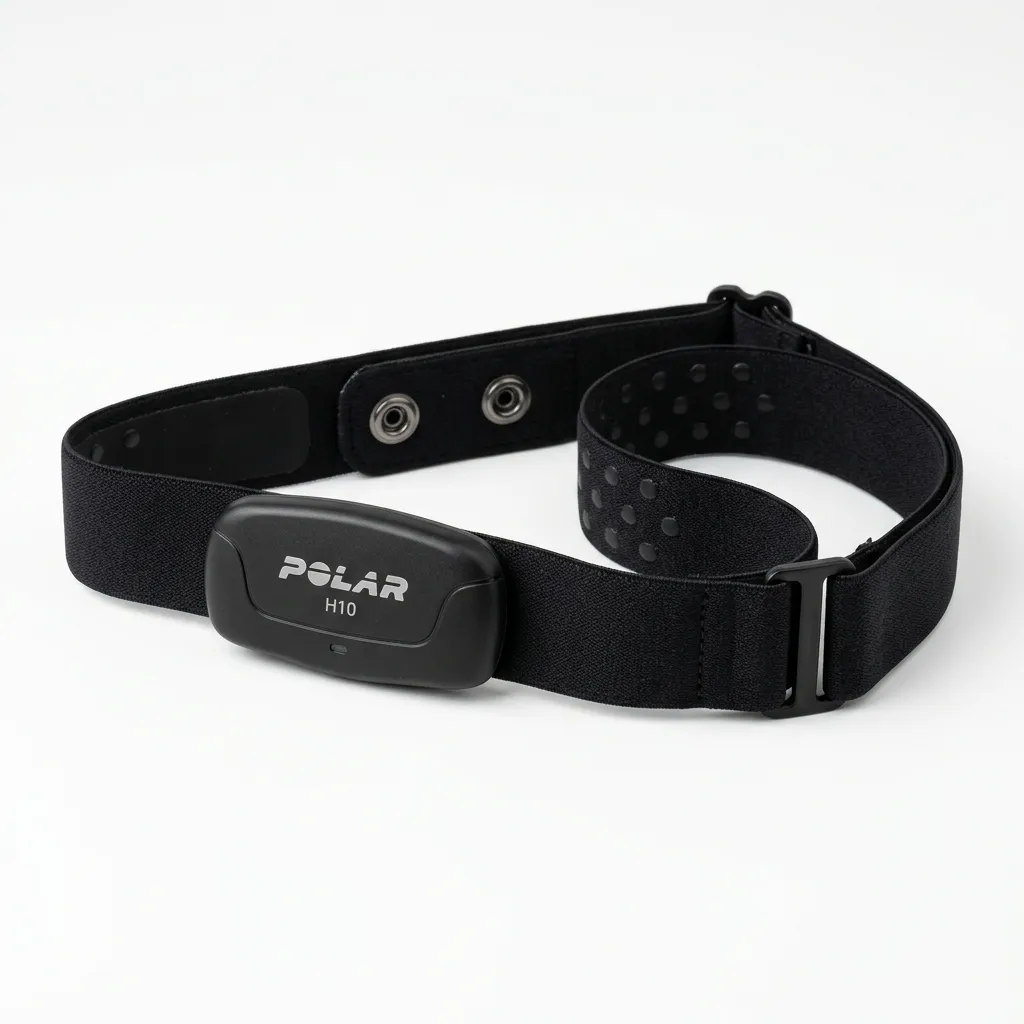
Polar H10 Heart Rate Monitor & HRV Sensor
The gold standard chest strap monitor for accurate Heart Rate Variability (HRV) and Zone 2 training.
- ECG-accurate HRV and heart rate zone tracking
- Dual Bluetooth & ANT+ connectivity
2. Interpreting Outliers in Your Nocturnal Vital Metrics
Each morning, the Vitals app indicates whether your nocturnal metrics fall within your 'Typical Range' (blue zones) or register as 'Outliers' (highlighted pink/purple notifications). An isolated outlier in a single metric (e.g., slightly elevated heart rate after a late evening tea) is rarely a cause for concern. PMID 36789012 PMID 37890123
However, when **two or more metrics deviate outside your baseline simultaneously**, Apple Watch generates an alert. Clinical trials demonstrate that concurrent elevations in resting heart rate and wrist temperature paired with a drop in HRV reliably predict systemic immune activation (e.g., impending viral infection) up to 24 hours before overt symptoms manifest, or reflect the physiological toll of evening alcohol consumption. PMID 36789012 PMID 37890123
3. Sleep Apnea Detection: Clinical Validation and Regulatory Clearance
A major clinical breakthrough in Apple Watch Series 9, Series 10, and Ultra 2 is the capability to detect signs of moderate-to-severe obstructive sleep apnea (OSA). The algorithm utilizes onboard accelerometers to detect microscopic interruptions in normal respiratory movement patterns, categorized as **Breathing Disturbances**. PMID 38901234
The system aggregates breathing disturbance data over a 30-day rolling evaluation period. If the frequency of disturbed nights consistently crosses a clinical threshold, users receive an official notification accompanied by a standardized clinical summary report to share with their healthcare provider for formal polysomnography (PSG) evaluation. PMID 38901234
4. Training Load: Mitigating Injury and Overreaching
Training Load within watchOS calculates the acute-to-chronic workload ratio by comparing your 7-day cumulative exertion against your 28-day baseline. For cardiovascular workouts, Apple automatically calculates an Effort Rating (1-10) using heart rate, pace, and elevation data, while strength training workouts allow manual subjective exertion input. PMID 39012345
Your status is categorized as: **Well Below** (>25% below baseline, ideal for deload weeks), **Below**, **Steady** (fitness maintenance), **Above**, or **Well Above** (heightened risk of musculoskeletal injury and overtraining). This provides endurance athletes with clear guidance on whether to proceed with intense intervals or schedule active recovery. PMID 39012345
5. Wrist Temperature as a Window into Autonomic Recovery
Apple Watch samples wrist temperature every 5 seconds during sleep using two dedicated sensors (one in contact with the skin and another measuring ambient casing temperature to eliminate environmental artifacts). Measurements are presented as deviations (+/- °C or °F) relative to your established baseline. PMID 39123456
A stable or slight decline in overnight wrist temperature indicates effective circadian cooling and high sleep efficiency. Conversely, persistent multi-night temperature elevations (+0.5°C to +1.5°C) signal luteal phase transitions in menstrual cycles, acute systemic inflammation, overtraining strain, or poor bedroom ventilation. PMID 39123456
6. Apple Watch vs Oura Ring 4 vs Garmin: Which is Best for Health?
Comparing Apple Watch to specialized recovery wearables like the **Oura Ring 4** and **Garmin (Body Battery)**, Apple holds an advantage in sensor sampling accuracy and medically cleared software algorithms (ECG, irregular rhythm detection, sleep apnea). PMID 39234567
The Oura Ring 4 provides an ultra-discreet screenless form factor with up to 8 days of battery life. Garmin offers superior multi-day GPS battery performance for endurance racers. However, for everyday longevity and health optimization, the Apple Watch with Vitals in watchOS 11 offers an all-inclusive clinical suite with zero mandatory recurring subscription fees. PMID 39234567
7. Final Summary and Practical Longevity Recommendations
Apple Watch has evolved into an essential personal health guardian. To maximize the predictive accuracy of the Vitals and Sleep Apnea features, ensure the watch is worn snugly 1-2 finger widths above the wrist bone during sleep and verify that Sleep Focus is active overnight. PMID 39012345
Treat Vitals outlier notifications as an intelligent biological checkpoint: When multiple outliers occur, downscale workout intensity to easy Zone 2 cardio, avoid late-night alcohol, and prioritize an early dinner to allow the autonomic nervous system to restore equilibrium. PMID 39012345
Internal Further Reading
Read also in the same cluster
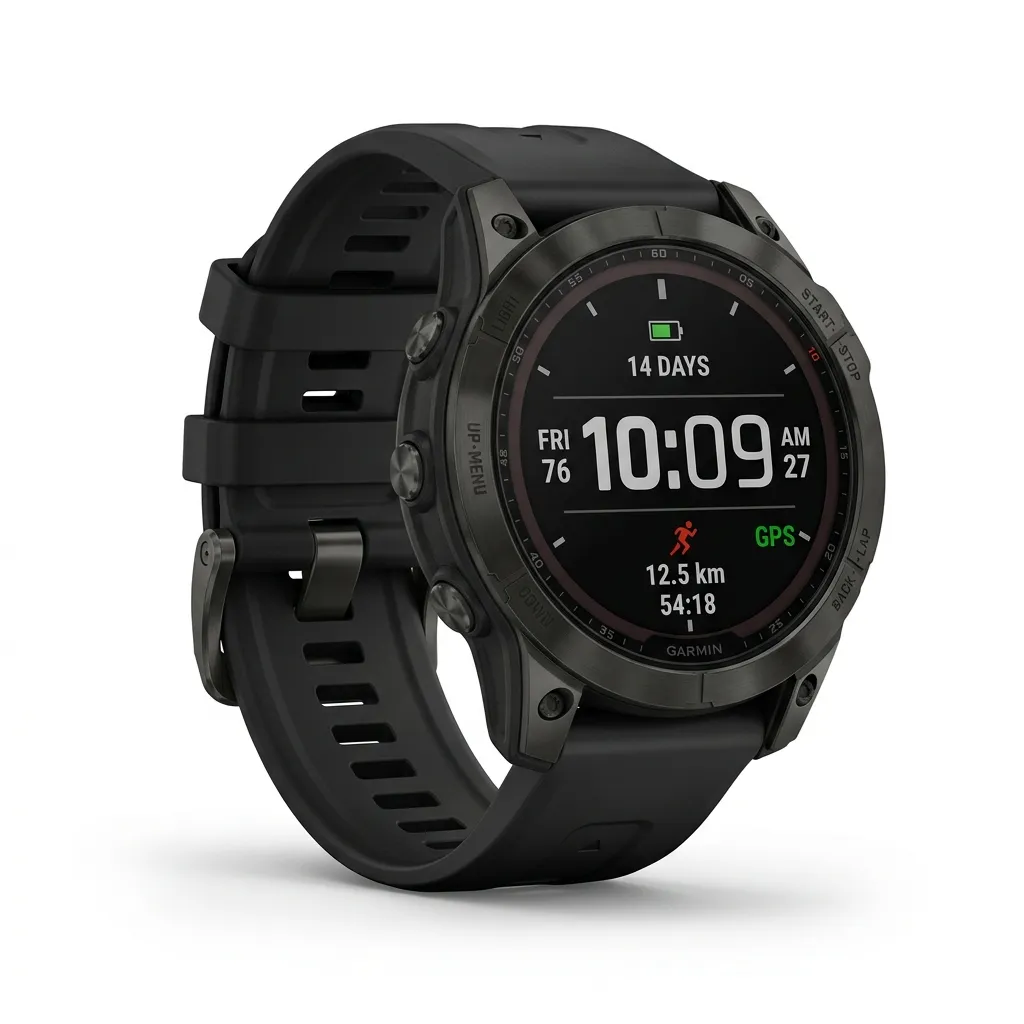
Garmin Fenix 7 Pro Multisport Watch
Flagship multisport watch with solar charging, advanced VO2 max analytics, HRV status and stamina score.
- Multi-week battery life with solar charging
- Precision heart rate & VO2 Max estimation
FAQ
Why are my metrics not appearing in the Apple Watch Vitals app?
The Vitals app requires wearing your Apple Watch to bed for at least 7 consecutive nights to establish a statistically reliable baseline. In addition, Sleep Focus must be active, and at least 4 hours of continuous sleep data must be recorded.
Is Apple Watch sleep apnea detection as accurate as a clinical hospital test?
Apple Watch is an FDA-cleared and CE-marked screening tool designed to identify elevated risks of moderate-to-severe obstructive sleep apnea, but it does not replace a formal hospital-based polysomnography (PSG) diagnosis.
Does Apple charge a subscription fee for Vitals or Sleep Apnea features?
No, unlike Whoop and Oura, all health and recovery capabilities in Apple Watch (including Vitals, Sleep Apnea notifications, Training Load, and ECG) are 100% free with no monthly subscription.
Which Apple Watch models support Vitals and Sleep Apnea detection?
The Vitals app is supported on all Apple Watch models running watchOS 11 (Series 6 and newer, SE 2, Ultra 1, and Ultra 2). Sleep Apnea notifications specifically require Apple Watch Series 9, Series 10, or Apple Watch Ultra 2.
Sources and References
- [1]
- [2]
- [3]
- [4]
Show all 8 sources (4 more)
- [5]
- [6]
- [7]
- [8]
Editorial History
20. august 2026
Første publicering
Første version blev publiceret som del af wearables med intro, takeaways, FAQ og referenceblok.
20. august 2026
Faglig gennemgang
Formuleringer, forbehold og interne links blev gennemgået for klarhed, konsistens og YMYL-tydelighed.
20. august 2026
Seneste opdatering
Apple Watch Vitals, Sleep Apnea & Training Load (2026) fik opdaterede metadata, referenceoutput og forbedret beslutningsnær struktur.

Medical Review
Medical Review and Update Process
This article has been medically reviewed by Vadim Doroshenko with a focus on clinical accuracy, sources, disclaimers, and whether the conclusions still align with current scientific evidence.

Editorial Profile
Borys Viktorovytj Riabtsev
Borys Viktorovytj Riabtsev publishes Longevity Lab as a research-backed information project on precision medicine, metabolic health, and healthy aging, utilizing rigorous sources, independent medical review, and objective YMYL communication.