Key takeaways
- Deep sleep supports physical recovery, memory consolidation and hormonal balance, but total sleep time and regularity are often more important than chasing a specific minute number.
- Sleep data from rings and bracelets are useful for seeing patterns, but they are not diagnostic and cannot replace clinical assessment when sleep apnea or other sleep disorders are suspected.
- The most robust measures are a fixed circadian rhythm, morning light, less alcohol, a cool sleeping environment, control of caffeine and appropriate exercise times.
- Remember the principle: nutritional supplements and gadgets may be relevant in individual situations, but rarely solve the underlying problem alone.
Medical disclaimer: Content is for informational purposes and does not replace medical advice.
Why deep sleep matters
Deep sleep is associated with physical recovery, tissue repair, immune function and a more stable metabolic profile the following day. Lack of sleep can affect appetite regulation, insulin sensitivity, mood and decision making after just a few nights. PMID 24136965 PMID 12409748
For longevity, sleep is therefore not only about energy for tomorrow. It's also about risk factors that accumulate over time: blood pressure, glucose, body composition, inflammation levels and mental resilience. PMID 24136965 PMID 12409748
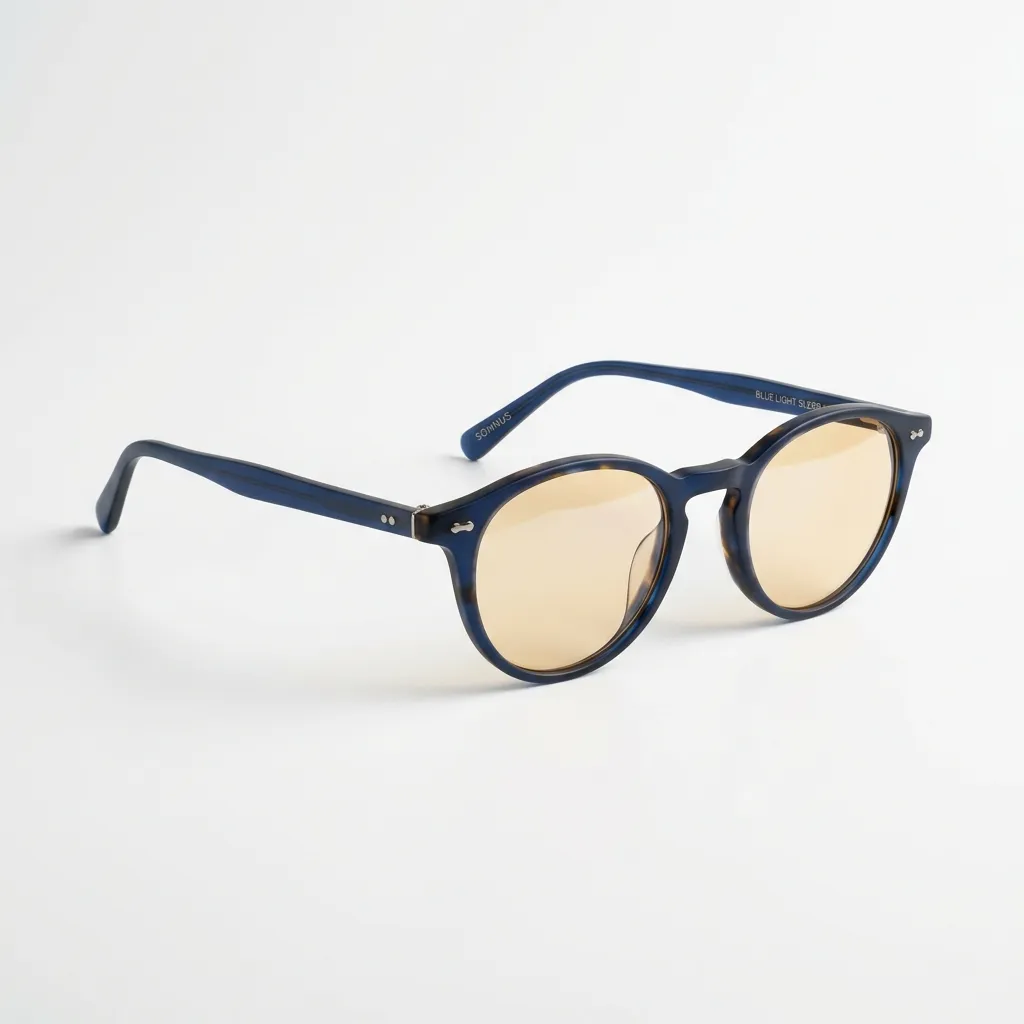
Blue Light Blocking Sleep Glasses
Specialized amber-lens glasses blocking 99% of blue light at night for natural melatonin production.
- Blocks 400-500nm screen light & LEDs
- Enhances deep sleep & REM phases
What your wearables can and cannot do
Oura Ring 4, Whoop 4.0, Ultrahuman Ring AIR and Hume Band provide continuous estimates of sleep stages, heart rate, temperature and HRV. It is valuable for discovering patterns: whether alcohol, late exercise, heat, travel or stress are affecting your night. PMID 12409748 PMID 19430032
But no consumer device measures sleep like a sleep laboratory. Therefore, use them for trend analysis, not to diagnose yourself. If you snore heavily, hold your breath in your sleep, wake up with a headache or are very tired during the day, you must be evaluated clinically. PMID 12409748 PMID 19430032
The most effective interventions
The most underrated grip is regularity. Fixed bedtime and fixed waking time stabilize the circadian rhythm. Morning light within the first hour after waking can strengthen the signal to the body about when the day begins. PMID 19430032 PMID 10944613
Alcohol often reduces the quality of sleep, even when falling asleep more quickly. Caffeine can affect much later than many people think. A cool, dark and quiet sleeping environment is still among the best investments. Exercise usually improves sleep, but very intense exercise late at night can make falling asleep worse for some. PMID 19430032 PMID 10944613
Which grips typically work best?
Many would like to know what usually gives the most effect for the least effort. The table shows the priority without promising perfection. PMID 10944613 PMID 30630653
Sleep in the larger longevity context
Sleep has become a large area with many products, subscriptions and devices. This means more solutions, but not necessarily better solutions. PMID 30630653
The more interesting development lies in the convergence between AI, multiomics, wearables and clinical medicine. AI may improve the interpretation of personal sleep and stress data over time, but in 2026 the foundation is still simple: enough sleep, regularity and correct investigation of symptoms. PMID 30630653
Sleep architecture and glymphatic clearance of neurotoxins during slow-wave sleep
Deep sleep—classified clinically as non-REM Stage N3 or Slow-Wave Sleep (SWS)—serves as the biological bedrock for physiological and neurological regeneration. This sleep stage is distinguished by synchronized, high-voltage delta electroencephalographic oscillations (< 4 Hz) propagating rhythmically across the neocortex. PMID 24136965 PMID 19430032
The most transformative breakthrough in modern neurobiology was the discovery of the **glymphatic system**, characterized by Professor Maiken Nedergaard at the University of Copenhagen and the University of Rochester (Science, 2013). PMID 24136965 PMID 19430032
During waking consciousness, the cerebral parenchyma is monopolized by active neurocomputational demands, keeping interstitial spaces compressed. Upon transitioning into slow-wave delta sleep, however, glial cells contract, causing the **brain's interstitial space to expand by up to 60%**. PMID 24136965 PMID 19430032
Facilitated by polarized **aquaporin-4 (AQP4)** water channels on astrocytic end-feet, cerebrospinal fluid (CSF) flushes through brain tissue via convective bulk flow like a microscopic dishwasher. This convective torrent strips away metabolic neurotoxic aggregates accumulated during wakefulness—including soluble **beta-amyloid**, hyperphosphorylated **tau**, and **alpha-synuclein**. PMID 24136965 PMID 19430032
Chronic slow-wave sleep deprivation impairs this essential waste clearance, representing a potent biological driver of early neurodegenerative neuropathology and cognitive decay. PMID 24136965 PMID 19430032
Thermoregulation biology and circadian core temperature drops
A fundamental, yet frequently neglected, physiological prerequisite for deep sleep is thermoregulatory cooling. The human circadian pacemaker requires an internal **core body temperature drop of approximately 1.0 to 1.5 °C** to initiate and stabilize restorative slow-wave delta sleep. PMID 10944613 PMID 30630653
This biological cooling is orchestrated by **distal peripheral vasodilation**: Microvascular networks in the glabrous skin of the hands, feet, and face vasodilate, radiating core visceral heat into the surrounding ambient environment. PMID 10944613 PMID 30630653
This explains the clinical efficacy of the 'warm bath effect': Ingesting or immersing in a warm bath (40–42 °C) approximately 60 to 90 minutes before bedtime dramatically accelerates sleep latency. The warm water dilates peripheral vasculature, dumping core thermal energy the moment one exits the bath and precipitating a rapid drop in internal temperature. PMID 10944613 PMID 30630653
To sustain this nocturnal thermal dissipation, the sleeping environment must remain cool—**ideally between 16 and 19 °C (60–67 °F)**. An excessively warm bedroom arrests this heat exchange, prompting fragmented micro-arousals and blunting total slow-wave sleep duration. PMID 10944613 PMID 30630653
Adenosine kinetics, caffeine pharmacology, and alcohol's destruction of sleep architecture
Restorative slow-wave sleep is governed by the two-process model of sleep regulation: Circadian rhythmicity (Process C) interacting with homeostatic sleep pressure (Process S). Every waking minute, neuronal ATP consumption releases the purine nucleoside **adenosine** into the extracellular space. PMID 12409748 PMID 19430032
Adenosine binds to high-affinity A1 and A2A receptors across basal forebrain structures, steadily magnifying homeostatic somnolence. During deep slow-wave sleep, adenosine is enzymatically cleared, resetting the sleep drive for the succeeding morning. PMID 12409748 PMID 19430032
Caffeine is a structural analogue to adenosine, functioning as a competitive antagonist that blocks adenosine receptors without activating inhibitory cascades. It does not eliminate fatigue; it merely blinds the central nervous system to homeostatic sleep pressure. With an elimination half-life of 5 to 7 hours and a **quarter-life of 10 to 12 hours**, consuming caffeine at 3 PM leaves roughly 25% of the drug actively blocking adenosine receptors at 1 AM, flattening delta amplitude. PMID 12409748 PMID 19430032
Alcohol represents an even more destructive disruptor: While ethanol promotes sedation via GABA-A agonism, **sedation is fundamentally distinct from physiological sleep**. Alcohol suppresses rapid eye movement (REM) sleep, shatters slow-wave sleep continuity in the latter half of the night, and drives nocturnal heart rate spikes with catastrophic drops in HRV. PMID 12409748 PMID 19430032
| Sleep Stage | EEG Waveform Pattern | Normal Adult Proportion | Core Physiological Functions | Clinical Sequelae of Deprivation |
|---|---|---|---|---|
| Stage N1 (Dozing / Light Sleep) | Theta oscillations (4–7 Hz) | Approx. 5% | Transition from waking state; somatic muscular relaxation | Hypnic jerks; prolonged sleep onset latency |
| Stage N2 (Baseline Core Sleep) | Sleep spindles & K-complexes | Approx. 45–55% | Synaptic motor memory consolidation, sensory gating | Impaired procedural learning and daytime mental fatigue |
| Stage N3 (Slow-Wave Deep Sleep) | High-amplitude delta waves (< 4 Hz) | 15–25% (concentrated in 1st half of night) | Glymphatic clearance of beta-amyloid, GH secretion, tissue repair | Accelerated neurodegeneration, systemic immune suppression, sarcopenia |
| REM Sleep (Dreaming Sleep) | Desynchronized beta-like waveforms | 20–25% (concentrated in final third of night) | Affective emotional processing, associative creativity, synaptic pruning | Heightened affective reactivity, impaired memory retention, emotional volatility |
Internal Further Reading
Read also in the same cluster
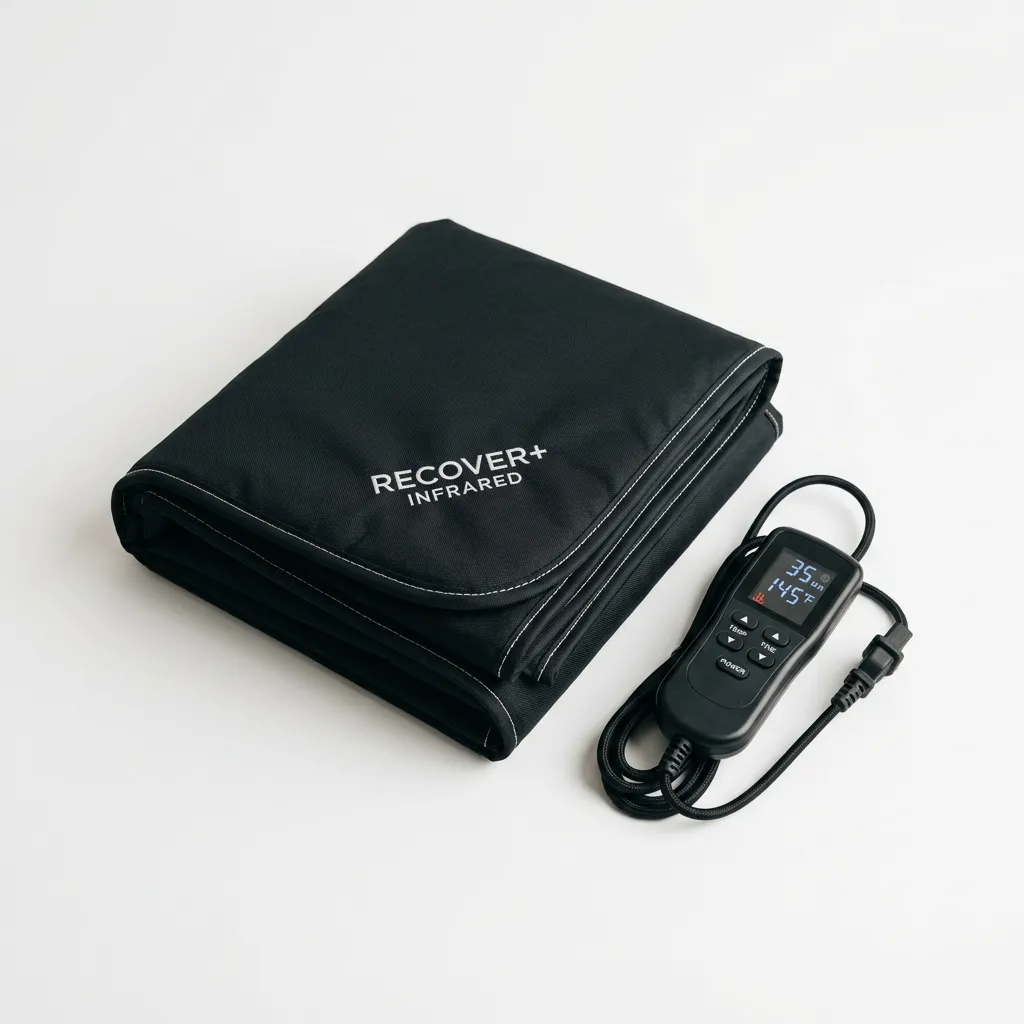
Infrared Sauna Blanket for Home Use
Infrared sauna blanket delivering deep thermal therapy, triggering heat shock proteins (HSP) and circulation.
- Far-infrared deep penetrating heat
- Triggers autophagy response & calorie burn
FAQ
How much deep sleep should you have?
There is no single optimal number of minutes for everyone. Rather look at total sleep time, function the next day and stable trends over several weeks than at a single night.
Is Oura or Whoop best for sleep?
Both can be used for trend measurement. The choice should depend on comfort, subscription, desired feedback and which other functions you value.
Can nutritional supplements provide more deep sleep?
Some experience an effect, but the results are individual and the evidence is not equally strong for all supplements. For chronic problems, the cause should be found rather than just adding a product.
What typically works best in the short term?
For many, more regular rhythm, less alcohol and better light control provide the fastest improvements.
When should you seek clinical evaluation?
In case of persistent sleep problems, pronounced daytime fatigue, severe snoring, breathing pauses or if sleep clearly affects function and health.
What percentage of deep sleep should a healthy adult achieve?
A healthy adult should ideally spend between 15% and 25% of total sleep time in Stage N3 slow-wave sleep, which generally corresponds to 1 to 2 hours per night, heavily front-loaded in the first third of the nocturnal cycle.
Why does a glass of wine before bed compromise sleep architecture?
Alcohol acts as a neural sedative, but sedation does not equal physiological sleep. As the liver metabolizes alcohol overnight, sleep architecture becomes heavily fragmented, nocturnal heart rate rises, and slow-wave delta power is suppressed.
How does ambient bedroom temperature affect deep slow-wave sleep?
Initiating and maintaining deep sleep requires an internal core body temperature drop of 1.0 to 1.5 °C. A cool bedroom (16–19 °C) enables peripheral vasodilation in the hands and feet to radiate heat away from the visceral core, stabilizing slow-wave sleep.
Sources and References
- [1]
- [2]
- [3]
- [4]
Show all 5 sources (1 more)
- [5]
Editorial History
14. April 2026
First publication
Initial version was published as part of the wearables with introduction, takeaways, FAQ, and reference block.
14. April 2026
Medical review
Phrasing, caveats, and internal links were reviewed for clarity, consistency, and YMYL alignment.
28. April 2026
Latest update
Sleep optimization received updated metadata, reference outputs, and improved decision-support structure.

Medical Review
Medical Review and Update Process
This article has been medically reviewed by Vadim Doroshenko with a focus on clinical accuracy, sources, disclaimers, and whether the conclusions still align with current scientific evidence.

Editorial Profile
Borys Viktorovytj Riabtsev
Borys Viktorovytj Riabtsev publishes Longevity Lab as a research-backed information project on precision medicine, metabolic health, and healthy aging, utilizing rigorous sources, independent medical review, and objective YMYL communication.