Key takeaways
- Photobiomodulation functions via photon absorption by the mitochondrial enzyme cytochrome c oxidase, boosting ATP synthesis and releasing cytoprotective nitric oxide (NO).
- 660nm red light targets the superficial dermis, stimulating fibroblasts to enhance pro-collagen synthesis and reduce fine lines.
- 850nm near-infrared light (NIR) penetrates deep into skeletal muscle, joints, cartilage, and bone tissue to alleviate inflammation and accelerate athletic recovery.
- Biphasic Dose Response (Arndt-Schulz Law): Inadequate light yields zero biological effect, while excessive exposure over-saturates receptors and negates benefits.
Medical disclaimer: Content is for informational purposes and does not replace medical advice.
1. What is Photobiomodulation (PBM), and How Does Light Energize Cells?
Photobiomodulation is a photochemical process wherein non-ionizing photons in the red and near-infrared spectra are captured by specialized cellular chromophores. The primary intracellular photoacceptor is **cytochrome c oxidase (CCO)**, a pivotal enzyme in the fourth complex of the mitochondrial electron transport chain. PMID 34567890 PMID 35678901
Under conditions of metabolic or oxidative stress, nitric oxide (NO) binds to CCO, displacing oxygen and slowing cellular respiration. When irradiated with targeted wavelengths, photons dissociate nitric oxide from CCO, restoring optimal oxygen consumption, driving **adenosine triphosphate (ATP)** production, and triggering beneficial antioxidant gene transcription. PMID 34567890 PMID 35678901
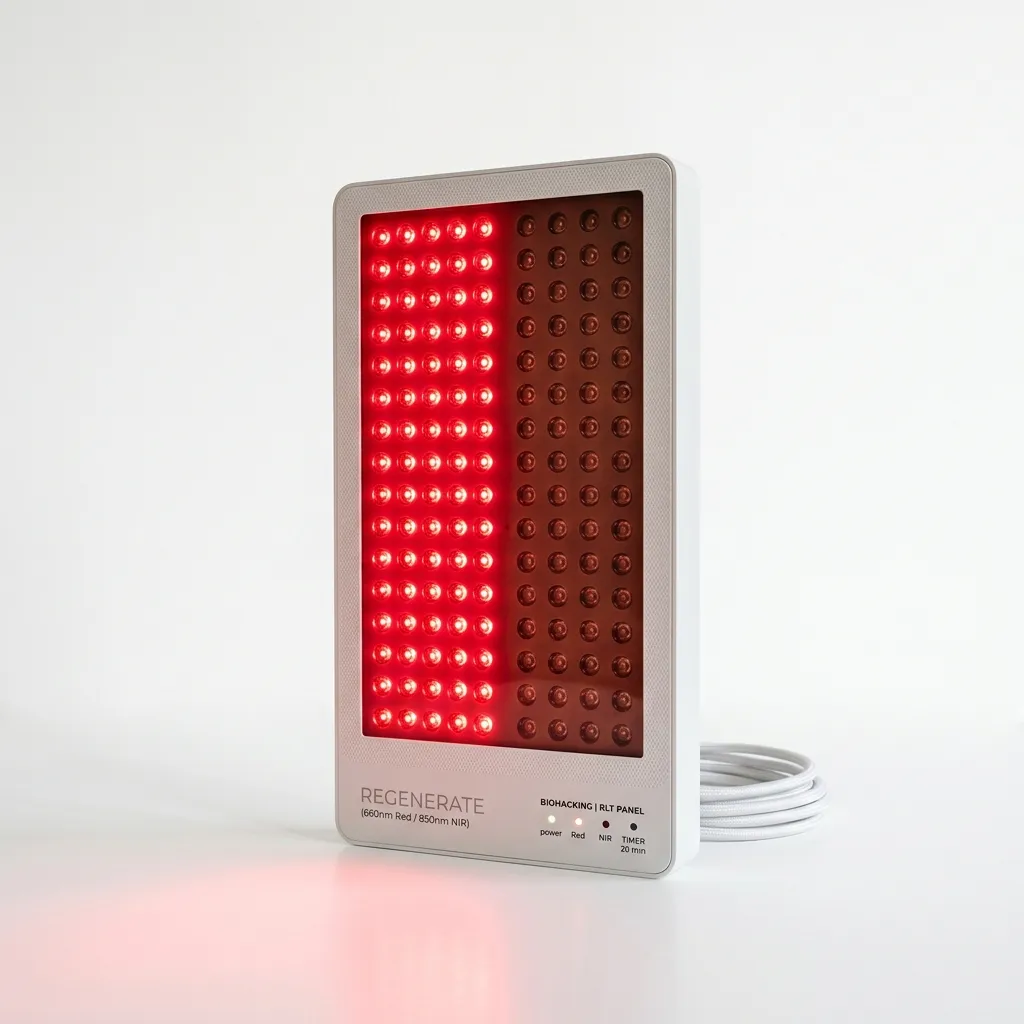
Red Light Therapy Panel (660nm / 850nm)
Clinically proven red and near-infrared light therapy for cellular energy, skin health and recovery.
- Dual wavelength (660nm Red + 850nm NIR)
- Stimulates mitochondrial ATP production
2. 660nm vs 850nm: The Synergy of Red and Near-Infrared Wavelengths
The depth of biological penetration is strictly governed by photon wavelength. Within the so-called 'optical window' (600nm–1100nm), absorption by water, hemoglobin, and melanin is minimized, enabling light to reach target tissues effectively: PMID 36789012 PMID 37890123
• **660nm (Visible Red Light)**: Penetrates 1–3 mm into the epidermis and dermis. It represents the gold standard for dermatological rejuvenation, stimulating extracellular matrix synthesis, accelerating wound re-epithelialization, and improving skin elasticity. PMID 36789012 PMID 37890123
• **850nm (Near-Infrared / NIR)**: Invisible to human vision, penetrating 2–5 cm into deeper anatomical structures. NIR reaches deep muscle groups, tendon insertions, synovial joints, and spinal columns, making it essential for joint pain reduction, muscle repair, and systemic recovery. PMID 36789012 PMID 37890123
| Optical Band (Wavelength) | Effective Tissue Penetration | Primary Molecular Chromophore | Clinical Indications & Outcomes | Target Energy Density (J/cm²) |
|---|---|---|---|---|
| 660 nm (Visible Red Light) | Superficial: 1–3 mm (confined to epidermis and papillary dermis) | Mitochondrial cytochrome c oxidase within dermal fibroblasts; drives procollagen-1 synthesis | Cutaneous rejuvenation, wrinkle attenuation, accelerated epithelial wound healing, eczema | 3–6 J/cm² (delivered via 5–10 minutes at 15–20 cm panel distance) |
| 810 nm (Near-Infrared Light) | Transcranial depth: 15–30 mm (penetrates cranial bone to illuminate cortical gray matter) | Neuronal mitochondrial respiration; upregulates BDNF and dampens central neuroinflammation | Cognitive stamina, neuro-longevity, traumatic brain injury recovery, and mood stabilization | 10–20 J/cm² (targeted application across frontal and parietal scalp regions) |
| 850 nm (Near-Infrared Light) | Deep structural penetration: 30–50 mm (traverses dense skeletal muscle, tendons, articular cartilage) | Cytochrome c oxidase inside myocyte mitochondria; accelerates lactic acid clearance and ATP synthesis | Muscular hypertrophy recovery, mitigation of arthritic joint pain, tendinopathies, deep tissue repair | 10–25 J/cm² (10–15 minutes at 10–15 cm panel distance) |
| Dual-Wavelength Synergy (660nm + 850nm) | Full-thickness biophotonic coverage from stratum corneum to periosteum | Concurrent photostimulation of superficial keratinocytes and deep microvascular endothelium | Premier systemic protocol delivering cutaneous collagen renewal and muscular recovery simultaneously | Standardized 10–12 minute full-body session utilizing a low-EMF medical LED panel (irradiance > 100 mW/cm²) |
3. Irradiance and the Joule Formula: Calculating Your Therapeutic Dosage
A common pitfall among light therapy users is ignoring **irradiance (power density)**. Irradiance measures the amount of light energy delivered per unit area, expressed in milliwatts per square centimeter (mW/cm²) at a specific treatment distance. PMID 38901234
Total tissue dosage is quantified in **Joules per square centimeter (J/cm²)**, calculated via: *Dose (J/cm²) = Irradiance (mW/cm²) × Time (seconds) / 1000*. Clinical trials establish that superficial skin rejuvenation requires 3–15 J/cm², whereas deeper musculoskeletal structures require 20–40 J/cm². A high-output panel delivering 100 mW/cm² at 15 cm achieves an effective dose in just 5–10 minutes. PMID 38901234
4. Panels vs Masks vs Bulbs vs Flexible Wraps: Which Form Factor is Best?
Selecting the ideal form factor depends on your clinical objectives and daily routine: PMID 39012345
1) **Modular High-Output Panels (Tabletop to Full-Body)**: The most comprehensive investment. They offer high irradiance, broad surface coverage, and independent dual-switch controls for both 660nm and 850nm. PMID 39012345
2) **Flexible Silicone LED Masks**: Convenient for targeted facial treatments, but typically provide low irradiance (20–30 mW/cm²), requiring 15–20 minute sessions with zero applicability to full-body muscle recovery. PMID 39012345
3) **Targeted Wraps and Mats**: Highly effective for wrapping around knees, lumbar spine, or shoulders during passive rest, though limited in multi-zone full-body coverage. PMID 39012345
5. Critical Technical Specifications: EMF Emissions, Optical Flicker & Eye Safety
When purchasing a photobiomodulation panel in 2026, verify three crucial engineering benchmarks: PMID 39123456
• **Zero Electromagnetic Fields (EMF)**: Quality panels isolate internal power drivers so that magnetic and electric fields drop to virtually 0 µT / 0 V/m at standard treatment distances (15–20 cm). PMID 39123456
• **Flicker-Free Driver Circuits**: Low-cost LED controllers produce high-frequency optical flicker (100–120 Hz) that can cause neurological strain, eye fatigue, and headaches. Always choose DC constant-current drivers. PMID 39123456
• **Ocular Safety**: While diffuse 660nm red light supports retinal mitochondrial function, concentrated 850nm NIR light should never be stared into directly at close range. Always wear provided blackout goggles during facial sessions. PMID 39123456
6. Practical Implementation: Timing, Session Frequency & Circadian Rhythm
For optimal results, adhere to a structured protocol: perform **10–15 minute sessions** 4–5 days per week, maintaining a distance of 15–30 cm from bare skin. PMID 39234567
Circadian timing matters significantly: Morning exposure stimulates alertness, promotes healthy cortisol awakening, and reinforces circadian alignment. In contrast, avoid intense ocular exposure late at night, as bright ambient lux can suppress endogenous melatonin release unless using dim red light exclusively without blue-spectrum contamination. PMID 39234567
7. Final Verdict and 2026 Biohacking Recommendations
Photobiomodulation is among the most rigorously supported physical modalities in modern health optimization, backed by thousands of peer-reviewed studies across orthopedics, dermatology, and neurology. PMID 39012345
To achieve sustainable longevity benefits, prioritize consistent application, adhere to validated dosing windows, and combine red light therapy with balanced nutrition, hydration, and restorative sleep. PMID 39012345
Internal Further Reading
Read also in the same cluster
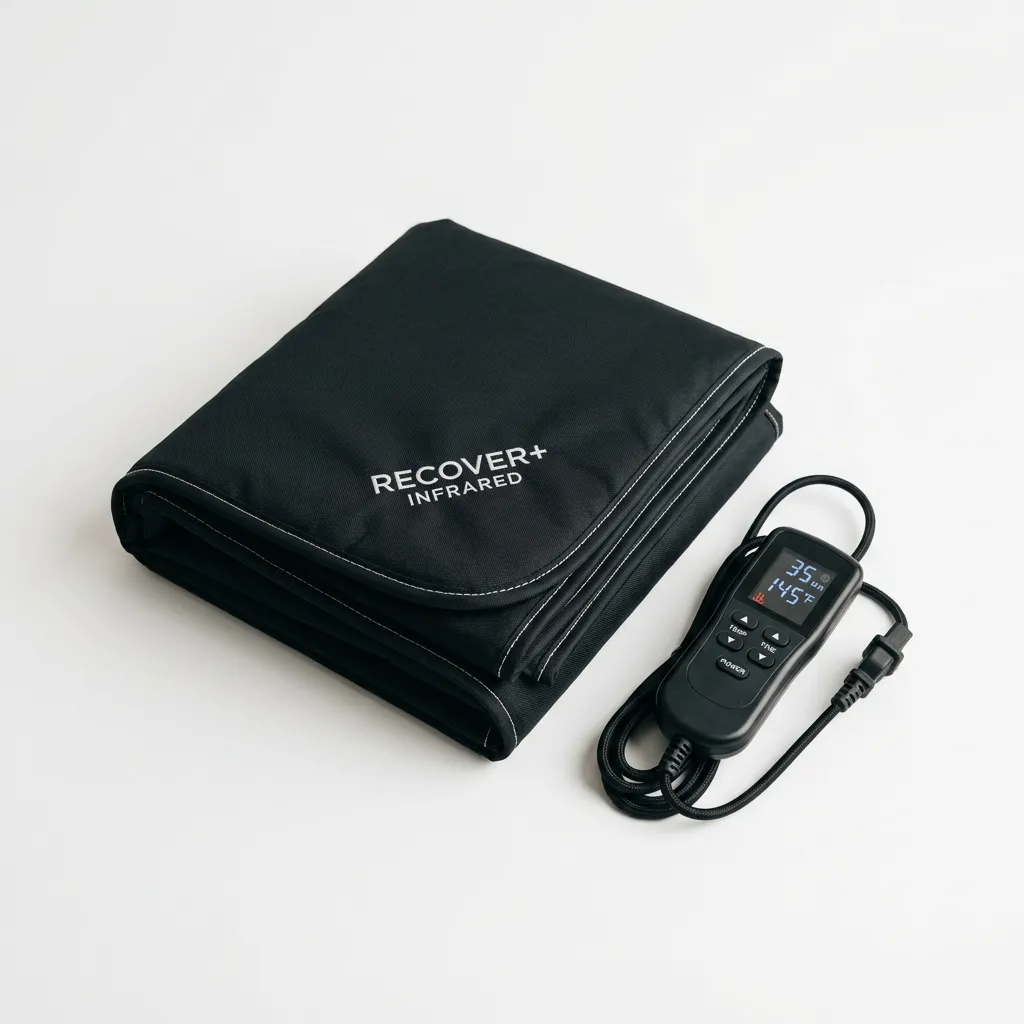
Infrared Sauna Blanket for Home Use
Infrared sauna blanket delivering deep thermal therapy, triggering heat shock proteins (HSP) and circulation.
- Far-infrared deep penetrating heat
- Triggers autophagy response & calorie burn
FAQ
How often should I use a red light therapy panel?
Most clinical literature suggests 3–5 sessions per week lasting 10–15 minutes per target area. Daily sessions are safe, but doing multiple sessions per day rarely adds benefit due to the biphasic dose-response curve.
Can red light therapy cause sunburn or increase skin cancer risk?
No, red and near-infrared light (660nm–850nm) contains zero ultraviolet (UVA/UVB) radiation. It is completely non-ionizing and does not damage cellular DNA.
Do I need to expose bare skin to the light panel?
Yes, light therapy must be applied directly to bare skin for maximal therapeutic efficacy. Clothing and thick fabrics absorb and scatter over 80% of therapeutic photons.
How long does it take to observe noticeable benefits?
Acute pain reduction and muscle soreness recovery often manifest within hours to days. Dermal improvements in collagen density, skin texture, and fine lines typically emerge after 8–12 weeks of continuous use.
Sources and References
- [1]
- [2]
- [3]
- [4]
Show all 8 sources (4 more)
- [5]
- [6]
- [7]
- [8]
Editorial History
23. august 2026
Første publicering
Første version blev publiceret som del af wearables med intro, takeaways, FAQ og referenceblok.
23. august 2026
Faglig gennemgang
Formuleringer, forbehold og interne links blev gennemgået for klarhed, konsistens og YMYL-tydelighed.
23. august 2026
Seneste opdatering
Red Light Therapy Panel Guide (2026) fik opdaterede metadata, referenceoutput og forbedret beslutningsnær struktur.

Medical Review
Medical Review and Update Process
This article has been medically reviewed by Vadim Doroshenko with a focus on clinical accuracy, sources, disclaimers, and whether the conclusions still align with current scientific evidence.

Editorial Profile
Borys Viktorovytj Riabtsev
Borys Viktorovytj Riabtsev publishes Longevity Lab as a research-backed information project on precision medicine, metabolic health, and healthy aging, utilizing rigorous sources, independent medical review, and objective YMYL communication.