Key takeaways
- Sleep apnea is an independent risk factor for insulin resistance, type 2 diabetes and cardiovascular disease.
- The mechanism goes via oxygen deficiency → stress response → cortisol → blood sugar increase → inflammation.
- Weight loss is the most effective non-operative treatment — even 5-10% reduction can make a difference.
- CPAP treatment improves sleep quality, blood pressure and insulin sensitivity in many, but adherence is the challenge.
Medical disclaimer: Content is for informational purposes and does not replace medical advice.
What is sleep apnea—and why is it a metabolic problem?
Sleep apnea is characterized by repeated pauses in breathing during sleep. Each stop lasts at least 10 seconds and can occur hundreds of times per night. The body reacts to the lack of oxygen with an acute stress response: pulse and blood pressure increase, cortisol is released and the sympathetic nervous system is activated — again and again, night after night. PMID 32504499 PMID 33542052
The result is a chronically elevated sympathetic tone that directly affects glucose metabolism. The liver produces more glucose, the muscle cells become less insulin sensitive, and the fat tissue releases inflammatory signaling substances. It's exactly the same metabolic dysfunction seen in incipient type 2 diabetes and metabolic syndrome — driven by sleep, not diet. PMID 32504499 PMID 33542052

Blue Light Blocking Sleep Glasses
Specialized amber-lens glasses blocking 99% of blue light at night for natural melatonin production.
- Blocks 400-500nm screen light & LEDs
- Enhances deep sleep & REM phases
The association with insulin resistance and metabolic syndrome
The research shows a strong two-way connection. Sleep apnea increases the risk of developing insulin resistance, and insulin resistance (especially via abdominal obesity) increases the risk of sleep apnea. It's a vicious cycle: fat around the neck narrows the airways, the lack of oxygen stresses the body, and the stress response promotes further fat storage — especially around the belly. PMID 33542052 PMID 35175240
Studies show that untreated sleep apnea is associated with a 2-3 times higher risk of type 2 diabetes, independent of BMI. This means that even normal-weight people with sleep apnea have an increased metabolic risk, which makes screening relevant for more than just the classically obese. PMID 33542052 PMID 35175240
Symptoms you should not ignore
Many associate sleep apnea with snoring and fatigue, but the symptom picture is broader — and often overlaps with metabolic dysfunction. The following signs should prompt you to talk to your doctor, especially if several of them appear at the same time. PMID 35175240 PMID 31806139
Diagnosis and treatment
The diagnosis is made by sleep examination — either in hospital (polysomnography) or at home with portable equipment. The study measures breathing, oxygen saturation, heart rate and sleep stages. The severity is indicated as AHI (apnea-hypopnea index), which counts the number of breathing stops per hour. PMID 31806139 PMID 34215890
CPAP (Continuous Positive Airway Pressure) is the first choice for moderate to severe sleep apnea. The device creates a continuous air pressure that keeps the airways open. Studies show that CPAP therapy can improve insulin sensitivity and lower blood pressure — but the effect depends on whether the device is used consistently every night. PMID 31806139 PMID 34215890
| Therapeutic Modality | Impact on Sleep Apnea Severity | Impact on Metabolic Health | Clinical Caveats |
|---|---|---|---|
| Targeted Weight Loss | Substantially reduces Apnea-Hypopnea Index (AHI) | Reverses hepatic steatosis, lowers systemic inflammation, and improves HOMA-IR | Requires sustained adherence; anatomical fat redistribution around the upper airway is key |
| Continuous Positive Airway Pressure (CPAP) | Eliminates obstructive apneic events and nocturnal desaturations | Modest improvements in nocturnal blood pressure, sympathetic tone, and glycemic variability | Adherence is the primary hurdle — 30–50% of patients fail to maintain adequate usage |
| Positional Therapy | Effectively manages position-dependent sleep apnea | Limited direct systemic metabolic benefit | Only indicated for patients exhibiting isolated supine obstructive events |
| Mandibular Advancement Device (MAD) | Effective for mild-to-moderate obstructive sleep apnea | Modest evidence regarding long-term cardiometabolic endpoints | Requires custom dental fabrication; poorly tolerated by patients with TMJ disorders |
What you can do yourself — beyond CPAP
Even if you get CPAP, lifestyle changes are critical to metabolic outcome. The combination of sleep therapy and weight loss typically produces the greatest effect — both on apnea severity and on insulin sensitivity, blood pressure and inflammation. PMID 34215890
Sleeping position also matters. Many people have positional sleep apnea, where the breathing stops mainly happen on their backs. In these cases, sleeping on the side can significantly reduce the AHI. PMID 34215890
Intermittent hypoxia, sympathetic hyperactivation, and insulin resistance
Obstructive sleep apnea (OSA) is far more than an annoying mechanical snoring complaint—it represents a severe systemic metabolic disruptor. Each nocturnal pharyngeal collapse provokes an acute oxygen desaturation drop followed by autonomic cortical micro-arousals and massive sympathetic nervous system surges. PMID 32504499 PMID 33542052
This repetitive cycle of intermittent hypoxia stabilizes hypoxia-inducible factor 1-alpha (HIF-1a) and triggers a nocturnal cascade of circulating catecholamines (epinephrine and norepinephrine). These counter-regulatory hormones blunt peripheral muscle glucose uptake, stimulate adipose lipolysis, and accelerate hepatic gluconeogenesis, cementing chronic daytime insulin resistance and elevated fasting glucose. PMID 32504499 PMID 33542052
Epidemiological cohorts demonstrate that patients with untreated moderate-to-severe OSA face up to a three-fold higher risk of incident type 2 diabetes and drug-resistant hypertension compared to matched controls. PMID 32504499 PMID 33542052
Apnea-Hypopnea Index (AHI), nocturnal desaturation, and diagnostic pathways in Denmark
Clinical severity of sleep-disordered breathing is objectively quantified via the **Apnea-Hypopnea Index (AHI)**, denoting the frequency of complete respiratory cessations or partial airflow reductions per hour of sleep: PMID 33542052 PMID 31806139
An AHI below 5 is normal; 5 to 15 indicates mild OSA; 15 to 30 denotes moderate OSA; while an AHI exceeding 30 defines severe OSA requiring immediate clinical intervention. Concurrently, clinicians evaluate the Oxygen Desaturation Index (ODI) and the total cumulative time spent with SpO2 below 90%. PMID 33542052 PMID 31806139
In Denmark, formal diagnostic evaluation is covered by the public healthcare system via referral from your general practitioner (egen læge) to an accredited private ear-nose-throat specialist (praktiserende ØNH-læge) or regional hospital pulmonary department for home sleep polygraphy (CRM). PMID 33542052 PMID 31806139
Therapeutic ladder: CPAP, mandibular advancement devices, weight reduction, and positional therapy
Evidence-based treatment follows a clear clinical hierarchy tailored to disease severity and anatomical phenotype: PMID 33542052 PMID 35175240 PMID 34215890
1. **Continuous Positive Airway Pressure (CPAP)**: Remains the unquestioned gold standard for moderate and severe OSA (AHI >15). Delivering pneumatic splinting via a nasal or full-face mask, consistent nightly adherence (>4 hours per night) restores normal AHI, blunts nocturnal hypertensive surges, and reverses metabolic insulin resistance within months. PMID 33542052 PMID 35175240 PMID 34215890
2. **Mandibular Advancement Devices (Oral Appliances)**: Custom dental splints that gently posture the mandible forward, expanding the retroglossal airway space for patients with mild-to-moderate OSA or CPAP intolerance. PMID 33542052 PMID 35175240 PMID 34215890
3. **Targeted Weight Reduction and Positional Therapy**: A 10% reduction in total body weight reduces AHI by an average of 26 to 50% by mobilizing parapharyngeal and tongue-base adiposity. For supine-dominant apnea, vibrotactile positional sensors prevent sleeping on the back. PMID 33542052 PMID 35175240 PMID 34215890
Internal Further Reading
Read also in the same cluster
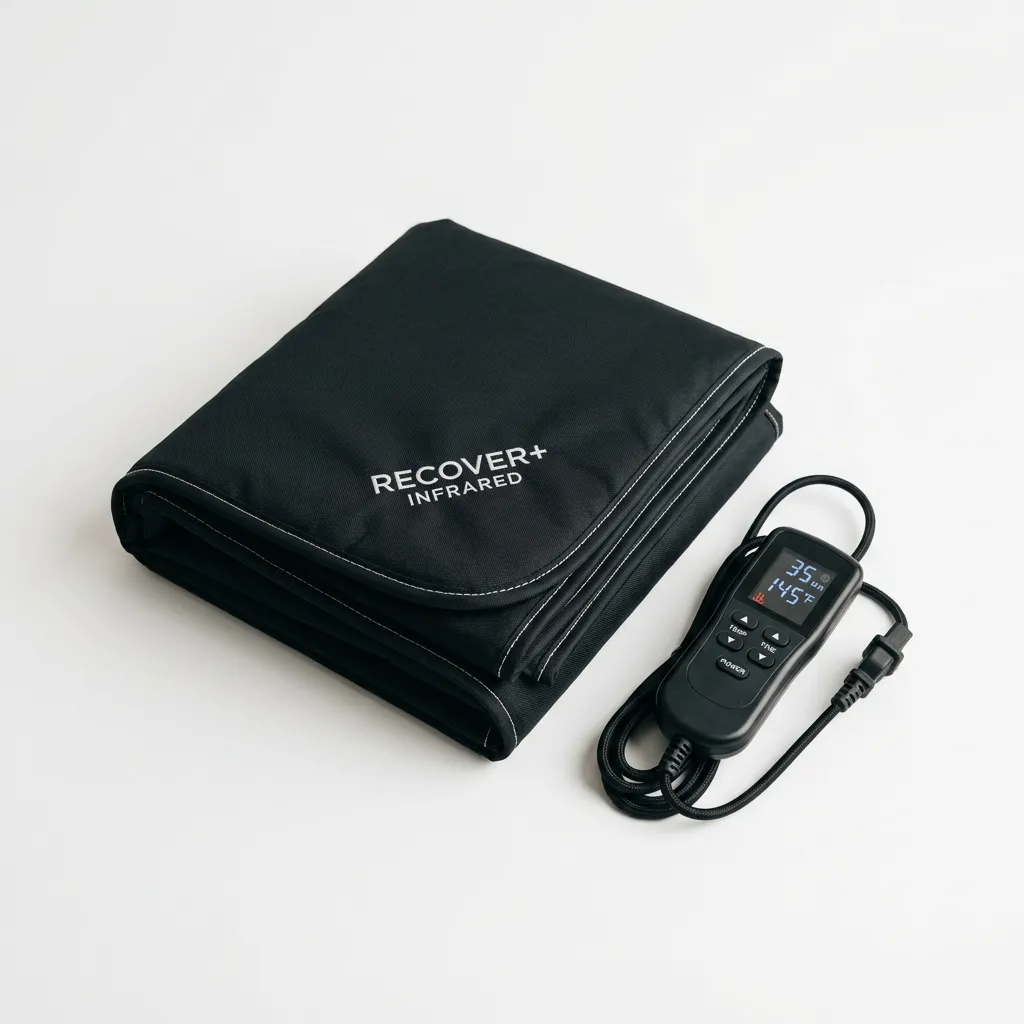
Infrared Sauna Blanket for Home Use
Infrared sauna blanket delivering deep thermal therapy, triggering heat shock proteins (HSP) and circulation.
- Far-infrared deep penetrating heat
- Triggers autophagy response & calorie burn
FAQ
How do I know if I have sleep apnea?
The most common signs are loud snoring, breathing pauses observed by the partner, daytime fatigue, morning headaches and unexplained high blood pressure. A sleep study by the doctor is necessary for the diagnosis.
Is sleep apnea dangerous?
Yes, untreated sleep apnea increases the risk of cardiovascular disease, type 2 diabetes, stroke, and traffic accidents due to daytime fatigue. It is a serious condition that requires treatment.
Can weight loss cure sleep apnea?
Yes, for many, weight loss can reduce or completely eliminate sleep apnea — especially if excess weight is the primary cause. But weight loss takes time, and CPAP should be used in the meantime for moderate to severe apnea.
Does sleep apnea affect blood sugar?
Yes, significantly. The lack of oxygen at night triggers a stress response that increases cortisol and blood sugar. Untreated sleep apnea is associated with poorer glycemic control and increased risk of type 2 diabetes.
How long does it take for CPAP to work?
Many experience better sleep quality and less daytime fatigue already after the first nights. Improvements in blood pressure and insulin sensitivity typically take weeks to months and require consistent use.
Why does obstructive sleep apnea drastically increase the risk of type 2 diabetes?
Recurrent nocturnal airway collapses cause intermittent hypoxia and micro-arousals, driving systemic surges of epinephrine and cortisol. This hormonal cascade directly inhibits peripheral glucose disposal and triggers excessive hepatic gluconeogenesis, producing profound insulin resistance.
What is the diagnostic pathway for sleep apnea in Denmark?
Diagnosis begins with a general practitioner referral to an ENT specialist (øre-næse-halslæge) or a regional hospital sleep clinic. The patient undergoes overnight home sleep polygraphy (CRM) to determine the Apnea-Hypopnea Index (AHI) and oxygen desaturation metrics.
Does continuous positive airway pressure (CPAP) improve metabolic parameters?
Yes. Adherent CPAP therapy (>4 hours per night) alleviates nocturnal hypoxemia, suppresses sympathetic overdrive, reduces blood pressure, and meaningfully enhances whole-body insulin sensitivity within months.
Sources and References
- [1]
- [2]
- [3]
- [4]
Show all 5 sources (1 more)
- [5]
Editorial History
1. June 2026
First publication
Initial version was published as part of the metabolic health with introduction, takeaways, FAQ, and reference block.
1. June 2026
Medical review
Phrasing, caveats, and internal links were reviewed for clarity, consistency, and YMYL alignment.
4. July 2026
Latest update
Sleep apnea and metabolic health received updated metadata, reference outputs, and improved decision-support structure.

Medical Review
Medical Review and Update Process
This article has been medically reviewed by Vadim Doroshenko with a focus on clinical accuracy, sources, disclaimers, and whether the conclusions still align with current scientific evidence.

Editorial Profile
Borys Viktorovytj Riabtsev
Borys Viktorovytj Riabtsev publishes Longevity Lab as a research-backed information project on precision medicine, metabolic health, and healthy aging, utilizing rigorous sources, independent medical review, and objective YMYL communication.