Key takeaways
- CoQ10 is biologically relevant, but not a universal energy source for everyone.
- The substance makes the most sense when assessed in the context of symptoms, age, medication and functional goals.
- It is most relevant in certain situations and not as a standard supplement for everyone.
- If the goal is more energy in everyday life, sleep, exercise, fluids and medication review are often more important first.
Medical disclaimer: Content is for informational purposes and does not replace medical advice.
What CoQ10 actually does in the body
CoQ10 is part of the electron transport chain and plays a role in the cells' energy production. This is part of the reason why the substance is often mentioned in connection with fatigue, heart function and healthy ageing. PMID 25282031 PMID 30302465
The biological role is real, but practical utility is something other than biological relevance. Many substances sound important at the molecular level without producing a large or obvious effect in real people. PMID 25282031 PMID 30302465
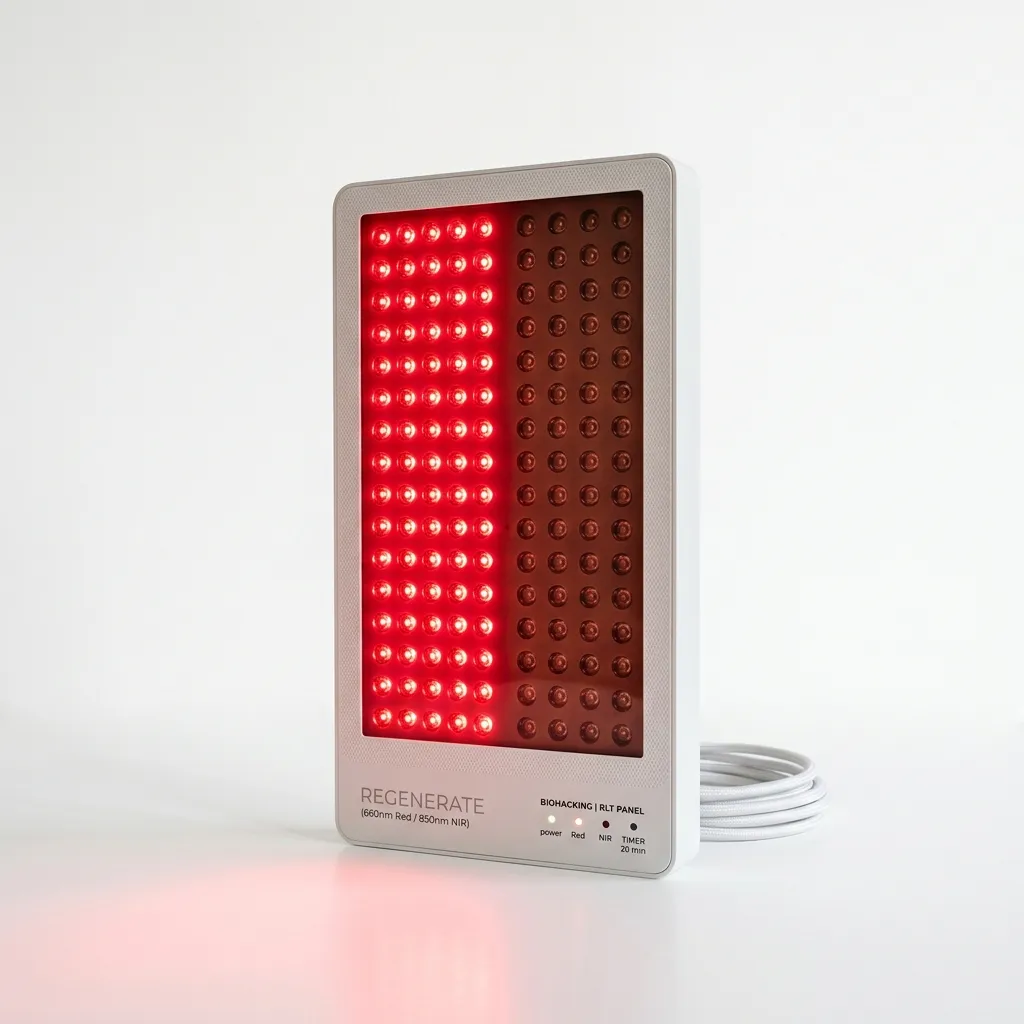
Red Light Therapy Panel (660nm / 850nm)
Clinically proven red and near-infrared light therapy for cellular energy, skin health and recovery.
- Dual wavelength (660nm Red + 850nm NIR)
- Stimulates mitochondrial ATP production
When Mitochondrial Supplements Make the Most Sense
CoQ10 is most relevant when there is a specific reason to consider it, for example age, medication profile or a limited question about energy and function. It's far less convincing as a default solution for anyone feeling a little lackluster. PMID 30302465 PMID 32330691
A good filter is to ask if there is a clear hypothesis and a realistic expectation. If the problem is just a vague desire for more energy, the likelihood of disappointment is greater. PMID 30302465 PMID 32330691
What you can realistically expect
The most realistic outcome is often a modest or unclear effect, not a dramatic energy boost. For some, it makes sense as a small part of a larger program. For others, it will be another supplement that takes up more space on the kitchen shelf than in everyday life. PMID 32330691 PMID 30528430
It is therefore important to assess utility in relation to price, compliance and alternatives. An expensive supplement with little effect can easily be less attractive than more sleep or a better training structure. PMID 32330691 PMID 30528430
When other measures are more important
If the fatigue is likely due to poor sleep, insufficient recovery, too little exercise, iron deficiency, illness or stress, CoQ10 is not the key answer. It's tempting to reach for an elegant supplement track, but the body often responds more clearly to basic improvements. PMID 30528430 PMID 29641571
Precisely for this reason, CoQ10 is best explained as a possible supplement and not as the foundation of a longevity program. PMID 30528430 PMID 29641571
Biochemical mechanism: electron shuttling across the mitochondrial respiratory chain
Coenzyme Q10 (ubiquinone/ubiquinol) is a lipophilic quinone embedded within the inner mitochondrial membrane, where it functions as an obligate mobile electron carrier. It shuttles reducing equivalents from Complex I (NADH:ubiquinone oxidoreductase) and Complex II (succinate dehydrogenase) directly to Complex III (cytochrome bc1 complex). PMID 25282031 PMID 30528430
This continuous electron transport powers proton translocation into the intermembrane space, maintaining the electrochemical proton gradient that drives ATP synthase. When mitochondrial CoQ10 concentrations decline, electron leakage increases, resulting in the generation of deleterious superoxide radicals and diminished aerobic phosphorylation in high-energy organs like the myocardium and skeletal muscle. PMID 25282031 PMID 30528430
Ubiquinol versus ubiquinone: molecular bioavailability and age-related decline
CoQ10 exists in two interchangeable redox states: the oxidized form (**ubiquinone**) and the fully reduced, active lipid antioxidant form (**ubiquinol**). In healthy young adults, greater than 90–95% of total circulating plasma CoQ10 circulates in the reduced ubiquinol form. PMID 30302465 PMID 30528430
With advancing age (particularly beyond age 45 to 50), endogenous hepatic and cardiac synthesis of CoQ10 declines substantially, accompanied by decreased enzymatic reduction kinetics via NADPH-dependent dehydrogenases. Pharmacokinetic studies confirm that pre-converted solubilized ubiquinol formulations demonstrate 3- to 4-fold higher systemic bioavailability compared to conventional crystalline ubiquinone capsules. PMID 30302465 PMID 30528430
Because CoQ10 is intensely hydrophobic, intestinal absorption requires incorporation into dietary lipid mixed micelles; it must always be ingested alongside meals containing dietary fats to trigger biliary secretion and enterocyte uptake. PMID 30302465 PMID 30528430
| Clinical Parameter | Ubiquinol (Reduced Form) | Ubiquinone (Oxidized Form) |
|---|---|---|
| Redox State | Fully reduced with two electron-donating hydroxyl groups | Oxidized dione quinone ring structure |
| Intestinal Bioavailability | Significantly superior oral bioavailability (3–4x) | Poor absorption; requires enterocyte enzymatic reduction |
| Physiological Action | Direct lipid-soluble antioxidant & electron carrier | Requires endogenous conversion to active ubiquinol |
| Target Demographic | Adults >50, patients with heart failure or on statin therapy | Younger individuals (<40) with intact enzymatic reduction |
Statin-induced mevalonate disruption and muscle-associated symptoms
HMG-CoA reductase inhibitors (statins) lower atherogenic LDL by blocking the rate-limiting enzyme of cholesterol synthesis. Crucially, this same mevalonate pathway produces farnesyl pyrophosphate—the obligate biochemical precursor for the polyisoprenoid side chain of coenzyme Q10. PMID 25282031 PMID 32330691
Clinical investigations consistently demonstrate that therapeutic statin administration depresses circulating and intramuscular CoQ10 concentrations by 40 to 50% within weeks of therapy initiation. This deficit is widely recognized as an aggravating factor in statin-associated muscle symptoms (SAMS), characterized by proximal myalgia, exercise intolerance, and subjective fatigue. PMID 25282031 PMID 32330691
While randomized trials show heterogeneous responses, preventive cardiologists frequently recommend adjunctive coenzyme Q10 supplementation (100–200 mg/day of ubiquinol) to replete intramuscular mitochondrial pools and preserve exercise adherence. PMID 25282031 PMID 32330691
Evidence-based dosing protocols, plasma benchmarks, and the selenium synergy
In preventive longevity practice, evidence supports daily dosages of 100 to 200 mg of ubiquinol taken with food. In the landmark Swedish **KiSel-10 study**, older community-dwelling adults (aged 70–88) received a daily co-supplementation of 200 mg CoQ10 and 200 µg of organic selenium yeast (SelenoPrecise) for four consecutive years. PMID 25282031 PMID 29641571
The 12-year prospective follow-up published in PLoS ONE demonstrated a persistent, statistically significant 40%+ reduction in cardiovascular mortality, sustained reductions in NT-proBNP (cardiac wall stress), and lowered circulating inflammatory biomarkers. Selenium acts as an essential cofactor for thioredoxin reductase, the primary enzyme regenerating oxidized CoQ10 back into active ubiquinol, creating a powerful biochemical synergy. PMID 25282031 PMID 29641571
Clinical therapeutic efficacy can be verified through serum coenzyme Q10 quantification via reference laboratories, targeting a steady-state therapeutic plasma concentration above 2.5 to 3.0 µg/mL (>3.5 µmol/L). PMID 25282031 PMID 29641571
Internal Further Reading
Read also in the same cluster
Outlive: The Science & Art of Longevity
Dr. Peter Attia's groundbreaking guide to preventive medicine, exercise for longevity, and healthy aging.
- Scientific framework for Medicine 3.0
- Actionable guide on sleep, exercise & nutrition
FAQ
Is CoQ10 a good supplement for mitochondria?
CoQ10 may be a relevant dietary supplement for mitochondria in selected situations, but it is not a universal quick fix for fatigue or low energy. Context, symptoms and alternatives matter more than hype.
Is CoQ10 relevant in longevity?
Yes, as a mitochondrial and energy-related supplement track, but not as the foundation of a longevity program.
Should everyone be taking CoQ10?
No. It should be assessed in context and not applied as a broad routine without reason.
Which form of CoQ10 is superior: ubiquinol or ubiquinone?
Ubiquinol is generally superior, particularly for individuals over age 45 or those taking statin medications, because it is already in the biologically active, reduced antioxidant state and achieves 3 to 4 times higher plasma bioavailability.
Should CoQ10 be taken in the morning or evening?
CoQ10 is best consumed in the morning or early afternoon with a meal containing healthy fats (such as avocado, whole eggs, or olive oil). Because it enhances cellular ATP production, taking it late at night can cause mild alertness or disrupted sleep in sensitive individuals.
Can sufficient therapeutic CoQ10 be obtained from whole food sources?
No. Dietary intake from animal organs (beef heart, liver) and wild oily fish provides only about 3 to 5 mg of CoQ10 daily. Achieving clinical therapeutic levels of 100 to 200 mg purely through food is practically unfeasible.
Sources and References
- [1]
- [2]
- [3]
- [4]
Show all 5 sources (1 more)
- [5]
Editorial History
16. April 2026
First publication
Initial version was published as part of the healthy aging with introduction, takeaways, FAQ, and reference block.
16. April 2026
Medical review
Phrasing, caveats, and internal links were reviewed for clarity, consistency, and YMYL alignment.
4. July 2026
Latest update
CoQ10 and mitochondria received updated metadata, reference outputs, and improved decision-support structure.

Medical Review
Medical Review and Update Process
This article has been medically reviewed by Vadim Doroshenko with a focus on clinical accuracy, sources, disclaimers, and whether the conclusions still align with current scientific evidence.

Editorial Profile
Borys Viktorovytj Riabtsev
Borys Viktorovytj Riabtsev publishes Longevity Lab as a research-backed information project on precision medicine, metabolic health, and healthy aging, utilizing rigorous sources, independent medical review, and objective YMYL communication.