Key takeaways
- Mitochondria function is about energy, signalling, stress response and cleaning up damaged mitochondria.
- Regular Zone 2 training is one of the most practical tools for mitochondrial adaptation over time.
- NMN, NR, urolithin A and CoQ10 are interesting, but the evidence varies and is not the same for everyone.
- VO2 max is one of the most relevant functional markers in longevity.
Medical disclaimer: Content is for informational purposes and does not replace medical advice.
What do mitochondria do in the body?
Mitochondria are central to ATP production, oxidative metabolism and signaling between cells. When mitochondria function is better, it is often seen indirectly as better endurance, more stable energy and better metabolic flexibility. NIH Intramural Research Program PMC
They are also part of the cell's stress response. Mitophagy, ie cleaning up damaged mitochondria, is a related track, but not the same as just taking an energy supplement. That's one of the reasons why the longevity field links mitochondria to inflammaging, neurodegeneration, muscle aging and metabolic health. NIH Intramural Research Program PMC

Red Light Therapy Panel (660nm / 850nm)
Clinically proven red and near-infrared light therapy for cellular energy, skin health and recovery.
- Dual wavelength (660nm Red + 850nm NIR)
- Stimulates mitochondrial ATP production
Zone 2 and VO2 max are not just fitness language
Zone 2 training is relevant because it stimulates mitochondrial biogenesis and improves the ability to use fat and oxygen efficiently. The most useful thing is usually to build volume gradually and keep the effort regular rather than locking in a single weekly number. PMC PMC
VO2 max is also one of the most robust functional markers of healthy ageing. A higher level is generally associated with better reserve capacity, and reserve capacity means a lot when the body is challenged by illness, surgery or age. PMC PMC
Supplements for mitochondria: the tracks everyone is talking about
NAD+ boosters such as NMN and NR are popular because NAD+ is involved in key energy processes. Urolithin A is interesting for mitophagy, while CoQ10 is associated with electron transport and energy generation. These are legitimate biological clues, but they are not universal quick fixes, and they should not overshadow mitochondria training. PMC PMC
For some, supplementation may make sense in a specific context, but the baseline should still be diet quality, sleep, exercise and clinical overview. This is also where critical thinking is important: products are often marketed as safer than the data justifies. PMC PMC
Mitochondria tracks in brief
Many people encounter a whole forest of names, all of which promise more energy. The table shows the difference between the most talked about tracks without making any of them miracle tools. PMC National Institute on Aging
The future will be more precise
The convergence between AI, genomics, regenerative medicine, multiomics and digital biomarkers can over time provide a much more personal picture of energy metabolism and response to interventions. This is part of the reason why precision medicine occupies so much space in the longevity market. National Institute on Aging
But the annual version of the timeline is that most people still get the most impact from classic habits. Future data may be more elegant, but they will not replace the physiological work of the present. National Institute on Aging
Translating mitochondrial biology into functional human capacity
Mitochondria are universally nicknamed the powerhouses of the cell, but their true physiological relevance centers on functional metabolic capacity: how efficiently tissues oxidize oxygen, fatty acids, and carbohydrates to generate adenosine triphosphate (ATP). Robust mitochondrial function directly underpins superior cardiorespiratory fitness (VO2 max), rapid post-exercise recovery, systemic metabolic flexibility, and cellular resistance to oxidative stress. NIH Intramural Research Program PMC National Institute on Aging
As mitochondrial volume and electron transport chain efficiency decline with chronological age, peripheral tissues prematurely shift to anaerobic glycolysis at lower workloads. This premature threshold crossing precipitates early muscular fatigue, blunts lipid oxidation, and accelerates intracellular metabolite accumulation. NIH Intramural Research Program PMC National Institute on Aging
Physical exercise remains the definitive mitochondrial stimulus
While commercial wellness searches frequently hunt for pills to repair cellular energy, structured physical exercise remains the single most potent and verified stimulus for mitochondrial health. Muscular contractions deplete high-energy phosphates, activating adenosine monophosphate-activated protein kinase (AMPK) and triggering expression of peroxisome proliferator-activated receptor-gamma coactivator 1-alpha (PGC-1alpha)—the master transcriptional regulator of mitochondrial biogenesis. PMC PMC National Institute on Aging
An evidence-based training protocol combines two distinct physiological adaptations: extensive Zone 2 steady-state cardiovascular conditioning (driving capillary angiogenesis and mitochondrial cristae density in slow-twitch fibers) coupled with weekly high-intensity interval training (HIIT) or heavy resistance training to maximize oxidative enzyme kinetics. PMC PMC National Institute on Aging
| Training Modality | Mitochondrial Adaptation | Common Execution Error |
|---|---|---|
| Zone 2 Endurance Training | Expands mitochondrial volume and fatty acid oxidation enzymes | Exceeding aerobic threshold into chronic gray-zone fatigue. |
| High-Intensity Intervals | Upregulates mitochondrial respiratory capacity and enzyme density | Inadequate inter-session recovery undermining adaptation. |
| Progressive Resistance Exercise | Enhances muscle cross-sectional area and glucose sink capacity | Stagnant loading lacking progressive mechanical tension. |
Mitophagy, quality control, and organelle turnover
Sustained bioenergetic health requires both mitochondrial biogenesis and the selective clearance of depolarized, dysfunctional mitochondria—a specialized autophagy process known as mitophagy. When mitochondrial outer membrane potential collapses under oxidative insult, serine/threonine-protein kinase PINK1 accumulates on the membrane, recruiting cytosolic Parkin E3 ubiquitin ligase to flag the damaged organelle for autophagosomal engulfment. PMC PMC
Nutraceuticals like urolithin A (derived via gut microbiome conversion of ellagitannins) and NAD+ precursors are actively studied for their capacity to enhance mitophagy. However, muscular contraction and energetic fluctuation during exercise remain the most robust physiological catalysts for coordinated mitochondrial turnover and organelle renewal. PMC PMC
Internal Further Reading
Read also in the same cluster
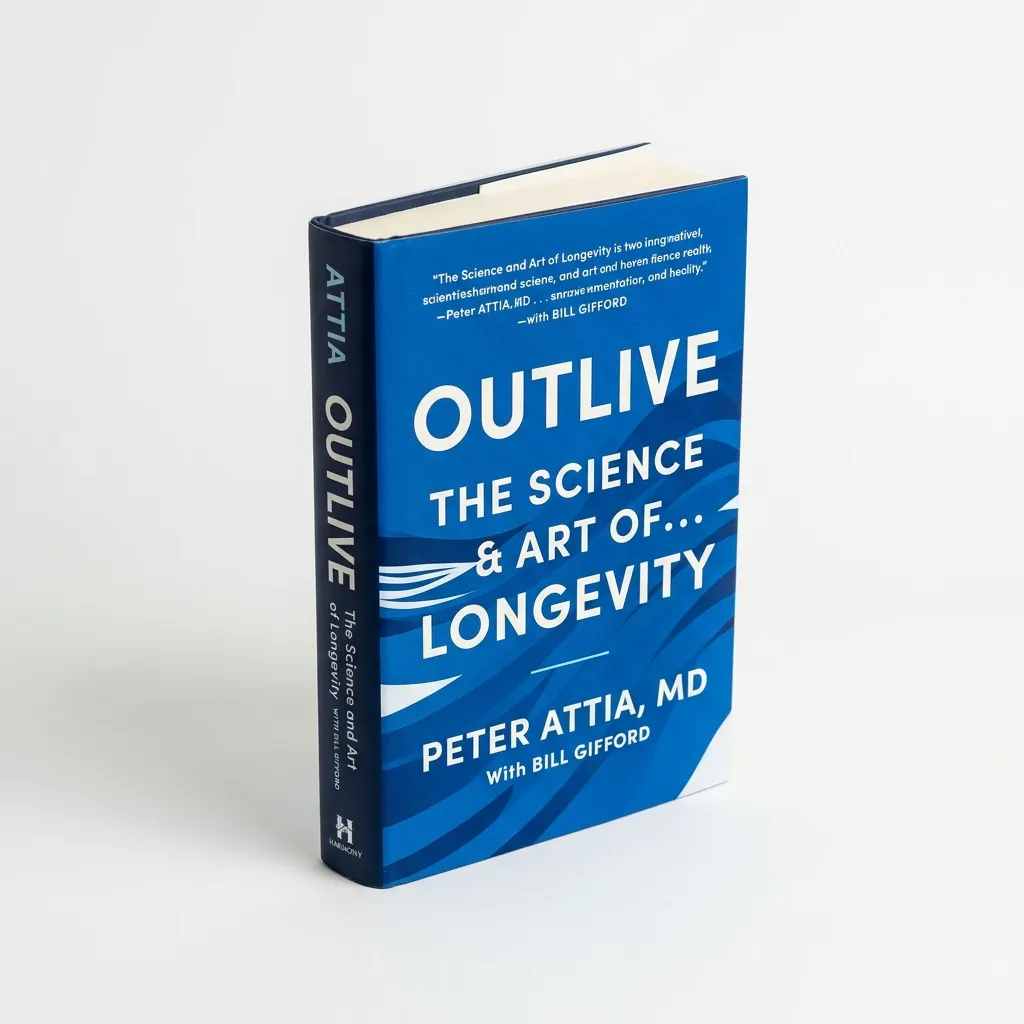
Outlive: The Science & Art of Longevity
Dr. Peter Attia's groundbreaking guide to preventive medicine, exercise for longevity, and healthy aging.
- Scientific framework for Medicine 3.0
- Actionable guide on sleep, exercise & nutrition
FAQ
What does mitochondria function?
Mitochondrial function describes how well the cells convert energy, handle stress, signal and clean up damaged mitochondria through processes such as mitophagy.
What do mitochondria do in the body?
Mitochondria are central to aerobic energy metabolism, oxidative metabolism and signaling between cells. In practice, this means that they help support endurance, metabolic flexibility and how robustly the body reacts to stress.
Is exercise more important than supplements?
Yes, for most people. Regular cardio and strength training produces more consistent effects on mitochondrial function than most supplements.
Why is VO2 max mentioned so often in longevity?
Because it reflects aerobic capacity and reserve. Higher VO2 max is generally associated with better function and a better outlook through aging.
Which supplements for mitochondria are most often mentioned?
NMN, NR, urolithin A and CoQ10 are among the most talked about supplements for mitochondria. They have different rationales, but none of them beat the foundations of exercise, sleep and metabolic health.
Which track should you start with?
For most, the most robust starting point is Zone 2, strength training and better recovery, because they affect the whole system and not just a single molecule.
Can a dietary supplement single-handedly repair damaged mitochondria?
No. No compound can replicate the systemic mechanical, energetic, and hormonal signals induced by muscular exercise. While cofactors like CoQ10 and urolithin A support biochemical steps, aerobic endurance and resistance training remain the indispensable foundation.
How does mitophagy differ from standard mitochondrial function?
Mitophagy is a specific quality-control mechanism: the targeted lysosomal degradation and recycling of depolarized, damaged mitochondria to prevent excessive reactive oxygen species (ROS) production and cellular apoptosis.
What is the primary function of mitochondria in simple terms?
Mitochondria convert oxygen and dietary substrates (glucose and fatty acids) into ATP, the universal cellular energy currency. They also govern cellular signaling, calcium homeostasis, and metabolic flexibility.
Sources and References
- [1]
- [2]
- [3]
- [4]
Show all 5 sources (1 more)
- [5]
Editorial History
14. April 2026
First publication
Initial version was published as part of the metabolic health with introduction, takeaways, FAQ, and reference block.
14. April 2026
Medical review
Phrasing, caveats, and internal links were reviewed for clarity, consistency, and YMYL alignment.
28. April 2026
Latest update
Mitochondria function received updated metadata, reference outputs, and improved decision-support structure.

Medical Review
Medical Review and Update Process
This article has been medically reviewed by Vadim Doroshenko with a focus on clinical accuracy, sources, disclaimers, and whether the conclusions still align with current scientific evidence.

Editorial Profile
Borys Viktorovytj Riabtsev
Borys Viktorovytj Riabtsev publishes Longevity Lab as a research-backed information project on precision medicine, metabolic health, and healthy aging, utilizing rigorous sources, independent medical review, and objective YMYL communication.