Key takeaways
- Zone 2 is one of the most reliable tools for improving aerobic capacity and metabolic flexibility over time.
- The correct intensity often feels easier than many expect, which is why so many miss.
- Zone 2 works best as a base layer during a program that also contains strength training and dosed intensity peaks.
- Continuity is more important than perfect gadgets or complicated heart rate zones.
Medical disclaimer: Content is for informational purposes and does not replace medical advice.
Why aerobic base still matters
In a longevity perspective, fitness is not about exercise identity. It is about how efficiently the body can produce energy, regulate stress and maintain work capacity with increasing age. Here, Zone 2 is a cornerstone. PMID 29464636 PMID 30347059
The big advantage of this form of training is that it reaches a level where the body works aerobically to a large extent and can maintain the effort long enough to create solid adaptations. PMID 29464636 PMID 30347059
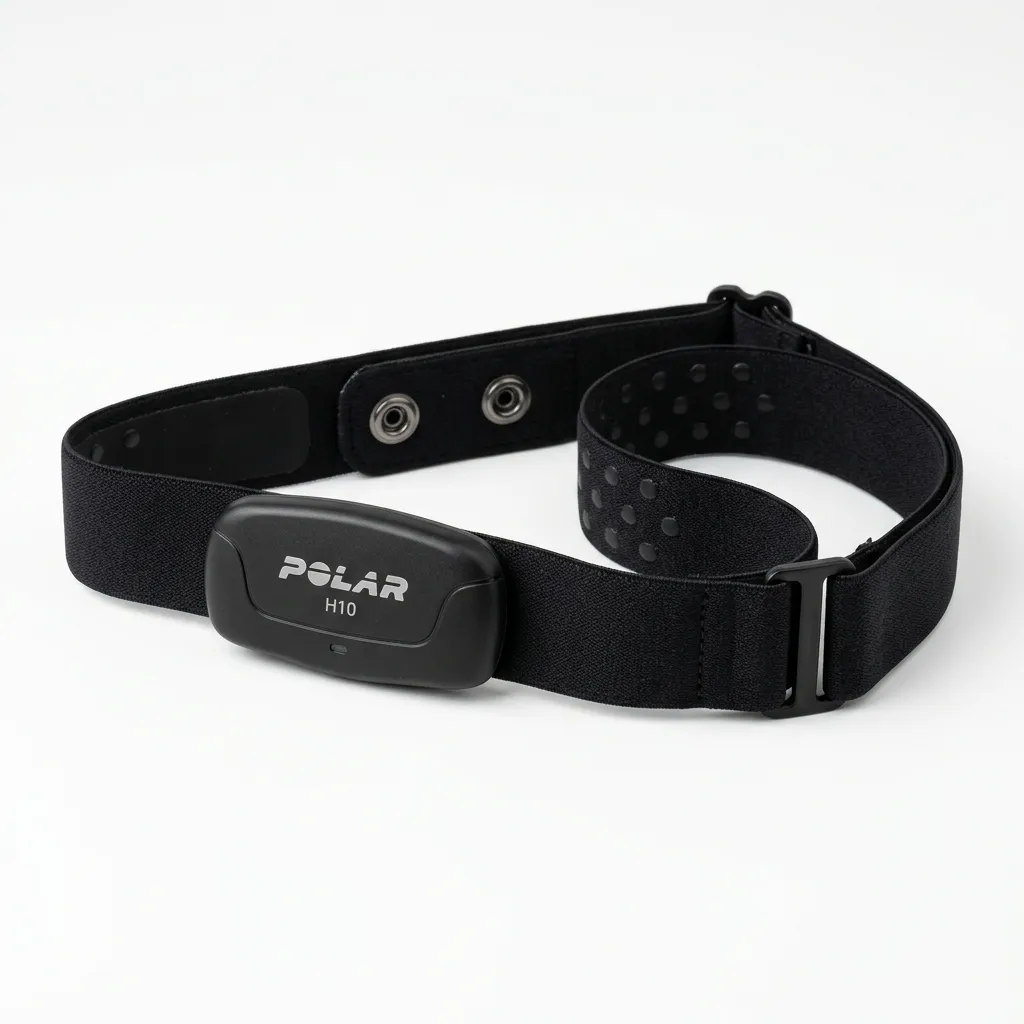
Polar H10 Heart Rate Monitor & HRV Sensor
The gold standard chest strap monitor for accurate Heart Rate Variability (HRV) and Zone 2 training.
- ECG-accurate HRV and heart rate zone tracking
- Dual Bluetooth & ANT+ connectivity
How to find the right intensity
Zone 2 is not a number printed on the Internet. The right intensity depends on your current level, your recovery and how you respond. A good rule of thumb is that you can speak in short sentences but not carry on long rambling conversations. PMID 30347059 PMID 29617642
If you constantly push yourself to a too hard intensity, the training becomes more taxing and less sustainable. If, on the other hand, you always lie too low, the stimuli will be too weak. PMID 30347059 PMID 29617642
How it fits into a whole week
Zone 2 is most effective as a base, not as the only training. For healthy aging, the program should normally also include strength training for muscle mass and bones, as well as smaller doses of high-intensity work for VO2 max and resilience. PMID 29617642 PMID 30485141
The good program is therefore rarely extreme. Rather, it is steady, rhythmic and built to be completed week after week without wrecking recovery. PMID 29617642 PMID 30485141
Zone 2 compared to other training tracks
Many readers become uncertain because they encounter Zone 2 as if it is all or nothing. In practice, it works best together with other forms of training. PMID 30485141 PMID 20861529
The table shows the difference between base work, intervals and strength. PMID 30485141 PMID 20861529
Entry level and progression without overthinking
The biggest practical problem with Zone 2 is rarely physiology but dosage. Some start way too hard, while others become so careful that the load never becomes real enough to move anything. PMID 20861529
A simple progression is usually better than perfect zone theory. The table helps you choose a realistic starting point. PMID 20861529
The most common mistakes
Many use Zone 2 as another opportunity to compete. The result is that they place too much importance on each session and, in practice, put together a training in the middle between quality and recovery. It becomes too hard to be light and too light to be really hard. PMID 20861529
Another classic mistake is overestimating gadgets and underestimating volume. Measurements are useful, but the adaptations come from regular work, not from a beautiful dashboard. PMID 20861529
A simple example of a week
If you want to get started without overthinking it, a week can be structured very simply. Two long Zone 2 sessions, two shorter sessions, two strength sessions and a day of active recovery can take most people surprisingly far. PMID 20861529
The most important thing is that the program is realistic enough to last. Longevity is created more by repetition than by heroic bursts. PMID 20861529
Physiological Definition and Lactate Kinetics: MCT1 Clearance and Muscle Fiber Types
In contemporary longevity medicine — championed by Dr. Iñigo San-Millán and Dr. Peter Attia — **Zone 2** is defined not merely by an arbitrary heart rate range, but by an exacting metabolic milestone. Zone 2 represents the highest exercise intensity at which circulating blood lactate remains stable at baseline (**between 1.5 and 2.0 mmol/L**), because lactate production is perfectly balanced by cellular lactate clearance. PMID 29464636 PMID 29617642
During muscular contractions, glycolytic fast-twitch Type IIa fibers are recruited, metabolizing glycogen into pyruvate and generating lactate and hydrogen ions. In accordance with George Brooks' *Lactate Shuttle Theory*, this lactate is rapidly transported into slow-twitch oxidative Type I fibers via **monocarboxylate transporter 1 (MCT1)** proteins. Inside the mitochondria of Type I fibers, lactate is reconverted into pyruvate and oxidized as aerobic fuel. As long as you remain strictly within Zone 2, lactate does not accumulate systemically, and muscular acidosis is prevented. PMID 29464636 PMID 29617642
Exceeding Zone 2 even marginally (shifting into Zone 3/4) pushes lactate generation beyond Type I MCT1 uptake capacity. This elevates cytosolic malonyl-CoA, which directly inhibits carnitine palmitoyltransferase-1 (CPT-1) — the gating enzyme responsible for shuttling fatty acids into the mitochondrial matrix. The downstream consequence is an immediate shutdown of mitochondrial beta-oxidation and an involuntary shift toward pure carbohydrate glycolysis. PMID 29464636 PMID 29617642
Mitochondrial Biogenesis, FatMax, and Metabolic Flexibility
The fundamental biological rationale for prioritizing Zone 2 as a longevity pillar is that this metabolic window elicits the peak rate of whole-body lipid oxidation (**FatMax** — typically 0.4–0.6 g of fat per minute). This sustained requirement challenges and rebuilds mitochondrial enzymatic architecture. PMID 29464636 PMID 30485141
Sustained moderate aerobic work engages signaling cascades governed by **AMPK** (AMP-activated protein kinase) and **PGC-1alpha** (peroxisome proliferator-activated receptor gamma coactivator 1-alpha). PGC-1alpha acts as the master regulator of **mitochondrial biogenesis** — orchestrating the synthesis of new mitochondria, expanding inner mitochondrial cristae surface area, and upregulating electron transport chain complexes I through V. PMID 29464636 PMID 30485141
In sedentary individuals or those with insulin resistance, impaired mitochondria lead to pathological accumulation of intramyocellular lipids (IMCL) and diacylglycerols, which blunt insulin cascade phosphorylation. Consistent Zone 2 training restores mitochondrial volume and reinstates **metabolic flexibility**: the cellular capacity to seamlessly burn fat at rest and low intensities, while reserving glucose for demanding physical and cognitive tasks. PMID 29464636 PMID 30485141
Polarized 80/20 Training Distribution and Testing Protocols (Lactate Meter vs. Talk Test)
Epidemiological and exercise physiology investigations in endurance cohorts and aging populations, including landmark work by Dr. Stephen Seiler, demonstrate that a **polarized 80/20 training distribution** yields superior longevity and cardiorespiratory outcomes. The model prescribes allocating approximately **80% of total weekly endurance training volume** to Zone 2 (aerobic foundation), reserving the remaining **20%** for high-intensity Zone 5 work (VO2 max intervals). PMID 30347059 PMID 20861529
This deliberate architecture strictly bypasses the chronic fatigue 'black hole' of Zone 3 and Zone 4: a moderately strenuous threshold pace that induces substantial autonomic and muscular strain, impeding quick recovery without eliciting maximal VO2 max adaptations or optimal fat oxidation pathways. PMID 30347059 PMID 20861529
To verify Zone 2 intensity in practice, three diagnostic protocols are utilized: 1. **Blood Lactate Meter (Gold Standard)**: A fingerprick blood sample drawn after 15–20 minutes of steady work. Target reading: 1.5–2.0 mmol/L. 2. **Ventilatory Talk Test**: You must be capable of speaking in continuous, complete sentences without gasping, though your breathing is deliberate and audible. If you can only manage 3–4 words per breath, you have crossed into Zone 3. 3. **Heart Rate Benchmarks**: Generally 65–75% of maximal heart rate, or the Maffetone formula (180 minus age), adjusting for cardiac drift across extended 45–60 minute sessions. PMID 30347059 PMID 20861529
| Training Zone | Intensity (% HR Max) | Blood Lactate (mmol/L) | Primary Substrate | Core Longevity Adaptation |
|---|---|---|---|---|
| Zone 1 (Active Recovery) | < 60% HR max | < 1.2 mmol/L | Fat (low oxidation rate) | Parasympathetic restoration, lymphatic drainage, and metabolic waste clearance |
| Zone 2 (Aerobic Base) | 60–75% HR max | 1.5–2.0 mmol/L | Maximal Fat Oxidation (FatMax) | Mitochondrial biogenesis, MCT1 lactate clearance, capillarization, metabolic health |
| Zone 3 (Tempo / 'Black Hole') | 75–82% HR max | 2.0–3.5 mmol/L | Mixed fat and muscle glycogen | Substantial autonomic strain with suboptimal return; suppresses lipid oxidation |
| Zone 4 (Lactate Threshold) | 82–90% HR max | 3.5–4.5 mmol/L | Predominantly glycolysis (carbs) | Anaerobic buffering capacity and functional threshold power (FTP/LT2) |
| Zone 5 (VO2 Max) | > 90% HR max | > 5.0–8.0+ mmol/L | Virtually pure carbohydrate | Peak stroke volume, cardiac remodeling, and maximal aerobic capacity |
Internal Further Reading
Read also in the same cluster
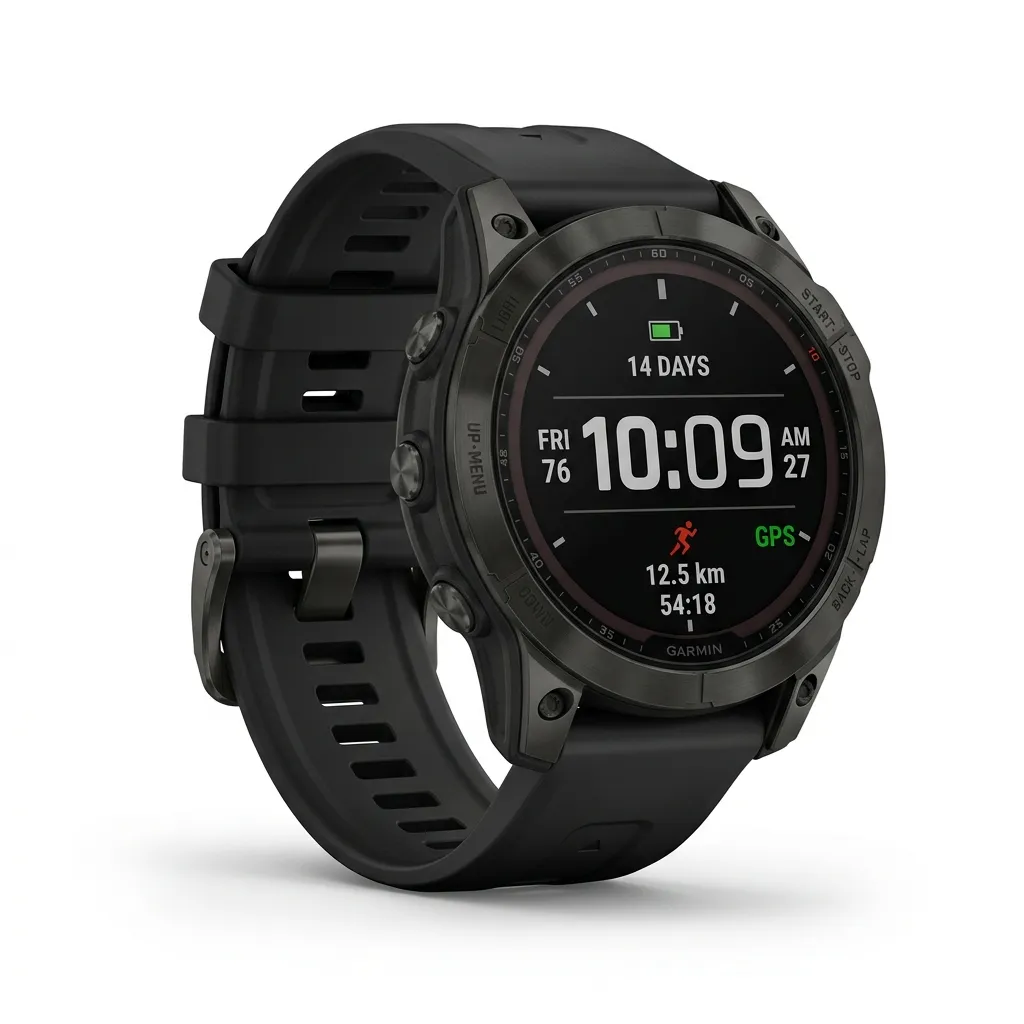
Garmin Fenix 7 Pro Multisport Watch
Flagship multisport watch with solar charging, advanced VO2 max analytics, HRV status and stamina score.
- Multi-week battery life with solar charging
- Precision heart rate & VO2 Max estimation
FAQ
Can I do Zone 2 without a heart rate monitor?
Yes. Heart rate is useful, but perceived exertion and speech tests are often good enough to get very close to the right zone.
Is time enough for Zone 2?
For some, yes, especially if the pace, hills or incline on the treadmill provide sufficient stress. For others, it requires cycling, running or another modality.
How quickly is the effect seen?
Early changes may appear over weeks to months, but the timeline varies with starting point, volume, regularity and the way the effect is measured.
Is Zone 2 enough on its own?
Rarely. Zone 2 is a strong base layer, but most people get more out of combining it with strength training and smaller doses of harder work.
Do I have to measure everything to get started?
No. A simple heart rate strategy, perceived exertion and regularity is often enough to start with.
Can Zone 2 be used during weight loss or a GLP-1 course?
Yes, often with great advantage. Especially during periods of weight loss or appetite suppression, Zone 2 can be a more durable way to protect aerobic capacity and metabolic flexibility than constant hard training.
How many minutes of Zone 2 training per week are required for optimal longevity?
Peer-reviewed literature suggests an absolute baseline of 150 minutes weekly distributed across 3–4 sessions of 45–60 minutes. For superior mitochondrial remodeling and metabolic disease prevention, aim for 180–240 minutes per week, paired with one focused weekly Zone 5 session.
Can high-intensity interval training (HIIT) replace Zone 2 to save time?
No. While HIIT drives rapid gains in VO2 max and ventricular stroke volume, it preferentially recruits glycolytic Type II fibers and spikes systemic lactate, shutting down fat oxidation. Mitochondrial density in oxidative Type I fibers and MCT1 clearance enzymes require the sustained, aerobic volume unique to Zone 2.
How do I determine if I am in Zone 2 without a fingerprick lactate meter?
Employ the 'talk test': You should be able to speak comfortably in complete sentences without gasping for air, though breathing remains deep and audible. Alternatively, enforce nasal-only breathing throughout the bout — if you are forced to inhale through your mouth, your intensity has exceeded Zone 2.
Sources and References
- [1]
- [2]
- [3]
- [4]
Show all 5 sources (1 more)
- [5]
Editorial History
14. April 2026
First publication
Initial version was published as part of the healthy aging with introduction, takeaways, FAQ, and reference block.
14. April 2026
Medical review
Phrasing, caveats, and internal links were reviewed for clarity, consistency, and YMYL alignment.
14. April 2026
Latest update
Zone 2 training received updated metadata, reference outputs, and improved decision-support structure.

Medical Review
Medical Review and Update Process
This article has been medically reviewed by Vadim Doroshenko with a focus on clinical accuracy, sources, disclaimers, and whether the conclusions still align with current scientific evidence.

Editorial Profile
Borys Viktorovytj Riabtsev
Borys Viktorovytj Riabtsev publishes Longevity Lab as a research-backed information project on precision medicine, metabolic health, and healthy aging, utilizing rigorous sources, independent medical review, and objective YMYL communication.