Key takeaways
- Muscle mass and strength are central to function, fall risk, glucose management and reserve capacity.
- Progressive strength training also works after 60 if it is dosed realistically and consistently.
- Protein and recovery are just as important as the training itself.
- Longevity is not only about living long, but about maintaining capacity.
Medical disclaimer: Content is for informational purposes and does not replace medical advice.
Why muscle is longevity capital
Muscle tissue is active metabolic tissue that helps with glucose handling, balance, bone load and function in everyday life. When muscle mass and strength decrease, resilience to illness, inactivity and surgery often also decreases. PMID 30312372 PMID 28698222
This is why muscle mass occupies so much space in modern longevity clinics and in the broader focus on precision medicine and metabolic health. It is one of those areas where action often gives more than theory. PMID 30312372 PMID 28698222

Smart Body Composition Scale
Advanced bioimpedance scale tracking muscle mass, body fat percentage, bone density and hydration.
- Tracks muscle mass & visceral fat
- Wireless sync with health apps
Strength training after 50 and 60 still works
One of the biggest myths is that it's too late. Although younger people typically build faster, older adults can still significantly improve strength and often also build or maintain muscle mass if they train consistently. PMID 28698222 PMID 21978586
The most important thing is progressive loading, not perfect programming. Two to four weekly sessions of few core lifts and controlled progression are too many to move anything meaningful. PMID 28698222 PMID 21978586
Protein, energy and recovery
Many underestimate how much adequate protein and overall energy means for adaptation. If the diet is too low, or if the appetite decreases with age, the effect of strength training is often less than expected. PMID 21978586 PMID 31343601
Sleep and recovery are also essential. Deep sleep, total sleep volume and realistic exercise frequency mean more to progress than most supplements. PMID 21978586 PMID 31343601
Three building blocks that should work together
Many see muscle mass as a pure training issue or a pure protein issue. In practice, the system works best when several building blocks work together. Results often fail when one important factor is missing. PMID 31343601 PMID 21205966
Muscles, fitness and the big connection
The best longevity program is rarely just strength or just conditioning. Muscles protect function, while Zone 2 and better VO2 max protect aerobic reserve and cardiovascular capacity. Together, they provide a stronger physiological safety net. PMID 21205966
This is also why the modern longevity movement uses multiple layers: strength, conditioning, blood tests, digital biomarkers and sometimes wearables. But the foundation is still the daily work. PMID 21205966
Sarcopenia vs dynapenia: Age-related anabolic resistance and motor unit denervation
In preventive gerontology, a crucial distinction exists between two interrelated degenerative processes: **Sarcopenia** (the progressive involuntary loss of skeletal muscle mass) and **Dynapenia** (the age-associated decline in muscle strength and neuromuscular power). Longitudinal studies reveal that functional power declines two to three times faster than muscle bulk — plummeting 2-4% annually past age 60 compared to 1-2% for muscle mass. PMID 30312372 PMID 21978586
This deterioration is orchestrated by two primary neurobiological mechanisms: First, the selective apoptosis and denervation of high-threshold glycolytic Type II (fast-twitch) motor units, severely blunting the neuromuscular Rate of Force Development (RFD). Second, senescent muscle tissue exhibits **anabolic resistance**: a blunted mTORC1 responsiveness to hyperaminoacidemia, requiring older adults to consume significantly higher per-meal leucine concentrations to trigger muscle protein synthesis. PMID 30312372 PMID 21978586
In the absence of targeted heavy resistance loading, contractile muscle fibers are progressively infiltrated by inter- and intramuscular adipose tissue (myosteatosis), compounding systemic insulin resistance and frailty risks. PMID 30312372 PMID 21978586
Clinical diagnostic benchmarks: DEXA ALMI, chair stand test, and gait speed
The European Working Group on Sarcopenia in Older People (EWGSOP2) established a standardized diagnostic framework for identifying sarcopenia in adults aged 50 and beyond. PMID 30312372 PMID 21205966
Assessment initiates with functional strength screening via isometric dynamometry (<27 kg in men, <16 kg in women) or the 5-times sit-to-stand chair rise test, where completion times exceeding 15 seconds define probable sarcopenia (dynapenia). PMID 30312372 PMID 21205966
Upon positive screening, muscle quantity is objectively quantified using dual-energy X-ray absorptiometry (DEXA): Appendicular Lean Mass Index (ALMI — lean soft tissue mass in all four limbs adjusted for height squared). Cutoffs of <7.0 kg/m² for men and <5.5 kg/m² for women confirm definitive sarcopenia. Functional gait speed testing (where velocities <0.8 m/s denote severe sarcopenia) serves as an independent predictor of all-cause mortality. PMID 30312372 PMID 21205966
The table below outlines official clinical thresholds per EWGSOP2 consensus standards. PMID 30312372 PMID 21205966
| Clinical Parameter | EWGSOP2 Cutoff (Men) | EWGSOP2 Cutoff (Women) | Clinical Interpretation |
|---|---|---|---|
| Grip Strength (Handheld Dynamometer) | <27 kg | <16 kg | Identifies diminished muscular strength (probable sarcopenia). |
| Chair Rise Test (5 repetitions) | >15 seconds | >15 seconds | Quantifies lower-extremity functional strength and dynamic balance. |
| DEXA ALMI (Appendicular Lean Mass) | <7.0 kg/m² | <5.5 kg/m² | Objectively confirms inadequate skeletal muscle mass (sarcopenia). |
| Gait Speed (4-meter course) | <0.8 m/s | <0.8 m/s | Categorizes severe sarcopenia with high predictive risk for falls and frailty. |
Nutritional and training architecture: Leucine threshold, creatine, and power training
Overcoming anabolic resistance past age 50 and 60 necessitates a synchronized nutritional and biomechanical framework: PMID 28698222 PMID 21978586 PMID 31343601
1. **Protein dosing and the leucine trigger**: Daily protein consumption should target 1.4 to 1.8 g/kg body weight (substantially higher than the standard baseline of 0.8 g/kg). Main meals should deliver 35–45 g of complete, high-biological-value protein to ensure surpassing the critical ~3.0 g leucine threshold required to initiate ribosomal translation in aging myocytes. PMID 28698222 PMID 21978586 PMID 31343601
2. **Creatine monohydrate supplementation**: Daily co-ingestion of 3-5 g of creatine monohydrate elevates intramuscular phosphocreatine reserves, accelerates satellite cell proliferation, and enhances training-induced strength adaptations by 10-15% across older cohorts. PMID 28698222 PMID 21978586 PMID 31343601
3. **Velocity-based power training**: While conventional resistance training emphasizes controlled tempo, mature adults critically require power training: executing moderate external resistance (50-60% of 1RM) with maximal intended concentric velocity (such as standing up briskly or rapid leg presses). This preferentially activates dormant Type II fibers, essential for recovering balance upon a sudden stumble. PMID 28698222 PMID 21978586 PMID 31343601
Internal Further Reading
Read also in the same cluster
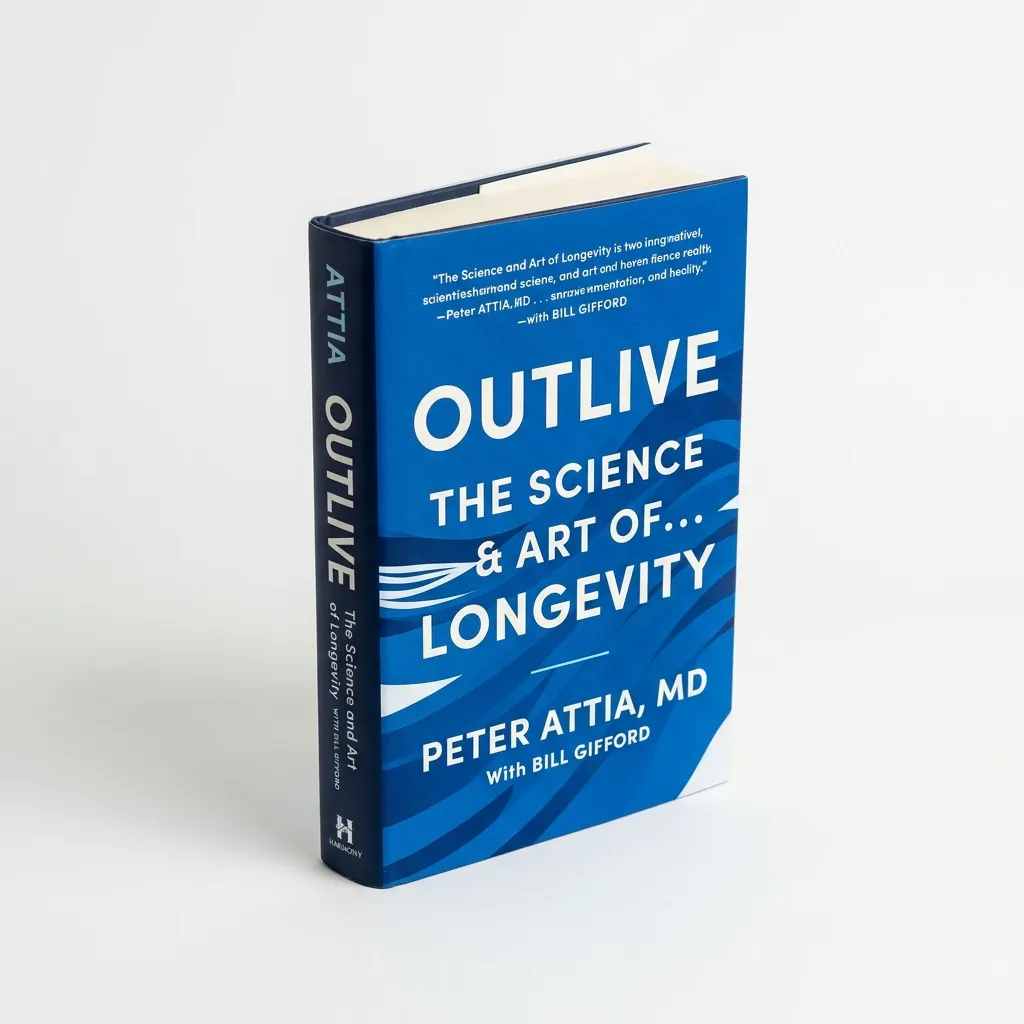
Outlive: The Science & Art of Longevity
Dr. Peter Attia's groundbreaking guide to preventive medicine, exercise for longevity, and healthy aging.
- Scientific framework for Medicine 3.0
- Actionable guide on sleep, exercise & nutrition
FAQ
Can you build muscle after 60?
Yes. Progress may be slower than in younger people, but strength and often muscle mass can improve significantly with regular exercise and enough protein.
How many times a week should I strength train?
For many adults, 2 to 4 sessions per week is a good and realistic level, especially if the program covers the whole body.
Is fitness still important if the goal is muscle mass?
Yes. Cardio training supports metabolic health, recovery and overall reserve capacity, especially when combined with strength.
Why do some people still lose muscle mass despite exercise?
Often because total protein, energy, recovery quality or progression in the program is not sufficient.
Are machines enough, or should you use free weights?
Both can work. The most important thing is safe progression, sufficient load and persistence over time.
Is heavy resistance training dangerous after age 60?
No, when executed with progressive overload and proper mechanics, heavy resistance loading is remarkably safe and represents the gold standard for preserving bone density, joint integrity, and functional power.
How much protein should I consume per feeding in my sixties?
Due to age-associated anabolic resistance, each main meal should provide 35 to 45 grams of high-quality protein to reliably surpass the 3.0 g leucine threshold required for muscle protein synthesis.
Is creatine supplementation safe for older adults, and does it impact renal health?
Extensive clinical literature demonstrates that 3-5 grams of creatine monohydrate daily is safe for older adults with healthy baseline kidneys. It may cause a benign elevation in serum creatinine without affecting actual glomerular filtration rate (eGFR).
Sources and References
- [1]
- [2]
- [3]
- [4]
Show all 5 sources (1 more)
- [5]
Editorial History
14. April 2026
First publication
Initial version was published as part of the healthy aging with introduction, takeaways, FAQ, and reference block.
14. April 2026
Medical review
Phrasing, caveats, and internal links were reviewed for clarity, consistency, and YMYL alignment.
28. April 2026
Latest update
Muscle mass after 50 and 60 received updated metadata, reference outputs, and improved decision-support structure.

Medical Review
Medical Review and Update Process
This article has been medically reviewed by Vadim Doroshenko with a focus on clinical accuracy, sources, disclaimers, and whether the conclusions still align with current scientific evidence.

Editorial Profile
Borys Viktorovytj Riabtsev
Borys Viktorovytj Riabtsev publishes Longevity Lab as a research-backed information project on precision medicine, metabolic health, and healthy aging, utilizing rigorous sources, independent medical review, and objective YMYL communication.