Key takeaways
- Red light has certain more plausible uses, but is often oversold far beyond the documentation.
- PEMF is a more mixed field, where devices, protocols and claims vary greatly.
- A good buying filter starts with goals, certainty and realistic effect size, not with influencer cases.
- If you cannot define a concrete problem and a way to evaluate the effect, the hardware purchase is probably premature.
Medical disclaimer: Content is for informational purposes and does not replace medical advice.
Why the two technologies take up so much space
They fill because they fit perfectly into modern longevity economics: visible technology, home use, low perceived effort, and the ability to build expensive product categories on top of relatively simple narratives of energy and repair. PMID 28070154 PMID 27042079
This does not mean that they are without value. It just means that you have to be extra sharp on the difference between plausible local utility and broad healthspan promises that are not reasonably documented. PMID 28070154 PMID 27042079
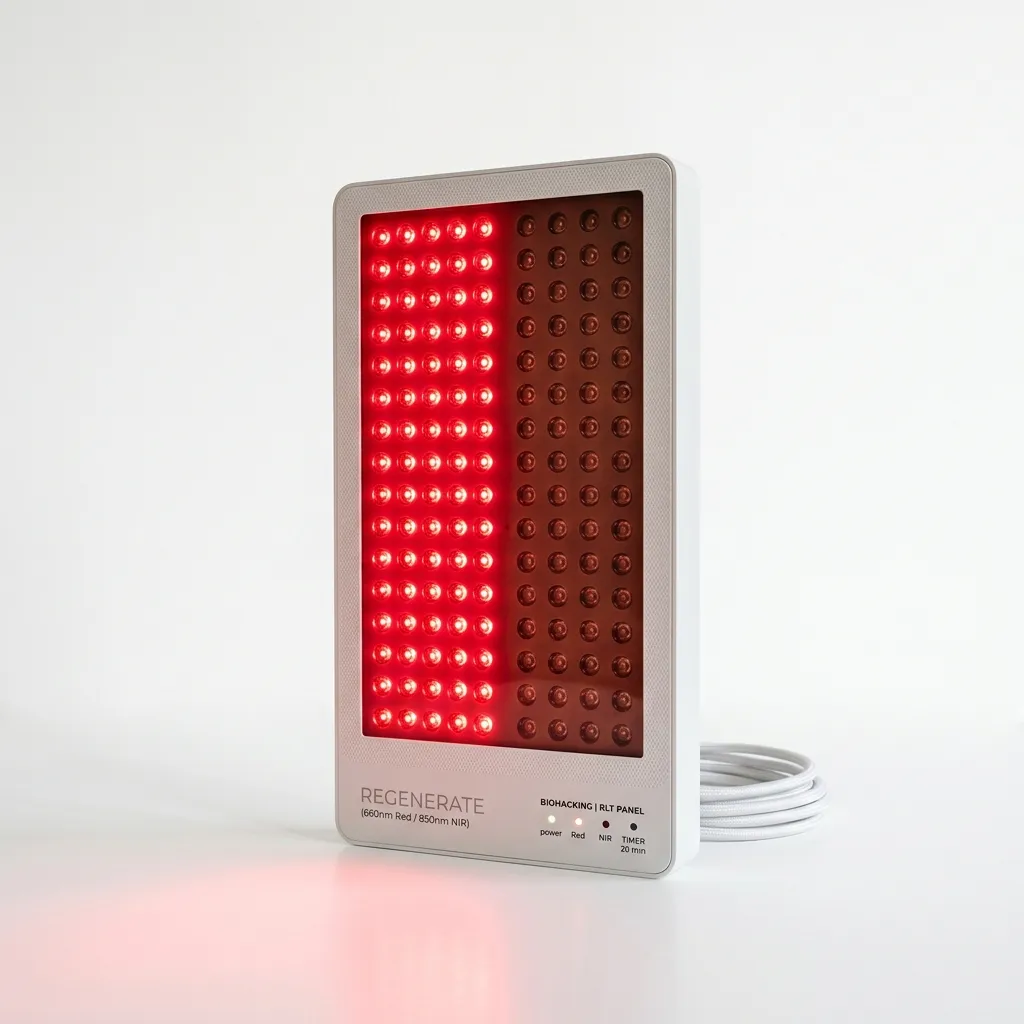
Red Light Therapy Panel (660nm / 850nm)
Clinically proven red and near-infrared light therapy for cellular energy, skin health and recovery.
- Dual wavelength (660nm Red + 850nm NIR)
- Stimulates mitochondrial ATP production
Where red light typically has the most plausible clues
Red light is often discussed in relation to skin, superficial tissues, recovery and certain local symptoms. This is where the market has the most recognizable uses, and where it makes the most sense to talk about limited objectives rather than total system optimization. PMID 27042079 PMID 17926117
The problem arises when the local plausibility is translated into claims of dramatic anti-ageing, hormonal reset or universal recovery without clear documentation for that specific use situation. PMID 27042079 PMID 17926117
Where PEMF becomes more mixed and harder to assess
The PEMF market is more heterogeneous. The devices vary greatly, the dosing logic is often less intuitive for the user, and claims range from pain and recovery to sleep, focus and systemic regeneration. PMID 17926117 PMID 34177726
This makes the purchase assessment more difficult. Not because everything is useless, but because the relationship between equipment, quality, price and expected effect is often unclear in marketing. PMID 17926117 PMID 34177726
A sober comparison filter before you buy
To avoid expensive confusion, the technologies should be evaluated in the same way as other health devices: what problem needs to be solved, what signals need to be improved, and how clearly is success or failure actually measurable? PMID 34177726 PMID 31552858
The table is not made to award winners, but to force a better decision filter. PMID 34177726 PMID 31552858
Safety, contraindications and the practical question of purchase
The sober buying question is not 'does it work in theory?', but 'is my case so clear that this investment is reasonable?' If the answer is unclear, there are often better places to start: sleep, exercise, pain management, physical therapy, or a simple recovery program. PMID 31552858
Additionally, every user should be aware that more exposure is not automatically better. Dosage logic, safety and individual tolerance still matter, and medically complex users should not treat this as ordinary wellness playground. PMID 31552858
Photobiomodulation (PBM): Wavelengths, cytochrome c oxidase, and mitochondrial photochemistry
Photobiomodulation (PBM), colloquially termed red light therapy, is grounded in rigorous photobiological physics rather than superficial wellness marketing. The therapeutic paradigm exploits the biological 'optical window' in human tissue, centered across two distinct wavelength spectra: **visible red light (630–660 nm)** and **near-infrared light (NIR, 810–850 nm)**. PMID 28070154 PMID 27042079
The preeminent intracellular photoacceptor (chromophore) for these photons is the enzyme **cytochrome c oxidase (CCO)**, which serves as Complex IV of the mitochondrial respiratory electron transport chain. PMID 28070154 PMID 27042079
Under metabolic distress, oxidative stress, or chronic systemic inflammation, excessive nitric oxide (NO) binds competitively to the binuclear copper (CuB) and heme centers of CCO, displacing molecular oxygen and shutting down mitochondrial ATP synthesis. When CCO absorbs photons within the 600–850 nm window, it triggers the immediate photodissociation of inhibitory nitric oxide. PMID 28070154 PMID 27042079
This biochemical release re-establishes unhindered electron transfer, increases inner mitochondrial membrane potential, and drives a significant surge in **adenosine triphosphate (ATP)** production. PMID 28070154 PMID 27042079
Concurrently, this photochemical event provokes a controlled, brief burst of reactive oxygen species (ROS) acting as an adaptive hormetic stimulus: Nuclear transcription factors such as NF-kB and Nrf2 are activated, upregulating endogenous antioxidant enzymes (superoxide dismutase, catalase) while systematically dampening pro-inflammatory cytokine expression. PMID 28070154 PMID 27042079
PEMF: Electromagnetic frequencies, voltage-gated calcium channels, and microperfusion
While photobiomodulation harnesses optical photons, **Pulsed Electromagnetic Field (PEMF) therapy** utilizes low-frequency, non-thermal electromagnetic fields (typically 1–50 Hz) at the opposite end of the electromagnetic spectrum. PMID 17926117
The critical biophysical attribute of PEMF is that magnetic waves penetrate completely through human tissue without attenuation—traversing dense cortical bone, deep articular cartilage, and visceral organs that optical near-infrared photons cannot penetrate. PMID 17926117
At the cellular plasma membrane, pulsed magnetic fields modulate trans-membrane electrical potentials, facilitating the gating of **voltage-gated calcium channels (VGCCs)**. The resulting transient intracellular calcium influx triggers calmodulin-dependent activation of **endothelial nitric oxide synthase (eNOS)**. PMID 17926117
Within the microvasculature, this localized surge of nitric oxide induces robust micro-arteriolar vasodilation, accelerates capillary neo-angiogenesis, and promotes interstitial fluid reabsorption to resolve tissue edema. PMID 17926117
PEMF maintains established regulatory clearance for non-union skeletal fractures and treatment-resistant depression, and in athletic longevity protocols, it significantly accelerates musculoskeletal recovery and arthritic joint remodeling. PMID 17926117
Clinical reality vs. commercial marketing: The biphasic Arndt-Schulz dose-response curve
Separating rigorous clinical evidence from exaggerated marketing claims is paramount: Neither PBM nor PEMF can 'halt all biological aging' or replace foundational exercise and nutrition. However, clinical validation for musculoskeletal pain reduction, tendinopathy remodeling, delayed onset muscle soreness (DOMS) mitigation, and dermal pro-collagen synthesis is extensive. PMID 34177726 PMID 31552858
The most critical operational principle for practitioners is adherence to the **biphasic Arndt-Schulz dose-response curve**: PMID 34177726 PMID 31552858
• **Sub-threshold Dosage (< 2–4 J/cm²)**: Insufficient photon energy fails to stimulate cytochrome c oxidase chromophores. PMID 34177726 PMID 31552858
• **Optimal Therapeutic Window (4–10 J/cm² for dermis, 20–50 J/cm² for deep joints)**: Maximizes ATP generation and anti-inflammatory tissue repair. PMID 34177726 PMID 31552858
• **Inhibitory Overdose (> 60–100 J/cm²)**: Excessive fluence saturates molecular chromophores, paradoxically provoking phototoxical bio-inhibition and cellular fatigue. PMID 34177726 PMID 31552858
In real-world application, optimal outcomes are attained with targeted 10- to 15-minute exposures 3 to 5 times per week at a 15–30 cm treatment distance using an array delivering a verified irradiance of at least 50–100 mW/cm². PMID 34177726 PMID 31552858
| Modality | Wavelength / Frequency | Tissue Penetration | Primary Cellular Mechanism | Validated Clinical Indications |
|---|---|---|---|---|
| Red Light (PBM) | 630–660 nm (visible red) | Shallow (1–3 mm into dermis) | Stimulates CCO in fibroblasts; drives procollagen type I synthesis | Dermal rejuvenation, wound healing, superficial inflammatory relief |
| Near-Infrared (NIR) | 810–850 nm (invisible light) | Deep (2–5 cm into muscle and joints) | Photodissociates NO from CCO; robust surge in cellular ATP and flow | Muscle recovery, tendinopathies, lumbar myofascial pain, osteoarthritis |
| PEMF (Pulsed EM) | 1–50 Hz (extremely low frequency) | Full-body penetration (unattenuated) | VGCC calcium flux, eNOS stimulation, resolution of interstitial edema | Bone non-union remodeling, cartilage repair, chronic arthritic relief |
Internal Further Reading
Read also in the same cluster
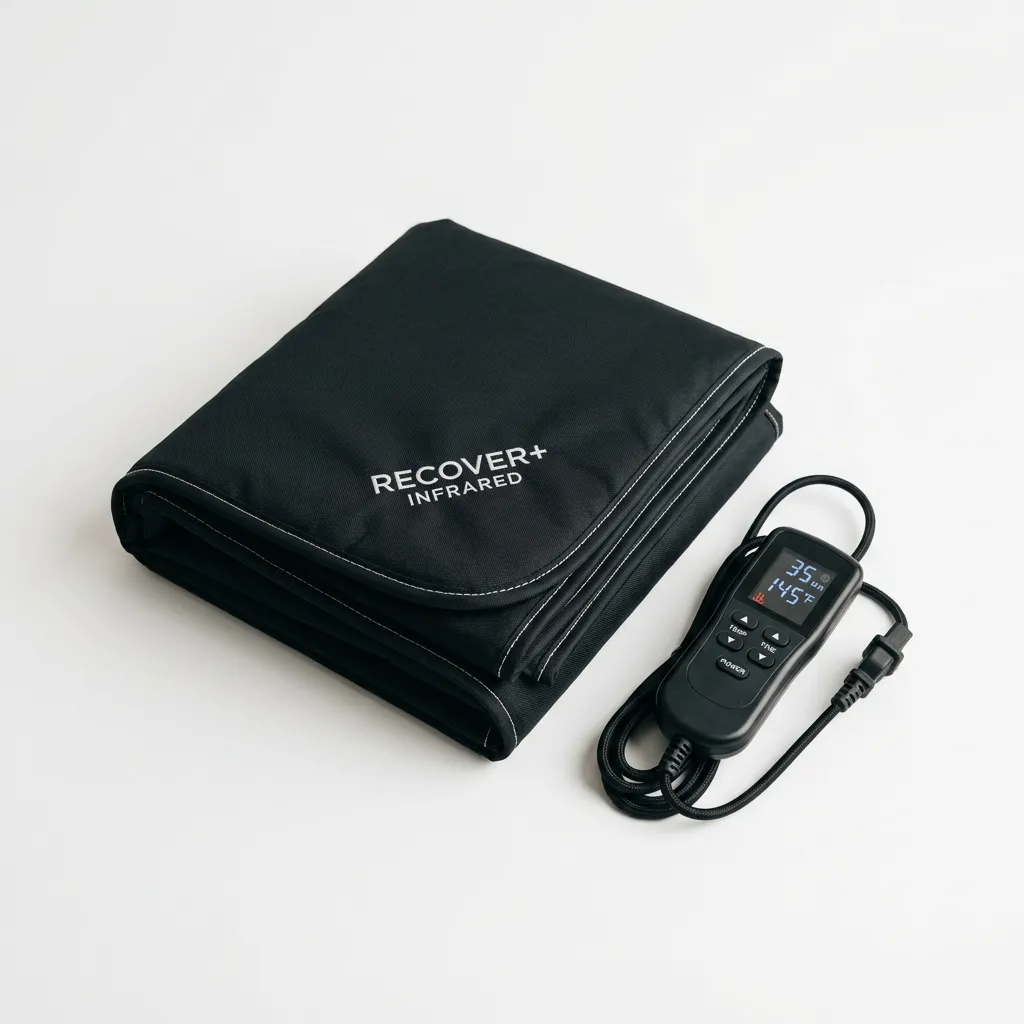
Infrared Sauna Blanket for Home Use
Infrared sauna blanket delivering deep thermal therapy, triggering heat shock proteins (HSP) and circulation.
- Far-infrared deep penetrating heat
- Triggers autophagy response & calorie burn
FAQ
Does red light work?
In some limited applications it is more plausible than many advertisements suggest, but the effect should not be generalized to everything from anti-aging to systemic recovery.
Is PEMF well documented?
It is a more mixed field with great variation in devices, protocols and claims. Therefore, the assessment requires more filtering than many think.
What is the biggest mistake when buying these devices?
To start with hardware without a clear problem, a realistic impact target and a plan for how the utility is to be assessed.
Are more expensive systems automatically better?
No. High price is not the same as high documentation. Usage scenario, quality, safety and evaluable utility are more important than premium narration.
What should be prioritized before buying?
For most, sleep, exercise, pain management, general recovery and basic lifestyle structure will still be the most robust first layers.
What is the physiological difference between red light and near-infrared (NIR) light?
Visible red light (630–660 nm) is absorbed within superficial dermal layers (1–3 mm), stimulating fibroblast collagen production. Near-infrared light (810–850 nm) penetrates deeply (2–5 cm) into muscular and articular structures to enhance mitochondrial ATP production.
How frequently and for how long should red light therapy be administered?
The clinical standard is 10 to 15 minutes per target zone 3 to 5 times weekly at a distance of 15–30 cm. Due to the Arndt-Schulz biphasic curve, extending sessions beyond 25–30 minutes diminishes efficacy and can cause cellular bio-inhibition.
How does PEMF differ fundamentally from red light photobiomodulation?
Red light relies on optical photons absorbed by mitochondrial cytochrome enzymes in accessible tissues. PEMF utilizes low-frequency magnetic fields that traverse the body entirely without attenuation, modulating cellular membrane voltage and microvascular perfusion.
Sources and References
- [1]
- [2]
- [3]
- [4]
Show all 5 sources (1 more)
- [5]
Editorial History
17. April 2026
First publication
Initial version was published as part of the healthy aging with introduction, takeaways, FAQ, and reference block.
17. April 2026
Medical review
Phrasing, caveats, and internal links were reviewed for clarity, consistency, and YMYL alignment.
4. July 2026
Latest update
PEMF and red light received updated metadata, reference outputs, and improved decision-support structure.

Medical Review
Medical Review and Update Process
This article has been medically reviewed by Vadim Doroshenko with a focus on clinical accuracy, sources, disclaimers, and whether the conclusions still align with current scientific evidence.

Editorial Profile
Borys Viktorovytj Riabtsev
Borys Viktorovytj Riabtsev publishes Longevity Lab as a research-backed information project on precision medicine, metabolic health, and healthy aging, utilizing rigorous sources, independent medical review, and objective YMYL communication.