Key takeaways
- Magnesium glycinate is the form most often mentioned in connection with sleep, but the evidence is still moderate.
- Magnesium deficiency can worsen sleep problems, cramps and stress, but supplements help most with actual deficiency.
- For healthy individuals with a normal diet, the effect of magnesium supplementation on sleep is often small or absent in controlled studies.
- Dietary sources such as nuts, seeds, legumes and green leafy vegetables should be the first priority.
Medical disclaimer: Content is for informational purposes and does not replace medical advice.
Why magnesium is even relevant to sleep
Magnesium is involved in over 300 enzymatic reactions in the body, including nerve signalling, muscle relaxation and regulation of the neurotransmitter GABA, which has a calming effect on the central nervous system. Theoretically, magnesium can support sleep both by dampening the activity of the nervous system and by influencing melatonin production and circadian rhythm. PMID 23853635 PMID 20109392
In addition, magnesium deficiency can lead to muscle cramps, restlessness in the legs and general nervousness, which in itself can disrupt sleep. Therefore, it makes biological sense that magnesium is relevant for sleep — but this is not the same as supplements working for everyone. PMID 23853635 PMID 20109392

Blue Light Blocking Sleep Glasses
Specialized amber-lens glasses blocking 99% of blue light at night for natural melatonin production.
- Blocks 400-500nm screen light & LEDs
- Enhances deep sleep & REM phases
The main types of magnesium and their differences
Not all magnesium compounds are created equal. The difference lies in what magnesium is bound to, which affects absorption, tolerability and which tissues they primarily reach. Some forms are better documented than others and the price varies considerably. PMID 20109392 PMID 27933574
The table below summarizes the most common forms and their typical uses in practice. PMID 20109392 PMID 27933574
What the clinical studies actually show
Most studies that have examined magnesium and sleep are small, short-term and have methodological limitations. A 2022 meta-analysis found that magnesium supplementation shortened the time to fall asleep by about 17 minutes on average in older adults with insomnia, but the effect was smaller and less consistent in younger or healthy individuals. PMID 27933574 PMID 28445426
Another systematic review concluded that magnesium may improve sleep quality in people with low magnesium intake or medical conditions, but that the evidence for healthy people with a normal diet is weak. It is an important caveat: magnesium is not a sleeping pill, but a supplement that primarily makes sense in the event of a deficiency or insufficient intake. PMID 27933574 PMID 28445426
When magnesium supplementation makes the most sense
Magnesium makes the most sense for people who have signs of or are at risk of deficiency. That includes the elderly, people with high alcohol consumption, people with type 2 diabetes, people taking certain types of medication, and people with poor diet quality. Also, intensive exercise can increase magnesium loss via sweat. PMID 28445426 PMID 25557808
For the typical Dane with a reasonably varied diet, the risk of pronounced deficiency is low, but an insufficient intake is not uncommon. Dietary sources such as almonds, pumpkin seeds, spinach, beans and whole grains should be the first line before resorting to supplements. PMID 28445426 PMID 25557808
Practical dosing and safety
A typical dose for sleep purposes is 200-400 mg of elemental magnesium, taken about an hour before bedtime. It is important to look at the elemental magnesium content, not the total weight of the magnesium compound. For example, 1000 mg of magnesium glycinate typically contains about 100-150 mg of elemental magnesium. PMID 25557808
The most common side effect of too high a dose is diarrhea and stomach problems, especially with citrate and oxide. People with reduced kidney function should be careful and consult a doctor, as the kidneys are responsible for excreting excess magnesium. PMID 25557808
Neurobiological mechanisms: GABA-A agonism, NMDA receptor blockade, and cortisol suppression
Magnesium operates as the central nervous system's essential physiological governor. At synaptic clefts, magnesium functions as an endogenous voltage-dependent gatekeeper of the **NMDA receptor** (N-methyl-D-aspartate). Under resting membrane potentials, an extracellular magnesium ion (Mg2+) physically lodges within the receptor channel pore, arresting unwarranted calcium influx and preventing neurotoxic hyper-excitation. PMID 23853635 PMID 27933574 PMID 28445426
When neuronal magnesium pools deplete, NMDA channels remain unblocked and hyper-responsive, driving cognitive agitation, racing thoughts, and somatic muscle hypertonicity at bedtime. PMID 23853635 PMID 27933574 PMID 28445426
Concurrently, magnesium exerts allosteric modulation upon **GABA-A receptors**—the brain's primary inhibitory signaling network. By enhancing the conformational affinity of gamma-aminobutyric acid for its binding pocket, magnesium promotes hyperpolarization of neuronal membranes, facilitating deceleration from high-frequency beta rhythms into calming alpha and delta waveforms. PMID 23853635 PMID 27933574 PMID 28445426
Furthermore, magnesium blunts autonomic reactivity across the hypothalamic-pituitary-adrenal (HPA) axis by dampening adrenocorticotropic hormone (ACTH) surges, preventing nocturnal cortisol spikes and fostering early nocturnal heart rate nadir. PMID 23853635 PMID 27933574 PMID 28445426
Magnesium chelates scrutinized: Glycinate, L-threonate, malate vs. oxide and citrate
The chemical ligand bound to the elemental magnesium ion determines bioavailability, tissue partitioning, and biological membrane permeability: PMID 20109392 PMID 25557808
• **Magnesium Bisglycinate (Glycinate)**: Chelation of one magnesium ion to two glycine amino acid residues. This organic complex resists dissociation in gastric acid, traversing the intestinal brush border intact via PEPT1 dipeptide transporters without drawing osmotic fluid into the colon. Crucially, glycine acts as an inhibitory neurotransmitter in the brainstem, driving peripheral vasodilation that lowers core body temperature by 0.5–1.0 °C—the mandatory circadian trigger for Stage 3 Slow-Wave Deep Sleep. PMID 20109392 PMID 25557808
• **Magnesium L-Threonate (Magtein)**: Synthesized at MIT (published in Neuron), this novel compound is uniquely capable of traversing the **blood-brain barrier**, elevating cerebrospinal fluid magnesium concentrations by ~15%. This structural access upregulates synaptic density in the hippocampus, deepening restorative slow-wave delta power and REM sleep stability. PMID 20109392 PMID 25557808
• **Magnesium Malate and Taurate**: Malate donates malic acid to mitochondrial Krebs cycle energetics (optimal for morning muscular fatigue), whereas taurate stabilizes myocardial rhythmicity and endothelial nitric oxide release. PMID 20109392 PMID 25557808
• **Magnesium Oxide and Citrate**: Oxide exhibits poor human bioavailability (~4%), acting essentially as an osmotic laxative. Citrate features decent fractional absorption, but doses exceeding 250–300 mg frequently provoke loose stools and nocturnal gastrointestinal distress. PMID 20109392 PMID 25557808
Evidence-based dosing protocol, optimal timing, and nutrient interactions
To optimize nocturnal restorative physiology and HRV recovery scores, adhere to the following protocol: PMID 23853635 PMID 20109392 PMID 28445426
1. **Elemental Magnesium Target**: Ingest 200 to 400 mg of pure elemental magnesium daily. Scrutinize nutrition labels: a 1,000 mg tablet of magnesium bisglycinate generally yields approximately 140 mg of elemental magnesium. PMID 23853635 PMID 20109392 PMID 28445426
2. **Circadian Timing**: Administer supplements **30 to 60 minutes prior to sleep**, ideally alongside a light snack containing complex carbohydrates or protein to optimize intestinal carrier dynamics. PMID 23853635 PMID 20109392 PMID 28445426
3. **Nutrient Synergies**: Pair magnesium with active Vitamin B6 (pyridoxal-5-phosphate / P5P), an essential cofactor promoting intracellular magnesium uptake. Avoid co-ingesting high-dose calcium or zinc (>30 mg) at bedtime, as divalent cations compete directly for divalent metal transporter-1 (DMT1) uptake sites. PMID 23853635 PMID 20109392 PMID 28445426
| Magnesium Compound | Bioavailability & GI Tolerance | Blood-Brain Barrier Passage | Primary Clinical Utility | Dosing Protocol |
|---|---|---|---|---|
| Magnesium Bisglycinate | Very high; extremely gentle on the gut | Moderate (systemic distribution) | Lowers core body temp via glycine; relieves nocturnal muscle tension | 200–300 mg elemental Mg 45 min before sleep |
| Magnesium L-Threonate (Magtein) | High; targeted central nervous uptake | Exceptional (proven crossing of BBB) | Upregulates synaptic density, cognitive clarity, and deep/REM sleep | 1,500–2,000 mg Magtein (~144 mg elemental Mg) in evening |
| Magnesium Taurate | High; well tolerated | Low to moderate | Stabilizes cardiac rhythmicity and vascular tone via taurine | 150–250 mg elemental Mg with evening meal |
| Magnesium Oxide / Citrate | Low (oxide ~4%) to moderate (citrate) | Minimal | Osmotic colonic hydration; indicated for chronic constipation | Unsuitable for sleep optimization due to nocturnal laxative cramping |
Internal Further Reading
Read also in the same cluster
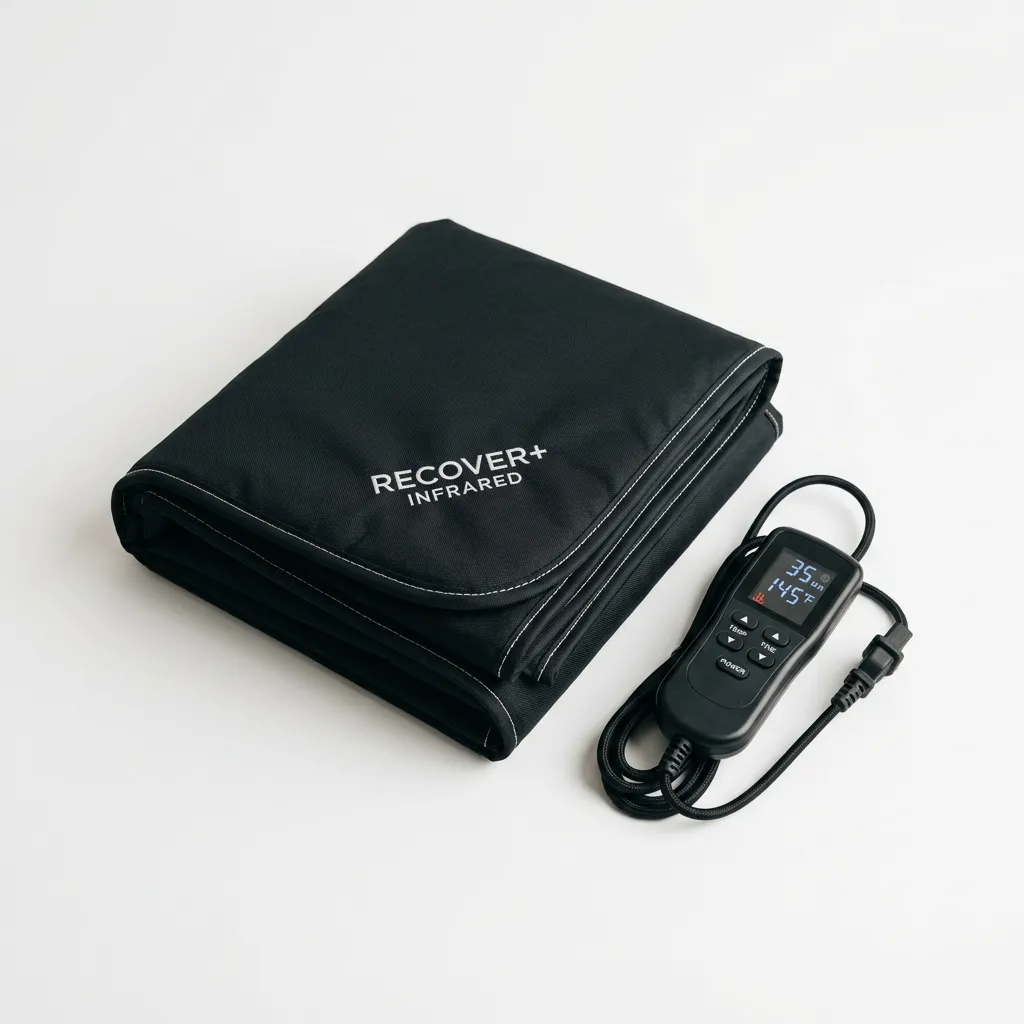
Infrared Sauna Blanket for Home Use
Infrared sauna blanket delivering deep thermal therapy, triggering heat shock proteins (HSP) and circulation.
- Far-infrared deep penetrating heat
- Triggers autophagy response & calorie burn
FAQ
Which type of magnesium is best for sleep?
Magnesium glycinate is the type most often recommended for sleep, because glycine itself can have a calming effect and because absorption is good. But the evidence is moderate and individual response varies.
How quickly does magnesium affect sleep?
Some experience an effect the same evening, but for most it takes days to weeks, especially if the starting point is a deficiency. It is not an instant sleeping pill.
Can I take magnesium every day?
Yes, within recommended doses, daily intake is safe for most healthy adults. The upper tolerable limit from supplementation is typically about 350 mg of elemental magnesium daily for adults.
Is magnesium enough to fix poor sleep?
Rarely alone. Sleep problems often have multiple causes: stress, screen time, caffeine, alcohol, irregular bedtimes, and underlying medical conditions. Magnesium can be a piece, but rarely the whole puzzle.
How do I know if I have a magnesium deficiency?
Blood tests measure serum magnesium, but it only reflects a small part of the body's total magnesium. Symptoms of deficiency include muscle cramps, fatigue, irritability and palpitations. A combination of symptoms, dietary assessment and possibly a blood test gives the best picture.
Which form of magnesium is best for improving sleep quality?
Magnesium bisglycinate represents the premier standard for sleep due to its high gastrointestinal tolerance and the ability of its glycine ligand to lower core body temperature. Magnesium L-threonate is an exceptional alternative when cognitive resilience and memory consolidation are also prioritized.
What is the recommended magnesium dosage before bedtime?
A clinically effective target is 200 to 350 mg of elemental magnesium consumed 30 to 60 minutes prior to bedtime. Ensure you verify the actual elemental magnesium yield on the product label rather than the gross compound weight.
Why does magnesium oxide perform poorly as a sleep aid?
Magnesium oxide has a very low absorption rate of approximately 4%. The unabsorbed compound remains in the intestinal lumen, drawing water into the bowel and causing gastrointestinal cramping that disrupts sleep.
Sources and References
- [1]
- [2]
- [3]
- [4]
Show all 5 sources (1 more)
- [5]
Editorial History
31. May 2026
First publication
Initial version was published as part of the metabolic health with introduction, takeaways, FAQ, and reference block.
31. May 2026
Medical review
Phrasing, caveats, and internal links were reviewed for clarity, consistency, and YMYL alignment.
4. July 2026
Latest update
Magnesium and sleep (2026) received updated metadata, reference outputs, and improved decision-support structure.

Medical Review
Medical Review and Update Process
This article has been medically reviewed by Vadim Doroshenko with a focus on clinical accuracy, sources, disclaimers, and whether the conclusions still align with current scientific evidence.

Editorial Profile
Borys Viktorovytj Riabtsev
Borys Viktorovytj Riabtsev publishes Longevity Lab as a research-backed information project on precision medicine, metabolic health, and healthy aging, utilizing rigorous sources, independent medical review, and objective YMYL communication.