Key takeaways
- More recent Mendelian randomization studies and cohorts with better control for confounders raise serious questions about the protective effect of moderate alcohol intake.
- Even moderate amounts of alcohol disrupt REM sleep, reduce HRV and significantly impair recovery.
- Acetaldehyde — alcohol's primary breakdown product — is directly DNA damaging and classified as a carcinogen.
- For Danes over 50, alcohol should be considered a pleasure with well-documented health risks, not a health-promoting product.
Medical disclaimer: Content is for informational purposes and does not replace medical advice.
The J-curve — is moderate alcohol protective or harmful?
The classic J-curve showing lower mortality with moderate alcohol consumption compared to abstinence has dominated the research literature for decades. The theory was that small amounts of alcohol — especially red wine — could have a beneficial effect on the cardiovascular system via increased HDL cholesterol, reduced platelet aggregation and the antioxidant properties of polyphenols. This has led to widespread recommendations that 'a glass of red wine a day is good for the heart'. WHO IARC/WHO PMID 30951758
But recent research with better methodology raises serious questions about this. Several large Mendelian randomization studies—using genetic variants as an instrument to control for lifestyle confounders—find no protective effect of moderate alcohol intake. On the contrary, they show a linear relationship between alcohol intake and mortality. The problem with the older observational studies is that many former drinkers (who have stopped due to illness) were classified as 'abstainers', which artificially worsened the abstinence group's results and created the illusion of a J-curve. WHO IARC/WHO PMID 30951758
A 2023 systematic review that controlled for this classification error found no significant protective effect for moderate alcohol intake—and a clear, linear increase in risk for intake above approximately 1-2 drinks per day. This does not change the fact that a single glass of wine with food probably poses a minimal risk to an otherwise healthy person, but it does change the basic premise: alcohol is not a health promoting product. WHO IARC/WHO PMID 30951758
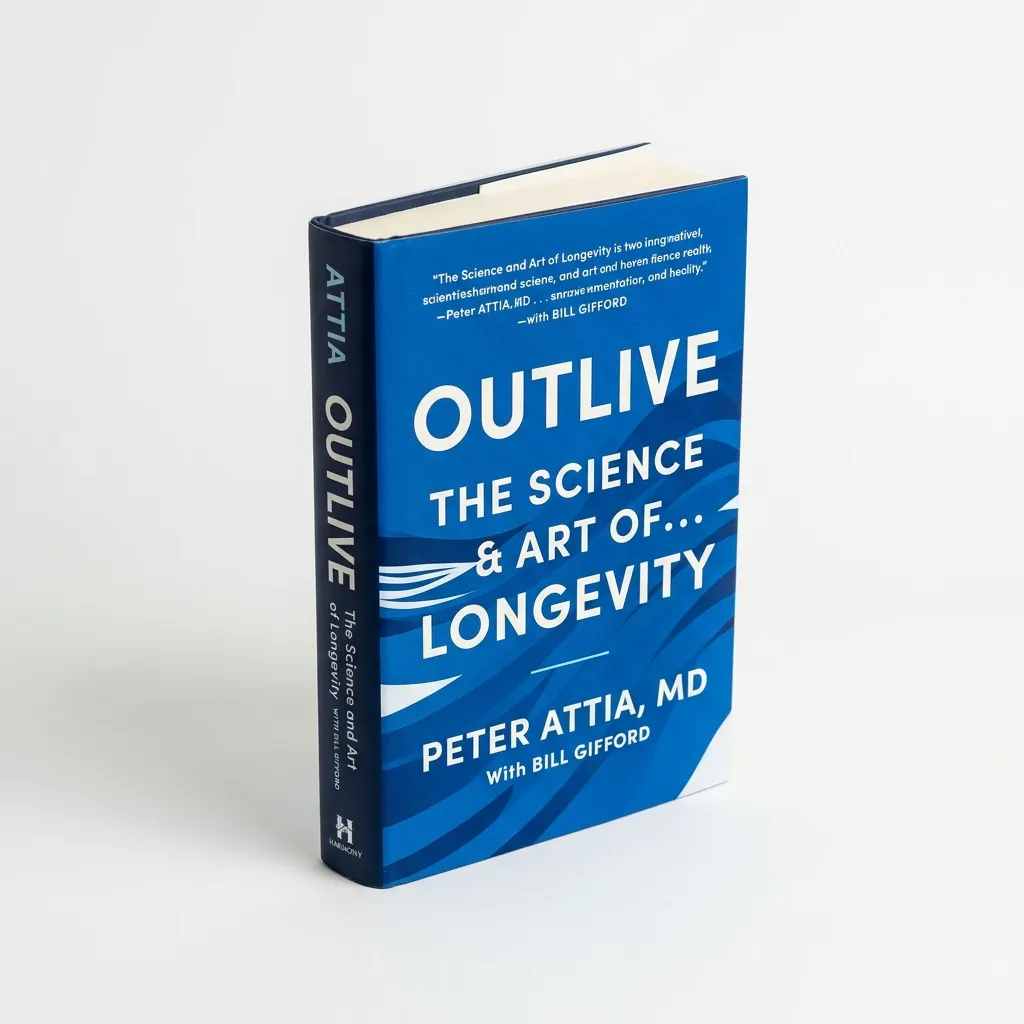
Outlive: The Science & Art of Longevity
Dr. Peter Attia's groundbreaking guide to preventive medicine, exercise for longevity, and healthy aging.
- Scientific framework for Medicine 3.0
- Actionable guide on sleep, exercise & nutrition
Alcohol's effect on sleep architecture and recovery
One of the most underestimated effects of even moderate alcohol is its impact on sleep quality. Many people find that a glass of wine in the evening helps them fall asleep — and it is true that alcohol has a sedative effect in the first part of the night. But this effect comes with a price: alcohol significantly changes sleep architecture throughout the night. PMID 23347102 PMID 36039387
Specifically, alcohol reduces the amount of rapid eye movement (REM) sleep, which is essential for cognitive recovery, emotional regulation, and memory consolidation. At the same time, it fragments sleep in the second half of the night, leading to more awakenings and less coherent deep sleep. Wearable data from Oura and Whoop consistently shows that even one or two items in the evening significantly lowers HRV (a measure of autonomic recovery), increases resting heart rate and reduces overall sleep score. PMID 23347102 PMID 36039387
For people over 50 — where sleep quality is already naturally declining due to age-related changes in sleep architecture — this disruption is particularly problematic. Chronic poor sleep is itself a risk factor for insulin resistance, cognitive decline, inflammation and early aging. Alcohol therefore worsens an already vulnerable sleep physiology in older adults. PMID 23347102 PMID 36039387
| Sleep Architecture Parameter | Physiological Impact of Ethanol | Downstream Healthspan Consequence |
|---|---|---|
| REM Sleep Stage | Severely suppressed, particularly in the initial sleep cycles | Impaired emotional processing, reduced cognitive memory consolidation |
| Deep Slow-Wave Sleep (N3) | Fragmented and abbreviated in the second half of the night | Blunted nocturnal growth hormone release and compromised cellular tissue repair |
| Overnight HRV (rMSSD) | Dramatic suppression by 30–50% even after 1–2 standard drinks | Severe autonomic stress, sympathovagal imbalance, and impaired cardiac recovery |
| Nocturnal Resting Heart Rate | Elevated by 8–15 bpm continuously across the sleep cycle | Increased cardiovascular myocardial workload during supposed resting hours |
| Sleep Micro-Arousals | Frequent sympathetic awakenings as acetaldehyde is metabolized | Fragmented, non-restorative sleep with morning fatigue and elevated cortisol |
Hepatic metabolism and acetaldehyde toxicity
When alcohol is consumed, it is metabolized primarily in the liver in a two-step process. First, ethanol is converted to acetaldehyde by the enzyme alcohol dehydrogenase (ADH). Acetaldehyde is then converted to acetate by aldehyde dehydrogenase (ALDH). Acetaldehyde is the crucial problematic intermediate: it is highly reactive, directly DNA-damaging and can form adducts with proteins and DNA, increasing the risk of mutations and cancer development. WHO PMID 30951758 PMID 30101987
Acetaldehyde is classified as a Group 1 carcinogen by the WHO's International Agency for Research on Cancer (IARC) — the same category as asbestos and tobacco smoke. The liver can normally metabolize acetaldehyde quickly enough to limit the damage, but with repeated or high exposure it accumulates and can cause inflammation, cell death and fibrosis. In addition, a significant proportion of the East Asian population has a genetic variant of ALDH that reduces the rate of breakdown, making them particularly vulnerable to alcohol-related cancer — but even people with normal ALDH function accumulate DNA damage over time with regular alcohol consumption. WHO PMID 30951758 PMID 30101987
Cancer risk — what do WHO and IARC say?
The WHO's International Agency for Research on Cancer (IARC) already classified alcoholic beverages as carcinogenic to humans (Group 1) in 1988. Since then, the evidence has only gotten stronger. Alcohol is causally linked to an increased risk of at least seven cancers: oral cavity, pharynx, larynx, oesophagus, liver, colon/rectum and breast cancer. There is no safe lower limit for alcohol and cancer risk — the risk increases with dose, but even low intakes contribute statistically to the total cancer burden. WHO IARC/WHO PMID 30101987
For a Dane over 50, this is particularly relevant. Age itself is the biggest risk factor for cancer, and alcohol acts synergistically with other exposures. The mechanism includes acetaldehyde's DNA-damaging effect, increased estrogen production (relevant to breast cancer), decreased folate absorption (relevant to colon cancer) and alcohol's role as a solvent that facilitates the absorption of other carcinogens — e.g. from tobacco smoke — through the mucous membranes. WHO IARC/WHO PMID 30101987
The overall estimate is that approximately 4% of all cancer cases globally are attributable to alcohol, and the risk is dose-dependent: the more you drink, the higher the risk. The most important message is that there is no 'healthy' amount of alcohol in relation to cancer — only a lower risk with lower consumption. WHO IARC/WHO PMID 30101987
Practical recommendations for Danes over 50
The Danish Health Authority's official recommendation is a maximum of 10 items per week for both men and women, and a maximum of 4 items in a single day. This is a maximum — not a goal, and certainly not a recommendation to drink. The Danish Health Authority emphasizes that lower consumption is always associated with lower risk, and that there is no health benefit from drinking alcohol. WHO PMID 23347102 PMID 36039387
For people over 50 who want to optimize their health and slow down biological ageing, the evidence points to a few concrete strategies. Drink less, especially late at night — a glass of wine at 6pm affects sleep much less than a glass at 10pm, as the alcohol has time to be partially metabolized before bedtime. Consider having alcohol-free days, ideally 3-4 days a week without alcohol, to allow the liver time to regenerate and the sleep architecture to normalize. Choose dry, less sweet drinks — they contain fewer calories and less sugar. And be especially careful if you have elevated liver counts, hypertension, sleep problems, or a family history of cancer — in these cases, even moderate alcohol is harder to defend. WHO PMID 23347102 PMID 36039387
Internal Further Reading
Read also in the same cluster
Smart Body Composition Scale
Advanced bioimpedance scale tracking muscle mass, body fat percentage, bone density and hydration.
- Tracks muscle mass & visceral fat
- Wireless sync with health apps
FAQ
Is red wine better than beer for health?
Red wine contains polyphenols such as resveratrol, which have shown antioxidant and anti-inflammatory properties in laboratory studies. But the overall evidence shows that the harmful effects of ethanol dominate over the potential benefits of polyphenols when consumed regularly. Red wine is not a health product.
How much alcohol can I drink without affecting my sleep?
Oura and Whoop data consistently show that even 1 item affects HRV and resting heart rate. The effect is evident with 2 items. For optimal sleep, the last item should be consumed at least 3-4 hours before bedtime.
Does Denmark have a particular problem with alcohol and ageing?
Denmark has one of the highest alcohol consumption rates in Europe, especially among adults over 50. The combination of high consumption, an aging population and increasing prevalence of metabolic syndrome makes alcohol a particularly important health factor for Danes who want healthy ageing.
Can I compensate for the effects of alcohol with nutritional supplements?
No. There are no documented nutritional supplements that effectively counteract the harmful effects of alcohol. The liver needs time without alcohol to regenerate — not an additional burden through trying to 'detox' with supplements.
Sources and References
- [1]
- [2]
- [3]
- [4]
Show all 6 sources (2 more)
- [5]
- [6]
Editorial History
1. July 2026
First publication
Initial version was published as part of the healthy aging with introduction, takeaways, FAQ, and reference block.
1. July 2026
Medical review
Phrasing, caveats, and internal links were reviewed for clarity, consistency, and YMYL alignment.
1. July 2026
Latest update
Alcohol and aging — what does the latest research say about even moderate consumption received updated metadata, reference outputs, and improved decision-support structure.

Medical Review
Medical Review and Update Process
This article has been medically reviewed by Vadim Doroshenko with a focus on clinical accuracy, sources, disclaimers, and whether the conclusions still align with current scientific evidence.

Editorial Profile
Borys Viktorovytj Riabtsev
Borys Viktorovytj Riabtsev publishes Longevity Lab as a research-backed information project on precision medicine, metabolic health, and healthy aging, utilizing rigorous sources, independent medical review, and objective YMYL communication.