Key takeaways
- Ring-based sleep trackers (Oura) often provide the most accurate sleep stage tracking due to close skin contact and the finger's good blood flow.
- Watch-based trackers (Apple Watch, Garmin) are more versatile and measure more parameters, but require daily charging.
- Mattress sensors require no user interaction and are best at capturing long-term sleep patterns and breathing disorders.
- No consumer sleep tracker is clinically diagnostic — use data for patterns, not self-diagnosis of sleep apnea or insomnia.
Medical disclaimer: Content is for informational purposes and does not replace medical advice.
Call — the discreet specialist
Ring-based sleep trackers such as Oura Ring and Ultrahuman Ring have a unique advantage: the finger has far better blood flow than the wrist, which provides a stronger optical signal for pulse measurement. This means more accurate HRV measurement at night, which is one of the most important parameters for assessing recovery and sleep quality. PMID 32634145 PMID 34819452 Oura Health
The small form factor of the rings makes them discreet and comfortable to sleep with — a point where watches often fail. The downside is that rings have limited battery (4–7 days), smaller screen (or none), and cannot be used for activity data in the same way as a watch. Ringe are specialists in sleep and recovery, but generalists in everything else. PMID 32634145 PMID 34819452 Oura Health
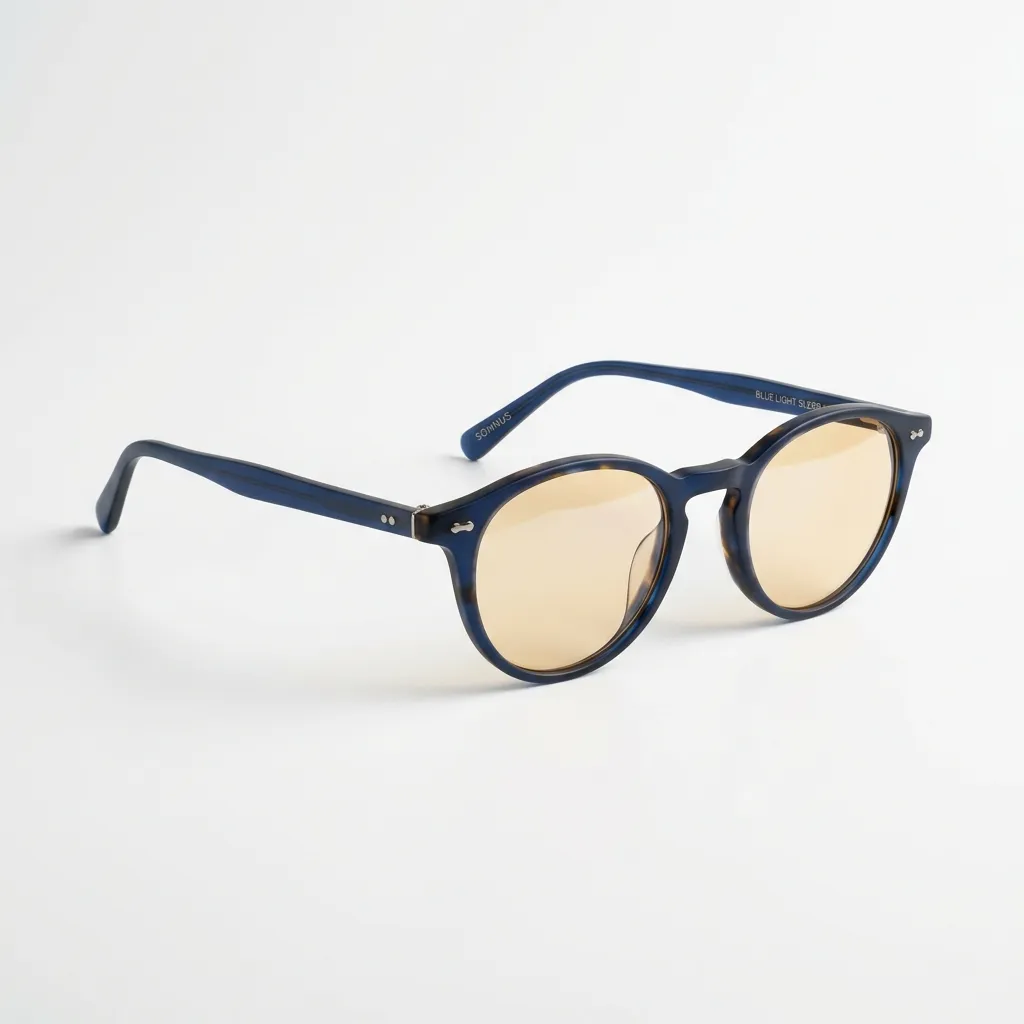
Blue Light Blocking Sleep Glasses
Specialized amber-lens glasses blocking 99% of blue light at night for natural melatonin production.
- Blocks 400-500nm screen light & LEDs
- Enhances deep sleep & REM phases
Watch — the versatile all-rounder
Apple Watch, Garmin, Whoop and other watch-based trackers are the most popular sleep tracking tools. They contain advanced sensor packages — optical heart rate, accelerometer, gyroscope, and in some cases temperature and SpO2 — providing a broader data base than rings. Since watchOS 9, the Apple Watch has been able to measure sleep phases (REM, core, deep sleep) and shown good agreement with clinical polysomnography. PMID 32634145 PMID 36508639 Whoop
The biggest downside to sleep-tracking watches is practicality: they need to be charged daily or every other day, and many find them uncomfortable to sleep with. Whoop stands out as a screen-free band with 4–5 days of battery life, which makes it more comfortable for sleep, but Whoop requires a subscription. Garmin has the best battery life in the watch category with up to 16 days, but their sleep algorithms are less validated than Apple and Oura. PMID 32634145 PMID 36508639 Whoop
| Form Factor / Device | Sensor Modality & Placement | Sleep Staging Precision (vs PSG) | User Friction & Comfort |
|---|---|---|---|
| Smart Ring (Oura / RingConn) | Finger PPG (arteries close to skin) | High (~75–80% concordance with polysomnography) | Zero wrist irritation; highly unobtrusive during sleep |
| Smartwatch (Garmin / Apple Watch) | Wrist optical PPG and 3D accelerometer | Moderate to high (~70–75% concordance; movement artifacts) | Bulkier; can cause wrist sweat or skin fatigue if worn tightly |
| Smart Mattress (Eight Sleep) | Pneumatic / piezoelectric under-sheet sensors | High for respiratory rate and heart rate; indirect for sleep stages | Completely frictionless; zero hardware attached to the body |
Madras — the passive observer
Mattress sensors like the Withings Sleep Analyzer and the Eight Sleep Pod work fundamentally differently than wearables. They measure sleep through pressure-sensitive sensors under the mattress that register movement, breathing and heart rate — without you having to wear anything on your body. This makes them ideal for people who find rings and watches uncomfortable, or who just want automatic, passive measurement. PMID 32634145 Withings
The strength of the mattress sensors is consistency over time. Because the measurement is done automatically every night without user interaction, you get a very stable data set to follow changes over weeks and months. The Withings Sleep Analyzer is clinically validated to detect sleep apnea — one of the few consumer sensors to have this approval. The disadvantage is that the precision of sleep phases is lower than for rings and watches, and that the sensor is less mobile. PMID 32634145 Withings
The 4th Wave: In-Ear EEG and Direct Brainwave Tracking (NextSense)
While rings, watches, and mattresses all rely on peripheral biomarkers (blood flow, movement, and respiration) as indirect proxies for sleep, in-ear EEG introduces a fundamental paradigm shift. Spearheaded by NextSense Smartbuds (incubated at Alphabet X), this emerging category records true microvolt cortical potentials directly inside the auditory canal. PMID 32634145 Oura Health
Featuring 6 dry electrodes per ear, in-ear EEG achieves an epoch-by-epoch clinical concordance of 85% to 92% against laboratory polysomnography (PSG), markedly surpassing the 65% to 75% typical of optical sensors. Additionally, the device deploys closed-loop auditory stimulation with pink noise synchronized to delta waves to actively reinforce deep sleep and optimize the brain's glymphatic clearance. Read our comprehensive in-depth review of in-ear EEG and NextSense Smartbuds for full analysis of ergonomics, accuracy, and buyer guidance. PMID 32634145 Oura Health
- Captures true cortical brainwaves (delta, theta, sleep spindles) instead of peripheral pulse proxies.
- Highest clinical concordance against PSG (85–92%) among consumer sleep trackers.
- Active Slow-Wave Enhancement via phase-locked micro-bursts of pink noise.
- Requires daily docking and may cause mild canal pressure for strict side sleepers on dense pillows.
What can data actually be used for?
Sleep data from consumer trackers is most useful for identifying patterns over time — not for diagnosing sleep disorders. If your tracker consistently shows low deep sleep, many awakenings or low HRV at night, it may be a signal to look at sleep hygiene, bedtime, caffeine, alcohol and stress. But it is not a diagnosis of insomnia, sleep apnea or other clinical conditions. PMID 32634145 PMID 34819452 PMID 36508639
The most practical use of sleep tracking is to correlate sleep quality with your behavior: how does late screen time affect your resting heart rate? What does a glass of wine in the evening do to your HRV? How does your sleep change with exercise? These insights can be useful, but require you to look at data over days and weeks, not single nights. PMID 32634145 PMID 34819452 PMID 36508639
Which type is right for you?
The choice of sleep tracker depends on your priorities. If precision on HRV and sleep phases is most important and you can live with a ring, Oura or Ultrahuman are the best choices. If you want one device for both sleep, exercise and everyday life, the Apple Watch or Garmin are more versatile choices. If you hate sleeping with gadgets but still want to track your sleep, a mattress sensor is the only realistic solution. PMID 32634145 Oura Health Withings
The combination of two devices can provide the most complete picture — for example, Oura Ring for sleep combined with Apple Watch or Garmin for daytime and training. But for most people, one well-chosen tracker is enough. The most important thing is consistency: same tracker, every night, over time. PMID 32634145 Oura Health Withings
Internal Further Reading
Read also in the same cluster
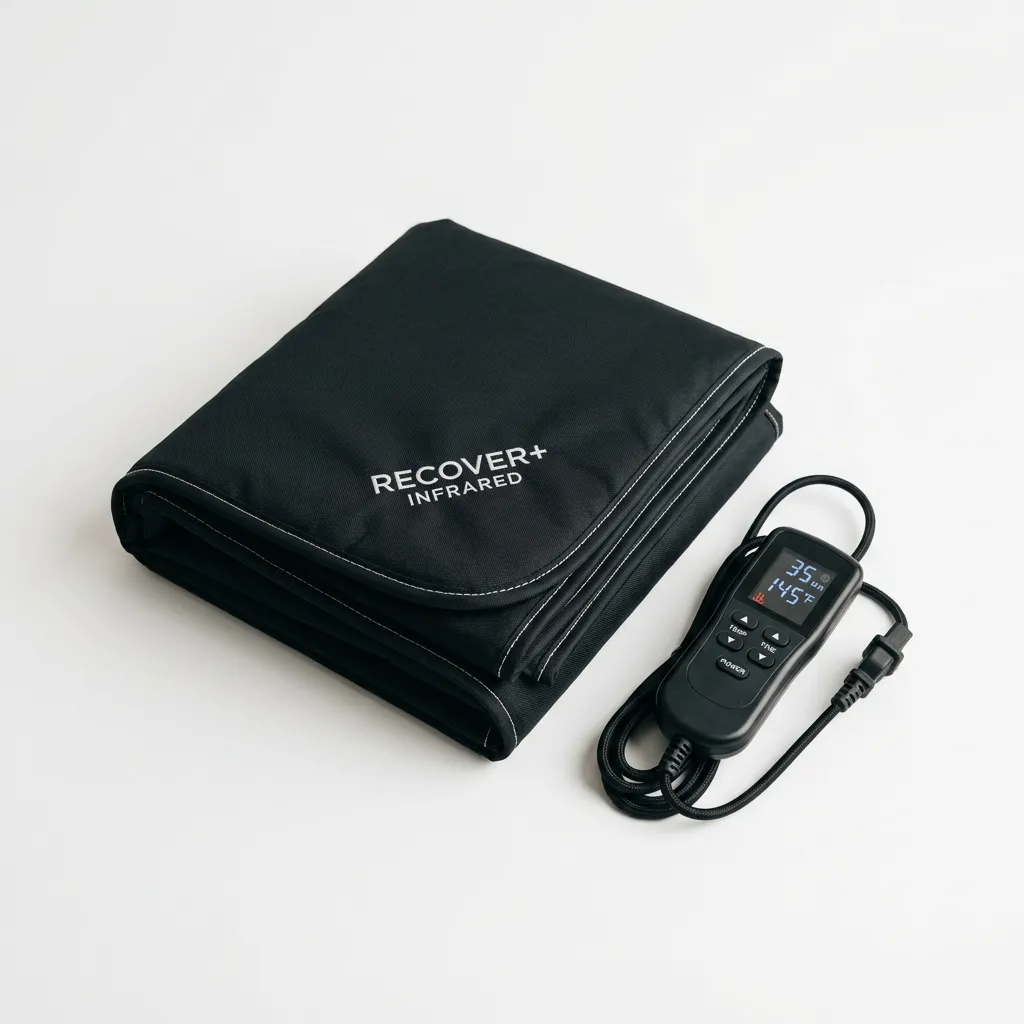
Infrared Sauna Blanket for Home Use
Infrared sauna blanket delivering deep thermal therapy, triggering heat shock proteins (HSP) and circulation.
- Far-infrared deep penetrating heat
- Triggers autophagy response & calorie burn
FAQ
Are rings more accurate than watches for sleep?
Generally yes. The finger's better blood flow provides a stronger optical signal for HRV measurement, which is crucial for sleep phase classification.
Can mattress sensors replace a sleep study?
No. They may indicate sleep apnea, but clinical diagnosis requires polysomnography or an approved home test via the doctor.
Is sleep data from wearables reliable?
For patterns and trends over time: yes. For clinical diagnosis of specific sleep disorders: no. Use data as a guide, not as a conclusion.
Can I use my phone for sleep tracking instead?
Phone apps for sleep tracking are significantly less accurate than wearables, as they typically only use a microphone or accelerometer in the mattress via the phone — and they cannot measure heart rate or HRV.
Sources and References
- [1]
- [2]
- [3]
- [4]
Show all 6 sources (2 more)
- [5]
- [6]
Editorial History
15. June 2026
First publication
Initial version was published as part of the wearables with introduction, takeaways, FAQ, and reference block.
15. June 2026
Medical review
Phrasing, caveats, and internal links were reviewed for clarity, consistency, and YMYL alignment.
15. June 2026
Latest update
Sleep tracking received updated metadata, reference outputs, and improved decision-support structure.

Medical Review
Medical Review and Update Process
This article has been medically reviewed by Vadim Doroshenko with a focus on clinical accuracy, sources, disclaimers, and whether the conclusions still align with current scientific evidence.

Editorial Profile
Borys Viktorovytj Riabtsev
Borys Viktorovytj Riabtsev publishes Longevity Lab as a research-backed information project on precision medicine, metabolic health, and healthy aging, utilizing rigorous sources, independent medical review, and objective YMYL communication.