Key takeaways
- Blood pressure below 120/80 mmHg is ideal; 120-139/80-89 is elevated; 140/90+ is hypertension.
- Home measurement over 3-7 days gives a more accurate picture than a single measurement at the doctor's.
- Lifestyle changes — especially weight loss, reduced salt, the DASH diet and exercise — are the first choice for mildly elevated blood pressure.
- Persistent hypertension above 140/90 often requires medical treatment to prevent stroke and heart disease.
Medical disclaimer: Content is for informational purposes and does not replace medical advice.
Why blood pressure rises with age
With age, blood vessels naturally become stiffer and less elastic — a phenomenon called arterial stiffness. This means the heart has to work harder to pump the blood around and the systolic blood pressure (the top number) rises. The diastolic pressure (the bottom number), on the other hand, can fall after the age of 60 because the vessels lose elasticity. PMID 38941258 PMID 33145620
But aging alone rarely explains hypertension. Factors such as being overweight, a sedentary lifestyle, high salt intake, alcohol, stress and sleep apnea often contribute more than chronological age. It also means that much of the rise in blood pressure can be prevented or treated — regardless of age. PMID 38941258 PMID 33145620
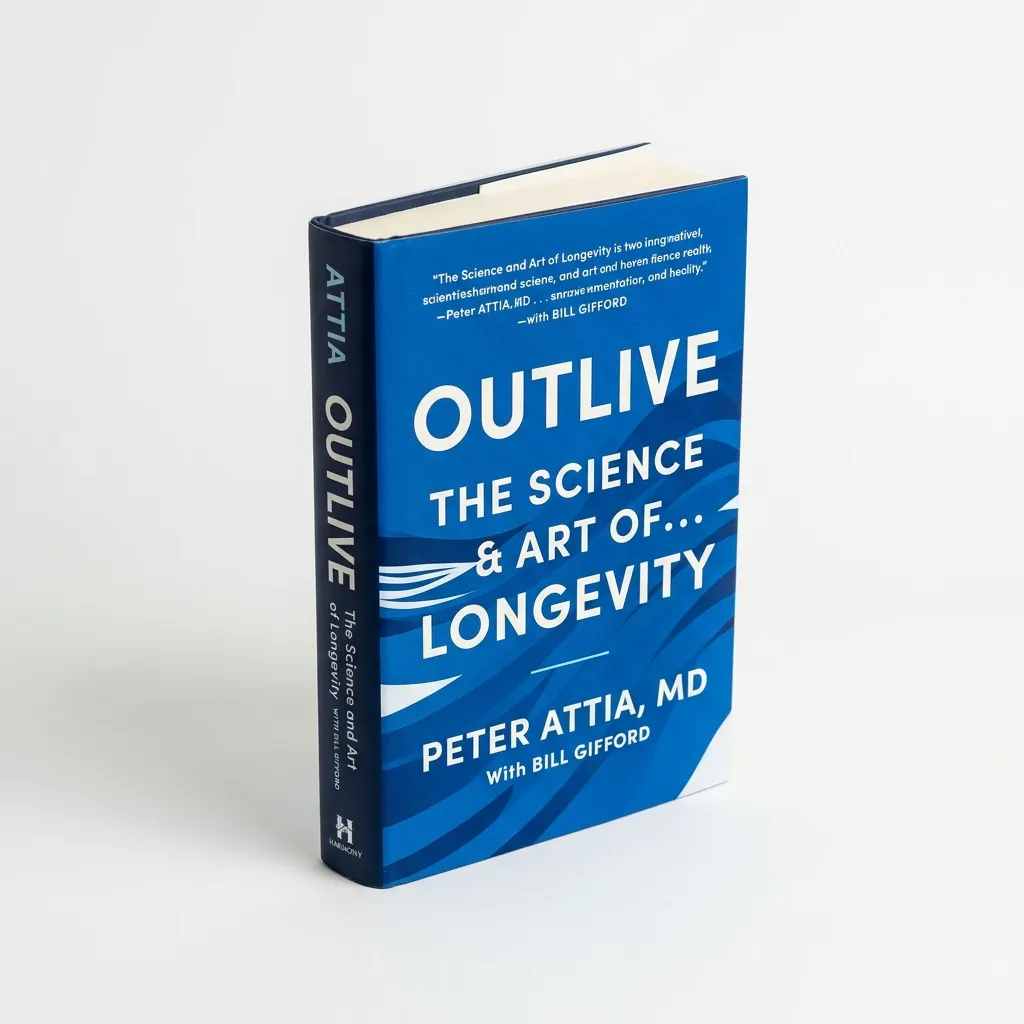
Outlive: The Science & Art of Longevity
Dr. Peter Attia's groundbreaking guide to preventive medicine, exercise for longevity, and healthy aging.
- Scientific framework for Medicine 3.0
- Actionable guide on sleep, exercise & nutrition
Limit values — when is it too high?
The international guidelines have moved towards lower targets in recent years. The Danish and European standards still define 140/90 mmHg as the limit for hypertension, but American guidelines lower the limit to 130/80. For the elderly over 80, slightly higher values (up to 150/90) are often accepted, because too aggressive lowering can cause side effects such as dizziness and falls. PMID 33145620 PMID 34125890
| Category | Systolic Blood Pressure (mmHg) | Diastolic Blood Pressure (mmHg) | Recommended Clinical Action |
|---|---|---|---|
| Optimal | < 120 | < 80 | Maintain healthy lifestyle habits and regular physical exercise |
| Elevated | 120–139 | 80–89 | Implement dietary sodium restriction, Zone 2 cardio, and home blood pressure monitoring |
| Hypertension Grade 1 | 140–159 | 90–99 | Intensive lifestyle interventions + evaluate pharmacological monotherapy with physician |
| Hypertension Grade 2 | 160–179 | 100–109 | Comprehensive lifestyle adjustments + initiate dual-agent antihypertensive therapy |
| Hypertension Grade 3 | > 180 | > 110 | Urgent medical evaluation; immediate pharmacological stabilization required |
How to measure blood pressure correctly
A single measurement by the doctor can be misleading — up to 20% have 'white coat hypertension', where the blood pressure rises in the clinic. Conversely, some may have normal pressure at the doctor's but elevated at home (masked hypertension). Therefore, home measurement over several days is recommended as a supplement. PMID 34125890 PMID 31952112
Correct measuring technique is essential. Small errors can cause large fluctuations in the result and lead to either overtreatment or false reassurance. PMID 34125890 PMID 31952112
What you can do yourself — before medicine
For most people with slightly elevated blood pressure (130-140/80-90), lifestyle changes are the first choice. The effect of several simultaneous measures can be surprisingly large and in some cases as effective as a single blood pressure drug. PMID 31952112 PMID 37491754
The DASH diet (Dietary Approaches to Stop Hypertension) is the best documented dietary strategy. It emphasizes fruit, vegetables, whole grains, low-fat dairy products, fish and nuts — and limits salt, red meat and added sugar. PMID 31952112 PMID 37491754
When is medication necessary?
Blood pressure medication is typically recommended for persistent hypertension above 140/90 mmHg despite lifestyle changes, or for 160/100+ already at diagnosis. For people with diabetes, kidney disease or previous cardiovascular disease, lower thresholds (130/80 mmHg) are often recommended. PMID 37491754
Most blood pressure drugs are well-documented, inexpensive and have few serious side effects when dosed correctly. Combination treatment with two or more low-dose preparations is often more effective and produces fewer side effects than a single high-dose preparation. PMID 37491754
Arterial stiffening, pulse wave velocity (PWV), and isolated systolic hypertension
Blood pressure represents one of the most potent independent predictors of cardiovascular morbidity, microvascular cerebral white-matter hyperintensities, and cognitive decline. With chronological aging, central elastic arteries (such as the aorta) undergo progressive degradation and fragmentation of elastin fibers, which are inexorably replaced by stiffer collagen networks and advanced glycation end-products (AGEs). PMID 38941258 PMID 33145620
This biomechanical stiffening accelerates **Pulse Wave Velocity (PWV)**: the forward pressure wave generated by left ventricular contraction travels faster along arterial walls and reflects prematurely back to the central circulation during late systole rather than diastole. The clinical hallmark is **isolated systolic hypertension**—a markedly elevated systolic pressure accompanied by normal or declining diastolic pressure and a widened pulse pressure (>60 mmHg). PMID 38941258 PMID 33145620
For optimal longevity, the clinical target is maintaining resting blood pressure below 120/80 mmHg, as each 10 mmHg elevation in systolic pressure above this threshold substantially multiplies the 10-year incidence of vascular dementia and heart failure. PMID 38941258 PMID 33145620
Endothelial function, nitric oxide (NO), and microvascular aging
The vascular endothelium plays a foundational role in vascular tone through the continuous generation of the gaseous signaling molecule **nitric oxide (NO)** via endothelial nitric oxide synthase (eNOS). NO diffuses into adjacent vascular smooth muscle cells, stimulating soluble guanylyl cyclase to induce vasodilation and protect against platelet aggregation. PMID 34125890 PMID 31952112
During vascular aging, sustained oxidative stress and elevated asymmetric dimethylarginine (ADMA) induce eNOS uncoupling, causing the enzyme to generate cytotoxic superoxide anions rather than bioactive NO. This leads to endothelial dysfunction and microvascular hypoperfusion in vulnerable organs including the brain, kidneys, and retina. PMID 34125890 PMID 31952112
Dietary inorganic nitrates (derived from beetroot, arugula, and leafy greens) enter the enterosalivary nitrate-nitrite-NO pathway, bypassing uncoupled eNOS to restore systemic vasodilation and reliably reduce systolic pressure by 3–5 mmHg in older adults. PMID 34125890 PMID 31952112
Circadian variation, nocturnal dipping, and evidence-based interventions
Healthy cardiovascular physiology follows a strict circadian profile characterized by a 10 to 20% nocturnal decline in mean arterial pressure during slow-wave sleep—termed physiological 'nocturnal dipping'. Individuals who fail to demonstrate this drop ('non-dippers') suffer up to double the risk of ischemic stroke, myocardial infarction, and end-organ microvascular damage. PMID 31952112 PMID 37491754
Ambulatory blood pressure monitoring (24-hour ABPM) remains the definitive diagnostic gold standard to uncover non-dipping status, 'white-coat' distortion, or nocturnal surges secondary to unrecognized obstructive sleep apnea. PMID 31952112 PMID 37491754
Among non-pharmacological interventions, recent rigorous network meta-analyses reveal that **isometric resistance training** (e.g., isometric wall squats or calibrated handgrip squeezes, 4 x 2 minutes, 3 times weekly) lowers resting systolic blood pressure by up to 8–10 mmHg—a therapeutic reduction rivaling or exceeding conventional first-line antihypertensive monotherapies. PMID 31952112 PMID 37491754
Internal Further Reading
Read also in the same cluster
Smart Body Composition Scale
Advanced bioimpedance scale tracking muscle mass, body fat percentage, bone density and hydration.
- Tracks muscle mass & visceral fat
- Wireless sync with health apps
FAQ
What is a normal blood pressure for a 60 year old?
Optimal is still below 120/80 mmHg, but up to 140/90 is often accepted in the elderly without other risk factors. After age 80, up to 150/90 may be acceptable to avoid dizziness and falls.
Can I lower my blood pressure without medication?
Yes, weight loss, the DASH diet, reduced salt, regular exercise and less alcohol can together lower blood pressure by 10-20 mmHg — often enough to avoid medication for mild hypertension.
How often should I measure my blood pressure?
With normal blood pressure, annual measurement is sufficient. In the case of high blood pressure, home measurement over 3-7 days every 3-6 days is recommended. month, depending on the level and whether you are undergoing treatment.
Are wrist gauges reliable?
Generally no. They are more sensitive to arm position and can give imprecise results. A validated upper arm gauge is recommended for home use.
Can stress cause high blood pressure?
Yes, chronic stress contributes to high blood pressure through increased sympathetic activity and cortisol. However, stress can be difficult to separate from the behavioral patterns (poor sleep, alcohol, unhealthy diet) that often accompany it.
Why does systolic blood pressure rise with age while diastolic often remains stable?
This condition is known as isolated systolic hypertension, caused by progressive arterial stiffening (arteriosclerosis) in large elastic arteries like the aorta. As elastin is replaced by stiff collagen and cross-linked by advanced glycation end-products (AGEs), pulse wave velocity (PWV) increases, driving up pulse pressure.
What is nocturnal blood pressure dipping and why does it matter for longevity?
A normal circadian blood pressure drop of 10–20% during deep sleep relieves shear stress on the vascular endothelium. Absence of this drop ('non-dipping') doubles the risk of stroke and cardiovascular events, frequently pointing to sleep apnea or sympathetic overdrive.
Which form of exercise demonstrates the most potent blood pressure-lowering effect?
Recent meta-analyses highlight isometric resistance training (such as isometric wall squats or handgrip contractions, 4 x 2 minutes, 3 times weekly) as exceptionally potent, lowering systolic pressure by up to 8–10 mmHg in synergy with Zone 2 aerobic cardio.
Sources and References
- [1]
- [2]
- [3]
- [4]
Show all 5 sources (1 more)
- [5]
Editorial History
1. June 2026
First publication
Initial version was published as part of the healthy aging with introduction, takeaways, FAQ, and reference block.
1. June 2026
Medical review
Phrasing, caveats, and internal links were reviewed for clarity, consistency, and YMYL alignment.
4. July 2026
Latest update
Blood pressure and ageing received updated metadata, reference outputs, and improved decision-support structure.

Medical Review
Medical Review and Update Process
This article has been medically reviewed by Vadim Doroshenko with a focus on clinical accuracy, sources, disclaimers, and whether the conclusions still align with current scientific evidence.

Editorial Profile
Borys Viktorovytj Riabtsev
Borys Viktorovytj Riabtsev publishes Longevity Lab as a research-backed information project on precision medicine, metabolic health, and healthy aging, utilizing rigorous sources, independent medical review, and objective YMYL communication.