Key takeaways
- There is no strong evidence that fisetin or Urolithin A directly improves sleep in the same way as classic sleep interventions.
- Urolithin A is most interesting via energy, mitochondria and function, while fisetin is more often discussed through inflammaging and senolytic theory.
- If you want to assess effectiveness, you should measure sleep, energy and recovery systematically rather than relying on diffuse sensations.
- For most people, sleep hygiene, rhythm, light, caffeine and stress regulation will still move far more than these substances.
Medical disclaimer: Content is for informational purposes and does not replace medical advice.
Why this particular combination is being debated
The combination arises because many in the longevity field are looking for connections between cellular health and daily function. If you can influence inflammaging or mitochondrial function, it is tempting to assume that sleep, recovery and daytime energy will also improve. PMID 30279143 PMID 27400265
The problem is that the road from plausible mechanism to clear human effect is long. It is not enough that a substance sounds biologically elegant. It should also show up in meaningful sleep or recovery data. PMID 30279143 PMID 27400265
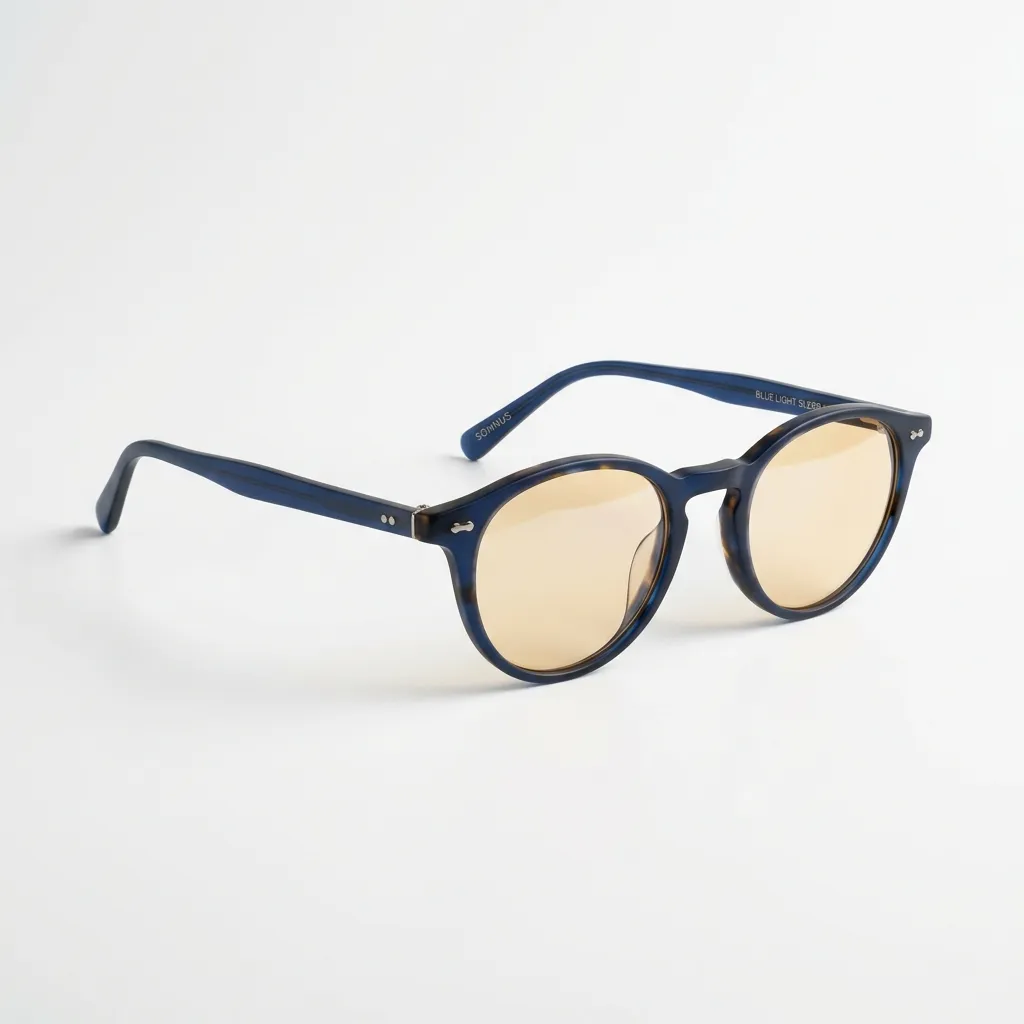
Blue Light Blocking Sleep Glasses
Specialized amber-lens glasses blocking 99% of blue light at night for natural melatonin production.
- Blocks 400-500nm screen light & LEDs
- Enhances deep sleep & REM phases
What fisetin realistically can and cannot say about sleep
Fisetin is typically highlighted as a plant-based substance in conversations about senolytics and inflammaging. This means that the interest is often about ambient stress, inflammation and theoretically better biological environment, not about direct sedation or improved sleep architecture. PMID 27400265 PMID 32694802
Therefore, it is more correct to see any sleep improvements as indirect hypotheses. If someone experiences better recovery, it may be due to several things at the same time, and the data are not strong enough to conclude that fisetin in isolation improves sleep in broad user groups. PMID 27400265 PMID 32694802
What Urolithin A can contribute to the recovery track
Urolithin A is more obvious in an energy and mitochondrial track. The hypothesis is not that the user becomes more sleepy, but that better cellular energy management and functional capacity can affect daytime energy, exercise tolerance and perceived recovery. PMID 32694802 PMID 32686865
This is an important nuance because many biohackers confuse better energy with better sleep. They overlap but are not the same. An intervention can improve daytime function without changing falling asleep, awakenings or overall sleep quality particularly much. PMID 32694802 PMID 32686865
Which signals are reasonable to follow
If you want to test a substance in a recovery track, the measurements must be more specific than 'I feel a little better'. The combination of subjective notes and simple biomarkers typically provides the best filter against self-deception. PMID 32686865 PMID 34083757
The table below shows which signals are most relevant to look at if the goal is to assess whether anything meaningful is happening at all. PMID 32686865 PMID 34083757
A pragmatic test design if you want to be sober
The best way to test is not to stack five new things on top of each other. Keep rhythm, caffeine, exercise and bedtime as stable as possible for a limited period of time, changing only the one factor you actually want to assess. PMID 34083757
If the signals are unclear after 3 to 6 weeks, it is often more honest to call the effect uncertain than to interpret every good night as proof. PMID 34083757
Fisetin as a potent plant senolytic: The 'hit-and-run' interventional paradigm
Cellular senescence represents one of the foundational Hallmarks of Aging. When somatic cells encounter critical DNA damage, oncogenic stress, or telomeric shortening, they enter an irreversible replicative arrest. Termed senescent or 'zombie' cells, they resist physiological programmed cell death (apoptosis) by upregulating pro-survival Senescent Cell Anti-Apoptotic Pathways (SCAP networks, prominently BCL-2, BCL-xL, and PI3K/Akt). PMID 30279143 PMID 32686865
Concurrently, these metabolically active cells secrete a noxious secretome comprising pro-inflammatory cytokines, chemokines, and extracellular matrix metalloproteinases—termed the Senescence-Associated Secretory Phenotype (SASP). SASP drives chronic low-grade systemic inflammation ('inflammaging') and paracrine senescence across healthy bystander cells. PMID 30279143 PMID 32686865
Fisetin, a naturally occurring polyphenolic flavonol found in minute quantities in strawberries and persimmons, was identified in high-throughput senotherapeutic screens at Scripps Research and the Mayo Clinic as the most potent naturally derived senolytic flavonoid. Fisetin selectively downregulates SCAP networks, triggering apoptosis specifically within senescent populations while sparing healthy somatic tissue. PMID 30279143 PMID 32686865
Crucially, the clinical administration requires an **intermittent 'hit-and-run' dosing schedule**: Senolytics should **never be ingested daily**. Chronic administration exhausts hepatic cytochrome enzymes and dampens physiological inflammatory cascades required for wound healing. Instead, human clinical trials utilize pulsed dosing: **20 mg/kg body weight for 2 consecutive days per month** (approx. 1,400–1,800 mg daily for 48 hours, repeated every 30 days) to purge accumulated senescent burden. PMID 30279143 PMID 32686865
Urolithin A and mitophagy: Overcoming the human microbiome bottleneck
While fisetin clears whole damaged cells, **Urolithin A** acts intracellularly within the cellular power plants: the mitochondria. With chronological age, mitochondria accumulate somatic mitochondrial DNA (mtDNA) mutations and lose inner membrane potential, compromising ATP synthesis while leaking damaging reactive oxygen species (ROS). PMID 27400265 PMID 32694802 PMID 34083757
Mitophagy is the selective autophagic recycling cascade, governed by the PINK1 and Parkin pathways, which targets defective mitochondria for lysosomal degradation while triggering mitochondrial biogenesis to replenish energetic pools. PMID 27400265 PMID 32694802 PMID 34083757
Urolithin A is a gut microbial metabolite produced when commensal bacteria metabolize dietary ellagitannins found in pomegranates, walnuts, and berries. However, extensive clinical trials in the European Journal of Clinical Nutrition demonstrated a severe microbiomic constraint: PMID 27400265 PMID 32694802 PMID 34083757
**Only 30 to 40% of healthy adults** harbor the specific gut microbial clades (primarily species from the *Eggerthellaceae* family, including *Gordonibacter urolithinfaciens*) capable of bio-transforming ellagitannins into active Urolithin A. For the remaining 60–70% of individuals, consuming dietary precursors produces zero circulating Urolithin A. Direct oral administration of synthesized Urolithin A (500–1,000 mg daily) bypasses this microbiome bottleneck, reliably restoring mitophagy and muscle endurance in clinical human trials. PMID 27400265 PMID 32694802 PMID 34083757
Impact on sleep architecture, glymphatic flow, and neuroinflammation
Both senolytics and mitophagy activators exert profound, yet frequently overlooked, benefits on sleep architecture and nocturnal cellular restoration: PMID 30279143 PMID 27400265 PMID 32686865
Sustained SASP secretion from senescent glial cells (senescent microglia and reactive astrocytes) traverses the blood-brain barrier, inciting central neuroinflammation. This chronic inflammatory signal disrupts the master circadian pacemaker in the suprachiasmatic nucleus, suppresses melatonin synthesis, and causes sleep fragmentation with frequent micro-arousals. PMID 30279143 PMID 27400265 PMID 32686865
By intermittently clearing senescent glial burden with pulsed fisetin, central neuroinflammatory tone recedes. Simultaneously, Urolithin A restores oxidative phosphorylation and cellular ATP reserves within cortical neurons. PMID 30279143 PMID 27400265 PMID 32686865
During Stage 3 Slow-Wave Deep Sleep, the brain's glymphatic clearance network operates with maximum vigor, pumping cerebrospinal fluid through interstitial channels to flush metabolic neurotoxins such as amyloid-beta and hyperphosphorylated tau. This active process requires high local cellular energetics. By re-energizing neuronal mitochondria, Urolithin A fuels optimal slow-wave delta power and restorative cognitive recovery. PMID 30279143 PMID 27400265 PMID 32686865
| Molecule / Compound | Primary Mechanism | Dosing Protocol | Natural Sourcing & Bioavailability | Sleep & Longevity Relevance |
|---|---|---|---|---|
| Fisetin (senolytic) | Inhibits SCAP survival axes; induces senescent apoptosis | Intermittent pulse ('hit-and-run'): 20 mg/kg for 2 days/month | Strawberries (trace amounts); necessitates purified extract | Lowers systemic SASP load, alleviates nocturnal microglial stress |
| Urolithin A (mitophagy) | Upregulates PINK1/Parkin-mediated selective mitophagy | Continuous daily administration: 500–1,000 mg in the morning | Pomegranates (requires specific gut flora; absent in 60–70%) | Restores neuronal ATP kinetics, supports deep slow-wave sleep |
| Synergistic Regimen | Dual action: purging senescent cells + re-energizing healthy tissue | Monthly 2-day fisetin pulse paired with daily Urolithin A | Clinically formulated nutraceuticals with analytical verification | Comprehensive cellular rejuvenation and deepened physiological recovery |
Internal Further Reading
Read also in the same cluster
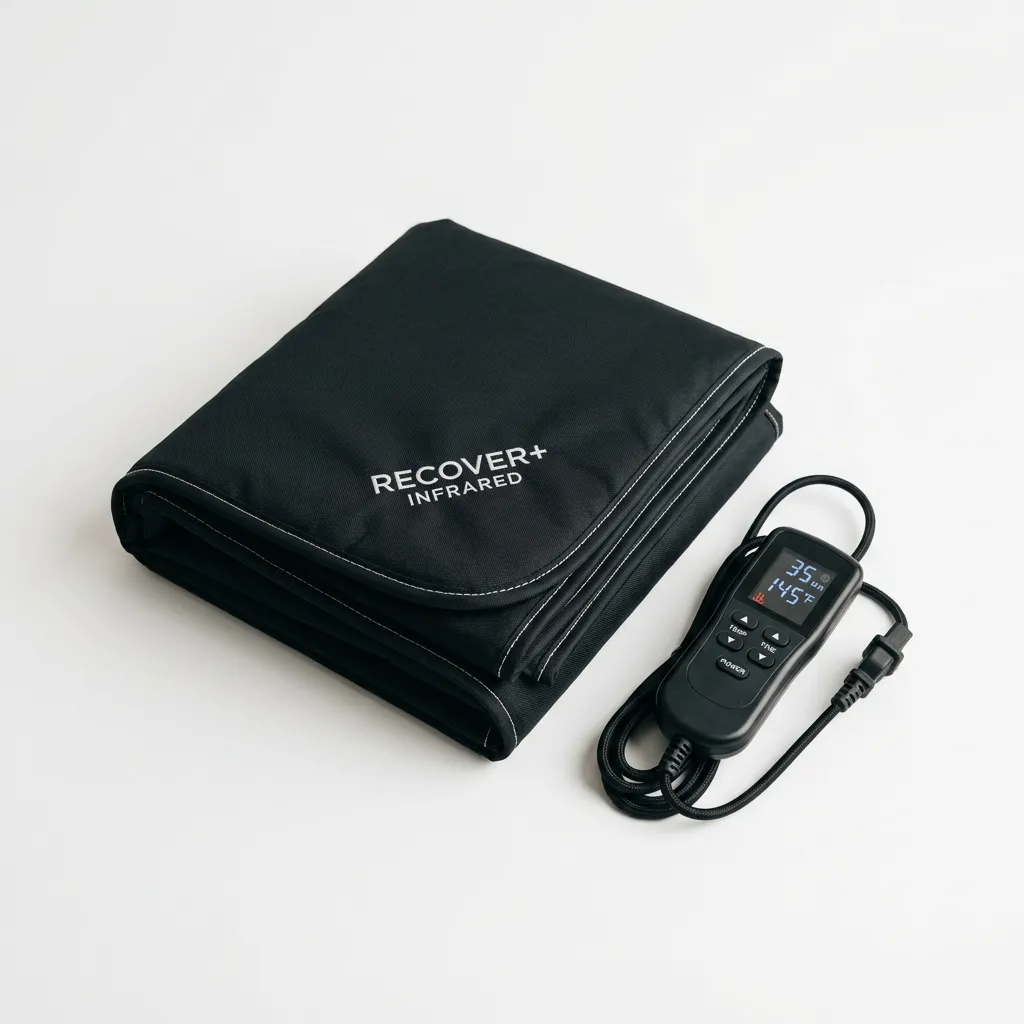
Infrared Sauna Blanket for Home Use
Infrared sauna blanket delivering deep thermal therapy, triggering heat shock proteins (HSP) and circulation.
- Far-infrared deep penetrating heat
- Triggers autophagy response & calorie burn
FAQ
Does fisetin improve sleep directly?
There is no strong evidence for a direct and reproducible sleep effect. Any improvements should be seen as hypothetical and indirect.
Is Urolithin A a sleep supplement?
No. It is discussed more plausibly via mitochondria, energy and function than as classical sleep intervention.
Can better energy provide better recovery?
Yes, but it is not the same as documented better sleep. One should distinguish between daytime function and nighttime sleep.
Which biomarkers make the most sense to follow?
Sleep diary, wearable trends, nocturnal heart rate, HRV and perceived daytime energy are often more useful than single nights or loose stomach sensations.
What still moves the most for most people?
Sleep hygiene, light management, regular rhythm, less late caffeine and better stress management will typically move more than these supplements.
Why should fisetin not be taken on a daily basis?
Fisetin operates as a senolytic compound intended to trigger a transient wave of apoptosis across senescent cells. Daily chronic dosing fails to provide additional senolytic benefit while placing metabolic strain on hepatic enzymes and potentially suppressing beneficial acute physiological inflammatory responses. The 2-day monthly 'hit-and-run' protocol is the scientific standard.
Can I achieve adequate Urolithin A by drinking pomegranate juice?
For most people, no. Only approximately 30–40% of the population possesses the gut microbial clades required to synthesize Urolithin A from ellagitannins. Additionally, pomegranate juice contains high levels of free fructose, which can compromise glycemic control when consumed in large volumes.
How do senolytics and mitophagy enhance nocturnal sleep quality?
Senescent cells secrete pro-inflammatory cytokines (SASP) that inflame circadian neural centers, fragmenting sleep architecture. Clearing this inflammatory burden while enhancing neuronal mitochondrial ATP production stabilizes slow-wave delta sleep and nocturnal glymphatic waste clearance.
Sources and References
- [1]
- [2]
- [3]
- [4]
Show all 5 sources (1 more)
- [5]
Editorial History
17. April 2026
First publication
Initial version was published as part of the healthy aging with introduction, takeaways, FAQ, and reference block.
17. April 2026
Medical review
Phrasing, caveats, and internal links were reviewed for clarity, consistency, and YMYL alignment.
4. July 2026
Latest update
Fisetin, Urolithin A and sleep received updated metadata, reference outputs, and improved decision-support structure.

Medical Review
Medical Review and Update Process
This article has been medically reviewed by Vadim Doroshenko with a focus on clinical accuracy, sources, disclaimers, and whether the conclusions still align with current scientific evidence.

Editorial Profile
Borys Viktorovytj Riabtsev
Borys Viktorovytj Riabtsev publishes Longevity Lab as a research-backed information project on precision medicine, metabolic health, and healthy aging, utilizing rigorous sources, independent medical review, and objective YMYL communication.