Key takeaways
- The Hume Band represents an important shift in the wearable market: from simple activity tracking to direct interpretation of long-term chronic risk and biological aging.
- The most unique feature is the inclusion of EEG sensors for sleep and focus, but the technology in a consumer band should be interpreted as trend indicators rather than clinical measurements.
- The decisive choice between the Hume Band, Oura Ring and Whoop is not about the number of sensors, but whether the software's feedback is clear enough to change your habits.
- If you are looking for the most proven and stable ecosystem, established players like Oura remain the most rational choice; Hume Band is for the curious longevity enthusiast.
Medical disclaimer: Content is for informational purposes and does not replace medical advice.
What Hume Band is trying to solve in the longevity landscape
In recent years, wearables have gone from counting steps and estimating calorie loss to monitoring complex physiological processes. Hume Band tries to take this a step further by shifting the focus from pure data collection to active interpretation of your long-term health risk and health span. It's a deeply attractive idea because most users quickly become saturated with raw numbers, graphs and percentages; instead, they want a unified narrative about what the data flow means for their future health and biological age. American Academy of Sleep Medicine PMID 37532372
But translating sensor data into a meaningful longevity score is at the same time an extremely difficult scientific and technical task. The greater the promises a product makes regarding biological age, chronic disease risk or life extension, the more critical it becomes to examine what is actually measured physiologically and how robust the underlying algorithms are when confronted with everyday noise and biological variations. American Academy of Sleep Medicine PMID 37532372
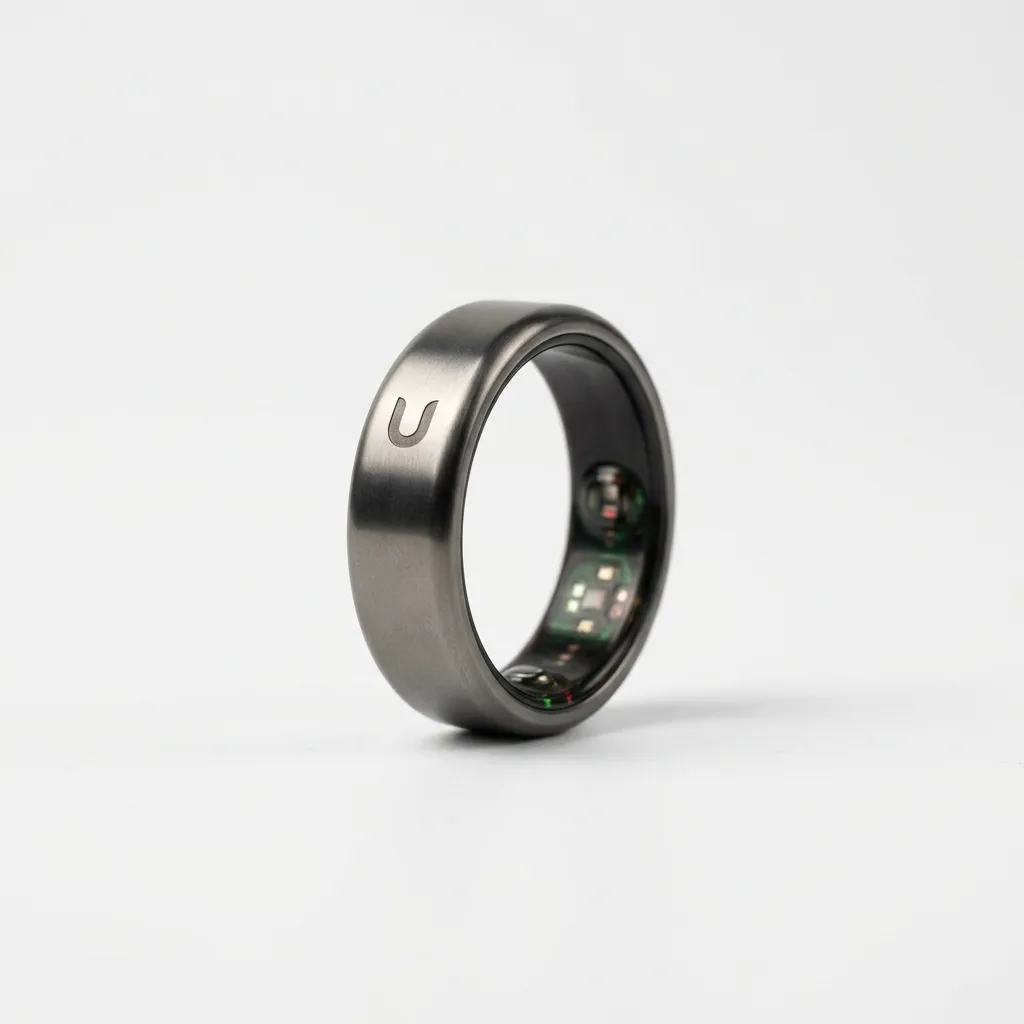
Ultrahuman Ring AIR Smart Ring
Ultra-lightweight titanium smart ring tracking sleep stages, HRV, body temperature and metabolic recovery.
- Weighs only 2.4 grams in fighter-grade titanium
- No monthly subscription fees required
EEG technology on the wrist: Innovation or unnecessary complexity?
The most prominent selling point of the Hume Band is the inclusion of EEG (electroencephalography) sensors, which aim to record electrical brain activity during sleep and rest. Traditional trackers like Oura Ring and Whoop base their sleep analysis solely on PPG (optical pulse measurement), movement and temperature, which at best provides an estimate of your sleep phases with 60 to 80 percent accuracy compared to a clinical sleep lab. PMID 37532372 Oura Help
Theoretically, direct measurement of brain waves via EEG can provide a much more accurate picture of deep sleep, REM sleep and micro-awakenings. But in practice, EEG in a consumer electronic wearable is extremely sensitive to artefacts, movement, sweat and electrical noise from the surroundings. Therefore, it is critical to understand that while the Hume Band provides more advanced sensors, the data remains experimental trend indicators rather than diagnostic measurements of your neurological health. PMID 37532372 Oura Help
Comparison: Hume Band vs Oura Ring 4 vs Whoop 4.0
To assess whether the Hume Band is worth the money, it must be compared to the current market leaders. The Oura Ring 4 dominates in comfort, discretion and stable heart rate variability (HRV) measurement, while the Whoop 4.0 is tailored for athletes who need precise control of training load and daily strain. Oura Help WHOOP
Hume Band differs by its explicit focus on longevity coaching and AI-driven health recommendations. Where Whoop asks if you're up for a hard workout today and Oura tells you if you should take a rest day, the Hume Band attempts to link your nightly recovery and stress levels directly to long-term physiological adaptations and healthy aging. Oura Help WHOOP
What you should critically examine before investing
Before investing in a new device like the Hume Band, you should clarify with yourself whether you are really getting new, action-oriented information, or whether you are simply buying a new visual packaging of well-known signals such as resting heart rate, HRV, skin temperature and sleep duration. Many health technology products appear far more impressive by virtue of their marketing language than by virtue of the actual physiological data layers. WHOOP Ultrahuman
The most important parameter for success is therefore never the number of sensors or advanced graphs on your screen. It is solely about whether you as a user understand what the numbers mean, whether you have confidence in the stability of the measurements over time, and whether the software manages to inspire you to concrete, positive behavioral changes in your diet, sleep, exercise and stress management in everyday life. WHOOP Ultrahuman
Who is the Hume Band for — and who should wait?
The Hume Band is undoubtedly best suited to curious users, biohackers and longevity enthusiasts who consciously want to experiment with new wearable formats and advanced signal types such as EEG. If you are stimulated by in-depth data analysis and thrive on being at the forefront of health technology, the Hume Band offers a unique insight into the future of personal health monitoring. Ultrahuman FDA
If, on the other hand, you are looking for the most well-tested, user-friendly and problem-free product on the market, it is often far more rational to choose a more established player such as Oura Ring or Apple Watch. For the average user, stability, high wearing comfort and simple, reliable feedback remain the most important factors to achieve a real health effect over time. Ultrahuman FDA
Why longevity language is not the same as clinical utility
A health product does not automatically become more useful or accurate simply because its marketing makes extensive use of concepts such as healthspan, pace of aging, metabolic reserve or chronic disease risk. For the quality-conscious consumer, having a simple device that measures a few core variables extremely reliably is infinitely more valuable than a device that promises to translate all of your biological complexity into a single screen. FDA
It is precisely in this light that the Hume Band should be assessed: as an exciting, ambitious and innovative step towards a more proactive health culture, but not as a magical shortcut to deeper medical or biological truth. Your daily behavior remains the most important factor for your health span. FDA
Practical decision filter for Hume Band
The Hume Band should not be evaluated solely on its longevity marketing terminology. A more pragmatic framework asks whether the band drives specific behavioral modifications that you cannot already obtain through an Oura Ring, Whoop 4.0, Apple Watch, or a simpler training and sleep tracking setup. American Academy of Sleep Medicine PMID 37532372 Oura Help WHOOP
If you are an early adopter eager to test emerging healthspan wearables, this review provides a balanced starting point. However, if your goal is platform stability and validated biomechanics, standard comparisons against Oura and Whoop remain essential. American Academy of Sleep Medicine PMID 37532372 Oura Help WHOOP
- Choose Hume Band out of scientific curiosity, not merely because 'longevity' features in marketing claims.
- Compare directly against Oura and Whoop on wearability, subscription costs, and real-world adherence.
- Discontinue wearable tracking if biometric telemetry generates cognitive distress rather than actionable clarity.
What EEG telemetry actually contributes—and what it does not
Hume Band sets itself apart by integrating consumer-grade electroencephalography (EEG) electrodes to assess cognitive stress and focus states. However, consumer wrist or headband EEG is not a clinical diagnostic instrument; it provides trend signals and lifestyle feedback that must be interpreted with prudent skepticism. American Academy of Sleep Medicine PMID 37532372 Ultrahuman
Consequently, EEG features should be viewed as experimental add-ons rather than a reason to abandon mature optical wearables. If your primary focus is nocturnal recovery and cardiovascular conditioning, EEG offers limited incremental utility. American Academy of Sleep Medicine PMID 37532372 Ultrahuman
| Biometric Signal | Hume Band | Oura Ring / Whoop |
|---|---|---|
| Consumer EEG | Experimental cognitive workload tracking | Not available |
| HRV & Nocturnal Sleep | Available on newer platform architecture | Highly validated, mature algorithmic baselines |
| Behavioral Coaching | Longevity- and healthspan-centric guidance | Athletic recovery and cardiovascular strain focus |
Who Hume Band is best suited for today
The device is primarily tailored for seasoned quantified-self enthusiasts who already utilize an Oura or Whoop and wish to experiment with neural telemetry in a unified dashboard. For novices entering biometric health monitoring, established consumer wearables represent a substantially lower friction entry point. American Academy of Sleep Medicine Oura Help WHOOP FDA
The priority is never collecting maximal data points—it is selecting the device that drives actionable habit adjustments with minimal cognitive burden. American Academy of Sleep Medicine Oura Help WHOOP FDA
- Start with Oura or Whoop if you are new to longitudinal health tracking.
- Consider Hume Band as an experimental secondary tier for exploratory neural telemetry.
- Pause tracker use if continuous monitoring exacerbates anxiety or disrupts natural sleep hygiene.
Safety considerations and realistic expectation management
No consumer wearable can diagnose neurological conditions or substitute for professional medical consultations. EEG micro-signals captured outside shielded clinical environments are susceptible to motion artifacts, sweat interference, and algorithmic noise. American Academy of Sleep Medicine PMID 37532372 FDA
Viewing the Hume Band as an exploratory quantified-self platform maintains appropriate scientific perspective while safeguarding user health decisions. American Academy of Sleep Medicine PMID 37532372 FDA
Internal Further Reading
Read also in the same cluster
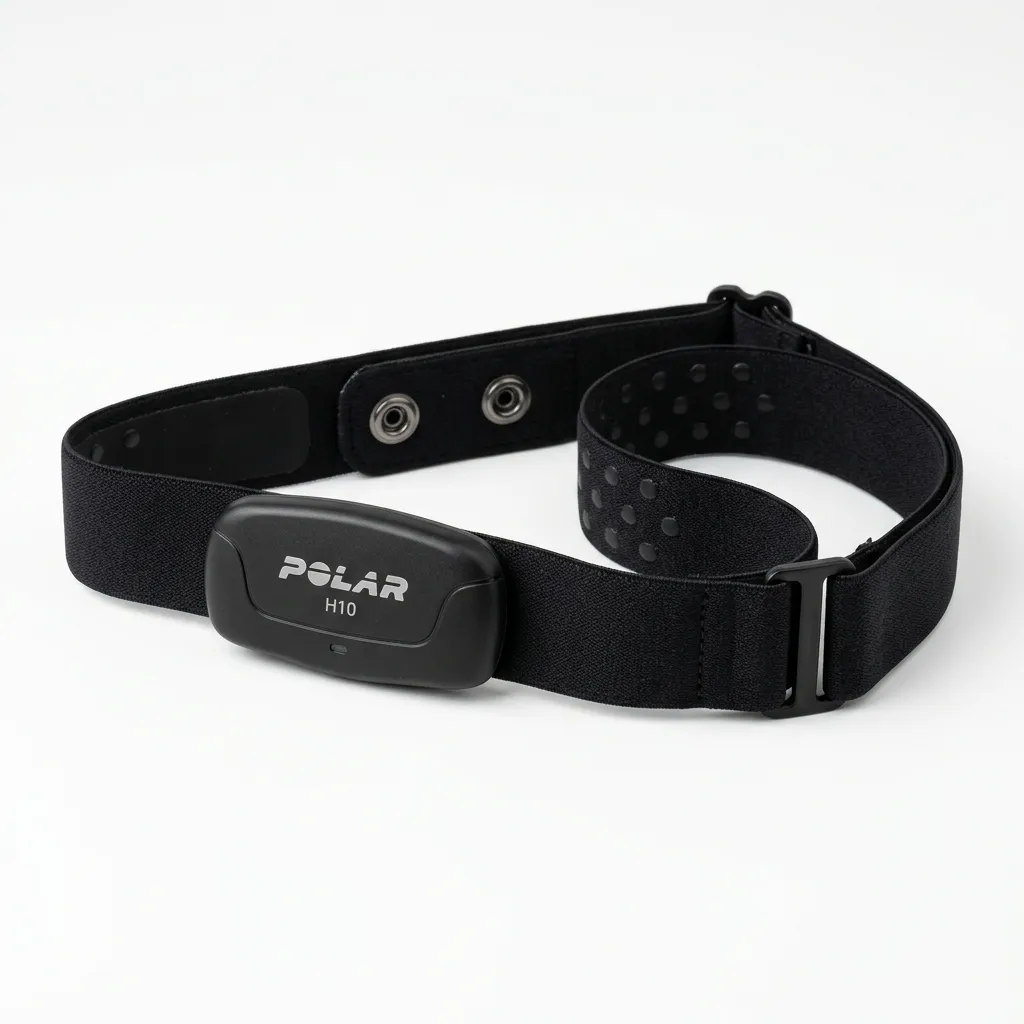
Polar H10 Heart Rate Monitor & HRV Sensor
The gold standard chest strap monitor for accurate Heart Rate Variability (HRV) and Zone 2 training.
- ECG-accurate HRV and heart rate zone tracking
- Dual Bluetooth & ANT+ connectivity
FAQ
Is Hume Band better than Oura Ring 4 or Whoop?
It is too early to choose an overall winner. The Oura Ring 4 is superior in comfort and simple sleep tracking, while the Whoop is best for training load. The Hume Band differs solely in its deep focus on longevity coaching and the inclusion of experimental EEG technology.
What does it mean that Hume Band is a longevity coach?
This means that the device's software and artificial intelligence try to link your daily measurements (such as sleep, HRV, resting heart rate and brain activity) with long-term health models to estimate your biological aging and prevent chronic wear and tear.
Can the EEG sensor in the Hume Band replace a clinical sleep study?
No, by no means. Although wrist EEG is a technological advance in consumer electronics, the measurements are sensitive to noise and movement. They should only be considered indicative trends for your sleep quality and focus.
How much does the Hume Band cost and does it require a subscription?
Like most advanced wearables in 2026, the Hume Band requires an ongoing subscription to gain full access to the AI coaching, longevity models and deep historical data analyses.
Is Hume Band a superior choice compared to Oura or Whoop?
Not inherently. While Hume Band is intriguing for its healthspan-specific positioning and EEG telemetry, Oura and Whoop remain substantially more mature, validated ecosystems for effortless sleep tracking and cardiovascular strain coaching respectively.
Can Hume Band EEG detect cognitive disorders?
No. Consumer EEG sensors provide trend indicators of relaxation and focus, not clinical diagnostic measurements. Any cognitive concerns warrant professional neurological evaluation.
Is Hume Band worth the investment in 2026?
For early adopters keen to experiment with novel neuro-telemetry, it offers an engaging testbed. For the majority of users, Oura Ring or Whoop 4.0 remain the more reliable, practical daily drivers.
Sources and References
- [1]
- [2]
- [3]
- [4]
Show all 6 sources (2 more)
- [5]
- [6]
Editorial History
16. April 2026
First publication
Initial version was published as part of the wearables with introduction, takeaways, FAQ, and reference block.
16. April 2026
Medical review
Phrasing, caveats, and internal links were reviewed for clarity, consistency, and YMYL alignment.
4. July 2026
Latest update
Hume Band vs Oura (2026) received updated metadata, reference outputs, and improved decision-support structure.

Medical Review
Medical Review and Update Process
This article has been medically reviewed by Vadim Doroshenko with a focus on clinical accuracy, sources, disclaimers, and whether the conclusions still align with current scientific evidence.

Editorial Profile
Borys Viktorovytj Riabtsev
Borys Viktorovytj Riabtsev publishes Longevity Lab as a research-backed information project on precision medicine, metabolic health, and healthy aging, utilizing rigorous sources, independent medical review, and objective YMYL communication.