Key takeaways
- Conventional wearables (Oura Ring, Apple Watch, Garmin) capture peripheral proxies (heart rate, HRV, motion), whereas in-ear EEG measures actual cortical brainwaves (delta, theta, alpha, sleep spindles) defining true sleep architecture.
- NextSense Smartbuds, engineered by former Alphabet X neuro-engineers, utilize 6 patented dry electrodes per ear embedded in soft medical silicone that harness natural auditory canal moisture to achieve low impedance (<50 kOhm).
- Beyond passive recording, the system performs active closed-loop auditory stimulation (pink noise pulses timed to the rising phase of slow oscillations) to amplify deep slow-wave sleep, enhancing glymphatic clearance and synaptic consolidation.
- In clinical validation trials, ear-EEG delivers 85–92% concordance against in-lab polysomnography (PSG) versus 60–75% for wrist or ring wearables, virtually eliminating the misclassification of quiet wakefulness as light sleep.
- Practical limitations: mechanical canal pressure can cause tenderness for strict side sleepers on firm pillows, and active overnight multi-channel streaming requires daily dock recharging.
Medical disclaimer: Content is for informational purposes and does not replace medical advice.
1. Paradigm Shift in Sleep Tracking: Moving from Peripheral Proxies (PPG) to Cortical EEG
To comprehend why in-ear EEG marks a quantum leap in personal health monitoring, one must recognize the inherent biological limitation of all wrist- and finger-based consumer wearables. When an Oura Ring, Whoop 4.0, or Apple Watch Series 10 reports that you attained '1 hour and 24 minutes of deep sleep' or '42 minutes of REM sleep', that metric is merely an indirect mathematical deduction. The hardware relies on photoplethysmography (PPG) — measuring optical absorption variations through vascular capillary beds using green, red, and infrared LEDs — coupled with multi-axis accelerometers capturing movement. PMID 31288246 PMID 33799047
The fundamental flaw of this methodology is well-documented in clinical sleep medicine: autonomic nervous system markers (pulse and HRV) and somatic muscle tone correlate with sleep stages, but they are not identical to them. A user resting completely still in bed while practicing breathwork or mindfulness meditation will frequently be misclassified by an optical tracker as Stage N2 light sleep or even Stage N3 slow-wave sleep. Conversely, during high-intensity REM dreaming accompanied by autonomic sympathetic bursts and heart rate spikes, a wristband may erroneously conclude that you awakened. Validation meta-analyses published in Sleep Medicine Reviews reveal that consumer wearables achieve merely 60% to 75% epoch-by-epoch agreement with laboratory polysomnography (PSG). PMID 31288246 PMID 33799047
Sleep is an electrophysiological state of the brain. The four official sleep stages codified by the American Academy of Sleep Medicine (AASM) — N1, N2, N3 (Slow-Wave Sleep), and REM — are defined by discrete frequency distributions and neuroelectric patterns produced by millions of synchronous cortical pyramidal neurons. In-ear EEG captures these microvolt potentials directly at the source. By nesting electrodes within the auditory canal — situated millimeters from the temporal lobe and major cranial conductive pathways — NextSense Smartbuds capture true neural oscillations: delta waves (0.5–4 Hz) during deep restorative sleep, theta rhythms (4–8 Hz) during sleep onset, sleep spindles (12–16 Hz) and K-complexes in Stage N2, and low-voltage desynchronized activity during REM. This transitions sleep tracking from algorithmic conjecture to genuine neurophysiology. PMID 31288246 PMID 33799047
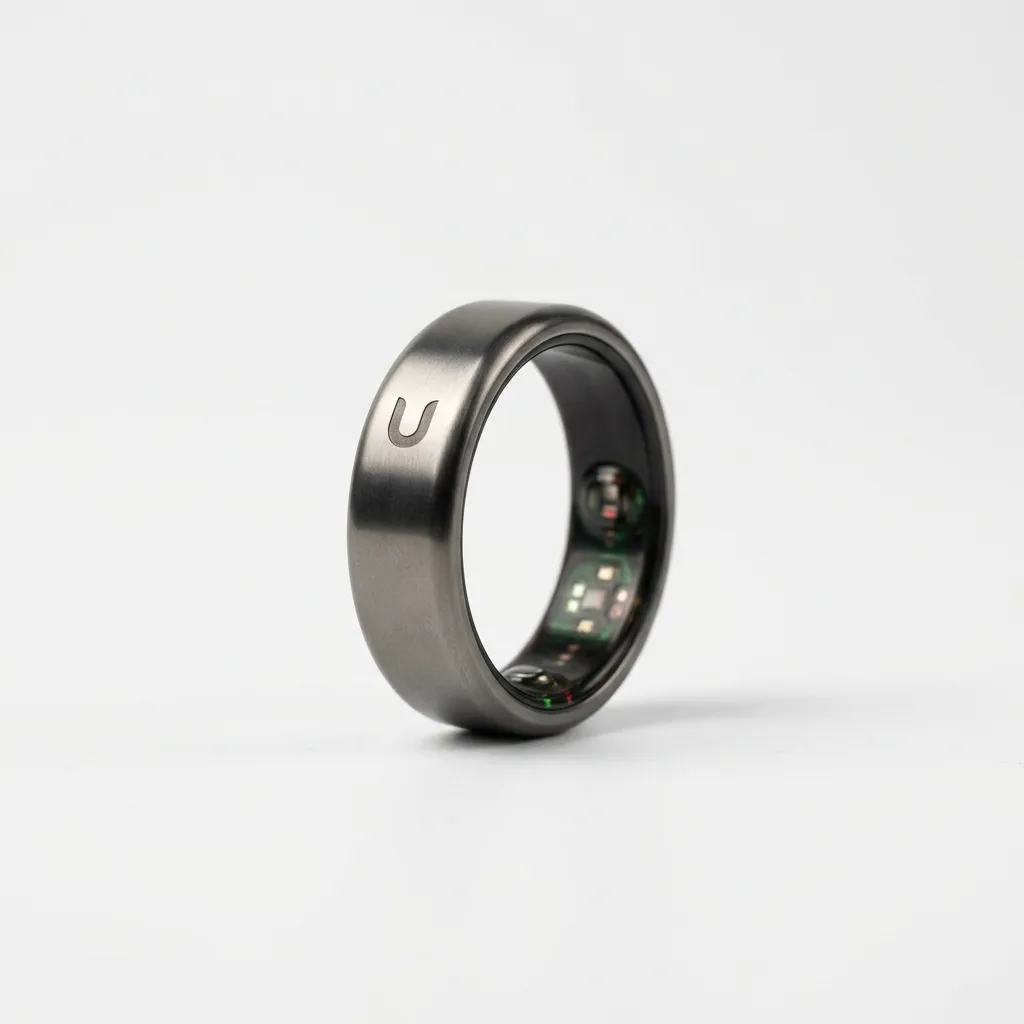
Ultrahuman Ring AIR Smart Ring
Ultra-lightweight titanium smart ring tracking sleep stages, HRV, body temperature and metabolic recovery.
- Weighs only 2.4 grams in fighter-grade titanium
- No monthly subscription fees required
2. NextSense Smartbuds Technology: 6 Dry Electrodes per Ear and Ear Canal Impedance
The conceptual framework of measuring EEG inside the ear canal (ear-EEG) has circulated in academic literature for years. However, transforming bulky medical instrumentation into miniature, wireless consumer earbuds comfortable enough for all-night sleep was long considered an insurmountable biomedical challenge. NextSense, originating from Alphabet's moonshot division X in Mountain View, solved this dilemma by re-engineering conductive polymer chemistry and ear ergonomics. PMID 31288246 PMID 23192461
A formal clinical EEG exam conducted in a hospital neurology ward requires 20 to 25 silver/silver-chloride (Ag/AgCl) cup electrodes glued onto an abraded scalp with abrasive paste and messy conductive electrolyte gels. The patient is tethered to an umbilical cable harness, provoking an acute 'first-night effect' that rarely reflects natural domestic sleep. NextSense Smartbuds replace this entire cumbersome setup with a pair of ultra-compact, wireless ergonomic earbuds weighing less than 5 grams each. PMID 31288246 PMID 23192461
Each earbud incorporates six proprietary dry-contact electrodes molded from a biocompatible conductive polymer seamlessly integrated into ergonomic silicone wingtips. These electrodes take advantage of a remarkable physiological trait: the human ear canal is a semi-enclosed microenvironment shielded from rapid evaporative drying, maintaining stable microscopic humidity. This natural transepidermal perspiration creates an ionic conducting bridge that drives contact impedance below 50 kOhm within 15 minutes — completely eliminating the need for sticky gels or skin prep. Multi-channel differential amplification, paired with onboard machine-learning ASICs, strips away real-time artifacts from jaw clenching, arterial pulse waves, and ocular twitches before transmitting encrypted telemetry to the user's mobile device. PMID 31288246 PMID 23192461
3. Closed-Loop Auditory Stimulation: Enhancing Deep Sleep with Synchronized Pink Noise
While every conventional sleep tracker on the market functions as a passive diagnostic recorder — informing you the next morning how poorly you rested — NextSense Smartbuds introduce active neuromodulation. The earbuds incorporate a proprietary neurotechnology known as Closed-Loop Auditory Stimulation (CLAS) or Slow-Wave Enhancement (SWE). PMID 29770104 PMID 33004513
During deep non-REM Stage N3 sleep, the cerebral cortex is synchronized by high-amplitude, slow delta oscillations cycling between 0.5 and 2 Hz at voltages exceeding 75 microvolts. It is during these coordinated slow-wave wavefronts that the brain's glymphatic clearance system — discovered by renowned Danish neuroscientist Prof. Maiken Nedergaard — opens astrocytic AQP4 aquaporin channels, flushing out neurotoxic metabolic byproducts such as amyloid-beta and hyperphosphorylated tau proteins. Concurrently, declarative memory consolidation takes place as information shuttles from the hippocampal buffer into permanent neocortical storage via synchronized hippocampal sharp-wave ripples and cortical sleep spindles. PMID 29770104 PMID 33004513
Smartbuds track this rhythmic neurobiology millisecond by millisecond. When onboard neural networks detect a sustained, high-amplitude delta-wave train, the earbuds trigger sub-perceptual acoustic micro-pulses of pink noise (1/f spectral density) calibrated to roughly 35–45 dB. Crucially, these sound bursts are phase-locked specifically to the rising slope of the slow cortical wave. Through auditory thalamocortical relay pathways, this gentle stimulation entrains neuronal ensembles to discharge in tighter synchrony. Rigorous clinical trials confirm that phase-locked auditory stimulation can augment slow-wave amplitude by 15% to 25% and prolong uninterrupted slow-wave duration, translating into enhanced restorative physiology, daytime mental clarity, and long-term neuroprotection. PMID 29770104 PMID 33004513
4. Clinical Accuracy: In-Ear EEG vs. Polysomnography (PSG) and Consumer Wearables
The definitive benchmark for evaluating any sleep biometric device is its concordance with the clinical gold standard. In sleep medicine, that benchmark is in-laboratory Polysomnography (PSG), scored manually epoch-by-epoch (in 30-second windows) by a registered polysomnographic technologist (RPSGT) following strict AASM scoring rules. PMID 31288246 PMID 33799047 PMID 23192461
Peer-reviewed validation studies of ear-EEG systems — including landmark evaluations published in the Journal of Neural Engineering — demonstrate an epoch-by-epoch concordance rate of 85% to 92% against full 10-20 scalp montage EEG. In stark contrast, leading smart rings such as Oura Gen 4 typically hover between 65% and 75% concordance, Apple Watch Series 9/10 achieves roughly 68% to 78%, and mattress sensor pads reach 60% to 72%. The most decisive diagnostic advantage occurs at the boundary between quiet wakefulness and Stage N1 sleep: while optical wearables routinely misjudge quiet lying in bed as sleep due to absent motion, in-ear EEG instantly detects the attenuation of occipital alpha rhythms (8–12 Hz) and the emergence of vertex sharp waves, delivering uncompromised sleep efficiency accuracy. PMID 31288246 PMID 33799047 PMID 23192461
From an economic perspective, this represents a massive democratization of neurodiagnostic fidelity. Across Scandinavia and Europe, public hospital waiting lists for clinical sleep studies stretch from 3 to 9 months, while private clinical PSG examinations cost between €1,300 and €3,300 (10,000–25,000 DKK) for a single overnight observation. In-ear EEG platforms like NextSense permit longitudinal, continuous brainwave telemetry across 30, 90, or 180 consecutive nights in the patient's habitual bedroom setting — yielding infinitely more representative circadian and neurobiological insight than an artificial hospital stay. PMID 31288246 PMID 33799047 PMID 23192461
| Technology / Device | Measurement Principle | Sleep Stage Concordance (vs. PSG) | Measures Brainwaves (EEG) | Active Sleep Intervention | Overnight Physical Comfort | Typical Price (EUR / DKK) |
|---|---|---|---|---|---|---|
| NextSense Smartbuds | 6 dry electrodes per canal (In-Ear EEG) | 85 – 92% (High) | Yes (Direct cortical potentials) | Yes (Closed-loop pink noise stimulation) | Good (Noticeable for lateral sleepers) | Approx. €380 – €470 / 2,800 – 3,500 DKK |
| Oura Ring Gen 4 | Infrared/Red finger PPG, temp sensor, actigraphy | 65 – 75% (Moderate) | No (Peripheral pulse & HRV surrogate) | No (Passive monitoring only) | Excellent (Minimal finger footprint) | €399 – €499 + €5.99/mo subscription |
| Apple Watch Series 10 | Wrist optical PPG, skin temp, 3D accelerometer | 68 – 78% (Moderate) | No (Peripheral pulse & motion proxy) | No (Alarms and notifications only) | Moderate (Wrist strap can bother some users) | €449 – €899 |
| Eight Sleep Pod 4 | Piezoelectric ballistocardiography (BCG) in cover | 60 – 72% (Moderate) | No (Mechanical pressure & pulse waves) | Yes (Active bed dual-zone thermo-regulation) | Zero contact (Fully invisible mattress cover) | Approx. €2,300 – €2,800 + subscription |
| Clinical Polysomnography (PSG) | 20+ scalp Ag/AgCl leads, EOG, EMG, ECG, nasal flow | 100% (Diagnostic gold standard) | Yes (Full clinical diagnostic montage) | No (Diagnostic measurement reference) | Very low (Adhesive collodion, wire harness) | €1,300 – €3,300 (Private clinic overnight) |
5. Ergonomics, Caveats, and Practical Buyer's Guide: Is NextSense Worth It in 2026?
While NextSense Smartbuds represent an undeniable leap forward in consumer neurotechnology, an objective consumer evaluation requires addressing physical trade-offs and operational caveats that any prospective buyer must consider prior to purchasing. PMID 33799047 PMID 23192461
The primary physical constraint centers on sleep position ergonomics. For back sleepers (supine position), Smartbuds are remarkably comfortable: the soft silicone retention wings seat the electrodes securely without slippage, and the physical presence is barely perceptible. However, for dedicated lateral sleepers (side sleepers) who rest their ear canal directly onto a firm or dense memory-foam pillow, mechanical compressive pressure against the ear cartilage can produce mild tenderness after 4 to 6 hours. Furthermore, pillow contact friction can cause sub-millimeter electrode displacements, introducing transient motion artifacts into that ear's EEG trace. PMID 33799047 PMID 23192461
Maintenance and hygiene require conscious user habits: earwax (cerumen) is a dielectric insulator. If the dry electrodes are not wiped down regularly with alcohol-free sanitizing wipes, impedance will degrade over weeks of nightly wear. Battery longevity is engineered for approximately 8 to 10 hours of continuous multi-channel streaming, necessitating daily recharging in the travel case. As of early 2026, NextSense is optimized primarily for iOS devices (iPhone on iOS 17+), with Android compatibility rolling out in phased beta updates. PMID 33799047 PMID 23192461
Bottom Line for Health Optimization & Longevity Practitioners: If your primary objective is low-friction, passive tracking of overall cardiovascular trends, resting heart rate, and approximate sleep duration, an Oura Ring or Apple Watch remains the most practical daily solution. But if you suffer from fragmented sleep, suspect poor slow-wave architecture, seek to actively enhance delta waves for maximum glymphatic waste clearance, or desire the closest available domestic equivalent to in-lab polysomnography, NextSense Smartbuds and in-ear EEG represent the most compelling neurotechnology breakthrough of 2026. PMID 33799047 PMID 23192461
Internal Further Reading
Read also in the same cluster
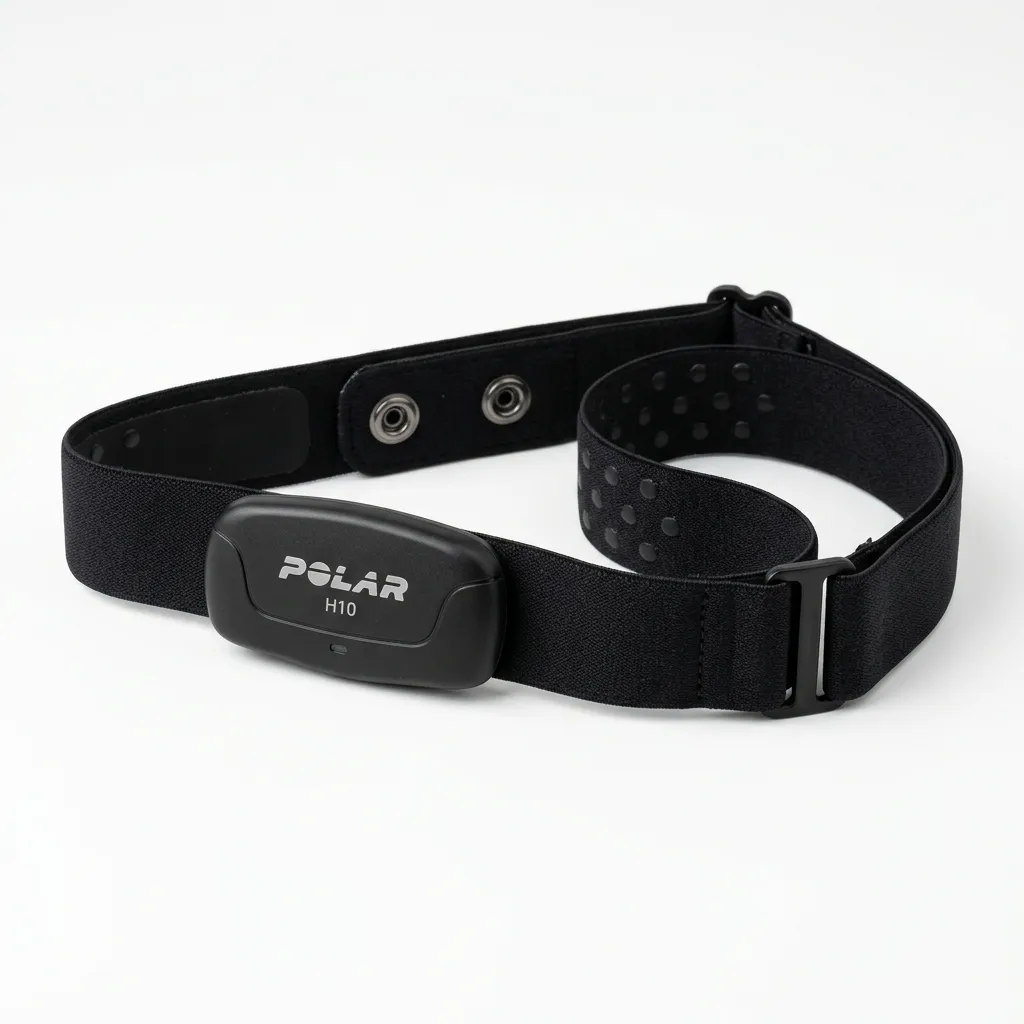
Polar H10 Heart Rate Monitor & HRV Sensor
The gold standard chest strap monitor for accurate Heart Rate Variability (HRV) and Zone 2 training.
- ECG-accurate HRV and heart rate zone tracking
- Dual Bluetooth & ANT+ connectivity
FAQ
Can NextSense Smartbuds formally replace a clinical polysomnography (PSG) hospital study?
No, not as a formal diagnostic substitute. A full clinical PSG conducted in a hospital sleep laboratory also measures nasal airflow, thoracic respiratory effort, pulse oximetry, leg movements (EMG), and eye movements (EOG) to diagnose obstructive sleep apnea and central sleep disorders. However, NextSense achieves 85–92% EEG concordance with PSG and offers superior longitudinal insights by recording actual brainwaves in your normal sleep environment over months.
How does in-ear EEG differ from sleep tracking with an Oura Ring or Apple Watch?
Oura Ring and Apple Watch track peripheral proxies through optical sensors (capillary blood flow, heart rate variability) and wrist movement, using algorithmic estimates to guess sleep stages. In-ear EEG records actual microvolt brainwaves from the cerebral cortex (delta, theta, alpha, sleep spindles), preventing quiet waking states from being mistaken for restorative sleep.
Does it hurt to sleep with in-ear EEG buds if you are a side sleeper?
NextSense uses ultra-soft medical silicone tips, but side sleepers resting firmly on dense memory foam pillows may experience mild ear cartilage pressure after several hours. Back sleepers and those using soft down pillows generally report seamless comfort.
What is closed-loop auditory stimulation and how does it enhance deep sleep?
Closed-loop auditory stimulation is an active neurotechnology where algorithms detect when your brain enters high-voltage delta oscillations. The earbuds instantly deliver faint, sub-perceptual bursts of pink noise timed to the upward phase of delta waves, biologically amplifying slow-wave amplitude and extending deep restorative sleep.
Sources and References
- [1]
- [2]
- [3]
- [4]
Show all 5 sources (1 more)
- [5]
Editorial History
18. september 2026
Første publicering
Første version blev publiceret som del af wearables med intro, takeaways, FAQ og referenceblok.
18. september 2026
Faglig gennemgang
Formuleringer, forbehold og interne links blev gennemgået for klarhed, konsistens og YMYL-tydelighed.
18. september 2026
Seneste opdatering
In-Ear EEG and NextSense Smartbuds fik opdaterede metadata, referenceoutput og forbedret beslutningsnær struktur.

Medical Review
Medical Review and Update Process
This article has been medically reviewed by Vadim Doroshenko with a focus on clinical accuracy, sources, disclaimers, and whether the conclusions still align with current scientific evidence.

Editorial Profile
Borys Viktorovytj Riabtsev
Borys Viktorovytj Riabtsev publishes Longevity Lab as a research-backed information project on precision medicine, metabolic health, and healthy aging, utilizing rigorous sources, independent medical review, and objective YMYL communication.