Key takeaways
- Recovery after 50 requires more time — the muscles repair more slowly and the nervous system recovers less efficiently.
- Sleep is the most potent recovery mechanism we have — but it often deteriorates with age, creating a vicious cycle.
- Protein within 2 hours after training + even distribution throughout the day is the best documented nutritional strategy for recovery.
- Active recovery days — light movement such as walking, cycling or yoga — are often more effective than total rest.
Medical disclaimer: Content is for informational purposes and does not replace medical advice.
What happens in the body during recovery?
When you train — especially strength training — you create microscopic damage in the muscle fibers. This is normal and actually desired because it is the repair process that makes the muscles stronger and bigger. The muscle damage triggers an inflammatory response that attracts immune cells and satellite cells to the area. These cells remove damaged tissue and start the production of new muscle proteins — a process called muscle protein synthesis. PMID 30868583 PMID 29635313
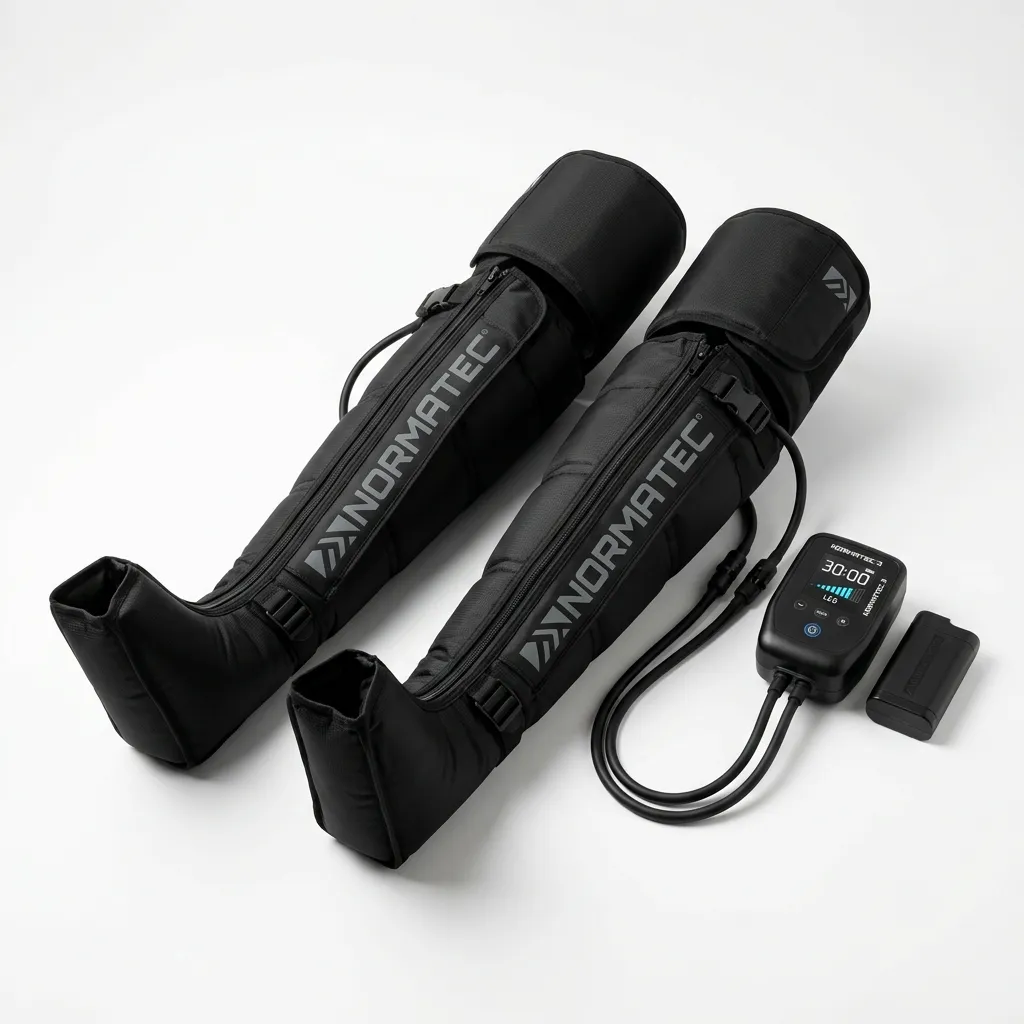
Normatec 3 Legs Compression Boots
Professional pneumatic compression boots promoting lymphatic drainage, lactic acid flushing and leg recovery.
- Patented dynamic zone pulsing compression
- Used by elite athletes & longevity experts
Recovery is also about rebuilding the glycogen stores — the body's carbohydrate reserve in the muscles and liver — and the nervous system recovering. Neuromuscular fatigue can last longer than muscle soreness and affects your ability to perform at your peak. After 50, all these processes slow down: muscle protein synthesis is less responsive, inflammation is more prolonged, and glycogen replenishment takes longer. PMID 30868583 PMID 29635313
Normatec 3 Legs Compression Boots
Professional pneumatic compression boots promoting lymphatic drainage, lactic acid flushing and leg recovery.
- Patented dynamic zone pulsing compression
- Used by elite athletes & longevity experts
Why recovery becomes more important with age
Aging brings about a state of chronic low-grade inflammation — often called inflammaging — which makes the inflammatory response to exercise more prolonged and less controlled. At the same time, the anabolic response decreases: older muscles produce less muscle protein in response to both protein intake and exercise, a phenomenon known as anabolic resistance. This means that the same amount of training requires longer recovery after 50 than before 40. PMID 30868583 PMID 32059358
Hormonal changes also play a role. Growth hormone and testosterone — two hormones central to muscle repair — decline with age. The quality of sleep often deteriorates, which further reduces natural recovery, as growth hormone is primarily secreted during deep sleep. The consequence is clear: recovery must be prioritized as much as the training itself. PMID 30868583 PMID 32059358
Protein and nutrition — the fundamental recovery tool
Protein is the most important nutritional tool for recovery. Muscle protein synthesis is primarily stimulated by the amino acid leucine, and older muscles need a higher leucine threshold to start the process. This means that meals after 50 should contain at least 2.5-3 grams of leucine — equivalent to approximately 25-35 grams of complete protein from animal sources such as chicken, fish, eggs or dairy products, or approximately 30-40 grams from plant sources such as soy or peas. PMID 29635313 PMID 33504916 PMID 31286359
Timing matters, but less so than previously thought. Consuming protein within 2 hours of exercise is optimal, but the total daily amount and distribution is more important. Aim for 4-5 protein-rich meals 3-4 hours apart to maximize muscle protein synthesis. Carbohydrates after exercise help with glycogen replenishment, especially if you exercise again within 24 hours. PMID 29635313 PMID 33504916 PMID 31286359
| Recovery Nutrient | Post-Workout Target Dose | Optimal Timing Window | Physiological Function |
|---|---|---|---|
| High-Quality Protein | 25–35 g (containing 2.5–3.0 g leucine) | Within 1–2 hours post-training | Stimulates muscle protein synthesis (MPS) via mTORC1 phosphorylation |
| Complex Carbohydrates | 0.8–1.2 g/kg body weight | Within 2–4 hours post-session | Replenishes depleted hepatic and skeletal muscle glycogen stores |
| Fluid & Hydration | 1.5 L per kg of body weight lost in sweat | Sustained intake over 4–6 hours | Restores intravascular volume, cardiac output, and cellular hydration |
| Electrolytes (Sodium & Potassium) | Sodium: 500–700 mg/L of fluid | Consumed concurrently with fluids | Prevents hyponatremia and restores neuromuscular membrane potentials |
Sleep — the most potent recovery mechanism
Sleep is the body's primary recovery window. During deep sleep (slow-wave sleep), up to 70% of the daily growth hormone is secreted, which is central to muscle repair and tissue regeneration. REM sleep is important for cognitive recovery and learning. After 50, both the total length of sleep and the proportion of deep sleep decrease — which directly reduces the body's ability to recover. PMID 32059358 PMID 34730133
Practical measures for better recovery through sleep: keep a fixed bedtime, ensure a dark and cool bedroom (16-18°C), avoid moderate alcohol and caffeine 4-6 hours before bed, and limit screen time one hour before sleep. Magnesium supplements (200-400 mg glycinate) may improve sleep quality in some people. Consistent sleep is more important than sleeping long at the weekend — irregular sleep disrupts the circadian rhythm. PMID 32059358 PMID 34730133
Active recovery days and other strategies
Active recovery — light movement such as walking, cycling or yoga on rest days — is often more effective than total rest. Light exercise increases blood flow to the muscles, which accelerates the removal of waste products and the supply of nutrients. It also reduces muscle soreness more effectively than sedentary rest. Aim for 20-40 minutes of activity at an intensity of 30-50% of maximum heart rate. PMID 30868583 PMID 29635313 PMID 31286359
Other strategies with moderate evidence include: contrast showering (alternating hot/cold water), compression garments (may reduce muscle soreness after endurance exercise), and foam rolling (may temporarily increase range of motion). Cold water immersion has a proven effect on reducing muscle soreness, but can potentially inhibit long-term muscle adaptation if used immediately after strength training. Use it strategically, not routinely. PMID 30868583 PMID 29635313 PMID 31286359
Internal Further Reading
Read also in the same cluster
Professional Percussive Massage Gun
High-torque percussive therapy device for deep muscle relief, circulation and post-workout recovery.
- Deep percussive impact for fast relief
- Quiet brushless motor with multiple heads
FAQ
How many rest days do I need after 50?
At least 48 hours between strength training of the same muscle group. Active recovery — light walking or cycling — can be done daily without straining the recovery.
Is muscle soreness a sign of good training?
No. Muscle soreness indicates tissue damage but is not a reliable indicator of exercise effect. You can have excellent training effect without soreness.
Should I take ice baths after strength training?
Ice baths reduce muscle soreness, but can inhibit long-term muscle adaptation. Only use ice baths strategically — for example, during competitive periods — not routinely.
How much protein should I eat on rest days?
Same amount as on training days — muscles are repaired for up to 48-72 hours after training, so protein requirements are actually highest on rest days.
Sources and References
- [1]
- [2]
- [3]
- [4]
Show all 6 sources (2 more)
- [5]
- [6]
Editorial History
21. June 2026
First publication
Initial version was published as part of the healthy aging with introduction, takeaways, FAQ, and reference block.
21. June 2026
Medical review
Phrasing, caveats, and internal links were reviewed for clarity, consistency, and YMYL alignment.
21. June 2026
Latest update
Recovery and restitution — the science behind it and why it becomes more important with age received updated metadata, reference outputs, and improved decision-support structure.

Medical Review
Medical Review and Update Process
This article has been medically reviewed by Vadim Doroshenko with a focus on clinical accuracy, sources, disclaimers, and whether the conclusions still align with current scientific evidence.

Editorial Profile
Borys Viktorovytj Riabtsev
Borys Viktorovytj Riabtsev publishes Longevity Lab as a research-backed information project on precision medicine, metabolic health, and healthy aging, utilizing rigorous sources, independent medical review, and objective YMYL communication.