Key takeaways
- Weight loss after 50 requires more focus on muscle preservation and protein than on calorie restriction alone.
- Strength training is the most effective intervention to counteract age-related loss of muscle mass and metabolism.
- Adaptive thermogenesis makes the body actively resist weight loss — small, sustained adjustments beat crash diets.
- Sleep, stress management and protein intake are just as important as exercise for weight loss after 50.
Medical disclaimer: Content is for informational purposes and does not replace medical advice.
Why weight loss becomes more difficult after 50
After the age of 50, the body undergoes fundamental changes that affect weight regulation. The most significant is the loss of muscle mass — sarcopenia. From around the age of 50, most people lose 3-8% of their muscle mass per decade. Since muscles are metabolically active and burn energy even at rest, less muscle mass means a lower basal metabolic rate. This means that the same amount of food that previously kept the weight stable can now lead to weight gain. PMID 26832483 PMID 30868583
At the same time, the hormonal system changes. In women, estrogen drops significantly after menopause, shifting fat deposition from the hips and thighs to the abdomen — the metabolically riskiest fat depot. In men, testosterone gradually decreases, which reduces muscle protein synthesis and increases the tendency for abdominal fat accumulation. Growth hormone and IGF-1 also decrease, further inhibiting the body's ability to maintain and build muscle. PMID 26832483 PMID 30868583
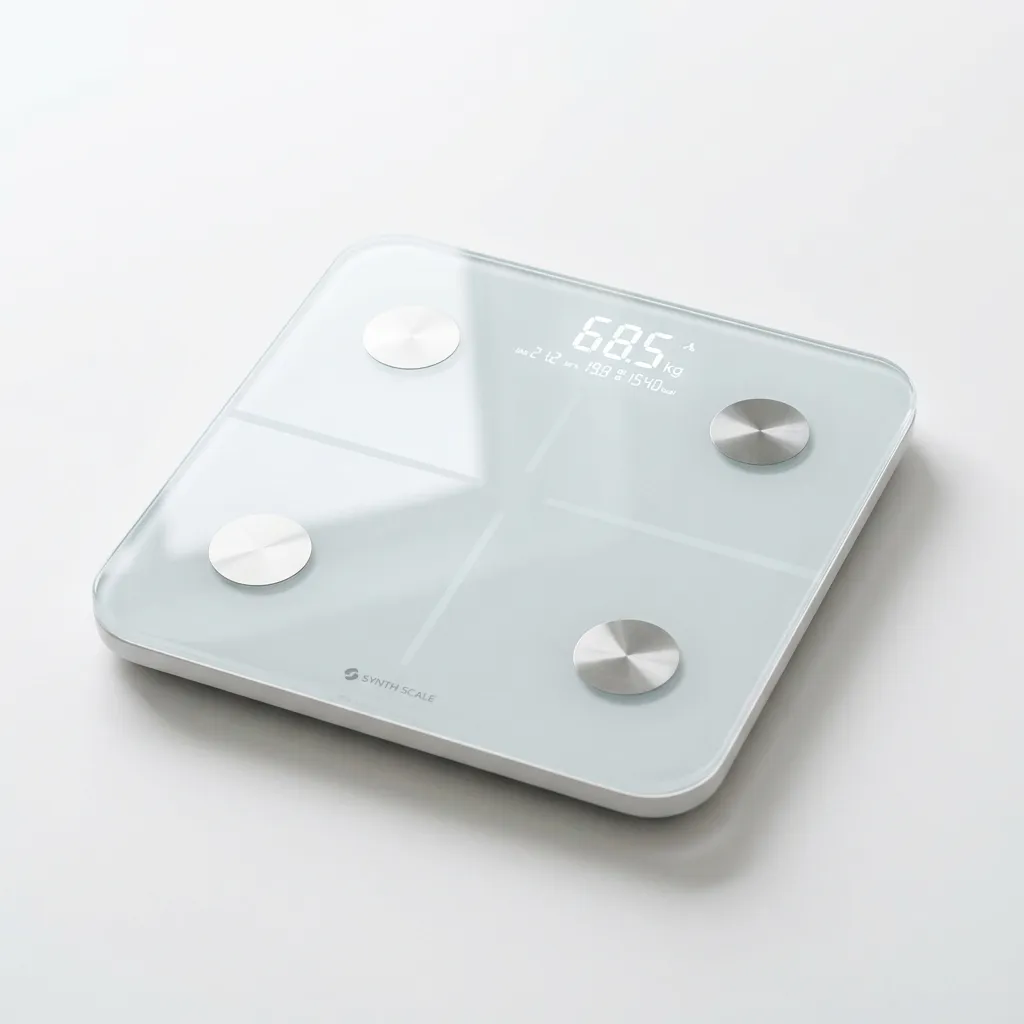
Smart Body Composition Scale
Advanced bioimpedance scale tracking muscle mass, body fat percentage, bone density and hydration.
- Tracks muscle mass & visceral fat
- Wireless sync with health apps
Adaptive thermogenesis — the body's built-in brake
When you lose weight, the body responds with adaptive thermogenesis: a reduction in energy consumption that is greater than what pure weight loss can explain. The body perceives weight loss as a threat and slows down the metabolism to save energy. Research shows that people who have lost significant weight can have a resting metabolic rate that is 200-500 calories lower per day than expected based on their new weight and body composition. This is one of the main reasons why many experience weight plateaus and later weight gain after a weight loss. The mechanism is well documented and means that the strategy after 50 must be fundamentally different from crash diets. PMID 26832483 PMID 22029981 PMID 20935666
Protein and strength training — the two most important measures
If there is one intervention that beats all others for weight loss after 50, it is the combination of increased protein intake and strength training. Protein has several advantages: it is more satiating than carbohydrate and fat per calorie, it has a higher thermic effect (the body uses 20-30% of protein calories to digest it), and it is essential for maintaining muscle mass during a caloric deficit. PMID 30868583 PMID 29635313 PMID 31286358
For people over 50, 1.6–2.0 grams of protein per kilogram of body weight per day is recommended during weight loss — significantly more than the official recommendations. Strength training 2-3 times a week with a focus on large muscle groups is essential to signal to the body that the muscles must be preserved despite the calorie deficit. Without this stimulus, the body will break down muscle mass to meet energy needs, which further slows the metabolism. PMID 30868583 PMID 29635313 PMID 31286358
| Metabolic Driver | Age-Related Shift After 50 | Clinical Consequence | Evidence-Based Solution |
|---|---|---|---|
| Resting Metabolic Rate (RMR) | Declines 2–3% per decade primarily via sarcopenic muscle loss | Reduced baseline daily energy expenditure | Progressive resistance training 3x/week + 1.2–1.6 g protein/kg |
| Hormonal Milieu | Estrogen drops in menopause; gradual free testosterone decline in men | Shift toward visceral and abdominal adipose deposition | Zone 2 aerobic base building and targeted circadian meal timing |
| Insulin Sensitivity | Decreased peripheral muscle GLUT4 abundance and receptor responsiveness | Higher postprandial glucose excursions and compensatory hyperinsulinemia | Eliminate refined carbohydrates, introduce intermittent fasting (16:8) |
| Non-Exercise Physical Activity (NEAT) | Subtle, unconscious decrease in spontaneous daily physical movement | Up to 300–500 fewer calories burned per day | Daily step count tracking with a consistent baseline target of 8,000–10,000 steps |
Sleep, stress and hormonal balance
Sleep and stress are two often overlooked factors in weight loss, but for people over 50 they are especially important. Sleep deprivation increases ghrelin (hunger hormone) and decreases leptin (satiety hormone), making it more difficult to maintain a caloric deficit. Chronic stress increases cortisol, which promotes abdominal fat deposition and increases cravings for calorie-dense foods. PMID 30868583 PMID 32059358
For women in and after menopause, sleep is often disrupted by hot flashes and hormonal fluctuations, creating a vicious cycle of increased appetite and decreased recovery. Sleep hygiene — consistent bedtime, dark and cool bedroom, no screens an hour before sleep — is one of the most underrated weight loss interventions for this group. PMID 30868583 PMID 32059358
Why crash diets fail—and what works instead
Crash diets with extreme calorie restriction often work in the short term, but almost always fail in the long term for people over 50. The reason is that they amplify muscle loss, trigger adaptive thermogenesis, and are impossible to sustain. When the weight inevitably comes back on, a larger proportion of it is fat — and the muscle mass is less than before. This phenomenon is called weight cycling and over time can lead to a poorer body composition. PMID 26832483 PMID 22029981 PMID 20935666
A more sustainable approach is a moderate caloric deficit of 300–500 kcal daily, combined with high protein intake, strength training and patience. Weight loss of 0.5–1 kg per week is more sustainable and gives the body time to adapt without triggering strong adaptive thermogenesis. Periodization — periods of weight loss interspersed with periods of weight maintenance — can also reduce metabolic adaptation. PMID 26832483 PMID 22029981 PMID 20935666
Internal Further Reading
Read also in the same cluster
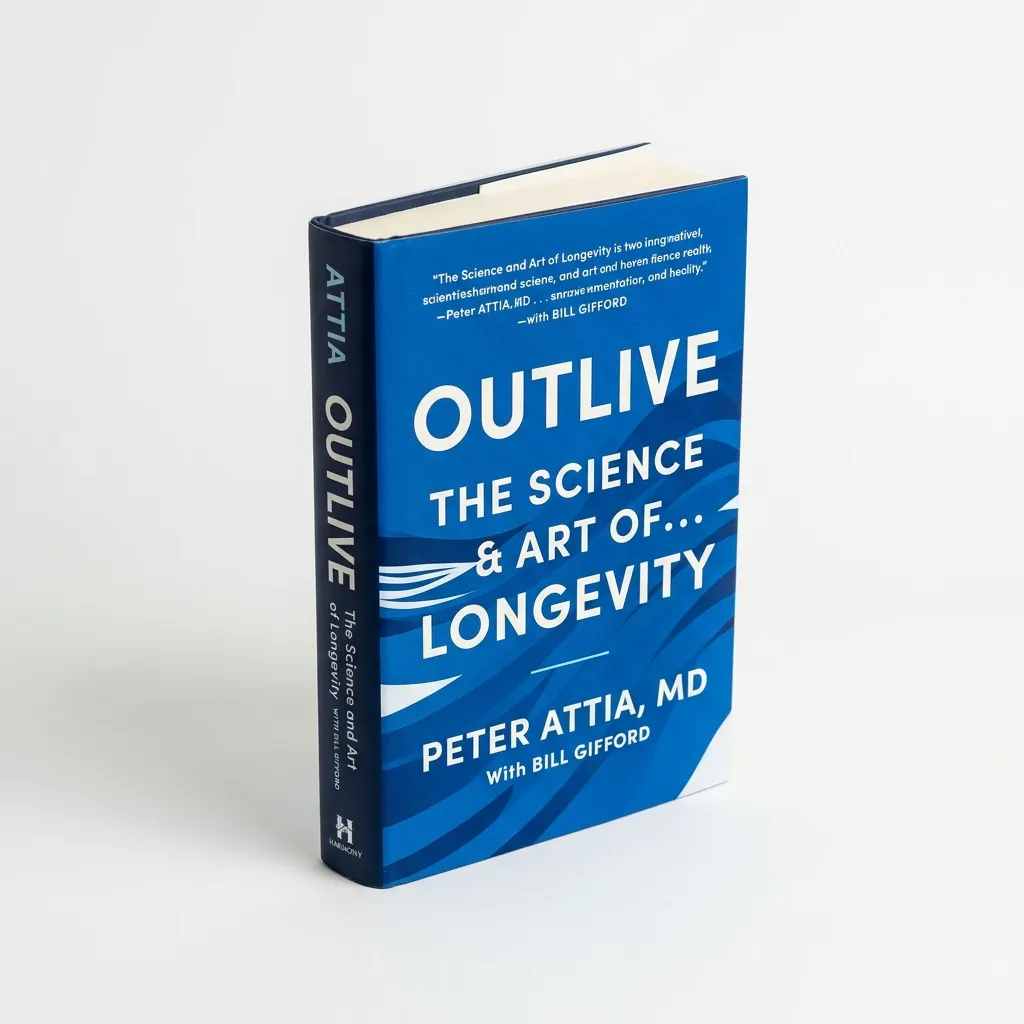
Outlive: The Science & Art of Longevity
Dr. Peter Attia's groundbreaking guide to preventive medicine, exercise for longevity, and healthy aging.
- Scientific framework for Medicine 3.0
- Actionable guide on sleep, exercise & nutrition
FAQ
Why am I gaining weight even though I eat the same as always?
Muscle mass decreases with age, which lowers your resting metabolism. The same diet that previously kept the weight stable can now lead to slow weight gain.
Should I be eating fewer carbs after 50?
Not necessarily fewer, but focus on complex carbohydrates from vegetables, legumes and whole grains. Prioritize protein and fiber in each meal for better satiety.
Is GLP-1 medication a solution for weight loss after 50?
GLP-1 receptor agonists can be effective, but should be combined with strength training and adequate protein to minimize muscle loss during weight loss.
How fast can I realistically lose weight after 50?
0.5–1 kg per week is realistic and sustainable. Faster weight loss increases the risk of muscle loss and metabolic adaptation that makes it harder to keep the weight off.
Sources and References
- [1]
- [2]
- [3]
- [4]
Show all 7 sources (3 more)
- [5]
- [6]
- [7]
Editorial History
15. June 2026
First publication
Initial version was published as part of the metabolic health with introduction, takeaways, FAQ, and reference block.
15. June 2026
Medical review
Phrasing, caveats, and internal links were reviewed for clarity, consistency, and YMYL alignment.
15. June 2026
Latest update
Weight loss after 50 — why is it harder and what actually works received updated metadata, reference outputs, and improved decision-support structure.

Medical Review
Medical Review and Update Process
This article has been medically reviewed by Vadim Doroshenko with a focus on clinical accuracy, sources, disclaimers, and whether the conclusions still align with current scientific evidence.

Editorial Profile
Borys Viktorovytj Riabtsev
Borys Viktorovytj Riabtsev publishes Longevity Lab as a research-backed information project on precision medicine, metabolic health, and healthy aging, utilizing rigorous sources, independent medical review, and objective YMYL communication.