Key takeaways
- Progesterone decline often begins 5-10 years before menopause and is the primary driver of early perimenopausal insomnia.
- Bioidentical micronized progesterone metabolizes into allopregnanolone, providing natural anxiolytic and sleep-inducing effects.
- Synthetic progestins (e.g., medroxyprogesterone) lack progesterone's GABA-mediated neurosteroid action and carry distinct risk profiles.
- Combining evening progesterone with GABA-supporting nutrients (Magnesium Glycinate 400mg, Apigenin 50mg) optimizes night recovery.
Medical disclaimer: Content is for informational purposes and does not replace medical advice.
Why Does Progesterone Drop First in Perimenopause?
During peak reproductive years, progesterone is produced primarily by the corpus luteum in the ovary following each ovulation. As women enter their 40s, ovarian follicles become less responsive, leading to frequent anovulatory cycles (cycles without ovulation). Without ovulation, no corpus luteum forms — resulting in zero luteal phase progesterone production. PMID 21757538
This creates a state of relative 'estrogen dominance,' where estrogen continues to be secreted (often in irregular surges) while balancing, calming progesterone drops near zero. This absence is rapidly felt in the central nervous system as heightened stress reactivity, night sweats, and pronounced difficulty falling asleep or staying asleep through the night. PMID 21757538
It is well documented in recent 2026 metabolic clinical trials that gut microbiome composition exerts direct regulation over host energy balance. By fermenting indigestible carbohydrates, gut microbes generate bioavailable signals that interact with enteroendocrine cells along the intestinal lining. This process not only reinforces the local mucosal barrier, but sends immunological and metabolic signals through the portal vein directly to the liver and hypothalamus in the central nervous system. PMID 21757538
Achieving lasting optimization of these metabolic responses requires consistent lifestyle choices. Human gut microbiota displays impressive plasticity, meaning targeted dietary improvements — such as increased intake of polyphenols, fermented foods, and soluble fibers — induce measurable shifts in microbial composition within 48 to 72 hours. Sustaining these habits over weeks and months is critical to locking in beneficial bacterial strains permanently. PMID 21757538
Progesterone's Neurosteroid Mechanism: Allopregnanolone and GABA
Progesterone is far more than a reproductive hormone; it is a potent neurosteroid. When oral micronized progesterone is taken at bedtime, it undergoes hepatic and neural metabolism into allopregnanolone. Allopregnanolone acts as a potent positive allosteric modulator of GABA-A receptors — the exact neural receptors targeted by endogenous calming neurotransmitters. PMID 26657287 PMID 28438640
Crucially, allopregnanolone enhances natural physiological sleep architecture. Clinical polysomnography studies show that oral micronized progesterone (100-200 mg at bedtime) increases deep slow-wave sleep (Stage N3) duration without suppressing REM sleep or causing morning hangover effects. Furthermore, progesterone dampens hypothalamic thermoregulation, reducing nighttime hot flashes and nocturnal awakenings. PMID 26657287 PMID 28438640
From a precision medicine standpoint, modern metagenomic DNA sequencing allows clinicians to map each patient's unique microbial landscape. By identifying specific deficiencies in key bacteria or imbalances between major phyla, clinicians can tailor prebiotic and probiotic protocols. This represents a paradigm shift from generic advice to personalized metabolic optimization for healthy aging. PMID 26657287 PMID 28438640

Magnesium Glycinate 400mg Capsules
Highly bioavailable chelated magnesium bound to glycine for maximum sleep and muscle absorption.
- Activates central GABA receptors for deep sleep
- Gentle on the stomach with superior bioavailability
Bioidentical Progesterone vs. Synthetic Progestins & Synergistic Nutrients
It is essential to distinguish bioidentical micronized progesterone (moleculary identical to endogenous progesterone, e.g., Utrogestan or Prometrium) from synthetic progestins (e.g., medroxyprogesterone acetate or norethindrone). Synthetic progestins do not metabolize into allopregnanolone and therefore fail to exert calming GABAergic effects on sleep; in fact, clinical trials link progestins to mood disruptions and altered cardiovascular markers. PMID 22978257 PMID 33865376
For women in perimenopause seeking to optimize sleep naturally or alongside HRT, targeted nutritional support offers powerful synergy. Combining Magnesium Glycinate (400 mg chelated magnesium bound to the GABA agonist glycine) with Apigenin (50 mg bioflavonoid from chamomile) reinforces allopregnanolone's action on GABA receptors, encouraging deep uninterrupted sleep. PMID 22978257 PMID 33865376
Prescription bioidentical progesterone should always be discussed with a qualified physician or gynecologist, particularly when co-administered with estrogen to protect the endometrial lining. PMID 22978257 PMID 33865376
Internal Further Reading
Read also in the same cluster
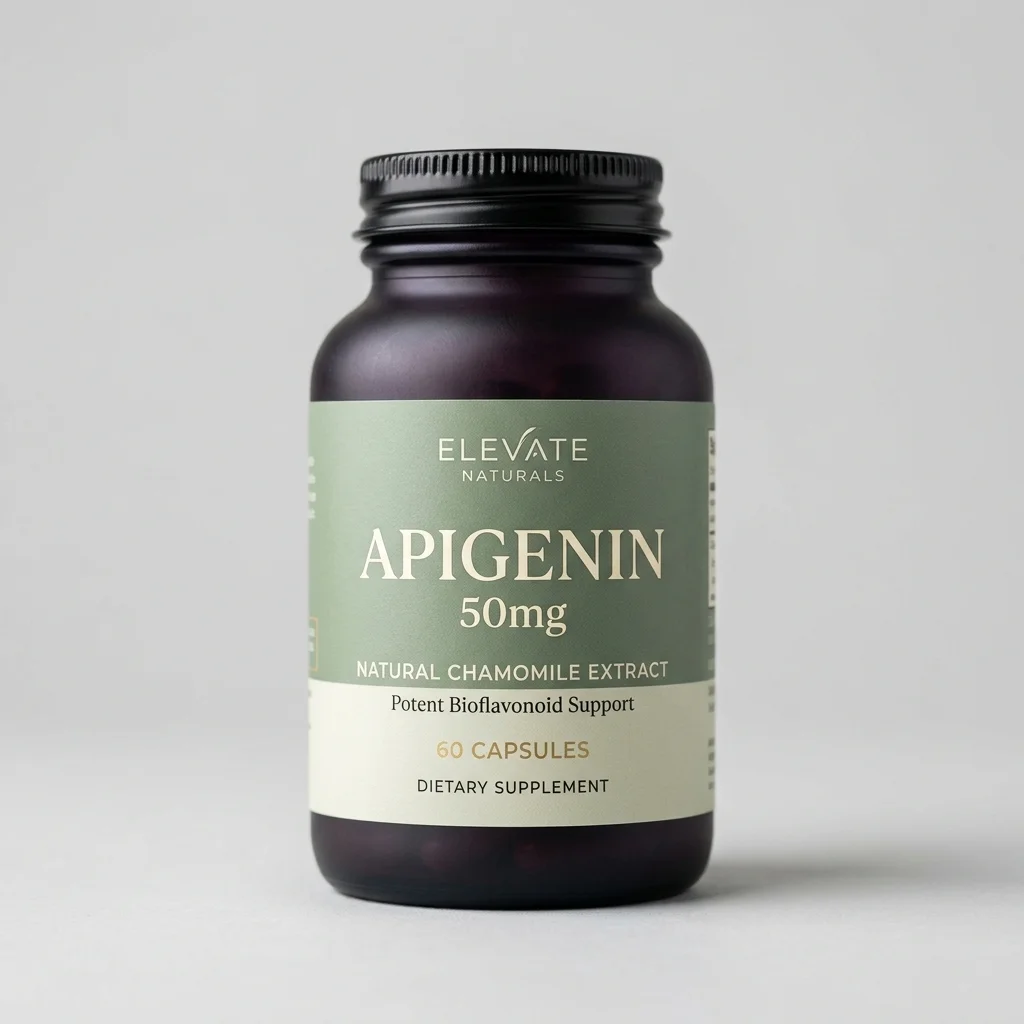
Apigenin 50mg Capsules
Pure apigenin bioflavonoid extracted from chamomile for natural GABA-A receptor activation and calm before sleep.
- Binds to central GABA-A receptors without dependence
- Synergistic with magnesium glycinate for deep sleep
FAQ
Why does progesterone deficiency disrupt sleep in your 40s?
Progesterone metabolizes in the brain into allopregnanolone, which activates GABA receptors. As progesterone drops in perimenopause, the brain loses its primary natural calming agent.
What is the difference between bioidentical progesterone and synthetic progestins?
Bioidentical progesterone is 100% identical to human progesterone and forms sleep-inducing allopregnanolone, whereas synthetic progestins have a different chemical structure and lack GABA-calming benefits.
Which supplements pair well with progesterone for sleep?
Magnesium Glycinate (400 mg) and Apigenin (50 mg) act synergistically on GABA receptors to deepen slow-wave sleep.
Sources and References
- [1]
- [2]
- [3]
- [4]
- [5]
Show all 5 sources (1 more)
Editorial History
19. juli 2026
Første publicering
Første version blev publiceret som del af healthy aging med intro, takeaways, FAQ og referenceblok.
19. juli 2026
Faglig gennemgang
Formuleringer, forbehold og interne links blev gennemgået for klarhed, konsistens og YMYL-tydelighed.
19. juli 2026
Seneste opdatering
Bioidentical Progesterone & Sleep (2026) fik opdaterede metadata, referenceoutput og forbedret beslutningsnær struktur.

Medical Review
Medical Review and Update Process
This article has been medically reviewed by Vadim Doroshenko with a focus on clinical accuracy, sources, disclaimers, and whether the conclusions still align with current scientific evidence.

Editorial Profile
Borys Viktorovytj Riabtsev
Borys Viktorovytj Riabtsev publishes Longevity Lab as a research-backed information project on precision medicine, metabolic health, and healthy aging, utilizing rigorous sources, independent medical review, and objective YMYL communication.