Key takeaways
- Vitamin D is important for bones, immune system and muscle function, but the effect depends on the starting level.
- In Denmark, adults should consider supplements in the winter, especially if they have dark skin, are older or get little sun.
- Measurement of serum 25(OH)D is the best way to assess status and avoid both under- and overdose.
- Vitamin D alone is not a substitute for sun, diet, exercise and the other factors that shape healthy aging.
Medical disclaimer: Content is for informational purposes and does not replace medical advice.
Why vitamin D is particularly relevant in Denmark
Denmark's northern location means that the UVB radiation from the sun is too weak to form vitamin D in the skin from around October to March. It is a physiological reality, not an attitude. During that period, the body is dependent on depots and diet. PMID 17634462 PMID 30321335
At the same time, fatty fish, eggs and fortified dairy products are the primary dietary sources, but many Danes do not get enough through diet alone. The combination of dark winters, a lot of indoor life and limited dietary sources make vitamin D one of the most relevant micronutrients in Danish prevention. PMID 17634462 PMID 30321335
For older adults, the situation is often more pronounced because the skin's ability to produce vitamin D declines with age and because mobility and outdoor time are often reduced. PMID 17634462 PMID 30321335
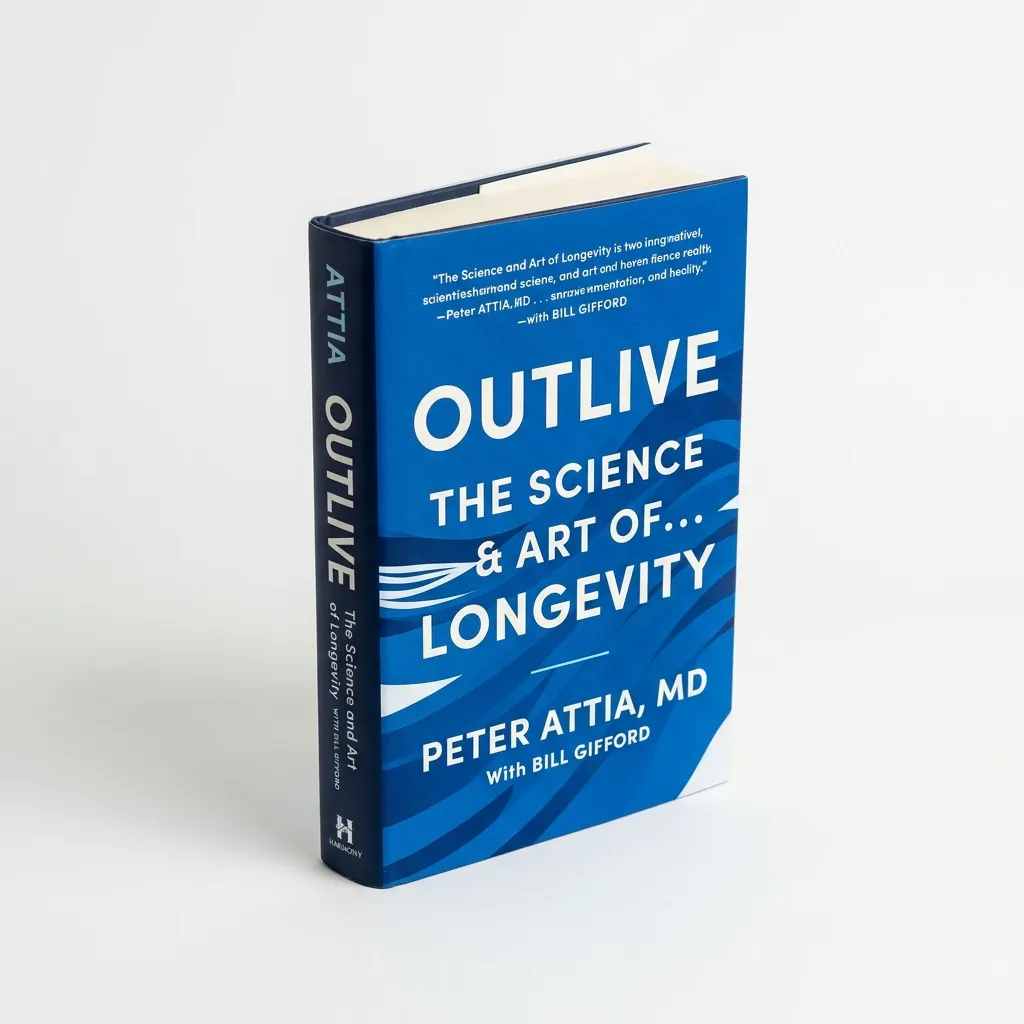
Outlive: The Science & Art of Longevity
Dr. Peter Attia's groundbreaking guide to preventive medicine, exercise for longevity, and healthy aging.
- Scientific framework for Medicine 3.0
- Actionable guide on sleep, exercise & nutrition
What vitamin D actually does in the body
Vitamin D acts as a steroid hormone that regulates hundreds of genes. The classic role is calcium and phosphate balance, which is essential for bone mineralization. But vitamin D also affects the immune system, muscle cells, insulin secretion and cell division. PMID 30321335 PMID 31189973
However, it is important to distinguish between association and causality. Many observational studies show that low vitamin D is associated with higher mortality, more infections and poorer cognitive function. But intervention studies where vitamin D is given to people without a proven deficiency have often shown weaker or absent effects. This suggests that vitamin D is primarily important when there is actually a deficiency, but does not necessarily provide additional benefit at already sufficient levels. PMID 30321335 PMID 31189973
Optimal levels and when a supplement makes sense
Serum 25(OH)D is the best marker of vitamin D status. Most Danish and international guidelines define levels below 25-30 nmol/L as deficiency, 30-50 nmol/L as insufficient, and 50-75 nmol/L or higher as sufficient for most. Some researchers argue for higher targets (75-120 nmol/L), but the evidence for additional benefit above 75 nmol/L is weak for most healthy adults. PMID 31189973 PMID 29138634
The question of routine screening is debated. For healthy adults without risk factors, it is not necessarily cost-effective. However, for the elderly, people with dark skin, the obese, people with malabsorption, or those taking medications that affect vitamin D metabolism, a measurement may make sense. PMID 31189973 PMID 29138634
Myths about vitamin D and aging
Vitamin D is sometimes marketed as a universal anti-aging pill, but the evidence doesn't support that narrative. Large randomized trials such as the VITAL trial did not find that vitamin D supplementation reduced the risk of cardiovascular disease or cancer in non-deficient individuals. Smaller studies have suggested effects on telomere length and epigenetic age, but results are inconsistent and often small. PMID 29138634 Sundhedsstyrelsen
This does not mean that vitamin D is unimportant. This means that its role in aging is probably as a necessary but not sufficient factor. Like oxygen and water, they are essential for survival without being miracle cures for aging. PMID 29138634 Sundhedsstyrelsen
Practical recommendations
For most Danish adults, a daily dose of 10-20 micrograms (400-800 IU) in winter is a reasonable starting point. If a deficiency is detected, higher doses are often recommended for a period, followed by maintenance. Fatty meals improve absorption, as vitamin D is fat-soluble. Sundhedsstyrelsen
Summer sunshine is still the most effective source of vitamin D. About 15-30 minutes of sun on the arms and face in the middle of the day, a few times a week, is often enough for fair-skinned people in the summer months. But sunscreen, clothing and time indoors reduce production significantly. Sundhedsstyrelsen
25(OH)D thresholds: Public health minimums vs. the longevity optimum (75–125 nmol/L)
In European public healthcare frameworks, clinical vitamin D deficiency is typically defined by a circulating serum 25-hydroxyvitamin D [25(OH)D] concentration below 50 nmol/L (20 ng/mL), with concentrations under 25 nmol/L categorized as severe deficiency presenting acute risks of osteomalacia and skeletal demineralization. PMID 17634462 PMID 31189973 Sundhedsstyrelsen
In precision preventative medicine and longevity biogerontology, however, 50 nmol/L merely reflects the absence of overt rickets—not an optimal metabolic zone. Comprehensive meta-analyses in The BMJ covering over 500,000 participants demonstrate a non-linear J-shaped correlation between circulating 25(OH)D and all-cause mortality. PMID 17634462 PMID 31189973 Sundhedsstyrelsen
The nadir for all-cause, cardiovascular, and cancer-related mortality settles definitively between **75 and 125 nmol/L (30–50 ng/mL)**. Levels above 150 nmol/L provide no incremental statistical protection, while sustained values beyond 250 nmol/L carry genuine risks of hypercalcemia, hypercalciuria, and soft-tissue calcification. PMID 17634462 PMID 31189973 Sundhedsstyrelsen
The Nordic vitamin D winter and genomic transcription via the VDR axis
Northern latitudes between 54°N and 57°N experience a well-characterized photobiological phenomenon termed the 'vitamin D winter'. From early October through late April, the zenith solar angle remains so low that atmospheric ozone completely absorbs solar UVB photons (wavelengths 290–315 nm). PMID 17634462 PMID 30321335 Sundhedsstyrelsen
Throughout these seven winter months, cutaneous photochemical synthesis of cholecalciferol from 7-dehydrocholesterol is zero, regardless of daytime outdoor exposure. Nordic populations must rely entirely upon endogenous adipose reserves, fatty fish consumption, or exogenous supplementation. PMID 17634462 PMID 30321335 Sundhedsstyrelsen
Vitamin D functions biochemically not as an inert vitamin, but as a potent secosteroid pre-hormone. Following hepatic 25-hydroxylation (CYP2R1), renal and immune cells convert it via CYP27B1 into active calcitriol [1,25(OH)2D], which binds the nuclear **Vitamin D Receptor (VDR)**. PMID 17634462 PMID 30321335 Sundhedsstyrelsen
VDR is ubiquitously expressed across human organ lineages and directly regulates the transcription of more than 1,000 genes—upregulating antimicrobial peptide synthesis (cathelicidin), downregulating systemic inflammatory cascades (IL-6, TNF-alpha), and protecting against telomeric decay. PMID 17634462 PMID 30321335 Sundhedsstyrelsen
The essential biochemical triad: D3, Vitamin K2 (MK-7), and Magnesium
A major pitfall in longevity supplementation is the chronic administration of high-dose vitamin D3 in isolation. Calcitriol potently stimulates intestinal calcium absorption. Without adequate cofactors, circulating calcium risks ectopic deposition inside vascular walls and cardiac valves rather than bone matrices. PMID 30321335 PMID 29138634
Calcitriol triggers the synthesis of two critical dependent proteins: **osteocalcin** (which anchors calcium into hydroxyapatite bone crystal) and **Matrix Gla Protein (MGP)** (the primary physiological inhibitor of arterial calcification). Both are secreted in an inactive, uncarboxylated state. PMID 30321335 PMID 29138634
**Vitamin K2 (specifically the long-chain menaquinone-7 / MK-7 isomer)** serves as an obligate cofactor for gamma-glutamyl carboxylase, carboxylating and activating MGP to shield vascular elastic laminae from calcification. Pairing 25–50 mcg of D3 with 100–200 mcg of MK-7 establishes safe calcium partitioning. PMID 30321335 PMID 29138634
Furthermore, **magnesium** is an indispensable catalytic cofactor for every enzyme in the vitamin D activation and transport pathway. In magnesium-depleted states, vitamin D remains trapped in inert storage forms, rendering high-dose supplementation clinically ineffective. PMID 30321335 PMID 29138634
| Serum 25(OH)D | Clinical Classification | Physiological Implications | Recommended Therapeutic Strategy |
|---|---|---|---|
| < 25 nmol/L (< 10 ng/mL) | Severe deficiency | Osteomalacia, proximal muscle weakness, impaired immune defense | High-dose clinical repletion (50–100 mcg / 2,000–4,000 IU daily) under medical guidance |
| 25–50 nmol/L (10–20 ng/mL) | Moderate deficiency / Insufficient | Secondary hyperparathyroidism, bone resorption, low-grade systemic inflammation | Daily supplementation with 35–50 mcg (1,400–2,000 IU) during winter months |
| 75–125 nmol/L (30–50 ng/mL) | Longevity optimal zone | Lowest all-cause mortality in epidemiological cohorts, optimal VDR gene regulation | Maintenance with 25–50 mcg D3 + 100 mcg K2 (MK-7) + magnesium; annual monitoring |
| > 250 nmol/L (> 100 ng/mL) | Potentially toxic range | Risk of hypercalcemia, renal nephrocalcinosis, and cardiac arrhythmias | Discontinue supplementation immediately; evaluate serum calcium and creatinine/eGFR |
Internal Further Reading
Read also in the same cluster

Smart Body Composition Scale
Advanced bioimpedance scale tracking muscle mass, body fat percentage, bone density and hydration.
- Tracks muscle mass & visceral fat
- Wireless sync with health apps
FAQ
Do all Danes need vitamin D supplements?
Not necessarily all. But the risk of insufficient level is high in winter. A measurement gives the best answer, but a moderate winter supplement makes sense for most adults.
Can I get enough vitamin D through diet?
It is difficult for most people. Fatty fish, eggs and fortified products help, but rarely cover the entire need in winter, especially if the starting point is low.
Is more vitamin D always better?
No. When the level is sufficient, further supplementation rarely produces measurable benefits. Very high doses can lead to hypercalcemia and kidney strain.
Which type of vitamin D is best?
D3 (cholecalciferol) is the form that the body produces itself, and it is generally absorbed better than D2 (ergocalciferol). Most food supplements in Denmark use D3.
When should I have my vitamin D measured?
A measurement makes the most sense in late autumn or early winter, when the level is typically the lowest. It may also be relevant for osteoporosis, repeated infections, muscle weakness or suspected malabsorption.
Does vitamin D affect biological age?
There are weak signals from smaller studies, but no solid evidence that vitamin D supplementation lowers biological age in people without a deficiency. However, correction of deficiency is important for overall health.
Why is a 25(OH)D level of 50 nmol/L insufficient for longevity optimization?
The public health threshold of 50 nmol/L was established to avert skeletal disorders like osteomalacia. Landmark epidemiological cohorts indicate that the lowest risk of all-cause, cardiovascular, and cancer mortality requires serum concentrations between 75 and 125 nmol/L.
Why should Vitamin K2 (MK-7) always accompany Vitamin D3?
Vitamin D3 enhances intestinal calcium uptake, while Vitamin K2 carboxylates and activates Matrix Gla Protein (MGP), ensuring calcium is directed into bone tissue rather than depositing inside arterial walls.
During which months should individuals in Denmark supplement Vitamin D?
Between October and April, solar UVB rays cannot penetrate the atmosphere at Danish latitudes. Most adults should supplement throughout these seven winter months and monitor their 25(OH)D levels annually to adjust dosage.
Sources and References
- [1]
- [2]
- [3]
- [4]
Show all 5 sources (1 more)
- [5]
Editorial History
31. May 2026
First publication
Initial version was published as part of the healthy aging with introduction, takeaways, FAQ, and reference block.
31. May 2026
Medical review
Phrasing, caveats, and internal links were reviewed for clarity, consistency, and YMYL alignment.
4. July 2026
Latest update
Vitamin D and aging received updated metadata, reference outputs, and improved decision-support structure.

Medical Review
Medical Review and Update Process
This article has been medically reviewed by Vadim Doroshenko with a focus on clinical accuracy, sources, disclaimers, and whether the conclusions still align with current scientific evidence.

Editorial Profile
Borys Viktorovytj Riabtsev
Borys Viktorovytj Riabtsev publishes Longevity Lab as a research-backed information project on precision medicine, metabolic health, and healthy aging, utilizing rigorous sources, independent medical review, and objective YMYL communication.