Key takeaways
- Time-restricted eating (16:8) has the best evidence for weight loss and metabolic improvements.
- Autophagy activation via fasting has been shown in human trials, but the practical significance is still uncertain.
- Fasting can improve insulin sensitivity and blood pressure, but the effect is often linked to weight loss.
- 5:2 and OMAD have less documentation and a greater risk of interruption and nutrient deficiency.
- For most people, a mild protocol (14:10 or 16:8) makes the most sense as a sustainable habit change.
Medical disclaimer: Content is for informational purposes and does not replace medical advice.
What is time-restricted eating and intermittent fasting?
Time-restricted eating (TRE) means that you eat all your meals within a specific time window each day. The best known version is 16:8 — 16 hour fasting and 8 hour eating window. Intermittent fasting (intermittent fasting) covers more and also includes the 5:2 protocol (two days of severe calorie restriction per week) and OMAD (one meal a day). PMID 31881139 PMID 29754951
It is important to distinguish between the protocols because they have different effects, different evidence and different practical durability. Fasting is not a new invention — but the systematic study of fasting as a metabolic and longevity intervention is relatively new. PMID 31881139 PMID 29754951
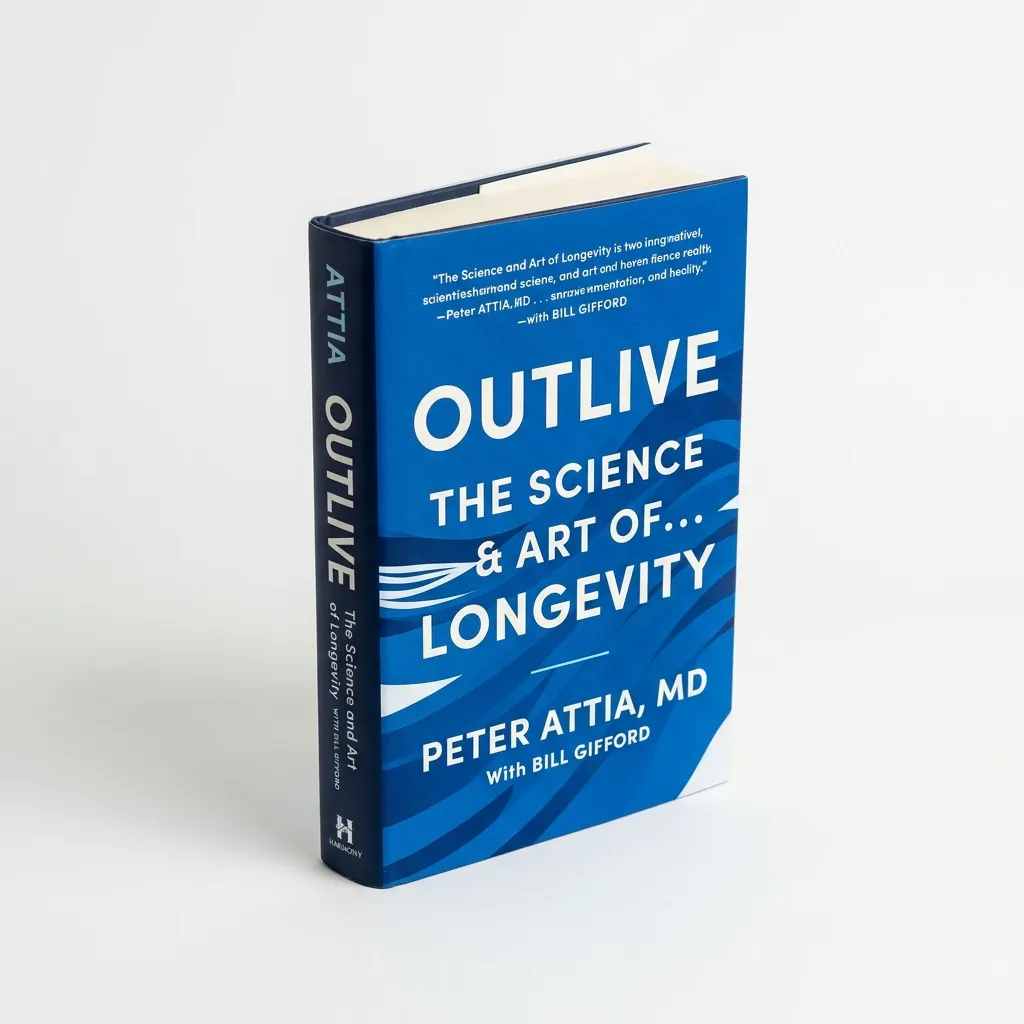
Outlive: The Science & Art of Longevity
Dr. Peter Attia's groundbreaking guide to preventive medicine, exercise for longevity, and healthy aging.
- Scientific framework for Medicine 3.0
- Actionable guide on sleep, exercise & nutrition
What does the research show about weight and body composition?
A 2025 Cochrane review concluded that intermittent fasting probably produces a modest weight loss of 3-8% of body weight over 8-12 weeks, but that the effect is no greater than that of traditional calorie restriction. A large network meta-analysis in BMJ (2025) showed that both TRE and 5:2 reduce body weight, waist circumference and blood pressure, but that the difference to standard calorie counting is small. PMID 29754951 PMID 24440038
This means that fasting primarily works because it helps reduce calorie intake — not because there is anything magical about fasting itself. The advantage for some users is rather the simplicity of the protocol: fewer decisions about food during the day. PMID 29754951 PMID 24440038
Research from the University of Illinois Chicago (Varady group) shows that 4-hour and 6-hour TRE results in the same weight loss of approx. 3% over 10 weeks. No significant difference in cardiometabolic risk factors between the two protocols. PMID 29754951 PMID 24440038
Autophagy: can fasting really start the cell's cleaning program?
Autophagy is the body's natural process for breaking down and recycling damaged cell components. It is one of the mechanisms most often mentioned as an explanation for the longevity effects of fasting. Until recently, autophagy was only measured in animal models, but in 2025, researchers from Cedars-Sinai and UT Health San Antonio published the first randomized controlled trial showing autophagy activation in humans after a 5-day fasting-mimicking diet (FMD). PMID 24440038 PMID 26374764
The result is an important step because it links fasting to a measurable cellular effect in humans. However, this does not mean that 16:8 or 5:2 necessarily activates autophagy to the same degree as an FMD protocol. Autophagy is complex and affected by many factors — including exercise, sleep and protein intake. PMID 24440038 PMID 26374764
For the average user, the practical point is: fasting can affect autophagy, but that is not a reason for extreme fasting. Exercise and sleep also have robust effects on cellular cleanup. PMID 24440038 PMID 26374764
Fasting and metabolic health: insulin, blood sugar and blood pressure
Several studies show that intermittent fasting can improve insulin sensitivity and reduce fasting insulin. A systematic review in Cureus (2025) confirmed positive effects on glucose metabolism and gut microbiome, but emphasized that the long-term effects are still uncertain. PMID 26374764 Sundhedsstyrelsen
Blood pressure reduction is one of the more consistent findings. The UIC research showed decreases in both systolic and diastolic blood pressure after 10 weeks of TRE. The effect on LDL cholesterol and triglycerides is more mixed — some studies find improvements, others do not. PMID 26374764 Sundhedsstyrelsen
The Netherlands Nutrition Centre summarizes that the favorable effects on cholesterol and blood pressure are related to the weight loss rather than to the fasting itself. That's an important distinction: fasting is a path to weight loss, not a shortcut around it. PMID 26374764 Sundhedsstyrelsen
Which protocol is right for you?
The choice of protocol depends on your goal, your everyday life and your body's signals. 16:8 is the best researched and most popular protocol because it is relatively easy to integrate into everyday life. 14:10 is a milder alternative that can be a better starting point for beginners, especially women, where hormonal influence can be more noticeable. Sundhedsstyrelsen
5:2 and OMAD require more planning and have a greater risk of nutrient deficiencies if meals are not carefully composed. Longer fasting (24-72 hours) should only be undertaken with medical supervision and is not necessary for most people. Sundhedsstyrelsen
The most important thing is durability. A protocol you can follow for 12 months is better than a more extreme protocol you give up after 3 weeks. Sundhedsstyrelsen
When does fasting not make sense?
Fasting is not for everyone. Pregnant women, breastfeeding women, people with a history of eating disorders, type 1 diabetes and people on certain types of medication should not fast without medical supervision. For people with type 2 diabetes, fasting may make sense, but requires medication adjustment. Sundhedsstyrelsen
If your primary goal is muscle building, longer fasting periods can work against you because the protein intake becomes more difficult to distribute optimally throughout the day. Here, a milder protocol such as 14:10 or just a stable meal pattern is often better. Sundhedsstyrelsen
The same applies if you tend to have low blood pressure, dizziness or energy problems. Fasting can worsen these conditions, and the potential gain rarely outweighs the discomfort. Sundhedsstyrelsen
The Metabolic Switch: Transitioning from hepatic glycogen to beta-hydroxybutyrate
Time-Restricted Feeding (TRF) and intermittent fasting operate not merely through caloric restriction, but by triggering an evolutionarily conserved bioenergetic adaptation termed **the metabolic switch**. PMID 31881139 PMID 24440038
In the postprandial absorptive state (fed state), circulating blood glucose and insulin levels remain elevated. Somatic cells rely predominantly upon carbohydrate glycolysis, sequestering surplus energy as glycogen within hepatic parenchymal cells (approx. 100–120 g, yielding 400–500 kcal) and skeletal muscle, or as triacylglycerols within adipose tissue. PMID 31881139 PMID 24440038
Upon cessation of feeding, hepatic glycogenolysis maintains normoglycemia for approximately 10 to 14 hours. Between fasting hours 12 and 16, hepatic glycogen reserves deplete beneath a critical threshold. This triggers an abrupt drop in circulating insulin accompanied by counter-regulatory surges in glucagon and catecholamines, stimulating **adipose triglyceride lipase (ATGL)** and hormone-sensitive lipase (HSL). PMID 31881139 PMID 24440038
Mobilized non-esterified fatty acids (NEFAs) enter the portal circulation, where hepatic mitochondrial beta-oxidation generates ketone bodies—predominantly **beta-hydroxybutyrate (BHB)** and acetoacetate. PMID 31881139 PMID 24440038
Far from serving merely as an alternate fuel substrate for cerebral and myocardial tissue, BHB functions as a master epigenetic signaling metabolite: BHB is an endogenous **class I histone deacetylase (HDAC) inhibitor**, relaxing chromatin compaction to upregulate genes orchestrating antioxidant defense (SOD2, catalase) and cellular autophagy. PMID 31881139 PMID 24440038
Early versus late time-restricted feeding (eTRF vs. lTRF) and circadian insulin sensitivity
Human metabolic enzymes, nutrient transporters, and pancreatic endocrine responses are synchronized by a 24-hour circadian clock architecture governed by molecular oscillators (BMAL1, CLOCK, PER) across metabolic organs. Systemic insulin sensitivity and pancreatic beta-cell glucose responsiveness peak in the morning and early afternoon, declining sharply toward the nocturnal cycle as pineal melatonin secretion initiates. PMID 29754951 Sundhedsstyrelsen
This biological reality establishes a profound physiological difference between common TRF implementations: PMID 29754951 Sundhedsstyrelsen
• **Early Time-Restricted Feeding (eTRF)**: Aligning the feeding window early, such as **8:00 AM to 4:00 PM** or **9:00 AM to 5:00 PM**. In the landmark Cell Metabolism trial by Sutton et al., prediabetic subjects adhering to a 6-hour eTRF window experienced dramatic improvements in whole-body insulin sensitivity, blood pressure, and oxidative stress markers—independent of any weight loss. PMID 29754951 Sundhedsstyrelsen
• **Late Time-Restricted Feeding (lTRF)**: The widespread lifestyle practice of skipping breakfast and restricting intake between **12:00 PM and 8:00 PM or 1:00 PM and 9:00 PM**. PMID 29754951 Sundhedsstyrelsen
While lTRF is socially accommodating, consuming heavy caloric loads late in the evening clashes with circadian downregulation of insulin secretion. This discordance causes exacerbated postprandial glucose excursions, delays nocturnal heart rate nadir timing, elevates core body temperature, and significantly compresses restorative Stage N3 slow-wave sleep. PMID 29754951 Sundhedsstyrelsen
Skeletal muscle preservation and the leucine threshold: Countering sarcopenia during fasting
A major clinical hazard of poorly planned intermittent fasting is the insidious loss of skeletal muscle mass (sarcopenia). When a compressed eating window leads an individual to under-consume dietary protein (< 1.0–1.2 g/kg body weight daily), systemic nitrogen balance turns negative, forcing the liver to catabolize skeletal muscle tissue for gluconeogenic precursors. PMID 24440038 PMID 26374764
Stimulating **muscle protein synthesis (MPS)** requires elevating circulating leucine beyond a discrete threshold—the physiological **'leucine trigger' (approximately 2.5 to 3.0 g of leucine)**, typically supplied by 30 to 40 g of high-biological-value protein (such as eggs, fish, poultry, whey, or soy isolates). PMID 24440038 PMID 26374764
Consuming multiple small 15 g protein snacks throughout a feeding window fails to trigger the leucine threshold, leaving MPS dormant. An optimal longevity fasting protocol requires: PMID 24440038 PMID 26374764
1. A daily protein intake of **1.4 to 1.8 g per kg of body weight**. PMID 24440038 PMID 26374764
2. Partitioning the feeding window into 2 to 3 substantial meals providing at least 35 to 45 g of complete protein per sitting. PMID 24440038 PMID 26374764
3. Consistent progressive resistance training (2–3 weekly sessions), ideally executed near the termination of the fasting fast immediately preceding the initial protein-dense meal. PMID 24440038 PMID 26374764
| Intervention Protocol | Fasting & Feeding Windows | Metabolic Switching (BHB) | Primary Clinical Benefits | Sarcopenia Risks & Pitfalls |
|---|---|---|---|---|
| Early TRF (eTRF 16:8) | Fast 16 hours; feed 8:00 AM–4:00 PM | Moderate ketosis (0.3–0.8 mmol/L) | Optimal circadian alignment; maximal glycemic and insulin control | Socially challenging for evening dining and family meals |
| Late TRF (lTRF 16:8) | Fast 16 hours; feed 12:00 PM–8:00 PM | Moderate morning ketosis | High real-world adherence; improved metabolic flexibility | Late-night feeding elevates nocturnal heart rate and impairs deep sleep |
| 5:2 Periodic Fasting | 5 days ad libitum; 2 days at 500–600 kcal | Robust ketosis on restricted days | High weekly flexibility; reduces visceral adipose depots | Risk of compensatory binge eating; protein deficits on fast days |
| Prolonged Fasting (24–72 hours) | 1–3 days water-and-electrolyte fasting | Deep ketosis (1.5–3.5 mmol/L); intense autophagy | Intense cellular organelle recycling; hematopoietic stem cell renewal | Elevated lean tissue catabolism if repeated frequently; requires supervision |
Internal Further Reading
Read also in the same cluster

Smart Body Composition Scale
Advanced bioimpedance scale tracking muscle mass, body fat percentage, bone density and hydration.
- Tracks muscle mass & visceral fat
- Wireless sync with health apps
FAQ
Does 16:8 work better than calorie counting?
The research shows that 16:8 and traditional calorie restriction produce comparable weight loss. The benefit of 16:8 is the simplicity of the protocol — fewer meals and less decision fatigue — not superior fat burning.
Can fasting delay aging?
Animal studies show life extension with calorie restriction, but human evidence for aging delay via fasting is limited. Autophagy activation via FMD protocols has now been shown in humans, but the practical significance for rate of aging remains uncertain.
Do I need to fast to achieve autophagy?
No. Autophagy is affected by exercise, sleep and protein intake, not just fasting. For most people, regular exercise and adequate sleep are more effective and less risky ways to support autophagy.
Is intermittent fasting dangerous?
For healthy adults, mild intermittent fasting (14:10 or 16:8) is generally safe. Prolonged or frequent fasting can lead to nutrient deficiencies, hormonal disturbances and disordered eating patterns. Consult a doctor before fasting, especially if you are on medication or have an illness.
Which protocol is best for women?
Some women experience hormonal effects during longer fasting periods. A milder protocol such as 14:10 may be a better starting point. In case of cycle disturbances, mood swings or loss of energy, the fast should be adjusted or stopped.
What is the primary difference between early (eTRF) and late (lTRF) time-restricted feeding?
Early TRF (e.g., eating 8:00 AM to 4:00 PM) aligns nutrient ingestion with the circadian peak in insulin sensitivity. Late TRF (eating 12:00 PM to 8:00 PM) is easier socially, but late evening eating clashes with melatonin secretion and can impair deep sleep.
Do you risk losing muscle mass when practicing 16:8 fasting?
Only if total daily protein intake drops too low. If you consume 1.4 to 1.8 g of protein per kg of body weight distributed across 2 to 3 protein-dense meals paired with resistance training, muscle mass is fully preserved.
How many hours of fasting are required to trigger significant fat oxidation?
The metabolic switch from carbohydrate reliance to fatty acid beta-oxidation and ketone body generation (beta-hydroxybutyrate) typically initiates between hours 12 and 16 of fasting, once hepatic glycogen reserves are depleted.
Sources and References
- [1]
- [2]
- [3]
- [4]
Show all 5 sources (1 more)
- [5]
Editorial History
26. May 2026
First publication
Initial version was published as part of the metabolic health with introduction, takeaways, FAQ, and reference block.
26. May 2026
Medical review
Phrasing, caveats, and internal links were reviewed for clarity, consistency, and YMYL alignment.
4. July 2026
Latest update
Time-limited eating and intermittent fasting received updated metadata, reference outputs, and improved decision-support structure.

Medical Review
Medical Review and Update Process
This article has been medically reviewed by Vadim Doroshenko with a focus on clinical accuracy, sources, disclaimers, and whether the conclusions still align with current scientific evidence.

Editorial Profile
Borys Viktorovytj Riabtsev
Borys Viktorovytj Riabtsev publishes Longevity Lab as a research-backed information project on precision medicine, metabolic health, and healthy aging, utilizing rigorous sources, independent medical review, and objective YMYL communication.