Key takeaways
- Blue light is not harmful in itself — it's the timing, intensity and duration of exposure that matters for sleep.
- Melanopsin in the eye's ipRGC cells detects the blue component of light and sends signals directly to the brain's suprachiasmatic nucleus, which controls the circadian rhythm.
- Blue-blocking glasses and night mode on screens reduce light exposure, but the effect on objective sleep quality is less than many people think, especially in people without sleep problems.
- In the dark Danish winters, strategic light exposure in the morning is at least as important as avoiding blue light in the evening.
Medical disclaimer: Content is for informational purposes and does not replace medical advice.
How blue light works in the brain — melanopsin and ipRGCs explained
Vision has two parallel systems: one for imaging (rods and pins) and one for non-imaging functions such as circadian rhythm regulation. The last system is centered around intrinsically photosensitive retinal ganglion cells (ipRGCs), which contain the photopigment melanopsin. Melanopsin responds most sensitively to light in the blue spectrum around 460-480 nanometers — the very wavelength range abundant in daylight, LED screens and many modern light sources. PMID 32773744 PMID 30550898 PMID 31450969
When melanopsin in the ipRGCs is activated by blue light, signals are sent directly to the brain's suprachiasmatic nucleus (SCN) — the body's master clock in the hypothalamus. The SCN controls the circadian rhythm and via the pineal gland regulates the production of melatonin, the hormone that signals sleep. Morning light with a strong blue component activates the system, suppresses melatonin and promotes wakefulness — a desired effect. In the evening, it has the opposite effect: blue light delays melatonin production, makes it harder to fall asleep and can reduce sleep quality. This is why the same biological mechanism has two opposite effects depending on the time of day. PMID 32773744 PMID 30550898 PMID 31450969
It is also important to understand that the melanopsin system integrates light over time. A short exposure to intense blue light has a greater effect than long-term weak exposure. The system also reacts to the overall light history: if you have been exposed to a lot of daylight during the day, the system is less sensitive to evening light than if you have been indoors under dim lighting all day. PMID 32773744 PMID 30550898 PMID 31450969
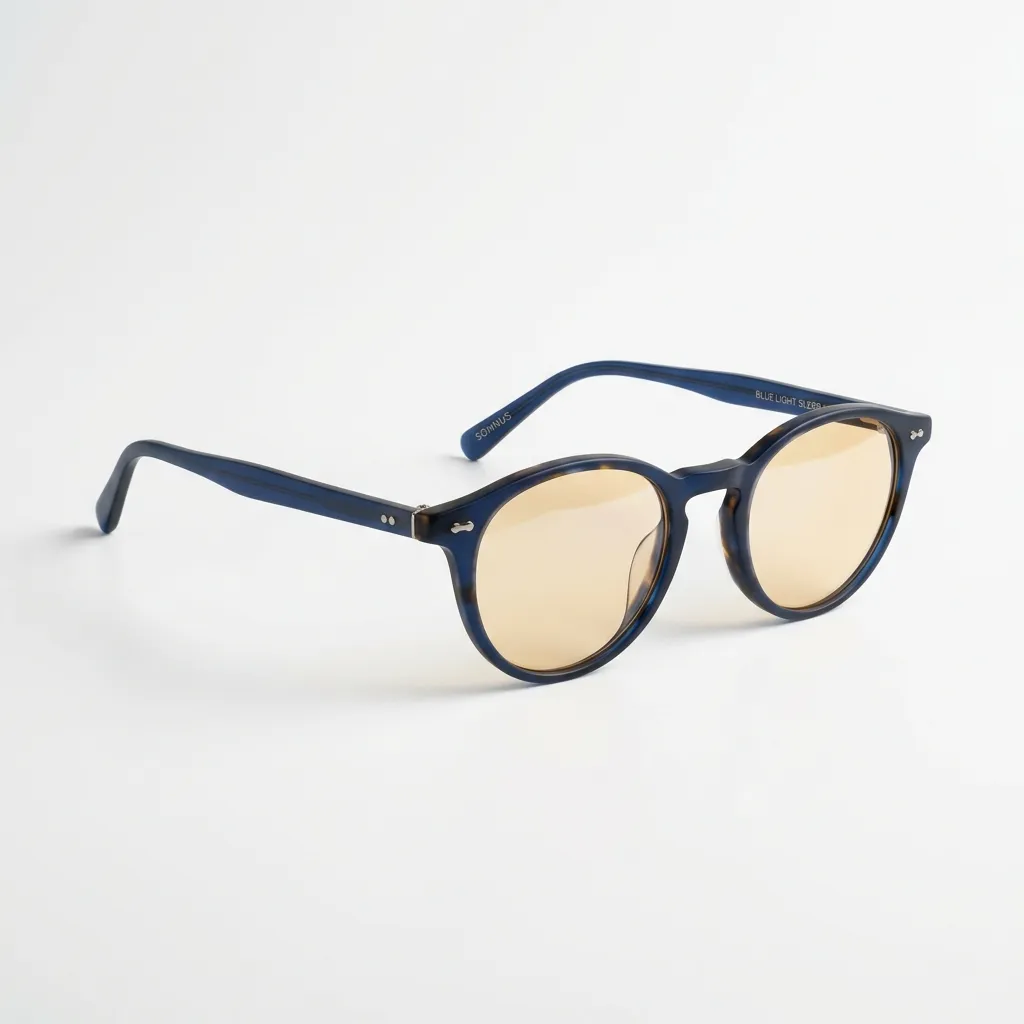
Blue Light Blocking Sleep Glasses
Specialized amber-lens glasses blocking 99% of blue light at night for natural melatonin production.
- Blocks 400-500nm screen light & LEDs
- Enhances deep sleep & REM phases
What do your devices actually emit? — phones, tablets, TV and LED bulbs
There are large differences in light intensity and spectral distribution between different light sources. A typical smartphone held at a distance of 30 centimeters emits 30-60 lux — a relatively low intensity. A tablet at a distance of 40 centimeters is 40-80 lux. A television at a distance of 2-3 meters emits 5-15 lux at the eye — very little. In comparison, office lighting is often 300-500 lux, and natural daylight even on a cloudy day can deliver 1000-5000 lux. This means that a smartphone close to the face late at night takes up less in the melatonin account than many people think - and a television above the living room is almost insignificant. PMID 32773744 PMID 31450969 PMID 37589211
What is decisive is the combined effect of all light sources in the hours before bed: screen + ceiling light + any night lamps. A powerful LED ceiling light (4000K or above) can deliver 200-500 lux directly to the eye and affect melatonin far more than a phone on night mode. At the same time, the spectral composition of the light varies between sources: cold white light (above 5000K) has a marked blue component, while warm white light (below 3000K) has relatively less. Modern displays typically use LED backlighting with a distinct peak in the blue spectrum, but the absolute intensity is low compared to the general lighting of the room. PMID 32773744 PMID 31450969 PMID 37589211
| Illumination Source | Typical Usage Distance | Luminous Intensity (Lux) | Melatonin Suppression Potential |
|---|---|---|---|
| Smartphone Screen | 30 cm | 30–60 lux | Low to moderate (concentrated blue spectral spike at 450–480 nm) |
| Tablet Computer | 40 cm | 40–80 lux | Moderate (sufficient to delay circadian melatonin onset by 60–90 min) |
| Television (Living Room) | 2–3 meters | 5–15 lux | Very low (distance dilutes photic irradiance considerably) |
| Overhead LED Fixtures (4000K) | 1.5–2.0 meters | 200–500 lux | High (suppresses pineal melatonin secretion by up to 50–70%) |
| Overcast Daytime Sky | Outdoor ambient | 1,000–5,000 lux | Very high (ideal morning zeitgeber to anchor circadian rhythms) |
Do blue blocking glasses work? — the evidence in 2026
The market for blue-blocking glasses has grown explosively, but the scientific evidence is mixed. A number of smaller studies have shown that orange (blue-blocking) glasses worn 1-2 hours before bedtime can increase melatonin levels in the evening by 30-60% and reduce the time it takes to fall asleep in people with sleep problems. However, the effect is less evident in healthy people without sleep problems, and many studies are small (typically 10-30 participants) and of varying quality. PMID 30550898 PMID 37589211 PMID 34865385
A 2023-2024 Cochrane review found that blue-blocking glasses are unlikely to have a clinically significant effect on sleep quality in the general population, but that they may have a small beneficial effect in people with insomnia or circadian rhythm disturbances. It is also important to distinguish between genuine blue-blocking glasses (deep orange/red lenses that block 90%+ of blue light) and marketing products with slightly yellowish lenses that only block 20-30%. The latter hardly have any noticeable biological effect. In 2026, the consensus is that orange glasses can be a useful supplement for people with delayed sleep phase or shift work, but that they cannot replace basic sleep hygiene. PMID 30550898 PMID 37589211 PMID 34865385
Night mode on displays — what it does and doesn't do
Most smartphones, tablets and computers have a night setting (Night Shift on Apple, Night Light on Windows, Comfort View on Android) that reduces the blue component of the screen's light and makes the color temperature warmer. The mechanism works: the spectral output of the screen is shifted towards longer wavelengths, which reduces the activation of melanopsin. Typically, night mode reduces the blue light component by 50-70% depending on the strength of the mode. PMID 31450969 PMID 37589211 PMID 34865385
But night mode alone does not solve the problem, because the total light intensity from the screen is often unchanged. Even if the color temperature is warmer, the total amount of light can still affect the circadian rhythm. In addition, some studies show that night setting has little or no effect on objective sleep measures such as total sleep time, time to fall asleep, or sleep efficiency — especially in people who do not have pre-existing sleep problems. The most effective strategy is therefore a combination: night setting on screens, dimming the room's general lighting (preferably below 100 lux), and reducing total screen time in the last hour before bed. PMID 31450969 PMID 37589211 PMID 34865385
Practical recommendations — especially for Danes in dark winters
In Denmark, the winter months are a particular challenge for the circadian rhythm. From November to February, natural daylight is limited to a few hours of low intensity, and many Danes see almost no daylight on weekdays. This means that the melanopsin system gets too little activation in the morning and forenoon, which makes the circadian rhythm weaker and more vulnerable to evening light. Morning light exposure is therefore at least as important as evening reduction. A powerful daylight therapy lamp (10,000 lux) used for 20-30 minutes in the morning can help anchor the circadian rhythm and improve sleep at night. PMID 32773744 PMID 30550898 PMID 31957064
The practical advice in priority order: First of all, get natural daylight in the morning — also in the winter months. Go for a walk, have breakfast by a window, or use a daylight therapy lamp. Next, dim the room lighting gradually from dinner onwards. Use warm light (below 3000K) in the living room, bedroom and bathroom in the evening. Turn down the ceiling lighting and instead use point lighting at eye level or lower. Third, enable night mode on all screens from 20-21 and onwards. Fourth, reduce total screen time in the last hour before bed. Finally, if you have persistent sleep problems or a markedly delayed circadian rhythm (you don't fall asleep until 2-3 am), true blue-blocking orange glasses worn 1-2 hours before bed can be a supplement — but they do not replace the other measures. PMID 32773744 PMID 30550898 PMID 31957064
Conclusion: What works and what's hype
Blue light is an important biological signaler, and it is wrong to consider it harmful in itself. Light in the morning with a blue component is desired and healthy. Light in the evening with a strong blue component can disturb sleep, but the effect strongly depends on intensity, duration and individual sensitivity. The biggest gains for most people don't come from expensive glasses or apps, but from simple, free changes: more daylight in the morning, dim room lighting in the evening, warm light in the bedroom, and fewer screens in the last hour before bed. PMID 32773744 PMID 30550898 PMID 31450969 PMID 34865385
For Danes, especially the morning light in the winter is the biggest challenge — and the biggest opportunity for improvement. If you only do one thing for your sleep in 2026, make sure you get light in the morning. Blue-blocking glasses and night mode on screens are useful supplements, but basic lighting behavior and sleep hygiene are the foundation. PMID 32773744 PMID 30550898 PMID 31450969 PMID 34865385
Internal Further Reading
Read also in the same cluster
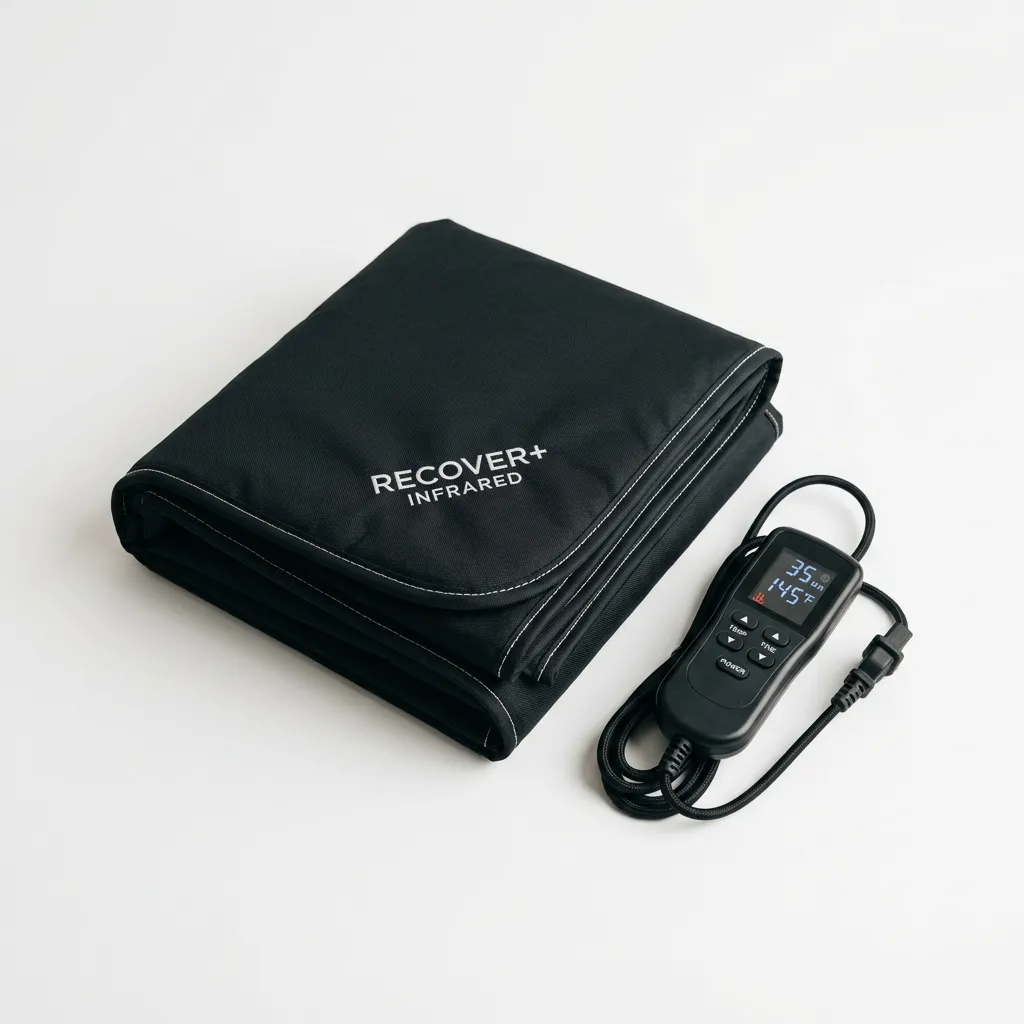
Infrared Sauna Blanket for Home Use
Infrared sauna blanket delivering deep thermal therapy, triggering heat shock proteins (HSP) and circulation.
- Far-infrared deep penetrating heat
- Triggers autophagy response & calorie burn
FAQ
Should I buy blue blocking glasses?
Only if you have documented sleep problems or a markedly delayed circadian rhythm. In that case, choose true orange (not yellowish) glasses that block at least 90% of blue light. For most people, dim room lighting and less screen time are more effective.
Does Night Shift on iPhone help with sleep?
Night Shift reduces the blue component of the screen light by 50-70%, but the overall light intensity is unchanged. The effect on objective sleep measures is limited. Use the feature, but don't expect miracles — it's most useful as part of a broader sleep strategy.
Why is morning light more important than evening darkness?
Because the melanopsin system calibrates the circadian rhythm primarily via morning light. If you don't get enough light in the morning, the circadian rhythm becomes weaker and more vulnerable to disturbing evening light. Especially in the dark Danish winters, morning light is absolutely central.
How many lux does it take to affect sleep?
In the evening, light intensities above 100 lux can affect melatonin, especially if the light has a strong blue component. For comparison, a smartphone at a distance of 30 cm is approximately 30-60 lux. It is the overall lighting of the room that usually matters the most.
Sources and References
- [1]
- [2]
- [3]
- [4]
Show all 6 sources (2 more)
- [5]
- [6]
Editorial History
5. July 2026
First publication
Initial version was published as part of the healthy aging with introduction, takeaways, FAQ, and reference block.
5. July 2026
Medical review
Phrasing, caveats, and internal links were reviewed for clarity, consistency, and YMYL alignment.
5. July 2026
Latest update
Blue light and sleep — what actually works in 2026 and what's hype received updated metadata, reference outputs, and improved decision-support structure.

Medical Review
Medical Review and Update Process
This article has been medically reviewed by Vadim Doroshenko with a focus on clinical accuracy, sources, disclaimers, and whether the conclusions still align with current scientific evidence.

Editorial Profile
Borys Viktorovytj Riabtsev
Borys Viktorovytj Riabtsev publishes Longevity Lab as a research-backed information project on precision medicine, metabolic health, and healthy aging, utilizing rigorous sources, independent medical review, and objective YMYL communication.