Key takeaways
- Slow breathing at 4-6 breaths per minute stimulates baroreceptors and activates the parasympathetic nervous system.
- The 4-7-8 method, box breathing, and Buteyko are among the best-documented breathing techniques for sleep and relaxation.
- The physiological sigh is an evidence-based technique for acute stress and anxiety reduction in under one minute.
- Regular practice — ideally 5-10 minutes before bedtime — is essential to achieve an effect on sleep quality.
Medical disclaimer: Content is for informational purposes and does not replace medical advice.
How does breathing affect the nervous system?
Breathing is unique among the body's functions because it is both autonomous (it runs automatically) and voluntary (you can consciously change it). This duality makes breathing a direct communication channel between the conscious mind and the autonomic nervous system — and thus one of the most effective ways to influence stress levels, heart rate, and sleep quality. PMID 35288214 PMID 38137330
The central mechanism is the vagus nerve, the longest nerve in the parasympathetic nervous system. When you breathe slowly and deeply — especially with prolonged exhalation — stretch receptors in the lungs are stimulated, sending signals to the brainstem via the vagus nerve. This activates the parasympathetic 'rest and digest' response, which lowers heart rate, reduces blood pressure, decreases cortisol levels, and promotes a state of calm and recovery. PMID 35288214 PMID 38137330
Research shows that breathing rates of around 4-6 breaths per minute (compared to the normal resting rate of 12-18) maximize this effect by optimizing so-called respiratory sinus arrhythmia — the natural variation in heart rate that occurs during breathing and is a sign of high heart rate variability (HRV) and good autonomic balance. PMID 35288214 PMID 38137330
| Breathing Protocol / Technique | Pacing & Pattern Architecture | Physiological Mechanism & Autonomic Pathway | Documented Impact on Sleep & Autonomic Tone | Optimal Protocol & Clinical Timing |
|---|---|---|---|---|
| 4-7-8 Method (Dr. Andrew Weil) | Inhale 4s (nasal), hold 7s, exhale 8s (oral whoosh) | Extended exhalation (1:2 ratio) activates vagal efferent projections to sinoatrial node | Reduces sleep onset latency, lowers heart rate by 6–10 bpm, suppresses presleep cognitive arousal | Supine in bed immediately prior to sleep (4–8 consecutive cycles) |
| Box Breathing (4-4-4-4 Square) | Inhale 4s, hold 4s, exhale 4s, hold 4s (all through nose) | Rebalances baroreflex sensitivity, restores arterial pCO2, dampens acute sympathetic drive | Aborts nocturnal panic, stabilizes resting cardiac variability without excessive somnolence | At bedtime during racing thoughts or during high-stress diurnal work transitions |
| Cyclic Physiological Sigh (Balban et al. 2023) | Double nasal inhalation (deep + short top-up) followed by protracted oral exhalation | Re-inflates collapsed terminal pulmonary alveoli, rapidly optimizes gas exchange via vagal feedback | Fastest physiological protocol to abort acute sympathetic arousal in under 60 seconds | 5 minutes of continuous daily practice in the evening for sustained mood and deep sleep enhancements |
| Resonance Frequency Breathing (0.1 Hz) | 5.5s inhalation, 5.5s exhalation (~5.5 breaths per minute) | Maximizes Respiratory Sinus Arrhythmia (RSA), phase-locking heart rate with Mayer waves | Maximizes vagal HRV metrics (rMSSD and high-frequency power), enhances baroreceptor gain | 10–20 minutes seated in quiet comfort during the wind-down period prior to bed |
| Buteyko Method (Reduced Nasal Volume) | Low-volume shallow diaphragmatic nasal breathing; prevents chronic hyperventilation | Enhances peripheral tissue oxygen extraction via the biochemical Bohr effect (preserving pCO2) | Prevents xerostomia, suppresses nocturnal snoring, and alleviates mild sleep-disordered breathing | 24/7 habitual baseline breathing practice paired with gentle nocturnal mouth-taping |
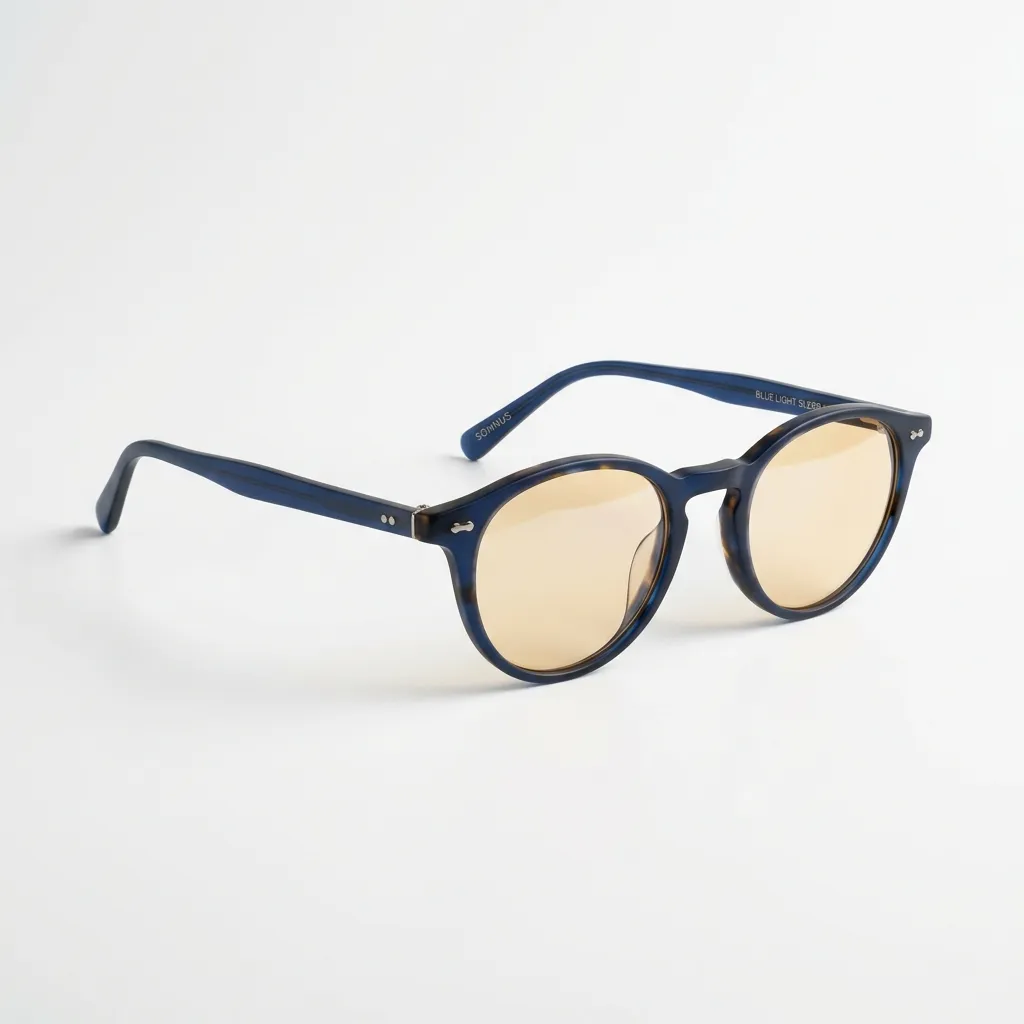
Blue Light Blocking Sleep Glasses
Specialized amber-lens glasses blocking 99% of blue light at night for natural melatonin production.
- Blocks 400-500nm screen light & LEDs
- Enhances deep sleep & REM phases
The 4-7-8 method — the classic sleep technique
The 4-7-8 method, also known as the 'relaxing breath,' was popularized by Dr. Andrew Weil and is based on ancient yogic breathing exercises (pranayama). The technique is simple: inhale through the nose for 4 seconds, hold the breath for 7 seconds, and exhale slowly through the mouth for 8 seconds. The prolonged exhalation ratio (1:2 between inhalation and exhalation) is the very key to the relaxing effect. PMID 38137330 PMID 35838520
The scientific explanation for the 4-7-8 method's effect lies in the fact that the prolonged exhalation activates the parasympathetic nervous system more powerfully than normal breathing. At the same time, the breath pause (the 7 seconds) helps build a slight increase in carbon dioxide in the blood, which has a naturally calming effect on the nervous system through influence on the respiratory center in the brainstem. PMID 38137330 PMID 35838520
Practical use: Lie in bed with closed eyes. Place the tip of your tongue against the palate just behind the front teeth. Exhale completely through the mouth. Inhale quietly through the nose while counting to 4. Hold your breath while counting to 7. Exhale through the mouth with a whoosh sound while counting to 8. Repeat the cycle 4 times. With regular practice, many fall asleep within a few cycles. PMID 38137330 PMID 35838520
Box breathing — square breathing
Box breathing, also known as square breathing (sama vritti in yoga), consists of four equal-length phases: inhalation, breath hold after inhalation, exhalation, and breath hold after exhalation — typically 4 seconds each, forming a 'breath square.' The technique has been used by Navy SEALs and elite soldiers to maintain calm and focus under extreme pressure. PMID 38137330 PMID 39864026
What is special about box breathing is that all four phases are equally long. This creates a stable, rhythmic breathing pattern that helps regulate the autonomic nervous system without favoring either sympathetic activation (stress) or parasympathetic activation (relaxation) — instead, the system is brought into balance. For sleep purposes, you can extend the exhalation phase to 6 seconds, giving the technique a more parasympathetic slant. PMID 38137330 PMID 39864026
For beginners, 4-4-4-4 is a good starting point. With practice, you can increase to 5-5-5-5 or 6-6-6-6. It is more important to find a rhythm that feels natural than to push the breathing to the extreme — discomfort works against the purpose of relaxation. Practice the technique for 5-10 minutes before bedtime. PMID 38137330 PMID 39864026
The Buteyko method — nasal breathing and reduced breathing
The Buteyko method was developed in the 1950s by Ukrainian physician Konstantin Buteyko and is based on the theory that many people chronically hyperventilate — they breathe too fast and too deeply relative to the body's needs. This leads to low carbon dioxide levels in the blood, which paradoxically reduces oxygen delivery to tissues (the Bohr effect) and increases the nervous system's alarm state. PMID 38137330 PMID 33530621
For sleep, the Buteyko method primarily means two things: nasal breathing throughout the night and conscious reduction of breathing volume. Mouth breathing during sleep is associated with snoring, sleep apnea, dry mouth, and more frequent awakenings. Nasal breathing filters, humidifies, and warms the air, produces nitric oxide which dilates airways, and stimulates the diaphragm more effectively. PMID 38137330 PMID 33530621
A simple Buteyko exercise for sleep: Lie on your back. Breathe normally through the nose for 30 seconds. Then take a normal inhalation and exhale. Pinch your nose and hold your breath for as long as comfortable (you should feel a mild air hunger). Release the nose and breathe calmly through the nose for at least 30 seconds. This 'control pause' trains the body's tolerance to carbon dioxide and helps normalize the breathing pattern over time. PMID 38137330 PMID 33530621
The physiological sigh — acute relaxation in under a minute
The physiological sigh is an automatic reflex that all humans perform approximately every 5 minutes — often without being aware of it. It consists of a double inhalation: first a normal inhalation, then an extra short inhalation, followed by a slow, prolonged exhalation. This breathing maneuver reopens the microscopic lung sacs (alveoli) that have collapsed during quiet breathing. PMID 35288214 PMID 36630953
In 2023, the physiological sigh became the subject of renewed scientific interest when a randomized controlled trial from Stanford University (Balban et al., published in Cell Reports Medicine) compared three breathing techniques and found that cyclic sighing (repeated physiological sighs over 5 minutes) was the most effective technique for acute anxiety reduction and mood improvement — more effective than both mindfulness meditation and box breathing. PMID 35288214 PMID 36630953
For sleep: Use the physiological sigh as an 'emergency brake technique.' When you lie in bed and your thoughts are racing, or you feel restlessness and tension: Take two inhalations through the nose (first a large one, then an extra short one), and then exhale slowly and completely through the mouth for 6-8 seconds. Repeat 3-5 times. The effect is often noticeable within 30-60 seconds. PMID 35288214 PMID 36630953
How to build a breathing routine for better sleep
The best approach is to combine the techniques into a practical routine that fits your daily life. The key is consistency — breathing exercises work through repetition and gradual recalibration of the autonomic nervous system, not through one-off 'miracle cures.' PMID 35288214 PMID 38137330 PMID 35838520 PMID 33530621
Start by setting aside 5 minutes every evening for two weeks. Put away your mobile phone, dim the lights, and choose one technique to focus on — 4-7-8 is a good place to start, as it is simple and well-documented. After two weeks, you can evaluate the effect and optionally add Buteyko exercises for nasal breathing or box breathing as a supplement. PMID 35288214 PMID 38137330 PMID 35838520 PMID 33530621
If you wake up during the night and have difficulty falling back asleep, the physiological sigh is the best 'firefighting technique' — 3-5 cycles take under a minute and activate the parasympathetic nervous system quickly enough to break the thought spiral. Avoid checking your phone or turning on lights, as this counteracts melatonin production. PMID 35288214 PMID 38137330 PMID 35838520 PMID 33530621
Internal Further Reading
Read also in the same cluster
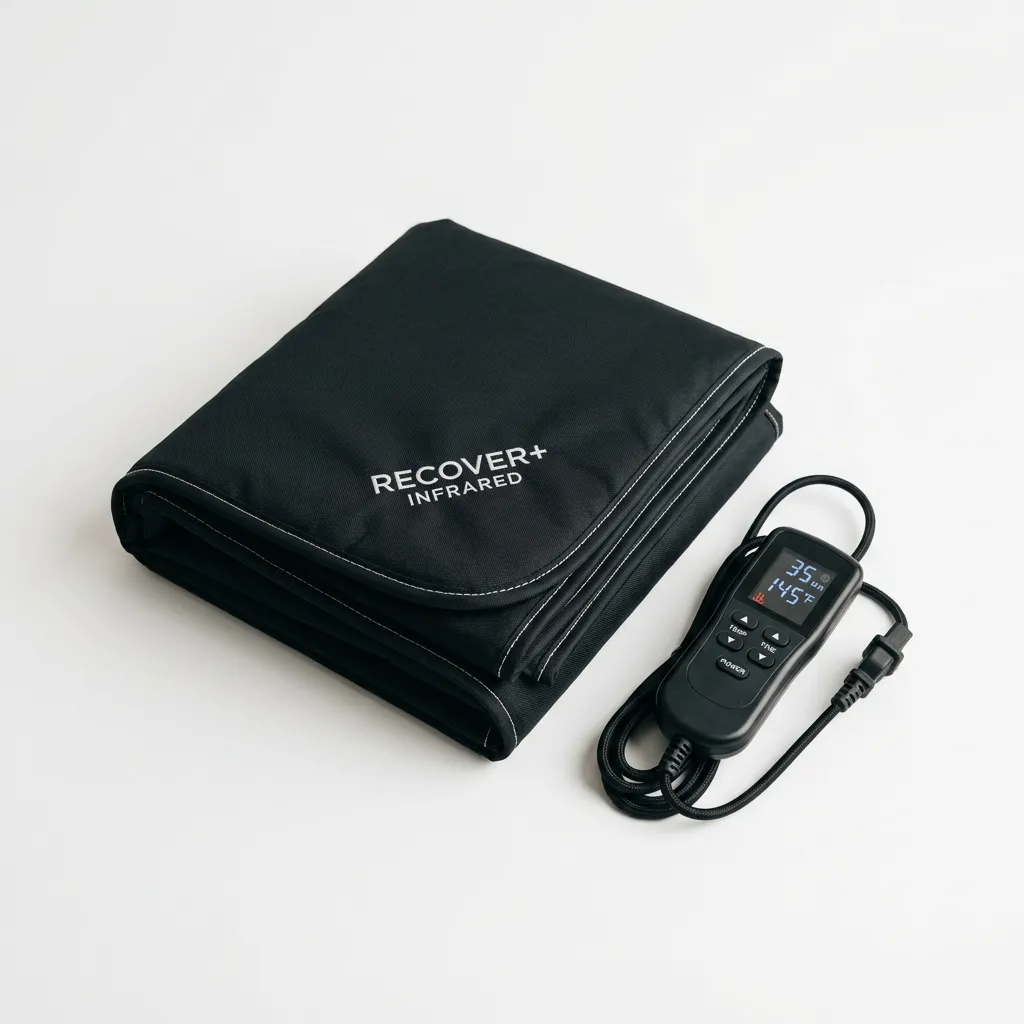
Infrared Sauna Blanket for Home Use
Infrared sauna blanket delivering deep thermal therapy, triggering heat shock proteins (HSP) and circulation.
- Far-infrared deep penetrating heat
- Triggers autophagy response & calorie burn
FAQ
How long does it take before breathing exercises affect sleep?
The acute relaxing effect can be felt within minutes, but lasting improvement in sleep quality typically requires 1-2 weeks of daily practice of 5-10 minutes.
Can breathing techniques replace sleep medication?
For mild to moderate sleep problems, breathing exercises can be an effective alternative or supplement. For severe sleep disorders or diagnosed insomnia, you should talk to your doctor — breathing exercises can be part of the treatment but do not necessarily replace medical treatment.
Is it dangerous to hold your breath during Buteyko exercises?
Buteyko exercises involve only a mild air hunger — never extreme or uncomfortable breath holds. If you have heart problems, high blood pressure, or are pregnant, you should consult your doctor before starting breathing exercises with breath holds.
What should I do if I fall asleep during the exercises?
That's exactly the point! If you fall asleep during the breathing exercises, the technique is working as intended. You don't need to complete a certain number of cycles — just practice until you drift into sleep.
Sources and References
- [1]
- [2]
- [3]
- [4]
Editorial History
14. July 2026
First publication
Initial version was published as part of the healthy aging with introduction, takeaways, FAQ, and reference block.
14. July 2026
Medical review
Phrasing, caveats, and internal links were reviewed for clarity, consistency, and YMYL alignment.
14. July 2026
Latest update
Breathing techniques for better sleep — from Buteyko to the 4-7-8 method received updated metadata, reference outputs, and improved decision-support structure.

Medical Review
Medical Review and Update Process
This article has been medically reviewed by Vadim Doroshenko with a focus on clinical accuracy, sources, disclaimers, and whether the conclusions still align with current scientific evidence.

Editorial Profile
Borys Viktorovytj Riabtsev
Borys Viktorovytj Riabtsev publishes Longevity Lab as a research-backed information project on precision medicine, metabolic health, and healthy aging, utilizing rigorous sources, independent medical review, and objective YMYL communication.