Key takeaways
- Collagen production declines by approximately 1% per year after age 30 — after 50 the total loss is significant.
- Hydrolyzed collagen (collagen peptides) is absorbed better than native collagen and has the best documentation for effect.
- Collagen supplements have moderate evidence for improving skin elasticity and moisture and reducing joint pain in osteoarthritis.
- Vitamin C, zinc and copper are necessary cofactors — without them the body cannot form collagen, regardless of how much you consume.
Medical disclaimer: Content is for informational purposes and does not replace medical advice.
What is collagen, and why do we lose it with age?
Collagen is a fibrous protein that functions as the body's scaffolding. It is formed by fibroblasts and consists of three polypeptide chains twisted together in a triple helix — a structure that provides tensile strength and elasticity. There are at least 28 different collagen types in the human body, but type 1, 2 and 3 together make up over 95% of total collagen. PMID 32528132 PMID 34188230
Collagen production declines for several reasons with age. Fibroblasts become less active and produce fewer collagen molecules. Oxidative stress and UV radiation break down existing collagen faster than it can be replaced. Hormonal changes — especially the decline in estrogen after menopause — significantly reduce collagen synthesis. And the accumulation of AGEs (advanced glycation end products) from high blood sugar makes collagen stiff and less functional. PMID 32528132 PMID 34188230
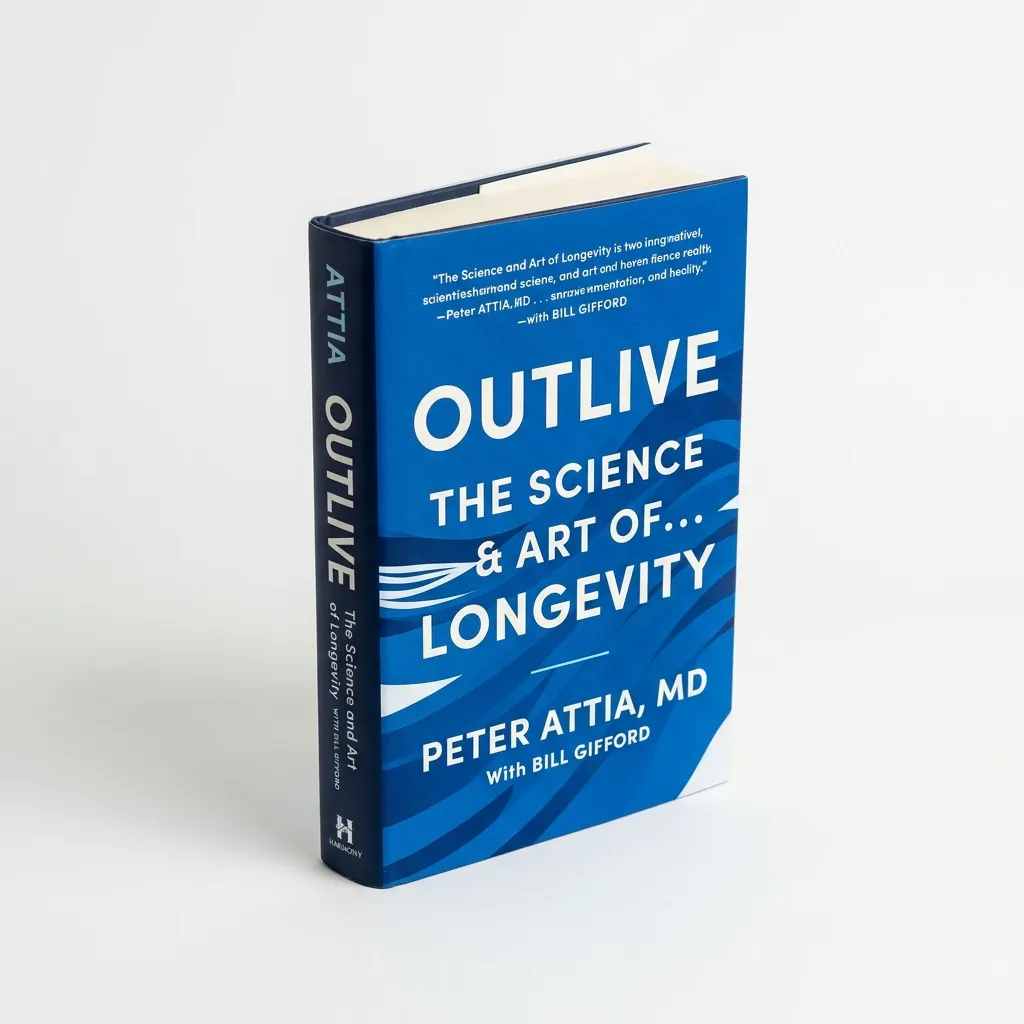
Outlive: The Science & Art of Longevity
Dr. Peter Attia's groundbreaking guide to preventive medicine, exercise for longevity, and healthy aging.
- Scientific framework for Medicine 3.0
- Actionable guide on sleep, exercise & nutrition
Type 1, 2 and 3 — what is the difference, and which should you choose?
Type 1 collagen is the most widespread — it is found in skin, tendons, ligaments, bones and teeth. It gives skin strength and elasticity. Type 2 is found almost exclusively in joint cartilage and is crucial for joint shock absorption. Type 3 is found in blood vessels, muscles and organ connective tissue and often works closely together with type 1 in tissues that require elasticity. PMID 32528132 PMID 31329266
| Type | Source | Primary Application Area |
|---|---|---|
| Type 1 & 3 | Bovine, fish (marine) | Skin, hair, nails, tendons, bones |
| Type 2 | Chicken cartilage | Joint cartilage, osteoarthritis |
| Marine type 1 | Fish skin and scales | Skin (smaller particles, potentially better absorption) |
Do collagen supplements work? What does the research say?
The evidence for collagen supplements is moderate but growing. A 2021 meta-analysis found that hydrolyzed collagen significantly improved skin elasticity, moisture and wrinkle depth after 8-12 weeks of daily intake of 2.5-10 grams. The mechanism is thought to be dual: collagen peptides are absorbed and function as building blocks, while also signaling to fibroblasts to produce more collagen. PMID 34188230 PMID 32696447 PMID 34087177
For joints and cartilage, the evidence is more mixed, but with a positive trend. Type 2 collagen has in several studies shown significant reduction of joint pain and improved function in people with knee osteoarthritis. The effect is moderate and typically takes 3-6 months to achieve. Collagen does not replace medical treatment of advanced osteoarthritis, but can be a relevant supplement to exercise and weight loss. PMID 34188230 PMID 32696447 PMID 34087177
Food sources and cofactors — how to boost your own production
The best strategy for collagen is not necessarily supplements, but supporting the body's own production. Bone broth is a classic and natural source that contains collagen, gelatin, amino acids and minerals in an easily absorbable form. Meat with connective tissue (slow-cooked beef, pork cheeks), fish skin and egg whites are also good sources. PMID 31329266 PMID 32589997
Without sufficient vitamin C, the body cannot form collagen — vitamin C is a necessary cofactor for the enzymes that cross-link collagen fibers. Zinc and copper are also essential. A diet rich in vitamin C (citrus, bell pepper, broccoli), zinc (oysters, beef, pumpkin seeds) and protein gives the body the best conditions to produce its own collagen. PMID 31329266 PMID 32589997
- Consume bone broth — a natural source of collagen, gelatin, and minerals.
- Get enough vitamin C: 75-100 mg daily from citrus, bell pepper, or broccoli.
- Zinc and copper from nuts, meat, and shellfish support collagen synthesis.
- Avoid smoking and excessive sun exposure — they break down collagen faster.
Conclusion — collagen as part of a larger anti-aging strategy
Collagen supplements have a place in modern longevity, but they are not a miracle cure. The best evidence is for hydrolyzed collagen for skin elasticity and hydration, and for type 2 collagen for joint pain in osteoarthritis. The effect is moderate, gradual, and requires consistent daily intake over several months. PMID 32528132 PMID 34188230 PMID 32696447
For most people over 50, the most sensible strategy is to combine a collagen-supporting diet with vitamin C, zinc, protein, and bone broth with a targeted supplement if there is a specific need for skin or joints. At the same time, it is crucial to remember that collagen cannot compensate for smoking, excessive sun exposure, poor sleep, or lack of exercise — the foundational lifestyle factors that have a far greater impact on skin and joint health than any supplement alone. PMID 32528132 PMID 34188230 PMID 32696447
Internal Further Reading
Read also in the same cluster

Smart Body Composition Scale
Advanced bioimpedance scale tracking muscle mass, body fat percentage, bone density and hydration.
- Tracks muscle mass & visceral fat
- Wireless sync with health apps
FAQ
Is collagen powder better than collagen capsules?
Powder typically provides a higher dose per serving (5-10 g vs 1-2 g in capsules). It is difficult to get a therapeutic dose from capsules alone.
How long before you see results?
For skin typically 8-12 weeks with daily intake. For joints 3-6 months. The effect is gradual.
Can vegetarians and vegans take collagen?
Animal collagen is not found in plant-based sources. There are plant-based collagen boosters with vitamin C and amino acids, but they do not contain collagen itself.
Should I take collagen together with vitamin C?
Yes, vitamin C increases absorption and is necessary for collagen synthesis. Many supplements already contain vitamin C.
Sources and References
- [1]
- [2]
- [3]
- [4]
Show all 6 sources (2 more)
- [5]
- [6]
Editorial History
9. July 2026
First publication
Initial version was published as part of the healthy aging with introduction, takeaways, FAQ, and reference block.
9. July 2026
Medical review
Phrasing, caveats, and internal links were reviewed for clarity, consistency, and YMYL alignment.
9. July 2026
Latest update
Collagen and aging — type 1, 2, 3 and what should you choose after 50 received updated metadata, reference outputs, and improved decision-support structure.

Medical Review
Medical Review and Update Process
This article has been medically reviewed by Vadim Doroshenko with a focus on clinical accuracy, sources, disclaimers, and whether the conclusions still align with current scientific evidence.

Editorial Profile
Borys Viktorovytj Riabtsev
Borys Viktorovytj Riabtsev publishes Longevity Lab as a research-backed information project on precision medicine, metabolic health, and healthy aging, utilizing rigorous sources, independent medical review, and objective YMYL communication.