Key takeaways
- Creatine monohydrate supports cellular ATP regeneration via the creatine kinase system in both brain and skeletal muscle.
- Clinical meta-analyses demonstrate that creatine combined with resistance training yields significantly greater gains in muscle mass and grip strength in older adults.
- The brain synthesizes limited creatine endogenously; oral supplementation increases brain tissue creatine content by 5–15%.
- Creatine enhances cognitive performance, working memory, and processing speed, particularly under mental fatigue, stress, or age-related decline.
- Emerging studies show creatine stimulates osteoblast activity while suppressing osteoclast-mediated bone resorption.
- A daily dose of 3–5 grams of creatine monohydrate without a loading phase is completely safe for renal and gastrointestinal health in older adults.
Medical disclaimer: Content is for informational purposes and does not replace medical advice.
What is Creatine and How Does Bioenergetics Work in Brain and Muscle?
Creatine is a naturally occurring nitrogenous organic acid synthesized in the liver, kidneys, and pancreas from the amino acids arginine, glycine, and methionine. Approximately 95% of total body creatine is stored in skeletal muscle as phosphocreatine (PCr), while the remaining 5% is distributed in the brain, heart, and testes. PMID 34836054 PMID 28615996
When brain or muscle cells engage in high-energy demands, adenosine triphosphate (ATP) is broken down into adenosine diphosphate (ADP). Phosphocreatine rapidly donates its phosphate group to ADP via the enzyme creatine kinase, resynthesizing ATP in milliseconds. This bioenergetic buffering system is vital for maintaining cellular energy homeostasis. PMID 34836054 PMID 28615996
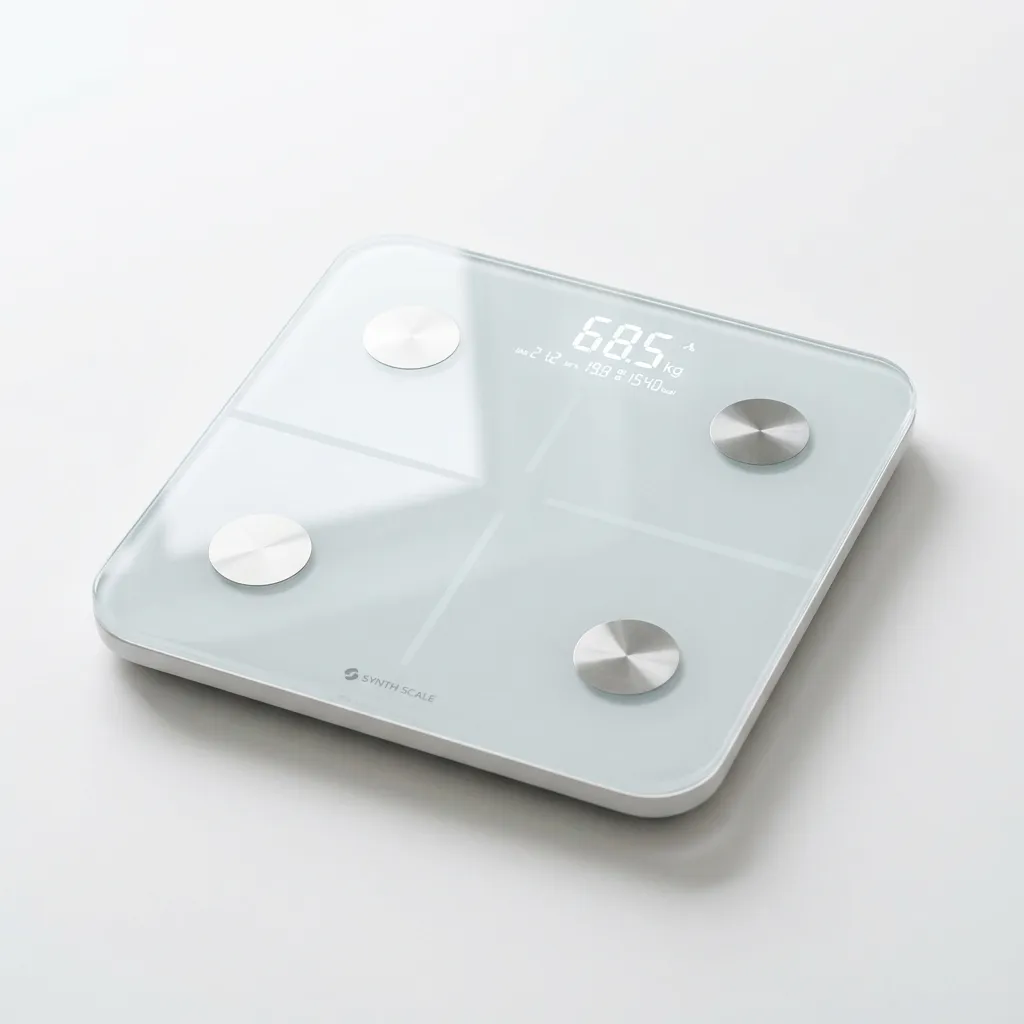
Smart Body Composition Scale
Advanced bioimpedance scale tracking muscle mass, body fat percentage, bone density and hydration.
- Tracks muscle mass & visceral fat
- Wireless sync with health apps
Cognitive Optimization: Brain Energy Buffer, Memory, and Mental Clarity
Although the human brain accounts for only about 2% of total body weight, it consumes over 20% of resting metabolic energy. Neurons and astrocytes depend on continuous ATP availability to maintain ion gradients across cell membranes and release neurotransmitters. With aging, bioenergetic efficiency in brain tissue declines, contributing to cognitive fatigue and brain fog. PMID 29704637 PMID 14561278 PMID 30783648
Systematic reviews and clinical trials (e.g., Avgerinos et al. and Rae et al.) show that creatine supplementation elevates cerebral phosphocreatine levels. This translates into measurable improvements in working memory, short-term recall, and cognitive processing speed in older adults, with the most pronounced benefits observed during complex tasks or sleep deprivation. PMID 29704637 PMID 14561278 PMID 30783648
Sarcopenia Prevention and Bone Density Enhancement in Older Adults
Age-related muscle loss (sarcopenia) and bone mineral density loss (osteopenia/osteoporosis) are closely linked conditions that lead to physical frailty. Meta-analyses of trials in adults over 50-60 confirm that subjects taking creatine alongside progressive resistance training achieve significantly greater increases in lean muscle mass, bench press, and leg press strength compared to training alone. PMID 30042358 PMID 29138605
Furthermore, creatine exerts direct anabolic effects on bone tissue. Researchers (e.g., Candow & Forbes) demonstrated that creatine increases osteoblastic alkaline phosphatase activity, stimulating new bone formation while dampening markers of bone resorption (such as NTx). This provides dual protection against falls and fractures. PMID 30042358 PMID 29138605
Dispelling Myths: Why Creatine Does Not Damage Kidneys or Cause Hair Loss
Many older adults hesitate to take creatine due to outdated misconceptions regarding kidney damage or hair loss. It is essential to distinguish between 'creatine' (the dietary supplement) and 'creatinine' (a natural metabolic waste product). When taking creatine, blood tests may show a slight, harmless elevation in serum creatinine, reflecting a larger creatine pool rather than renal dysfunction. PMID 34836054 PMID 28615996
Hundreds of clinical studies and position statements from the International Society of Sports Nutrition (ISSN) confirm that creatine monohydrate is safe for kidney and liver function in healthy individuals of all ages. The hair loss myth stems from a single, un-replicated study in young rugby players and has been refuted by subsequent research. PMID 34836054 PMID 28615996
Practical Dosing Protocol, Selection of Form, and Timing
For adults over 50, a high-dose 'loading phase' (20g daily) is neither necessary nor recommended, as it can cause mild stomach upset. The most effective and gentle method is a continuous daily intake of 3 to 5 grams of micronized Creatine Monohydrate. PMID 28615996 PMID 21305417
Pure Creatine Monohydrate (such as Creapure) is the most thoroughly validated, cost-effective, and bioavailable form available. Expensive alternatives like creatine ethyl ester offer no proven advantage. Take the supplement daily with a meal containing carbohydrates or protein, as insulin facilitates creatine transport into target cells. PMID 28615996 PMID 21305417
Internal Further Reading
Read also in the same cluster
Professional Percussive Massage Gun
High-torque percussive therapy device for deep muscle relief, circulation and post-workout recovery.
- Deep percussive impact for fast relief
- Quiet brushless motor with multiple heads
FAQ
Why should adults over 50 take creatine?
Creatine recharges cellular energy stores (ATP) in both brain and muscle. It helps preserve muscle mass, physical strength, and cognitive performance while protecting against age-related frailty.
Is a loading phase necessary when starting creatine?
No, a loading phase is not necessary. Taking 3-5 grams daily achieves full muscle and brain tissue saturation within 3-4 weeks without risk of stomach discomfort.
Does creatine affect kidney function tests?
Creatine can cause a harmless minor increase in blood serum creatinine levels due to increased total creatine turnover. Extensive research proves it does not harm kidney function in healthy individuals.
Sources and References
- [1]
- [2]
- [3]
- [4]
Show all 8 sources (4 more)
- [5]
- [6]
- [7]
- [8]
Editorial History
3. august 2026
Første publicering
Første version blev publiceret som del af healthy aging med intro, takeaways, FAQ og referenceblok.
3. august 2026
Faglig gennemgang
Formuleringer, forbehold og interne links blev gennemgået for klarhed, konsistens og YMYL-tydelighed.
3. august 2026
Seneste opdatering
Creatine for Older Adults (2026) fik opdaterede metadata, referenceoutput og forbedret beslutningsnær struktur.

Medical Review
Medical Review and Update Process
This article has been medically reviewed by Vadim Doroshenko with a focus on clinical accuracy, sources, disclaimers, and whether the conclusions still align with current scientific evidence.

Editorial Profile
Borys Viktorovytj Riabtsev
Borys Viktorovytj Riabtsev publishes Longevity Lab as a research-backed information project on precision medicine, metabolic health, and healthy aging, utilizing rigorous sources, independent medical review, and objective YMYL communication.