Key takeaways
- ECG vs. PPG Core Biophysics: Polar H10 measures the true electrical depolarization of cardiac myocytes directly on the chest wall at 1,000 Hz (1 ms resolution), whereas smartwatches utilize optical photoplethysmography (PPG) at 25–100 Hz subject to systemic lag.
- Zero Latency in Zone 2: Optical wrist wearables suffer from an inherent smoothing latency of 10 to 25 seconds during rapid cardiac changes and fail severely during grip contractions (kettlebells, rowing, push-ups, or deadlifts).
- Gold Standard for R-R Intervals and HRV: Only an ECG chest strap provides raw, unfiltered millisecond intervals between successive R-waves—an absolute clinical requirement for true autonomic HRV profiling in Kubios HRV.
- Economic Advantage in Denmark: At approximately 599–699 DKK as a one-time purchase with zero recurring subscription fees (contrasting with Whoop's ~2,400 DKK annual cost), the Polar H10 delivers 400 hours of active battery life on a standard user-replaceable CR2025 coin cell.
Medical disclaimer: Content is for informational purposes and does not replace medical advice.
Biophysics and Physiology: ECG Electrodes vs. Optical Photoplethysmography (PPG)
To comprehend why an optical sensor on the wrist or finger can never fully substitute for a chest strap, one must examine the underlying bioelectrical and biomechanical physics. An ECG-based chest strap like the Polar H10 detects the bioelectrical dipole generated when the heart's sinoatrial (SA) node fires an action potential, depolarizing the ventricular myocardium. This rapid electrical cascade produces the hallmark QRS complex on an electrocardiogram. Positioned just beneath the pectoral muscles directly across the heart's electrical axis, the Polar H10's conductive rubber electrodes sample this cardiac electrical vector at 1,000 Hz (1,000 times per second), yielding a temporal precision of 1 millisecond for every discrete R-peak. PMID 27015388 PMID 31333486
Conversely, optical wearables (photoplethysmography or PPG) found in the Apple Watch, Garmin, Whoop, and Oura Ring operate via an indirect volumetric fluid-dynamics principle. Green and infrared light-emitting diodes (LEDs) project photons into cutaneous and subcutaneous vascular beds. An adjacent photodiode captures the fraction of light reflected back. Each time the left ventricle contracts, ejecting a pulsatile bolus of oxygenated blood into the arterial tree, microvascular capillaries in the wrist expand, absorbing slightly more green light. Therefore, PPG does not measure the heartbeat itself—it measures the delayed hydraulic pressure wave expanding peripheral tissue. PMID 27015388 PMID 31333486
This indirect optical methodology is compromised by four unavoidable physical vulnerabilities: PMID 27015388 PMID 31333486
**1. Pulse Transit Time (PTT) Latency**: It takes approximately 150 to 250 milliseconds for an arterial pressure wave to propagate from the aortic root to the radial artery in the wrist. This transit duration fluctuates dynamically based on instantaneous arterial compliance, systemic blood pressure, and peripheral vascular resistance. PMID 27015388 PMID 31333486
**2. Motion Artifacts and Sensor Displacement**: During dynamic upper-body movements, running impacts, or gripping tasks, the wearable shifts microscopically against the dermal stratum corneum. These mechanical displacements alter the optical path length and photodiode alignment, generating large optical signal spikes that algorithms frequently misinterpret as cardiac pulses. PMID 27015388 PMID 31333486
**3. Cadence Lock**: When running at a cadence matching typical cardiovascular frequencies (e.g., 165–175 strides per minute), the rhythmic impact shock of each footstrike creates periodic capillary blood volume surges beneath the watch face. Optical filtering algorithms can erroneously lock onto this mechanical cadence frequency, displaying a falsely elevated heart rate of 170+ BPM while your true cardiovascular rate is only 135 BPM. PMID 27015388 PMID 31333486
**4. Cutaneous Vasoconstriction in Cold Weather**: In Scandinavian climates, cool ambient temperatures trigger immediate peripheral sympathetic vasoconstriction, diverting blood away from the skin surface toward the vital core. As dermal capillary perfusion plummets, the signal-to-noise ratio of optical wrist sensors collapses, frequently resulting in erratic dropouts during the initial 15 minutes of outdoor winter workouts. PMID 27015388 PMID 31333486
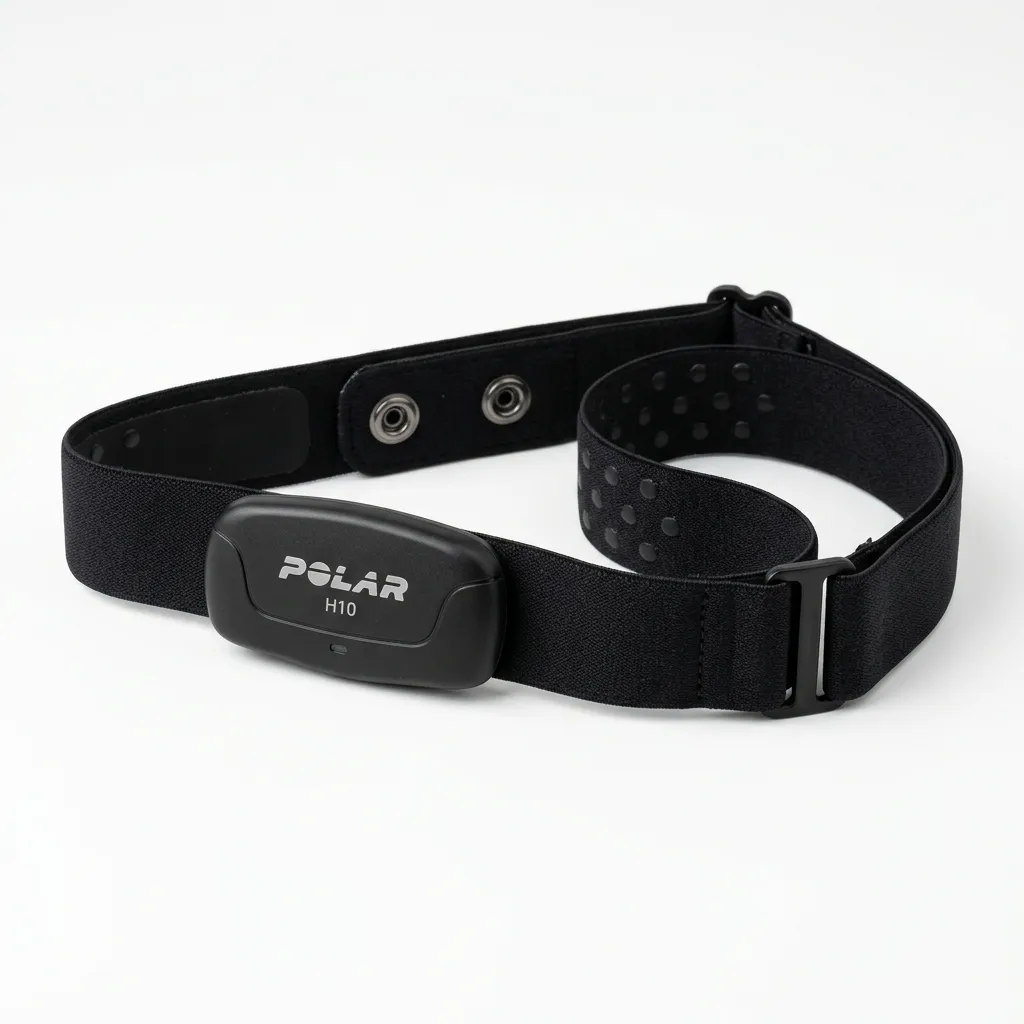
Polar H10 Heart Rate Monitor & HRV Sensor
The gold standard chest strap monitor for accurate Heart Rate Variability (HRV) and Zone 2 training.
- ECG-accurate HRV and heart rate zone tracking
- Dual Bluetooth & ANT+ connectivity
Comparison: Polar H10 vs. Apple Watch Ultra, Garmin, Whoop, and Oura
While modern premium wearables incorporate sophisticated machine-learning filtering and multi-wavelength LED arrays (such as Garmin's Elevate Gen 5 or Apple's photodiode clusters), the physical limitations of surface PPG persist. The benchmark matrix below compares the Polar H10 against prominent consumer wearables across critical diagnostic and athletic metrics. PMID 27015388 PMID 38319483
| Device / Sensor | Measurement Principle | Sampling Frequency | Latency / Response Time | Accuracy in Strength/Rowing | R-R Interval Quality (HRV) | Price in Denmark (DKK) |
|---|---|---|---|---|---|---|
| Polar H10 Chest Strap | ECG (Bioelectrical Potential) | 1,000 Hz | Real-time (0 sec) | 99.8% (Gold standard benchmark) | 1 ms raw ECG precision (R-peaks) | 599–699 DKK (One-time buy) |
| Apple Watch Ultra 2 / S10 | PPG (Green/IR optical array) | 50–100 Hz | 10–20 sec smoothing lag | 82–88% (Struggles with wrist flexion) | Aggregated rMSSD estimation | 3,599–6,999 DKK |
| Garmin Fenix 7 / Epix Pro | Elevate Gen 5 Optical PPG | 25–50 Hz | 12–25 sec smoothing lag | 80–86% (Frequent dropouts during grip) | Estimated (Nightly HRV baseline only) | 4,200–7,800 DKK |
| Whoop 4.0 | PPG (5 LED photodiode array) | 52 Hz | 15–30 sec smoothing lag | 75–82% (Significant motion noise) | Nightly sleep average only | 2,400 DKK/year (Subscription) |
| Oura Ring Gen 3 / Ring 4 | Infrared PPG (Finger arteries) | 50 Hz (sleep) / 25 Hz | Unsuitable for dynamic training | <60% (Unreliable during weightlifting) | Clinical accuracy during motionless sleep | 2,899–4,199 DKK + 45 kr/mo |
Zone 2 and VO2 Max Training: Why a 5-Beat Lag Disrupts Physiological Adaptation
In modern longevity protocols popularized by physician Dr. Peter Attia and metabolic researcher Dr. Iñigo San-Millán, Zone 2 aerobic training serves as the primary stimulus for mitochondrial biogenesis, maximal lipid oxidation, and lactate clearance capacity. Zone 2 corresponds to the highest exercise intensity at which blood lactate remains at steady-state equilibrium (typically 1.5 to 2.0 mmol/L), driven predominantly by slow-twitch Type I muscle fibers relying on mitochondrial beta-oxidation. PMID 38319483 PMID 33821334
The practical challenge of Zone 2 training is that this physiological window is exceptionally narrow—frequently spanning only 6 to 10 beats per minute (e.g., 128 to 136 BPM for an aerobically fit 45-year-old). When encountering an outdoor headwind, a slight road gradient, or increasing treadmill pace, true heart rate can accelerate from 132 to 142 BPM within 10 to 15 seconds. At 142 BPM, glycolytic recruitment surges, blood lactate crosses 2.0 mmol/L, and cellular fat oxidation drops sharply as intracellular carbohydrate flux accelerates. PMID 38319483 PMID 33821334
When relying on an optical smartwatch, algorithmic filtering imposes a 15- to 25-second lag before the display reflects this cardiac acceleration. Consequently, you remain under the false impression that you are maintaining pure Zone 2 metabolism, while you have actually entered glycolytic Zone 3. This mismatch blunts the targeted mitochondrial adaptation. With the Polar H10, heart rate fluctuations are displayed instantly on the very next cardiac cycle, allowing immediate pace or wattage micro-adjustments. PMID 38319483 PMID 33821334
An identical requirement applies to high-intensity VO2 max training, such as the Norwegian 4x4 protocol (four bouts of 4 minutes at 90–95% of maximum heart rate separated by 3 minutes of active recovery). Achieving the targeted stroke volume expansion demands reaching 90%+ HRmax within the initial 60 to 90 seconds of each work interval. Optical wrist sensors struggle during rapid accelerations, often displaying peak target rates only when the interval has already finished and the recovery phase has commenced. PMID 38319483 PMID 33821334
Clinical HRV and R-R Intervals: Kubios HRV and Autonomic Nervous System Profiling
Heart Rate Variability (HRV) has emerged as the premier non-invasive digital biomarker for systemic physiological recovery, allostatic load, and autonomic nervous system (ANS) equilibrium. However, a profound diagnostic distinction exists between the generalized nightly HRV metrics presented by consumer wearables and rigorous, scientific HRV assessment. PMID 27015388 PMID 31333486 PMID 33821334
Standard consumer wearables (such as Oura, Whoop, and Apple Watch) calculate HRV exclusively during quiescent nocturnal sleep when movement artifacts are minimal. They produce a single aggregate summary value—typically rMSSD (Root Mean Square of Successive Differences) averaged over an entire night. While valuable for tracking weekly lifestyle trends and systemic fatigue, nocturnal averages offer zero visibility into real-time autonomic reactivity under physical or mental stress challenges. PMID 27015388 PMID 31333486 PMID 33821334
True scientific HRV requires measuring raw **R-R intervals**—the exact millisecond duration between consecutive R-wave peaks in the cardiac cycle (e.g., 814 ms, 792 ms, 828 ms). Because vagal parasympathetic modulation alters cardiac timing from millisecond to millisecond in synchrony with respiration (respiratory sinus arrhythmia), any optical filtering, mathematical smoothing, or missing pulse artifact corrupts frequency-domain spectral analysis (HF, LF, and VLF bands). PMID 27015388 PMID 31333486 PMID 33821334
By pairing the Polar H10 with gold-standard diagnostic software like **Kubios HRV Scientific** (the global research standard utilized across clinical trials and Olympic laboratories), users can perform a standardized **Active Orthostatic Test**: PMID 27015388 PMID 31333486 PMID 33821334
**1. Supine Rest Phase (5 Minutes)**: You lie relaxed in a quiet room breathing normally. This phase establishes baseline parasympathetic vagal tone (high High-Frequency power and elevated rMSSD indicate rested autonomic reserves). PMID 27015388 PMID 31333486 PMID 33821334
**2. Active Standing Challenge (3 Minutes)**: You stand up smoothly and remain stationary for three minutes. Gravity induces sudden venous pooling in the lower extremities, triggering an immediate baroreflex-mediated sympathetic response. The test evaluates how rapidly and effectively the autonomic system restores hemodynamic homeostasis. PMID 27015388 PMID 31333486 PMID 33821334
An optical wrist sensor cannot execute an accurate active orthostatic test; the mechanical transition of standing produces soft-tissue motion artifacts that distort millisecond interval calculations. The Polar H10 provides an artifact-free, laboratory-grade evaluation of neuro-cardiovascular resilience. PMID 27015388 PMID 31333486 PMID 33821334
Practical Setup, Cleaning Protocol, Apps, and Danish Market Context
To maximize the lifespan, comfort, and data accuracy of the Polar H10 in daily longevity routines, several practical guidelines must be observed: PMID 32450702
**1. Dual Bluetooth Low Energy & ANT+ Connectivity**: PMID 32450702
The Polar H10 broadcasts over two simultaneous BLE channels alongside an open ANT+ signal. This architecture enables broadcasting real-time ECG-grade heart rate simultaneously to a bike computer (such as a Garmin Edge or Wahoo Elemnt) and a smartphone running Kubios HRV, Zwift, or Polar Beat. Furthermore, the H10 features internal onboard memory capable of storing a full standalone training session (ideal for contact sports, kettlebell complexes, or swimming without a nearby phone). PMID 32450702
**2. Electrode Pre-Wetting Protocol (Preventing Initial Dropouts)**: PMID 32450702
The most prevalent user error is wearing the strap with dry electrodes. The grooved silicone-patterned rubber pads on the reverse side of the Polar Pro strap require generous moistening with lukewarm water (or a small dab of water-based ECG gel) prior to buckling. Liquid provides the necessary electrolytic conductivity across the stratum corneum until natural perspiration maintains low contact impedance. PMID 32450702
**3. Strap Hygiene and Longevity Protocol**: PMID 32450702
Human perspiration contains salts, lactic acid, and sebum that gradually crystallize within the conductive polymer threads of the strap: PMID 32450702
• **After every workout**: Thoroughly rinse the elastic strap under lukewarm running water and hang it to dry. Always unclip the plastic sensor pod immediately; moisture bridging the metal snap connectors completes a galvanic circuit, draining battery reserves prematurely. PMID 32450702
• **Every fifth session**: Machine wash the strap at 30°C inside a mesh laundry bag using gentle liquid detergent without fabric softener or bleaching agents. Never tumble dry. PMID 32450702
• **Battery Replacement**: The unit utilizes an inexpensive, universally available CR2025 coin cell providing up to 400 hours of active tracking. The battery compartment cap opens smoothly using a coin without specialized tools. PMID 32450702
**Pricing and Availability in Denmark**: PMID 32450702
In Denmark, the Polar H10 is readily stocked across major sports and electronics retailers including Elgiganten, Proshop, Løberen, Marathon Sport, and Pulsure.dk, as well as via Amazon.de with direct Danish shipping. The retail price consistently ranges between **599 and 699 DKK**. With no recurring monthly subscription fees required to access hardware or the companion Polar Flow platform, the Total Cost of Ownership (TCO) is vastly superior to subscription-locked alternatives like Whoop (~2,400 DKK annually). PMID 32450702
Internal Further Reading
Read also in the same cluster
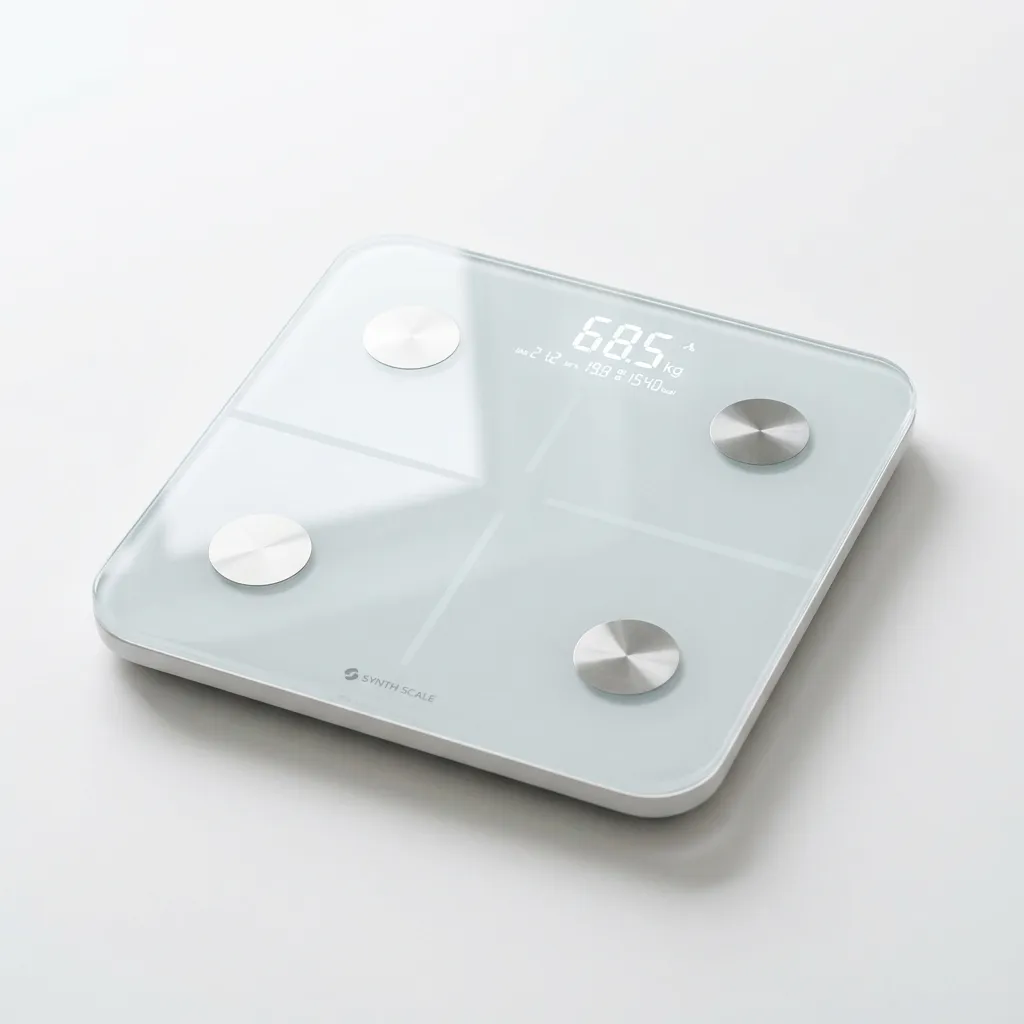
Smart Body Composition Scale
Advanced bioimpedance scale tracking muscle mass, body fat percentage, bone density and hydration.
- Tracks muscle mass & visceral fat
- Wireless sync with health apps
FAQ
Why does my Apple Watch or Garmin occasionally spike to 170 BPM during an easy Zone 2 jog?
This common error is known as 'cadence lock'. In cold outdoor conditions or at the onset of a workout before skin perfusion has elevated, the watch's optical photodiode can mistake the repetitive physical impact of your footstrike cadence (e.g., 168–174 steps per minute) for a heart rate pulse. The optical algorithm mistakenly locks onto this mechanical stride rate for several minutes. An ECG chest strap like the Polar H10 is immune to stride shock because it detects pure myocardial electrical voltage.
Can I record workouts with the Polar H10 without carrying my smartphone?
Yes. The Polar H10 contains internal onboard memory capable of storing one full workout session. Simply open the Polar Beat app on your phone before starting, select 'Save HR with sensor', and start the session. You can leave your phone behind during swimming, martial arts, or running. When you finish and reconnect to your smartphone, the entire workout file syncs automatically to Polar Flow.
Is it mandatory to use specialized electrode gel with the Polar H10?
No. Ordinary lukewarm tap water is completely sufficient for the vast majority of users. Generously wetting the rubber electrode surfaces before donning the strap establishes immediate electrical conduction through dry skin. However, individuals with exceptionally dry skin or those training in sub-zero winter weather with breathable base layers may find that a drop of water-based ECG or ultrasound gel guarantees an instant, 100% artifact-free signal from the very first second.
Is the Garmin HRM-Pro Plus superior to the Polar H10?
The Garmin HRM-Pro Plus is an excellent accessory specifically for dedicated Garmin ecosystem users who desire native Running Dynamics metrics (such as vertical oscillation, ground contact time balance, and stride length). However, the Polar H10 maintains two critical advantages: its elastic strap is fully detachable and replaceable independently of the sensor pod (on Garmin, the sensor is fused to the strap, requiring an entire unit replacement when the strap wears out), and the Polar H10 offers wider compatibility with open third-party scientific HRV software like Kubios HRV Scientific.
Sources and References
- [1]
- [2]
- [3]
- [4]
Show all 5 sources (1 more)
- [5]
Editorial History
26. september 2026
Første publicering
Første version blev publiceret som del af wearables med intro, takeaways, FAQ og referenceblok.
26. september 2026
Faglig gennemgang
Formuleringer, forbehold og interne links blev gennemgået for klarhed, konsistens og YMYL-tydelighed.
26. september 2026
Seneste opdatering
Polar H10 vs Optical HR Monitors fik opdaterede metadata, referenceoutput og forbedret beslutningsnær struktur.

Medical Review
Medical Review and Update Process
This article has been medically reviewed by Vadim Doroshenko with a focus on clinical accuracy, sources, disclaimers, and whether the conclusions still align with current scientific evidence.

Editorial Profile
Borys Viktorovytj Riabtsev
Borys Viktorovytj Riabtsev publishes Longevity Lab as a research-backed information project on precision medicine, metabolic health, and healthy aging, utilizing rigorous sources, independent medical review, and objective YMYL communication.