Key takeaways
- Testosterone gradually decreases with age, but only 2-5% of men over 50 have real clinical testosterone deficiency.
- Many symptoms attributed to 'low testosterone' are actually due to lack of sleep, obesity, stress or medication side effects.
- A single blood test is not enough — testosterone is dynamic and must be measured in the morning in two separate measurements.
- Free testosterone is often more informative than total, especially in obesity — but both measurements need context (SHBG, LH, FSH).
- Lifestyle interventions (weight loss, sleep, strength training, alcohol reduction) can increase testosterone without side effects and should be the first choice.
Medical disclaimer: Content is for informational purposes and does not replace medical advice.
What happens to testosterone after 50?
Testosterone naturally declines with age — this is not a disease, but a physiological process. The free testosterone (the biologically active fraction) decreases on average 0.4-1.6% per year after the age of 40. Total testosterone falls more slowly because SHBG (sex hormone binding globulin) often increases with age and binds more testosterone in an inactive form. British Society for Sexual Medicine Guidelines 2017 PMID 17426092
The important distinction is between normal age-related decline and true hypogonadism. Clinical testosterone deficiency — defined as symptoms combined with repeated low measurements of total or free testosterone — occurs in an estimated 2-5% of men over 50. Many men who feel low or 'not their usual self' actually have normal testosterone levels and their symptoms are due to other factors. British Society for Sexual Medicine Guidelines 2017 PMID 17426092
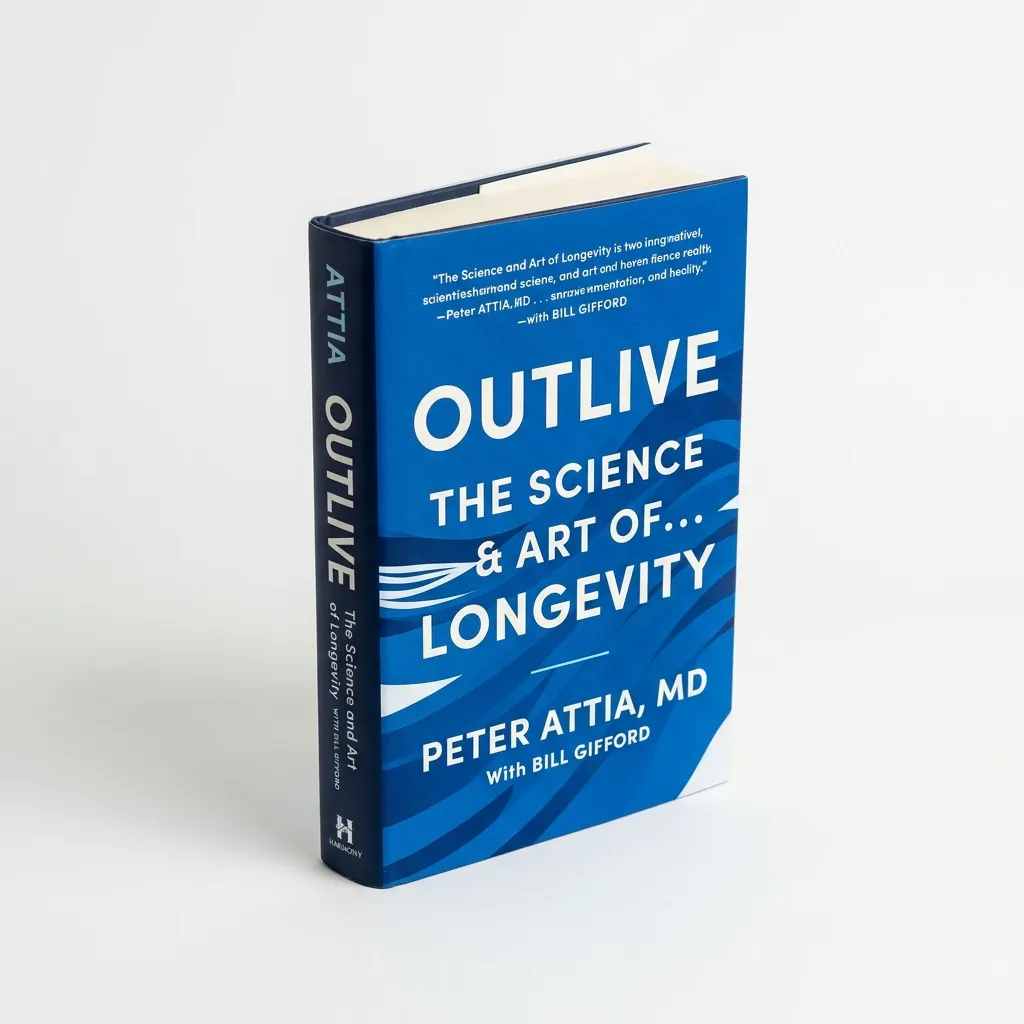
Outlive: The Science & Art of Longevity
Dr. Peter Attia's groundbreaking guide to preventive medicine, exercise for longevity, and healthy aging.
- Scientific framework for Medicine 3.0
- Actionable guide on sleep, exercise & nutrition
Symptoms: what is real testosterone deficiency and what is normal aging?
Many of the symptoms men associate with low testosterone — tiredness, irritability, increase in adipose tissue, decreased sex drive — are non-specific and can be caused by a wide range of other factors: lack of sleep, stress, depression, obesity, alcohol, or side effects from common medications such as beta-blockers and statins. British Society for Sexual Medicine Guidelines 2017 PMID 29565267
Signs that indicate real testosterone deficiency are more specific: decreased spontaneous erection (especially morning erection), loss of body hair, gynecomastia (breast development in men), osteoporosis before the age of 65, and — most importantly — consistently low readings in two separate morning blood tests. Symptoms alone are not enough for diagnosis. British Society for Sexual Medicine Guidelines 2017 PMID 29565267
| Clinical Symptom | Frequently Linked to Low Testosterone? | Alternative Clinical Etiologies |
|---|---|---|
| Chronic Fatigue | Yes, but non-specific | Sleep deprivation, allostatic stress, depressive disorders, hypothyroidism, sleep apnea |
| Decreased Libido | Yes — highly characteristic | Clinical depression, psychogenic stress, relationship conflict, adverse medication effects |
| Reduced Spontaneous Morning Erections | Yes — one of the most specific clinical indicators | Atherosclerotic vascular disease, diabetic microvascular damage, smoking |
| Loss of Lean Muscle Mass | Yes | Lack of progressive resistance stimulus, inadequate protein intake, age-related sarcopenia |
| Depressed Mood & Apathy | Yes, but non-specific | Primary major depressive episode, chronic burnout, life transitions, Vitamin D deficiency |
| Vasomotor Hot Flashes / Sweats | Yes — high diagnostic specificity | Infrequent in men — strong objective indicator of profound androgen deprivation |
Which blood tests make the most sense?
A well-executed testosterone analysis requires more than a single measurement of total testosterone. The first step is two separate morning measurements (between 7 and 10 am, when testosterone is highest) of total testosterone. If both are low, you should supplement with SHBG (to calculate free testosterone), as well as LH and FSH to distinguish between primary and secondary hypogonadism. British Society for Sexual Medicine Guidelines 2017 PMID 29565267 Sundhed.dk / Region Hovedstaden
Free testosterone is the biologically active fraction. It can be estimated via salvage (eg, the Vermeulen formula) from total testosterone, SHBG and albumin, or measured directly by equilibrium dialysis — which is the gold standard but rarely available in routine laboratories. In obesity, free testosterone is often more informative than total, because being overweight lowers SHBG and thus total testosterone without the free fraction necessarily being low. British Society for Sexual Medicine Guidelines 2017 PMID 29565267 Sundhed.dk / Region Hovedstaden
How does lifestyle affect your numbers?
For many men with borderline levels or mild symptoms, lifestyle interventions can significantly increase testosterone—often enough to avoid medical treatment. This is the recommended first-line approach in all international guidelines. PMID 22194346 PMID 24999088
The strongest lifestyle effects come from weight loss (fat tissue converts testosterone to estrogen via aromatase), adequate sleep (testosterone production occurs primarily during sleep, and a night with 4-5 hours of sleep can reduce testosterone by 10-15% the next morning), strength training (especially basic exercises with high load) and alcohol reduction (alcohol inhibits testosterone production in the Leydig cells). PMID 22194346 PMID 24999088
TRT, clomiphene, hCG or not — what does the evidence say?
Testosterone replacement therapy (TRT) is an effective treatment for confirmed hypogonadism with documented low values and clinical symptoms. Under proper medical supervision, TRT improves libido, bone density, muscle mass and, in some studies, humor and cognition. But the evidence for TRT in healthy, aging men with normal or borderline values is weak, and the risks are not trivial. British Society for Sexual Medicine Guidelines 2017 PMID 29565267
There are alternatives to classic TRT, but they each have their limitations. Clomiphene citrate stimulates the body's own testosterone production via increased LH/FSH and preserves fertility — relevant for younger men — but lacks long-term data. hCG (human chorionic gonadotropin) does the same, but is expensive and requires injections. Both parts should only be prescribed and monitored by an endocrinologist or specialist doctor. British Society for Sexual Medicine Guidelines 2017 PMID 29565267
What can you do yourself before considering medical treatment?
Before you have a conversation with your doctor about testosterone, there are a number of things you can do yourself - and which your doctor will most likely recommend as a first step. These measures have no side effects, are free or inexpensive, and have positive effects far beyond testosterone levels. Sundhed.dk / Region Hovedstaden
Start with sleep: focus on 7-8 hours of consistent sleep for at least 4 weeks and notice if your energy, humor and sex drive change. Next: reduce alcohol strongly or take a break of 4-8 weeks. If you are overweight (BMI over 28), set yourself a goal of 5-10% weight loss over 3-6 months through diet and exercise. Start strength training twice a week. If the symptoms persist after 3-6 months of lifestyle interventions, it is time to have blood samples taken. Sundhed.dk / Region Hovedstaden
Internal Further Reading
Read also in the same cluster
Smart Body Composition Scale
Advanced bioimpedance scale tracking muscle mass, body fat percentage, bone density and hydration.
- Tracks muscle mass & visceral fat
- Wireless sync with health apps
FAQ
What testosterone levels are normal in Denmark?
Most Danish laboratories indicate the normal range for total testosterone as 8-35 nmol/L for adult men. But the reference intervals are wide, and your individual baseline from your 20-30 years of age is often more relevant than whether you are within the normal range now.
Can I get testosterone via public treatment in Denmark?
Yes, but only in documented hypogonadism — repeated low morning readings of total testosterone combined with specific clinical symptoms. Investigation and treatment takes place via the own doctor and endocrinology specialist. Wellness-TRT without medical indication is only offered in private clinics and is not publicly funded.
What is 'andropause' — does it exist?
The term 'andropause' is controversial in medical literature. In contrast to women's menopause — which is an abrupt, universal hormonal transition — men's testosterone decline is gradual, varies greatly individually, and only leads to fatal to clinically significant symptoms. Most endocrinologists prefer the term 'senile hypogonadism' or 'functional testosterone deficiency', but only when there are objectively low values.
Can exercise increase testosterone permanently?
Strength training produces an acute, temporary ceiling in testosterone in the hours after training. Long-term, regular training can raise the basal level modestly — especially if it is combined with weight loss and improved sleep. However, the effect is moderate (typically 1-3 nmol/L increase for total testosterone) and diminishes if the training ceases. It is not a permanent hormonal transformation.
What about testosterone boosters and supplements?
Most marketed 'testosterone boosters' (tribulus terrestris, fenugreek, tongkat ali, ashwagandha) have weak or no evidence to increase testosterone in men with normal baseline levels. Apart from zinc and vitamin D — which are only effective in the event of a documented deficiency — there are no nutritional supplements with convincing evidence. This market is characterized by marketing, not documentation.
How does the testosterone level differ for women?
Women's testosterone levels are 10-20 times lower than men's, and the role of testosterone in women's health — especially around perimenopause — is a separate and complex topic. Read our article on women's longevity and perimenopause for a thorough review of the hormonal transition for women.
Sources and References
- [1]
- [2]
- [3]
- [4]
Show all 6 sources (2 more)
- [5]
- [6]
Editorial History
4. June 2026
First publication
Initial version was published as part of the precision medicine with introduction, takeaways, FAQ, and reference block.
4. June 2026
Medical review
Phrasing, caveats, and internal links were reviewed for clarity, consistency, and YMYL alignment.
4. June 2026
Latest update
Testosterone after 50 received updated metadata, reference outputs, and improved decision-support structure.

Medical Review
Medical Review and Update Process
This article has been medically reviewed by Vadim Doroshenko with a focus on clinical accuracy, sources, disclaimers, and whether the conclusions still align with current scientific evidence.

Editorial Profile
Borys Viktorovytj Riabtsev
Borys Viktorovytj Riabtsev publishes Longevity Lab as a research-backed information project on precision medicine, metabolic health, and healthy aging, utilizing rigorous sources, independent medical review, and objective YMYL communication.