Key takeaways
- Vitamin D increases intestinal calcium absorption, but Vitamin K2 is required to direct it into bone tissue.
- Matrix Gla-Protein (MGP) is the most potent inhibitor of arterial calcification and requires K2 activation.
- Osteocalcin is activated by Vitamin K2 through carboxylation, binding calcium directly to bone hydroxyapatite.
- Menaquinone-7 (MK-7) has a significantly longer serum half-life (~72 hours) compared to MK-4 (~1-2 hours).
- Clinical 3-year trials demonstrate that 180 mcg MK-7 daily inhibits age-related bone loss and improves arterial elasticity.
- A combination of Vitamin D3 (2000-4000 IU), K2 MK-7 (100-200 mcg), and magnesium provides optimal synergy for bone health.
Medical disclaimer: Content is for informational purposes and does not replace medical advice.
What is the 'Calcium Paradox' and Why is Vitamin D Alone Insufficient?
When we take Vitamin D, it stimulates the synthesis of calcium-binding transport proteins in the intestinal lining, dramatically enhancing calcium absorption into the bloodstream. This is essential for maintaining serum calcium levels. However, once calcium enters circulation, a major physiological challenge arises if Vitamin K2 is absent. PMID 26770129 PMID 29138634
Without adequate Vitamin K2, calcium-regulating proteins remain in an inactive, uncarboxylated state. Consequently, calcium circulates freely and deposits into the tunica media of arterial walls, heart valves, and soft tissues. This leads to vascular stiffness and elevated cardiovascular risk while bones remain brittle. Vitamin D opens the door for calcium entry, but Vitamin K2 guides it to the correct destination. PMID 26770129 PMID 29138634
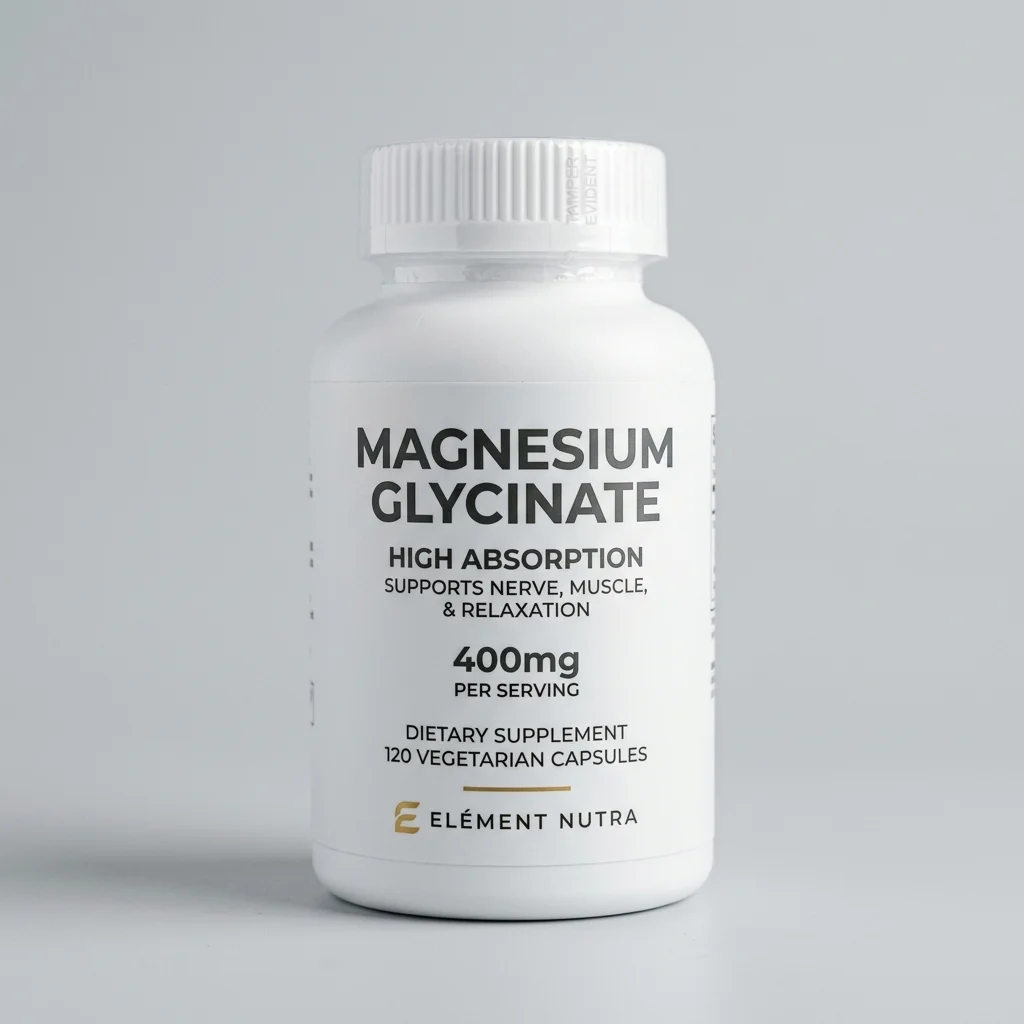
Magnesium Glycinate 400mg Capsules
Highly bioavailable chelated magnesium bound to glycine for maximum sleep and muscle absorption.
- Activates central GABA receptors for deep sleep
- Gentle on the stomach with superior bioavailability
Biological Mechanisms: Osteocalcin and Matrix Gla-Protein (MGP)
Vitamin K2 acts as an indispensable cofactor for the enzyme gamma-glutamyl carboxylase (GGCX). This enzyme attaches a carboxyl group to specific glutamic acid residues on target proteins, transforming them from inactive precursors into functional Gla-proteins. PMID 26770129 PMID 22489224
The two primary K2-dependent proteins in calcium homeostasis are osteocalcin and Matrix Gla-Protein (MGP). Osteocalcin is synthesized by osteoblasts in bone; once carboxylated by K2, it acquires high affinity for calcium ions and binds them directly into the hydroxyapatite matrix. MGP is produced by vascular smooth muscle cells; upon K2 activation, it serves as the body's primary defense against arterial calcification. PMID 26770129 PMID 22489224
Why Choose Menaquinone-7 (MK-7) Over MK-4 or Vitamin K1?
Vitamin K exists in two primary dietary forms: Vitamin K1 (phylloquinon), found in green leafy vegetables and primarily utilized by the liver for blood coagulation, and Vitamin K2 (menaquinones), produced by bacterial fermentation. K2 is subdivided into short-chain (e.g., MK-4) and long-chain forms (e.g., MK-7). PMID 22414724 PMID 23140417
Pharmacokinetic trials reveal major differences. MK-4 has a very short biological half-life in serum (1–2 hours) requiring high milligram-level dosing. In contrast, MK-7 (derived from fermented natto) features an extended half-life of up to 72 hours. A modest daily dose of MK-7 provides stable, continuous blood levels that effectively saturate extra-hepatic tissues like bone and blood vessel walls. PMID 22414724 PMID 23140417
Clinical Evidence: Effects on Bone Density and Arterial Elasticity
A landmark 3-year double-blind, randomized controlled trial (Knapen et al.) investigated the effects of 180 mcg daily MK-7 in healthy postmenopausal women. Results were striking: the MK-7 group exhibited significant inhibition of age-related declines in bone mineral density (BMD) at the lumbar spine and femoral neck compared to placebo. PMID 23525445 PMID 26420598
Equally impressive were the vascular outcomes: MK-7 supplementation significantly improved arterial elasticity and reduced arterial stiffness (measured via pulse wave velocity), particularly in subjects with higher baseline stiffness. Meta-analyses confirm that calcium supplementation without K2 fails to adequately prevent fractures while increasing vascular risk. PMID 23525445 PMID 26420598
Optimal Dosing, Synergy with D3 & Magnesium, and Safety
To achieve therapeutic synergy, an integrated protocol is recommended. The standard adult dose for Vitamin K2 (MK-7) is 100–200 mcg daily, taken with a fat-containing meal as K2 is fat-soluble. This pairs ideally with 2000–4000 IU Vitamin D3 daily, guided by serum 25(OH)D testing. PMID 29138634 PMID 25686619
Magnesium must also be included: it is the required cofactor for enzymes that activate Vitamin D in the liver and kidneys. Vitamin K2 MK-7 demonstrates an exceptional safety profile without toxicity even at elevated doses. The primary clinical contraindication applies to individuals taking Vitamin K antagonist anticoagulants (such as Warfarin), where K2 intake must be closely coordinated with a physician. PMID 29138634 PMID 25686619
Internal Further Reading
Read also in the same cluster

Outlive: The Science & Art of Longevity
Dr. Peter Attia's groundbreaking guide to preventive medicine, exercise for longevity, and healthy aging.
- Scientific framework for Medicine 3.0
- Actionable guide on sleep, exercise & nutrition
FAQ
Why should Vitamin K2 be taken with Vitamin D?
Vitamin D increases calcium absorption into the bloodstream, while Vitamin K2 activates osteocalcin and MGP to deposit calcium into bones and prevent arterial calcification.
What is the difference between Vitamin K1 and K2 MK-7?
Vitamin K1 comes from green vegetables and supports liver blood clotting. Vitamin K2 (MK-7) comes from fermented foods, has a 72-hour half-life in blood, and activates bone and vascular proteins.
Can you take Vitamin K2 if you are on blood thinners?
If you take Vitamin K antagonists like Warfarin, do not take K2 without consulting your doctor. Newer direct oral anticoagulants (DOACs) are generally not affected by Vitamin K2.
Sources and References
- [1]
- [2]
- [3]
- [4]
Show all 8 sources (4 more)
- [5]
- [6]
- [7]
- [8]
Editorial History
3. august 2026
Første publicering
Første version blev publiceret som del af healthy aging med intro, takeaways, FAQ og referenceblok.
3. august 2026
Faglig gennemgang
Formuleringer, forbehold og interne links blev gennemgået for klarhed, konsistens og YMYL-tydelighed.
3. august 2026
Seneste opdatering
Vitamin K2 (MK-7) and Calcium (2026) fik opdaterede metadata, referenceoutput og forbedret beslutningsnær struktur.

Medical Review
Medical Review and Update Process
This article has been medically reviewed by Vadim Doroshenko with a focus on clinical accuracy, sources, disclaimers, and whether the conclusions still align with current scientific evidence.

Editorial Profile
Borys Viktorovytj Riabtsev
Borys Viktorovytj Riabtsev publishes Longevity Lab as a research-backed information project on precision medicine, metabolic health, and healthy aging, utilizing rigorous sources, independent medical review, and objective YMYL communication.